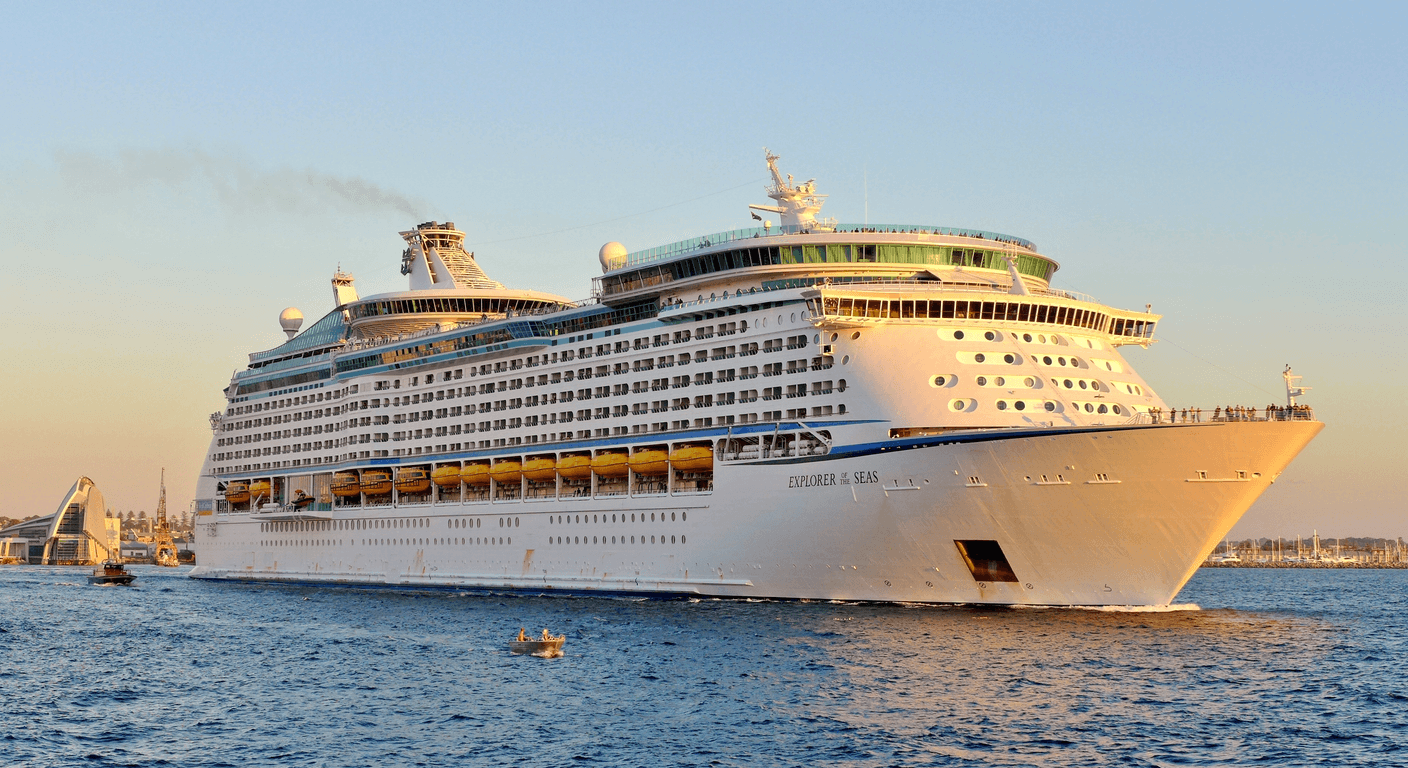
Small-ship luxury cruising suits over-50 Australians sailing Alaska between May and September, typically over a seven-night voyage. It offers a boutique-hotel atmosphere, unhurried dining and a slower daily rhythm than mega-ships. Mobility is moderate — cabins and excursions vary, and tender-port transfers can challenge those with limited mobility. Access requires a long-haul flight to a US port such as Seattle or Vancouver, plus a pre-cruise overnight to offset jet lag.
What Does 'Small-Ship Luxury' Actually Mean?
The label gets used loosely, so it's worth pinning down. In practical terms, a small-ship luxury vessel carries somewhere between 200 and 700 guests — a fraction of the 4,000-plus aboard a mainstream mega-ship. Lines like Oceania Cruises, Azamara and Silversea sit in this category, though they differ meaningfully from each other in price, style and what's bundled into the fare. What they share is a higher crew-to-guest ratio (often around 1:1.5 compared with 1:3 or worse on large ships), a quieter onboard atmosphere, and a dining philosophy that treats food as the centrepiece rather than an afterthought.
The ship itself tends to feel more like a well-appointed boutique hotel than a floating resort. Public spaces are less cavernous, bars are genuinely convivial rather than theatre-sized, and the absence of a casino-and-waterpark culture changes the demographic on board — which, for many travellers in their 50s and 60s, is precisely the point. You're less likely to be sharing a lift with a bucks party.
That said, 'luxury' is not a regulated term in cruising. It's worth reading the inclusions list carefully before assuming anything is covered. The differences between what Oceania includes versus what Silversea includes — and what each charges extra for — can be significant and are explored below.
What's Included — and What Costs Extra?
Most small-ship luxury lines include gratuities in the fare, which matters more than it might sound. On mainstream lines, daily service charges of USD 18–25 per person can add hundreds to a two-week voyage. On lines like Azamara and Silversea, that's already handled. Many also include at least some beverages — typically house wine, beer and spirits during meals, and sometimes a broader drinks package throughout the day. Oceania's approach has historically been more food-focused, with beverage packages as optional add-ons; confirm the current structure before booking, as policies change.
Speciality dining is the area where costs can quietly accumulate. Most small-ship lines include multiple dining venues in the base fare — the main restaurant plus a selection of alternatives — but some premium speciality restaurants carry a surcharge, typically in the range of USD 30–80 per person per sitting (indicative; confirm with the line). On Oceania, for instance, the speciality restaurants like Polo Grill and Toscana are included in higher suite categories but charged separately for lower cabin grades. Knowing this before you board avoids disappointment.
Shore excursions are almost universally extra, and they're not cheap. Expect to pay roughly AUD 100–350 per person per excursion depending on the activity and destination (indicative). Alaska glacier tours, whale-watching charters and helicopter experiences sit at the higher end. Some lines offer an 'excursion package' discount if you pre-purchase a bundle — worth calculating against the specific tours you actually want rather than assuming it's always better value. Flights from Australia are virtually never included in the advertised fare, which is a critical distinction when comparing headline prices.
What Does an Alaska Small-Ship Cruise Actually Cost from Australia?
Using Alaska as a working example: a 7-night small-ship luxury Alaska cruise departing from Seattle or Vancouver typically starts at roughly AUD 5,000–8,000 per person in an interior or ocean-view cabin on a mid-tier luxury line like Azamara or Oceania, rising to AUD 12,000–20,000+ for a veranda suite or all-inclusive line like Silversea. These are indicative figures based on publicly available pricing patterns and should be confirmed directly with the cruise line or a specialist travel adviser, as fares fluctuate significantly by season, booking lead time and promotional periods.
Add return economy flights from Melbourne, Sydney or Brisbane to Seattle or Vancouver — roughly AUD 2,000–3,500 per person depending on airline, routing and timing — and the all-in cost for a 7-night voyage starts to look more like AUD 7,000–11,000 per person at the entry level, and considerably more in premium cabins. Business-class flights, which many over-50 travellers rightly consider for a 15–20 hour journey with at least one stopover, can add another AUD 4,000–8,000 per person each way. That changes the calculus considerably.
A pre-cruise night or two in Seattle or Vancouver is not optional — it's sensible. Arriving jet-lagged and boarding a ship the same day is a recipe for spending your first port day in bed. Budget roughly AUD 250–450 per night for a comfortable hotel in either city (indicative). The total trip, realistically planned with business class flights and a proper pre-cruise buffer, can reach AUD 20,000–35,000 per person. That's not a criticism — it's a realistic number worth knowing before you start comparing it with a Mediterranean mainstream cruise at half the price.
The Single-Supplement Question — Is It Better on Small Ships?
The single supplement — the additional cost solo travellers pay to occupy a double cabin alone — is one of the more frustrating realities of cruising. On mainstream lines, it typically ranges from 50% to 100% of the double-occupancy fare, effectively meaning solo travellers pay roughly 1.5 to 2 times the per-person rate. Small-ship luxury lines are not categorically better, but they are more variable — and some actively court solo travellers.
Azamara, for instance, has run solo traveller promotions with reduced supplements on select sailings. Silversea offers a limited number of single-occupancy cabins on some ships, which can reduce the penalty significantly. Oceania has periodically waived or reduced single supplements on specific itineraries. None of these are permanent policies — they're promotional, and availability is limited — but a specialist cruise travel adviser who knows the current offers can save a solo traveller a meaningful sum.
For a woman travelling solo in a group of friends (a common scenario for this age group), the practical answer is often to share a twin cabin with a travelling companion, which removes the supplement entirely. If travelling alone, the honest advice is to work with a cruise-specialist travel agent who tracks single-supplement deals, rather than booking direct and paying the rack rate. The difference can be AUD 2,000–5,000 on a single voyage.
Pacing, Daily Rhythm and What It Means for Tired Legs
This is where small-ship cruising earns its reputation for the over-50 traveller — and where the contrast with mainstream cruising is most tangible. A typical day in Alaska on a small ship involves arriving at a port or anchorage in the morning, spending four to eight hours ashore or at anchor watching glaciers calve, and returning to the ship for a proper dinner. There's no pressure to rush back for a 6pm show. The evening entertainment, if there is any, tends to be a single act — a naturalist lecture, a pianist, a local cultural performance — rather than a Vegas-style production.
For travellers who tire easily or who manage pain conditions, this rhythm is genuinely restorative. You set your own pace. Nobody is tapping a microphone to herd you toward the next activity. The ship is small enough that getting from your cabin to the dining room doesn't require a ten-minute walk. On a sea day — and Alaska itineraries often include scenic cruising through fjords and passages that count as 'sea days' in the best possible sense — there's nowhere you need to be.
The flip side: if your idea of a great cruise evening involves trivia nights, comedy clubs, a casino, a pool deck party and three shows to choose from, a small luxury ship may feel underwhelming. The entertainment offering is genuinely more limited. That's not a flaw — it's a design choice — but it's worth being honest with yourself and your travel companions about what you actually want from an evening at sea.
Accessibility Realities: Cabins, Tenders and Alaskan Terrain
Cabin size on small-ship luxury lines is often a surprise — in both directions. Entry-level ocean-view cabins on some vessels are quite compact by modern standards, though typically finished to a higher specification than equivalent mainstream cabins. Bathrooms in lower categories can be narrow, with shower-over-tub configurations that aren't ideal for anyone with limited mobility or balance concerns. If a walk-in shower is a practical necessity, it's worth specifying this when booking and confirming the cabin configuration in writing. Suites on these ships generally offer more generous bathrooms and, on some vessels, a separate bath and shower.
Tender access is a genuine accessibility consideration in Alaska. Many of the most scenic ports — Skagway, Sitka and others depending on itinerary — are dock ports, but some anchorages require guests to transfer via small tender boats. This involves stepping between a moving vessel and a dock, which can be challenging for anyone with knee or hip concerns, or who uses a walking aid. Most lines require guests who use wheelchairs or mobility scooters to confirm tender-port accessibility in advance; in some cases, guests with significant mobility limitations may not be able to go ashore at tender ports at all. Ask the cruise line directly and get a written answer before booking.
Shore excursions in Alaska vary enormously in physical demand. A whale-watching boat tour is accessible to most people; a rainforest hike or a kayaking excursion is not. The better small-ship lines grade their excursions honestly by difficulty, and some offer 'gentle' or 'easy' alternatives at most ports. It's also entirely reasonable to skip a shore excursion and spend the morning watching the scenery from the ship's deck with a coffee — on a small ship, that's often the most memorable experience anyway.
Packing for Small-Ship Luxury: Ship-Elegant Evenings and Cold Shore Days
Alaska in summer (May to September) presents a genuine packing challenge: evenings on a luxury small ship call for something polished, while mornings on a dock in Juneau at 8am call for waterproof layers and comfortable walking shoes. Most small-ship luxury lines have moved away from formal nights toward 'smart casual' or 'country club casual' — which in practice means trousers and a blouse or a smart dress for women, no jeans in the main restaurant at dinner. Confirm the specific dress code for your line before packing.
For shore days in Alaska, the practical kit is: a waterproof outer layer (not a light rain jacket — a proper one), thermal underlayers for early mornings, comfortable walking shoes with grip (not fashion trainers), and a small daypack. Temperatures in Alaskan ports during summer typically range from around 8°C to 18°C, with frequent rain. Binoculars are worth every gram of luggage allowance — glacier viewing and wildlife spotting from the ship are among the genuine highlights.
Cabin storage on smaller ships can be limited in lower categories, so packing with discipline matters. A soft-sided bag that can slide under the bed is more practical than a rigid suitcase in a compact cabin. Bring any prescription medications in your carry-on in original packaging, with a letter from your GP — this is standard advice for any international travel but matters more when you're boarding a ship in a remote Alaskan port where a pharmacy is not nearby.
Dining Reservations and Speciality Restaurant Etiquette
One of the genuine pleasures of small-ship luxury dining is the absence of the frantic reservation scramble that characterises large ships. On a 2,000-passenger mainstream vessel, failing to book a speciality restaurant weeks in advance can mean missing out entirely. On a 400-passenger small luxury ship, the dynamic is more relaxed — though it's still worth making reservations for any included or surcharge speciality venues as soon as the booking window opens, particularly on popular sailings.
The main dining room on a small luxury ship typically operates on open seating for most or all meals, meaning you sit when you like and with whom you like. This suits travellers who prefer flexibility over assigned tables and set dinner times. Meals tend to be longer and less rushed — the kitchen isn't turning over 3,000 covers a night — and the food quality on lines like Oceania is genuinely one of the strongest arguments for the premium price. Oceania in particular has built its reputation on cuisine, and it's not undeserved.
A practical note on dining rhythm: some small-ship guests find the pace of mealtimes slower than they're accustomed to. A dinner with multiple courses can take 90 minutes or more, which is a pleasure if you're in the mood and a minor irritation if you're tired after a long shore day. Most ships will accommodate a lighter, faster meal if you ask — the crew-to-guest ratio means requests are generally handled graciously.
Internet, Entertainment and the Honest Caveats
Internet access on small luxury ships has improved considerably, but it remains the area where the gap between expectation and reality is largest. Satellite connectivity in remote destinations like Alaska is inherently limited, and even ships with the latest technology will deliver slower, less reliable internet than you'd get at home. Video calls can be patchy. Streaming is often throttled or unavailable. Most small luxury lines charge for internet packages (typically USD 20–40 per day for premium packages, indicative) or include a basic package in higher cabin categories. If staying connected is genuinely important — for health monitoring, family contact or work — discuss the specifics with the cruise line before booking.
Entertainment variety is the other honest caveat. Australians accustomed to the programming density of a large mainstream ship — multiple shows nightly, comedy clubs, trivia circuits, themed parties, sports bars — will find a small luxury ship noticeably quieter. The evening offering typically includes one main performance or lecture, a bar with a pianist or small ensemble, and a library. For many over-50 travellers, this is the point. For others, it's a genuine limitation worth acknowledging before committing to a 14-night voyage.
The LifeWellCruised YouTube channel — including the review at youtube.com/watch?v=9ggQPlVfxtE — offers candid, experience-based perspectives on small-ship luxury cruising that complement official line marketing. It's a useful reference point for understanding the onboard atmosphere and daily rhythm from a traveller's point of view rather than a brochure's.
Small Ship vs Mainstream: A Comparison Checklist Before You Book
Before committing to a small-ship luxury cruise, it's worth working through a short checklist honestly. Do you value food and wine as a centrepiece of the experience, or is it background? Do you prefer a quieter ship where you recognise faces in the corridor, or do you enjoy the anonymity and energy of a large vessel? Are you comfortable with a slower, less structured daily rhythm, or do you like having a packed schedule of activities to choose from? Is the all-inclusive pricing model appealing, or do you prefer paying for exactly what you use?
On accessibility: can you manage a tender transfer if required? Are you comfortable with uneven dock surfaces and gangways? Is your cabin bathroom configuration suitable for your needs? Have you discussed any mobility aids (walking sticks, a folding rollator) with the cruise line to confirm they're manageable in the cabin and on excursions? These are not hypothetical questions — they're the ones that determine whether a beautiful itinerary becomes a frustrating experience.
On budget: have you calculated the full cost including flights in your preferred class, pre-cruise accommodation, shore excursions, any drinks packages, and travel insurance that covers pre-existing conditions? The last item is non-negotiable for any Australian travelling internationally, and small-ship luxury cruising to remote destinations like Alaska makes comprehensive cover more important, not less. Compare quotes from specialist travel insurance providers and read the policy document — not just the summary — before purchasing.
Quick planning guide
| Ideal pace | Slow-paced and unhurried, with no scheduled rushing between activities |
|---|---|
| Best months | May to September (Alaska's summer sailing season) |
| Suggested stay | Around 7 nights, plus a pre-cruise night in Seattle or Vancouver |
| Mobility level | Moderate — comfortable for most, but tender-port transfers and some excursions require care |
| Cost level | Premium — realistic all-in trips often reach AUD 20,000–35,000 per person |
| Comfort level | High, with boutique-hotel service, higher crew ratios and unhurried dining |
| Best for | Over-50 travellers who prefer quiet, attentive service and a relaxed pace over big-ship entertainment |
| Main planning consideration | Long-haul flights to a North American departure port and tender-port accessibility |
Key takeaways
- A 7-night Alaska small-ship luxury cruise from Australia costs roughly AUD 7,000–20,000+ per person all-in, depending on cabin grade, flight class and line — confirm current fares before planning.
- Gratuities, speciality dining and drinks are often (but not always) included on small luxury ships — read the inclusions list carefully before comparing headline prices.
- Tender ports in Alaska require honest self-assessment of mobility; travellers with significant limitations should confirm access in writing with the cruise line before booking.
- Solo travellers should seek out single-supplement promotions through a specialist cruise adviser rather than paying rack rate — the saving can be AUD 2,000–5,000 per voyage.
- Small-ship luxury suits over-50 travellers who want slower pacing, better food and fewer crowds; it's a deliberate mismatch for those who want high-energy entertainment and a packed activity schedule.
- A minimum two-night pre-cruise stay in Seattle or Vancouver is strongly recommended after a 15–20 hour flight from Australia — boarding a ship jet-lagged wastes the early days of the itinerary.
Recommended partners and links
Indicative prices only — always confirm with the operator before booking.
Frequently asked questions
What is typically included in a small-ship luxury cruise fare?
Most small-ship luxury lines include gratuities, most meals across multiple dining venues, and at least some beverages in the base fare. Lines like Silversea are fully all-inclusive; Oceania and Azamara have more variable inclusions depending on cabin grade and current promotions. Shore excursions, flights and travel insurance are almost never included. Always confirm the current inclusions list directly with the cruise line or a specialist travel adviser before booking.
How much does a small-ship Alaska cruise cost from Australia in total?
A 7-night small-ship luxury Alaska cruise, including return economy flights from an Australian capital city to Seattle or Vancouver, typically costs roughly AUD 7,000–14,000 per person at the entry level, rising to AUD 20,000–35,000+ per person in premium suites with business-class flights. These are indicative figures only and subject to change — confirm current fares with the cruise line and your airline.
Is small-ship luxury cruising accessible for over-50 Australians with mobility concerns?
Small-ship luxury cruising can be well-suited to travellers with moderate mobility limitations, but tender ports — common in Alaska — require the ability to step between a moving boat and a dock, which is not accessible to all. Cabin bathrooms in lower categories can be compact. Travellers who use mobility aids should contact the cruise line directly to confirm accessibility before booking, and get responses in writing.
Do solo Australian travellers pay a single supplement on small-ship luxury cruises?
Yes, most small-ship luxury lines charge a single supplement — typically 50–100% of the double-occupancy fare — for solo travellers in standard cabins. However, some lines offer reduced or waived supplements on select sailings as promotions. A specialist cruise travel adviser who tracks these offers can help solo travellers find significantly better pricing than the standard rack rate.
How does the entertainment on a small luxury ship compare to a mainstream cruise?
Entertainment on small luxury ships is deliberately limited compared with mainstream vessels. Expect one main performance or lecture per evening — a pianist, a naturalist talk, a small ensemble — rather than multiple nightly shows, comedy clubs or themed parties. For travellers who value a quieter onboard atmosphere, this is a feature; for those who enjoy a packed entertainment schedule, it's a genuine limitation worth considering before booking.