Malta suits Australians over 50 best from April to June or September to October, when the heat is bearable and prices dip. A stay of several days from one base like Valletta covers the compact island easily. The defining highlight is the Ħaġar Qim temple complex, predating the pyramids and Stonehenge. Mobility is moderate — Valletta's slopes and Mdina's cobbles need care, though the Barrakka Lift helps. There are no direct flights from Australia; expect 22–26 hours via a stopover hub, with a recovery night recommended on arrival.
Why Malta Works So Well for Over-50 Australians
There's a particular pleasure in arriving somewhere foreign and immediately understanding the street signs, the menu, the bus driver's directions and the pharmacist's advice. Malta offers exactly that. English has been an official language since independence in 1964, and in practice it's spoken fluently across hotels, restaurants, taxis, medical clinics and archaeological sites. For a traveller who's done the pantomime of navigating non-English-speaking Europe, the difference is tangible from the first morning.
The island is 27 kilometres long and 14 kilometres wide. That compactness is genuinely liberating at a pace that suits most over-50 travellers — there's no pressure to cover enormous ground, no multi-hour drives between highlights. Valletta, Mdina, the temples at Ħaġar Qim, the fishing village of Marsaxlokk and the medieval city of Vittoriosa are all reachable from a central base without an early alarm or a tour-bus marathon. Malta rewards the traveller who wants to linger over a second coffee and still have a full afternoon.
For women travelling with friends, Malta also has a well-earned reputation for safety. The streets of Valletta are animated and well-lit; solo women report feeling entirely comfortable walking in the evenings. The culture is warm without being intrusive. It's a place where a group of Australian women in their sixties will be welcomed as guests, not managed as tourists.
Getting There: Flight Realities from Australia
There are no direct flights from Australia to Malta's Malta International Airport (MLA). Every routing involves at least one stopover at a major hub — most commonly Dubai (Emirates), Doha (Qatar Airways) or Singapore (Singapore Airlines connecting onward to a European carrier). Total travel time from Melbourne, Sydney or Brisbane runs roughly 22 to 26 hours depending on the connection, with layover time added. It's a substantial journey, and worth acknowledging honestly rather than glossing over.
The practical approach for most over-50 travellers is to build in a recovery night at the hub city or on arrival in Malta before committing to any serious sightseeing. A night in Dubai or Doha is easily arranged and turns a punishing transit into a genuine two-destination trip. Arriving in Valletta exhausted and then immediately climbing its famous stairs is nobody's idea of a good start.
Confirm current visa requirements, entry conditions and travel insurance obligations via smartraveller.gov.au before booking — rules around European entry for Australian passport holders have been subject to change, and the Australian Government's advice is the only source worth trusting on this. Travel insurance that covers pre-existing medical conditions is essential for any long-haul trip at this life stage; premiums vary considerably, so compare carefully and read the policy, not just the brochure.
Valletta: What to See, and How to Navigate the Slopes
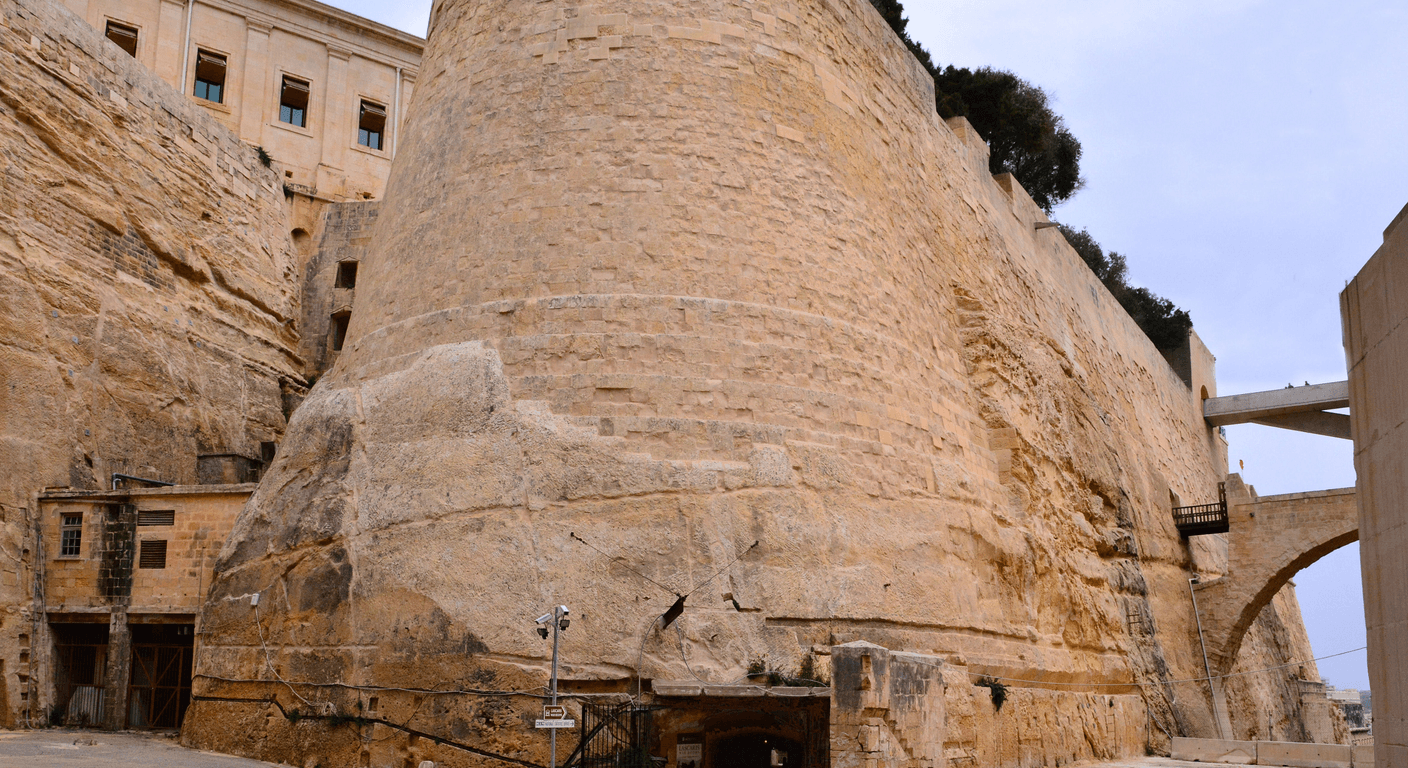
Valletta is a UNESCO World Heritage city built by the Knights of St John in the sixteenth century, and almost every street is a visual argument for the designation. The grid layout is logical and the distances between major sites are short — the whole city is roughly one kilometre by half a kilometre. The catch is gradient. Valletta sits on a peninsula of rock, and several of its main streets drop steeply toward the Grand Harbour. For travellers with knee concerns or limited mobility, this matters.
The Barrakka Lift solves the worst of it. Located near the Upper Barrakka Gardens, it connects the upper city to the waterfront at Valletta Wharf in under a minute, saving the long descent and — more to the point — the climb back up. It operates daily and costs a few euro; confirm current hours and fares at visitmalta.com. The Upper Barrakka Gardens themselves are worth the visit regardless: the view across the Grand Harbour to the Three Cities is one of those views that earns its reputation quietly, without needing to be told how good it is.
St John's Co-Cathedral is the single site in Malta that most visitors remember longest. The floor is a continuous mosaic of marble tombstones; the walls are encrusted with gilded baroque carving; and Caravaggio's 'The Beheading of Saint John the Baptist' — the only painting he ever signed — hangs in the Oratory. Arrive when it opens to avoid the midday groups. Modest dress is required (shoulders and knees covered), and the audio guide is genuinely good. Entry is ticketed; book via heritagemalta.mt to confirm current pricing.
The Harbour Ferries: Sightseeing That Doesn't Feel Like Sightseeing
One of the most pleasurable hours in Malta costs almost nothing. The harbour ferry from Valletta Wharf to Birgu (Vittoriosa) crosses the Grand Harbour in minutes, threading between the limestone fortifications that have defined this waterway since the Great Siege of 1565. The views from the water are simply different from the views from land — the full scale of the fortifications only becomes clear when you're sitting at water level looking up.
The Three Cities — Birgu, Bormla and Isla — on the far side of the harbour predate Valletta itself and see a fraction of the foot traffic. Birgu's Maritime Museum and the Inquisitor's Palace (both managed by Heritage Malta) are worth a morning. The streets are quieter, the cafes less polished, and the sense of an inhabited, working Maltese town is more present than in the tourist-facing parts of the capital. The ferry back to Valletta takes the same few minutes and the same few euro.
Separate harbour cruise operators run longer tours of the Grand Harbour and the creeks; these are worth considering for a group, particularly in the late afternoon when the limestone glows amber. Confirm operators and current pricing through visitmalta.com rather than through third-party booking aggregators, which sometimes list outdated schedules.
Mdina: The Silent City
Mdina sits on a ridge in Malta's centre, its medieval walls visible from much of the island. It was the island's capital before the Knights built Valletta, and it has never quite adjusted to the demotion — which is part of its character. The city's permanent population is counted in the hundreds; the streets within the walls are genuinely quiet in the early morning and evening, after the day-trip crowds have departed.
The main gate and cathedral square are the obvious starting points, but the real reward is simply walking the narrow lanes without a particular agenda. The Palazzo Falson Historic House Museum offers an exceptionally well-preserved glimpse into the domestic life of a medieval Maltese noble family; it's the kind of place that a certain type of traveller — the one who prefers context to spectacle — tends to love. Confirm opening hours and entry fees at palazzofalson.com before visiting.
The approach to Mdina from Valletta by bus is straightforward; Malta Public Transport's network covers the route, and the journey takes around 30 to 40 minutes. Taxis and rideshares are also readily available. The city is largely car-free within the walls, and while the lanes are cobbled and occasionally uneven, the distances are short enough that most travellers with moderate mobility manage comfortably. A walking stick or trekking pole is a sensible precaution on the cobblestones.
The Megalithic Temples: Older Than the Pyramids
This is the fact that tends to stop people mid-sentence. The Ħaġar Qim and Mnajdra temple complexes on Malta's southern coast were constructed between approximately 3600 and 2500 BCE — predating the Egyptian pyramids by several centuries and Stonehenge by a similar margin. They are UNESCO World Heritage listed and among the oldest freestanding stone structures on earth. Protective canopies were installed over the main temples some years ago to shield them from weathering, which is pragmatic if aesthetically imperfect.
The site is managed by Heritage Malta, and the visitor centre provides solid context before you approach the temples themselves. The landscape around Ħaġar Qim is open and exposed — sun protection, a hat and water are non-negotiable in the warmer months. The path from the visitor centre to the temples is relatively flat and paved for most of its length, making it accessible for travellers with moderate mobility. Allow two to three hours for both temple complexes.
The nearby Tarxien Temples in the south of Malta and the Hypogeum of Ħal Saflieni — an underground prehistoric burial site that requires advance booking and has strictly limited daily visitor numbers — round out what is, taken together, an extraordinary concentration of Neolithic heritage. Book the Hypogeum well in advance through heritagemalta.mt; it regularly sells out weeks ahead, and the underground environment is not suitable for those with significant mobility limitations or claustrophobia.
Practical Malta: Seasons, Costs and Getting Around
Summer in Malta is serious. July and August temperatures regularly exceed 35°C, and the island's limestone surfaces retain and radiate heat in a way that makes midday sightseeing genuinely uncomfortable for most people. April through June and September through October are the sensible windows — warm, bright, and without the punishing humidity of high summer. March can be mild but occasionally wet; November onwards cools quickly. The shoulder seasons also mean lower accommodation rates and shorter queues at major sites.
Malta's public bus network covers the whole island and is inexpensive — indicatively a few euro per journey, though fares and timetables change, so confirm current details at publictransport.com.mt. Taxis are metered and reliable; apps including eCabs operate similarly to rideshare services and are widely used. Renting a car is possible but unnecessary for most itineraries, and parking in Valletta is genuinely difficult. A central base in Valletta or Sliema (connected to Valletta by a short, regular ferry) eliminates most transport complexity.
Accommodation ranges from small boutique guesthouses in converted Valletta townhouses — some of the most atmospheric stays in the Mediterranean — to larger hotel properties in St Julian's and Sliema with pools and sea views. Indicative mid-range costs run roughly AUD 150 to 280 per room per night, though this varies considerably by season and property. Dining is excellent value compared to most of Western Europe; a proper restaurant dinner with wine for two runs indicatively around AUD 60 to 100. Confirm all costs independently, as prices shift with exchange rates and seasons.
Quick planning guide
| Ideal pace | Slow and unhurried, with time to linger |
|---|---|
| Best months | April to June and September to October |
| Suggested stay | Several days from a single base such as Valletta |
| Mobility level | Moderate — manageable with some steep streets and uneven cobblestones |
| Cost level | Mid-range, roughly AUD 150–280 per room per night |
| Comfort level | High — English is an official language and widely spoken |
| Best for | Over-50 travellers wanting deep history without language barriers or long transit between sights |
| Main planning consideration | No direct flights from Australia; total travel time runs 22–26 hours, so a recovery night on arrival is worth building in |
Key takeaways
- Malta's official language is English, making it one of the most straightforward European destinations for Australian travellers over 50.
- The island is small enough that Valletta, Mdina and the megalithic temples can all be visited from a single base without long travel days.
- The Barrakka Lift in Valletta removes the steepest climb in the city — a practical detail that changes the experience for many travellers.
- The megalithic temples at Ħaġar Qim predate the Egyptian pyramids; Malta's prehistoric heritage is among the oldest in the world.
- April to June and September to October are the best months — summer heat above 35°C is real and worth taking seriously.
- Flights from Australian capitals require at least one stopover, with total travel time around 22 to 26 hours; a recovery night on arrival is a sound investment.
Recommended partners and links
Indicative prices only — always confirm with the operator before booking.
Frequently asked questions
Do Australians need a visa to visit Malta?
Malta is a member of the European Union and the Schengen Area. As of 2025, Australian passport holders can enter Schengen countries for short stays without a pre-arranged visa, but entry requirements and any new electronic travel authorisation systems should be confirmed at smartraveller.gov.au before booking, as rules are subject to change.
Is Malta suitable for travellers with limited mobility?
Malta is rated Moderate for mobility. Valletta has steep streets, but the Barrakka Lift, harbour ferries and short distances between sites make it manageable for most travellers with moderate fitness. Mdina's cobbled lanes require care. The Ħaġar Qim temples have a largely flat, paved approach. Travellers with significant mobility limitations should research specific sites in advance via heritagemalta.mt and visitmalta.com.
What is the best time of year for Australians to visit Malta?
April to June and September to October offer the best balance of warm weather, manageable crowds and lower prices. July and August temperatures regularly exceed 35°C, which is uncomfortable for extended outdoor sightseeing. November to March is cooler and quieter, with occasional rain.
How do you get around Malta without a car?
Malta's public bus network covers the entire island and is inexpensive; timetables and fares are available at publictransport.com.mt. Taxis are metered and reliable, and the eCabs app functions similarly to a rideshare service. Harbour ferries connect Valletta to Sliema and the Three Cities. A car is unnecessary for most itineraries based in Valletta or Sliema.
How far in advance should you book the Hypogeum of Ħal Saflieni?
The Hypogeum has strictly limited daily visitor numbers and regularly sells out weeks — sometimes months — ahead. Book as early as possible through heritagemalta.mt. The underground site is not suitable for travellers with claustrophobia or significant mobility limitations.