Maryborough, the Queensland birthplace of Mary Poppins author P.L. Travers, is best visited April to September when cooler, drier weather suits its flat, easily walkable heritage precinct. A day covers the Story Bank museum and Portside riverfront, though an overnight stay lets visitors catch the Wednesday costumed heritage market. Mobility is easy, with level footpaths throughout the town. Access is via a four-hour Tilt Train from Brisbane Roma Street or a three-hour drive along the Bruce Highway.
A town that wears its literary heritage lightly — and well
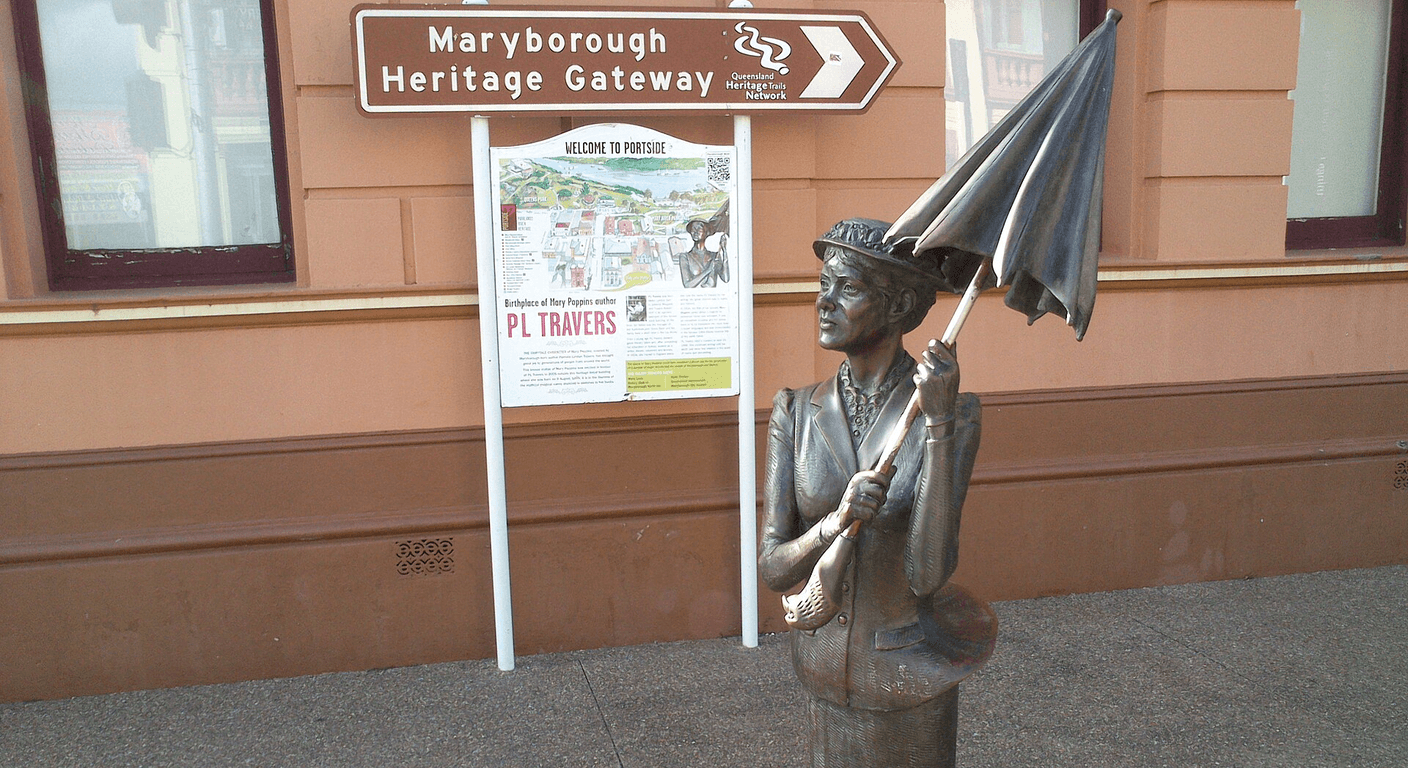
There's something pleasing about a town that doesn't overdo it. Maryborough knows it's the birthplace of P.L. Travers — and it celebrates that fact with warmth rather than theme-park excess. The Mary Poppins statue on the main street is genuinely lovely: a bronze Travers as a child, caught mid-step, umbrella in hand. The pedestrian crossing lights nearby are themed with the character's silhouette. It's a small civic gesture, but it stops you in your tracks.
Helen Lyndon Goff was born here in 1899, and the town has leaned into that connection with increasing confidence over recent decades. What makes Maryborough work as a cultural destination for travellers who've seen a fair bit of the world is that the literary story sits inside a broader heritage context — one that stands on its own merits even if you've never opened a Mary Poppins book.
The Story Bank: where the real P.L. Travers begins
The Story Bank museum occupies the building associated with P.L. Travers' birth and early Maryborough years. It traces the life of Helen Lyndon Goff — her Queensland childhood, her family's instability, her eventual reinvention as a London-based author and mystic — with more nuance than you might expect from a regional museum. The woman behind Mary Poppins was complicated, fiercely private and not particularly sentimental about her Australian origins. The museum doesn't shy away from that.
Entry fees apply; confirm current pricing directly with the museum before you visit, as these have changed over time. Opening hours also vary by season and day, so it's worth a quick check of the Story Bank website or a call ahead. Allow a comfortable ninety minutes inside — there's enough to read, watch and absorb that rushing would be a waste.
For travellers who saw the 2013 film 'Saving Mr. Banks' — which dramatised Travers' fraught negotiations with Walt Disney over the Mary Poppins adaptation — the museum adds genuine texture. You'll leave with a more interesting picture of her than the film alone provides.
The Portside heritage precinct: Queensland colonial architecture at its grandest
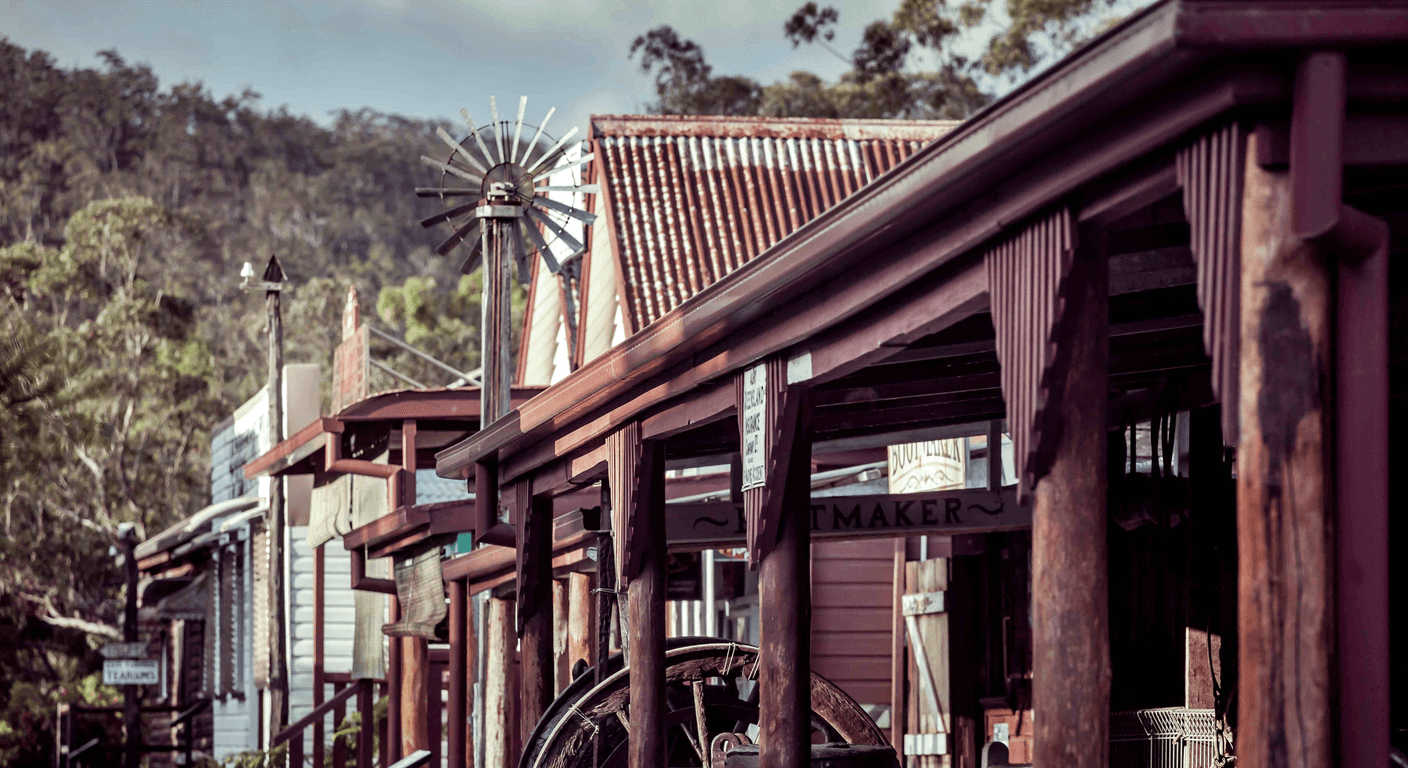
Walk down to the Mary River and you find yourself in one of Queensland's most intact nineteenth-century commercial streetscapes. The Portside precinct was built on the back of the region's timber, sugar and wool trades, and the bond stores and warehouses that lined the river reflect that prosperity in solid, handsome form. Wide verandahed facades, iron lacework, and the occasional fig tree breaking up the pavement — it's the kind of place that photographs well but rewards being in it even more.
The flat terrain is genuinely easy going. There are no significant gradients between the main street and the riverfront, and the footpaths are in reasonable condition. For a solo traveller who prefers to move at her own pace without negotiating hills or crowds, this is about as agreeable as Australian heritage precincts get. The scale is human — nothing is too far, nothing is overwhelming.
Several of the bond store buildings have been adapted for cafes, galleries and small retailers, which means the precinct has life without feeling like a heritage museum piece. Pick a cafe with a river outlook and take your time. The Mary River is tidal here, and watching the light change on the water over a long lunch is not a bad way to spend a Queensland afternoon.
Markets, costumed characters and the Wednesday rhythm
Maryborough's heritage market — held on the main street, typically on Wednesday mornings and some Saturdays — is one of the town's most photographed drawcards, partly because costumed historical characters wander among the stalls. Townspeople dressed as colonial-era figures, including a Mary Poppins character, appear in the market precinct and are happy to stop for a conversation or a photograph. It's done with good humour rather than forced jollity.
The market itself covers local produce, antiques, handmade goods and the usual regional market staples. It's not enormous, but it's authentic — and the setting on the heritage streetscape lifts it above the ordinary. Confirm current market days and character appearance schedules with Fraser Coast Tourism or the council website before building your itinerary around it, as programming can shift seasonally.
If you're timing your visit around market day, a Wednesday arrival makes sense — travel up the day before, settle in, and wake up to a slow market morning. That rhythm suits Maryborough well.
Self-guided heritage walks: how to read the town at your own pace
Fraser Coast Tourism and the local council have developed self-guided heritage walk maps that cover both the Portside precinct and the broader town centre. These are available at the visitor information centre and, in some versions, downloadable online. The walks are graded for easy terrain and designed to be completed in segments — so if you want to do the riverfront loop in the morning and the main street heritage trail after lunch, that works perfectly.
The town's heritage architecture extends well beyond the obvious set pieces. There are Federation-era homes, a handsome post office, churches of several denominations that speak to the town's nineteenth-century immigrant mix — Scottish, Irish, English, German — and public buildings that were clearly built by a community with confidence in its own future. A heritage walk here is less about ticking sites and more about reading the layers of a place.
Pick up the printed walk guide from the visitor centre on Wharf Street rather than relying solely on a phone — the signage is good but the printed map gives you context and building histories that aren't always on the plaques. And wear comfortable shoes with a sole that handles warm pavement.
Getting there: the Tilt Train and the case for leaving the car behind
Queensland Rail's Tilt Train runs from Brisbane Roma Street to Maryborough West — the station that serves the town — on a journey of roughly four hours. For a solo traveller, the train makes particular sense: no navigation, a comfortable seat, and the Queensland countryside rolling past the window. Indicative fares are around $50–$90 one way depending on class and booking time; confirm current pricing with Queensland Rail directly. Maryborough West station is a few kilometres from the town centre, so factor in a taxi or rideshare for the final leg, or arrange accommodation that can collect you.
If you're driving from Brisbane, the route via the Bruce Highway is around 250 kilometres and takes roughly three hours without stops — manageable in a single day but more pleasant broken up with a stop at Gympie or a look at the Sunshine Coast hinterland on the way. From Hervey Bay, it's a very easy forty-kilometre drive or a short bus connection. Many grey nomads arrive via Hervey Bay after Fraser Island, which makes Maryborough a natural cultural counterpoint to a nature-heavy itinerary.
The town itself is compact enough that a car isn't essential once you're there — the heritage precinct, the Story Bank, the main street and the riverfront are all within comfortable walking distance of each other. That's a real advantage for anyone who'd rather not think about parking.
Practical notes for a comfortable visit
Maryborough's subtropical climate means April through September is the preferred window for most visitors. October to March brings humidity and occasional heavy rain that can make outdoor heritage walking less pleasant, though it's not impossible. Morning starts are always a good idea in Queensland — the light is better for photography and the heat is manageable before noon.
Accommodation options include heritage-listed guesthouses and motels on the main street, which keep you within walking distance of everything. For a solo female traveller, a centrally located guesthouse with good natural light and a veranda is the kind of detail worth prioritising when booking — and Maryborough has a couple of options that fit that description. Confirm availability and accessibility features (step-free entry, ground-floor rooms) directly with properties.
Travel insurance is standard advice for any trip, but worth noting specifically: if you're managing a pre-existing condition, confirm that your policy covers it before you travel, even for a domestic Queensland trip. The nearest major hospital is in Hervey Bay. Mobile coverage in the town centre is generally reliable on major networks, but confirm with your provider if you're planning to rely on data-heavy navigation apps.
Quick planning guide
| Ideal pace | Slow-paced, self-guided walking |
|---|---|
| Best months | April to September (cooler, drier) |
| Suggested stay | A day, or overnight to catch the Wednesday market |
| Mobility level | Easy — flat terrain, no significant gradients |
| Cost level | Budget-friendly (modest museum entry, train fares roughly $50–$90 one way) |
| Comfort level | Comfortable in cooler months; humid and wet October–March |
| Best for | Solo travellers, heritage and literary enthusiasts |
| Main planning consideration | Confirm Story Bank opening hours/pricing and market or costumed-character schedule before finalising the itinerary |
Key takeaways
- Maryborough is the Queensland birthplace of Helen Lyndon Goff, who wrote the Mary Poppins books as P.L. Travers.
- The Story Bank museum occupies the building associated with Travers' birth and tells her life story with more complexity than most visitors expect.
- The Portside heritage precinct along the Mary River is flat, walkable and one of Queensland's most intact nineteenth-century commercial streetscapes.
- Queensland Rail's Tilt Train connects Brisbane Roma Street to Maryborough West in around four hours — a practical option for solo travellers.
- The Wednesday heritage market features costumed historical characters on the main street; confirm current schedule before visiting.
- April to September is the most comfortable window, with lower humidity and cooler mornings for heritage walks.
Recommended partners and links
Indicative prices only — always confirm with the operator before booking.
Frequently asked questions
Is Maryborough really the birthplace of Mary Poppins' author P.L. Travers?
Yes. Helen Lyndon Goff — who wrote the Mary Poppins books under the pen name P.L. Travers — was born in Maryborough, Queensland, in 1899. The Story Bank museum in town tells her life story and explores the connection between her Queensland childhood and the character she created.
How do you get to Maryborough by train from Brisbane?
Queensland Rail's Tilt Train runs from Brisbane Roma Street to Maryborough West station in around four hours. Indicative fares are roughly $50–$90 one way depending on class and booking time — confirm current pricing and timetables at queenslandrail.com.au. Maryborough West station is a short taxi or rideshare ride from the town centre.
What are the opening hours and entry fees for the Story Bank museum?
Opening hours and entry fees at the Story Bank museum vary by season and can change, so confirm current details directly with the museum at storybank.com.au or by phone before your visit. Allow at least ninety minutes to move through the exhibition comfortably.
When does the Maryborough heritage market run, and will the costumed characters be there?
The heritage market typically runs on Wednesday mornings and some Saturdays, with costumed historical characters appearing on the main street. Schedules can vary seasonally, so confirm current market days and character programming with Fraser Coast Tourism at visitfrasercoast.com before planning your visit around them.
Is Maryborough's Portside precinct suitable for travellers with mobility considerations?
Yes. The Portside heritage precinct and town centre are largely flat and paved, making them well-suited to travellers who prefer easy terrain. The self-guided heritage walks are designed in segments so you can cover as much or as little as suits you on the day. Confirm specific accessibility details with individual venues and accommodation providers.