Mission Beach, on Queensland's Cassowary Coast roughly halfway between Townsville and Cairns, is best visited in the dry season (June–September) when swimming is unrestricted and rainforest tracks are in top condition. A two- to three-night stay suits most itineraries, built around wild cassowary sightings and a short water taxi crossing to Dunk Island. The flat, fourteen-kilometre beach and sealed coastal path make walking easy for most fitness levels, though a hire car is needed since no direct coach service reaches the village.
What makes Mission Beach work for a group of women travelling together?
There is something quietly liberating about a place that has not been over-developed. Mission Beach — which covers four distinct villages, Bingil Bay, Mission Beach township, Wongaling Beach and South Mission Beach — has the kind of unhurried atmosphere that rewards slow travel. The villages are connected by road and linked by a flat coastal path that makes walking between them genuinely manageable, even on warm mornings. For a group of friends who want to spend a week reading on a beach, exploring a nearby island and spotting wildlife without fighting tour-bus crowds, it ticks most boxes.
The social geography suits a group well. Each village has its own character: Mission Beach township has the most cafes and a small cluster of shops; South Mission Beach is quieter and faces Dunk Island directly. Renting a house or a cluster of units across the four villages is a popular choice, which gives the group flexibility to self-cater some nights and eat out on others. The cost of accommodation here is noticeably lower than in Cairns or Port Douglas, which matters when you are splitting costs across a week or more.
The community is small and unhurried, and locals tend to be genuinely helpful. There is no nightlife to speak of, which is not a complaint — it simply means the evenings belong to long dinners, early nights and the sound of the Coral Sea. For women travelling together in their sixties, that is often exactly the point.
How does Mission Beach sit on the Townsville-to-Cairns road trip route?
Mission Beach sits roughly 140 kilometres south of Cairns and about 240 kilometres north of Townsville, making it a natural stopping point for anyone driving the Bruce Highway corridor. The turn-off from the highway is well signposted, and the drive into the village takes you through cane fields and then rainforest before the coast appears. It is the kind of arrival that feels earned.
For a group sharing a hire car, Mission Beach works well as a two- to three-night base mid-trip, though many people who arrive for two nights find themselves extending. The road itself is straightforward and flat, which suits drivers who prefer not to tackle mountain passes or winding coastal roads. If you are flying into Cairns and driving south, or flying into Townsville and driving north, Mission Beach is roughly equidistant from both airports — worth factoring into which way you route the trip.
There is no direct coach service that drops into the village itself on major routes, so having a hire car or arranging a shuttle is practical. Some accommodation providers can advise on local transfers. Confirm transport options before you travel, as services in smaller coastal communities can change seasonally.
What is the walk along the beach actually like?
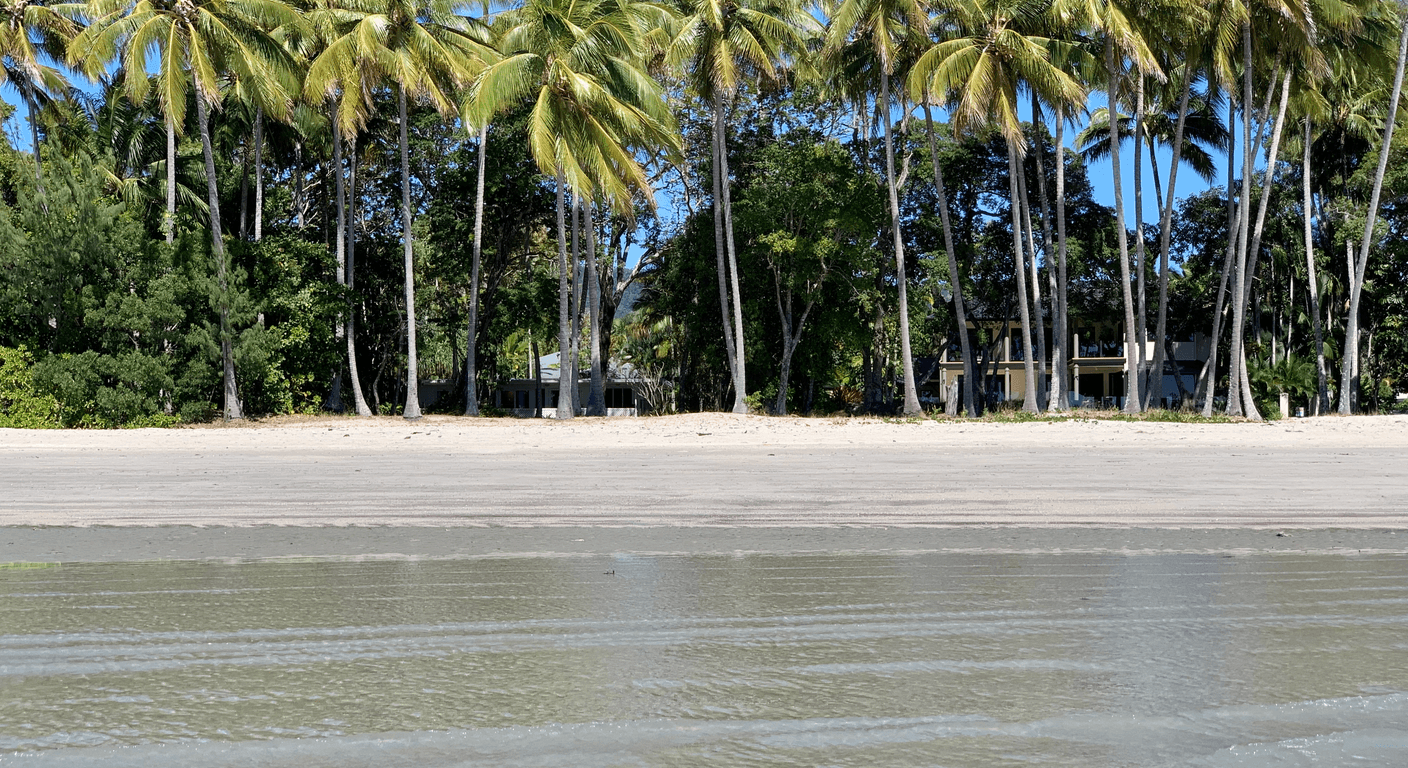
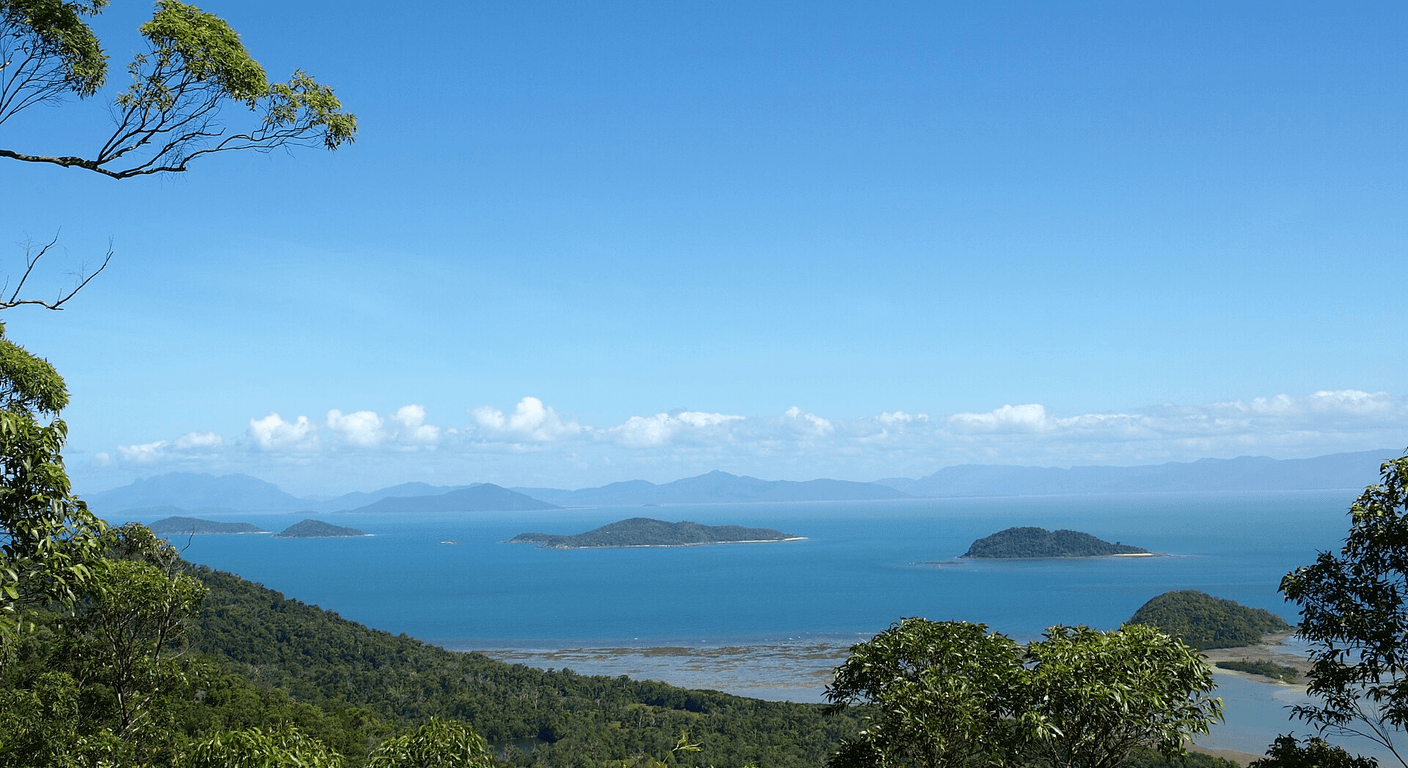
The beach itself is the main attraction for unhurried walking. The sand is wide, pale and largely flat, and at low tide there is a firm strip close to the water that is comfortable to walk on without sinking. From South Mission Beach, looking north along the arc of sand with Dunk Island sitting a few kilometres offshore and palm trees framing the view behind you, it is one of those settings that does not need any hyperbole to describe.
The fourteen-kilometre length of the combined beach means you can walk as little or as much as suits the group on a given day. A leisurely hour-long walk from the township to the southern end and back is well within reach for most people with no significant mobility concerns. The path between villages is sealed in sections and flat, though some stretches revert to grass or sand — sensible footwear rather than thongs is worth the small effort. There are public toilets and shaded rest spots at intervals.
For anyone with limited mobility or a preference for shorter flat distances, the beach at South Mission Beach is particularly easy to access from the road, with parking close to the sand. The Clump Mountain National Park walking tracks at the northern end of the beach area are rainforest paths and involve some uneven ground — enjoyable for those who want a change of scenery, but worth checking current track conditions with Queensland Parks before setting out.
How do you get to Dunk Island, and what is there to do?
Dunk Island is visible from the beach at South Mission Beach — close enough that it feels almost within reach, and the water taxi crossing takes around fifteen minutes. The Quick Cat water taxi service operates from the Mission Beach area and runs day-tripper services to the island. Fares are indicative at around $50–$60 return per person, but you should confirm current pricing directly with the operator before planning your day, as fares adjust with fuel costs and season.
Dunk Island has been through a long period of post-cyclone recovery and redevelopment, and the experience on the island is currently more about natural beauty than resort amenity. There are walking tracks through the national park section of the island, a beach for swimming (stinger conditions permitting — see below), and the kind of quiet that is hard to find on more developed islands. Take water, sunscreen and food for the day, as facilities on the island are limited and you should not rely on buying supplies there.
The water taxi boarding point involves a short walk onto a jetty or beach embarkation, and the vessel is a small motorised craft. For anyone with balance concerns or limited mobility, it is worth contacting the operator in advance to understand the boarding process. The crossing can be choppy if there is any wind, so those who are prone to motion sickness may want to take precautions. On a calm day, though, the crossing is straightforward and the island arrival is genuinely lovely.
What do you need to know about stinger season and swimming?
Swimming in tropical Queensland waters requires some awareness of marine stingers, principally box jellyfish and Irukandji, which are present in coastal waters from roughly October through to May — though the peak risk period is generally November to April. During stinger season, the beaches at Mission Beach have stinger enclosures: netted areas of water that are maintained for safer swimming. These are not a complete guarantee, but they significantly reduce risk and are the recommended option for beach swimming during the warmer months.
Outside stinger season — broadly June through September — the water is clear, calm and swimmable along the open beach, and Mission Beach in the dry season is genuinely one of the more pleasant swimming beaches in North Queensland. Water temperatures are warm year-round. If your group is planning the trip around swimming as a priority activity, the dry season months give you the most flexibility and the least concern.
Snorkelling directly off Mission Beach is limited by water visibility, which can be affected by runoff after rain. The reef is not immediately accessible from shore here — Dunk Island and further offshore locations are better for snorkelling, and day-trip operators from Cairns cover the Great Barrier Reef if that is on the group's list. Confirm current stinger conditions and enclosure availability with local operators or Queensland Health's Surf Life Saving Queensland resources when you arrive.
What should you know about cassowaries — and how do you behave around them?
The southern cassowary is a large, prehistoric-looking bird — up to 1.8 metres tall, with a vivid blue and red neck, a casque on its head, and the kind of presence that makes you stop walking and reassess your priorities. Mission Beach and the surrounding Cassowary Coast rainforest is one of the most reliable places in Australia to see one in the wild, and sightings on the roads between villages and at the edges of the beach are not unusual, particularly in the early morning.
The important thing to understand is that cassowaries are wild animals and should be treated with respect and distance. They have powerful legs and can cause serious injury if they feel threatened. The Queensland Parks and Wildlife Service guidance is clear: do not approach, do not feed, do not attempt to photograph from close range, and if a cassowary approaches you, back away slowly and put a tree or solid object between you if possible. They are not aggressive without reason, but they are not domesticated and they should never be hand-fed — it habituates them to humans and ultimately harms the birds.
Driving in the Mission Beach area requires genuine care at dawn and dusk when cassowaries are most active near roads. The local speed limits in cassowary zones are low for good reason. The Cassowary Coast Regional Council and Queensland Parks both have current information on cassowary safety, and the community takes the protection of these birds seriously — there are only a few hundred left in the wild. Spotting one from a respectful distance is genuinely one of the more memorable experiences a trip to this region offers.
When should you visit — and what does the wet season actually mean?
The dry season, from June through September, is the most straightforward time to visit Mission Beach. Days are warm and sunny, humidity is lower, stinger risk is at its least, and the rainforest tracks are in their best condition. Accommodation tends to book further ahead in these months, particularly July and August, so planning a few months out is sensible for a group needing multiple rooms or a house.
The wet season runs roughly from December through March, and in Mission Beach it means proper tropical rainfall — not a light shower but sustained, heavy downpours that can last for hours and sometimes for days. Cyclone risk is real in this region during the wet season, and it is worth understanding what that means practically: road closures, cancelled water taxi services, and the need to monitor the Bureau of Meteorology closely. Travel insurance that covers disruption is not optional in this season — it is essential.
The shoulder months of October, November and April offer a middle ground: warmer and more humid than the dry season, with some rainfall, but generally manageable. October and November bring the stinger season back into play. April can be a genuinely pleasant time if you are comfortable with occasional rain and want quieter roads and lower accommodation prices. The group's priorities — swimming freedom, walking comfort, or budget — will determine which season fits best.
Quick planning guide
| Ideal pace | Slow-paced, unhurried |
|---|---|
| Best months | June to September (dry season) |
| Suggested stay | 2–3 nights, often extended to a week |
| Mobility level | Easy – flat sand and sealed paths; some uneven rainforest tracks optional |
| Cost level | Budget-friendly compared to Cairns or Port Douglas |
| Comfort level | Relaxed, quiet, minimal nightlife |
| Best for | Groups of friends or seniors wanting beach walks, wildlife and an uncrowded pace |
| Main planning consideration | Hire car needed for access; check stinger season and wet-season cyclone risk before travelling |
Key takeaways
- Mission Beach covers four villages across fourteen kilometres of flat, palm-backed sand — manageable on foot and genuinely uncrowded.
- Dunk Island is a short water taxi ride from South Mission Beach; confirm current fares and facilities with the operator before you go.
- Stinger enclosures make beach swimming safer from October to May, but the open beach is freely swimmable during the dry season (June to September).
- Wild cassowaries cross roads and appear at beach edges — observe from a distance, never feed them, and drive slowly in marked cassowary zones.
- Mission Beach sits roughly halfway between Townsville and Cairns airports, making it a natural two- to three-night stop on a Bruce Highway road trip.
- The wet season (December to March) brings heavy tropical rain and cyclone risk — travel insurance covering disruption is essential if you visit then.
Recommended partners and links
Indicative prices only — always confirm with the operator before booking.
Frequently asked questions
Is Mission Beach suitable for older travellers with limited mobility?
The beachfront at Mission Beach is largely flat, and the sand near the water at low tide provides a firm walking surface. Parking is close to the beach at South Mission Beach. The rainforest tracks at Clump Mountain National Park involve uneven ground and are less suitable for those with significant mobility concerns. The water taxi to Dunk Island requires boarding a small vessel, so anyone with balance issues should contact the operator in advance to discuss the process.
How far is Mission Beach from Cairns and Townsville?
Mission Beach is roughly 140 kilometres south of Cairns and approximately 240 kilometres north of Townsville, both by road via the Bruce Highway. Driving times are roughly 1.5 to 2 hours from Cairns and around 2.5 to 3 hours from Townsville, depending on traffic and stops. There is no direct major coach service into the village, so a hire car or pre-arranged transfer is the most practical option.
What is the water taxi to Dunk Island like, and how much does it cost?
The water taxi from Mission Beach to Dunk Island takes around fifteen minutes on a calm day. The crossing can be choppy in windy conditions. Fares are indicative at around $50–$60 return per person as of recent reports, but prices change with fuel costs and season — confirm current fares directly with Mission Beach Water Taxis (missionbeachwateraxis.com.au) before you travel. Facilities on Dunk Island are limited, so take food, water and sunscreen for the day.
Are cassowary sightings actually common at Mission Beach?
Cassowary sightings in the Mission Beach area are more reliable than almost anywhere else in Australia. The birds are most often seen near the edges of the rainforest, crossing roads between villages, and occasionally at the back of the beach at dawn. Sightings are not guaranteed, but visitors who spend two or more days in the area and move around at dawn and dusk have a reasonable chance of an encounter. Always observe from a safe distance and never approach or feed them.
What is the best time of year to visit Mission Beach?
June through September is the most straightforward time to visit: lower humidity, no stinger risk in open water, and minimal rain. July and August are the busiest months and accommodation books up earlier. The wet season from December to March brings heavy tropical downpours, potential cyclones, and stinger season — travel insurance is essential. April and October to November are shoulder months with warmer temperatures and some rain, and stingers return from October onward.