The Moggill Ferry, a free cable-guided crossing of the Brisbane River between Moggill and Wacol, is best visited April to September when conditions are mild and dry. The five-minute crossing suits a half-day outing, ideally combined with a drive through Brookfield's semi-rural lanes. Access is easy underfoot, though the boarding ramp's modest incline warrants care; reaching it requires a car, as it sits roughly 35 minutes west of Brisbane's CBD with limited public transport.
What exactly is the Moggill Ferry?
The Moggill Ferry is a small, flat-decked vehicle and passenger ferry that crosses the Brisbane River between Moggill on the western bank and Wacol on the eastern side. What makes it unusual — and worth the drive — is that it is cable-guided: a wire strung across the river keeps the vessel on course as the current does much of the work. It is one of the last operational cable ferries in Queensland, and possibly in Australia.
The crossing itself takes roughly five minutes. There's no ticket booth, no EFTPOS reader, no queue for a turnstile. You simply drive on, or walk on, and cross. For anyone who has spent decades navigating toll roads and timed parking meters, there is something genuinely pleasant about that simplicity.
The ferry is operated under Brisbane City Council's jurisdiction. It carries a small number of vehicles per crossing — typically around three to four cars — which means that during busy periods, particularly on weekends, a short wait on the bank is entirely normal. That wait, it turns out, is part of the experience: you sit by the river, watch the ferry make its return run, and remember that not everything needs to be instant.
Getting there from Brisbane — and from interstate
From Brisbane's CBD, the Moggill Ferry landing is around 25 to 30 kilometres west via Moggill Road — roughly a 35-minute drive in light traffic. For travellers arriving from Melbourne, Sydney or Adelaide, Brisbane is well-served by direct flights, typically two to three hours depending on origin city. Brisbane Airport connects to the CBD via the Airtrain, and car hire is straightforward at the terminal — a car is the most practical way to reach Moggill, given that public transport to the ferry landing is limited.
Travellers who prefer not to drive should check current Translink routes at translink.com.au, as bus services do operate into the western suburbs, though the walk from any stop to the ferry ramp may not suit everyone. Confirm the current route situation before setting out, as services in outer suburban areas can change.
For interstate visitors staying in Brisbane for a few days — which is the sensible approach for anyone flying from Victoria or South Australia — the Moggill Ferry works well as a half-day outing on its own, or as the anchor of a longer western suburbs drive. Brisbane's accommodation options range from inner-city apartments to quieter riverside stays in Indooroopilly or Fig Tree Pocket, both closer to Moggill than the CBD.
What is the crossing actually like?
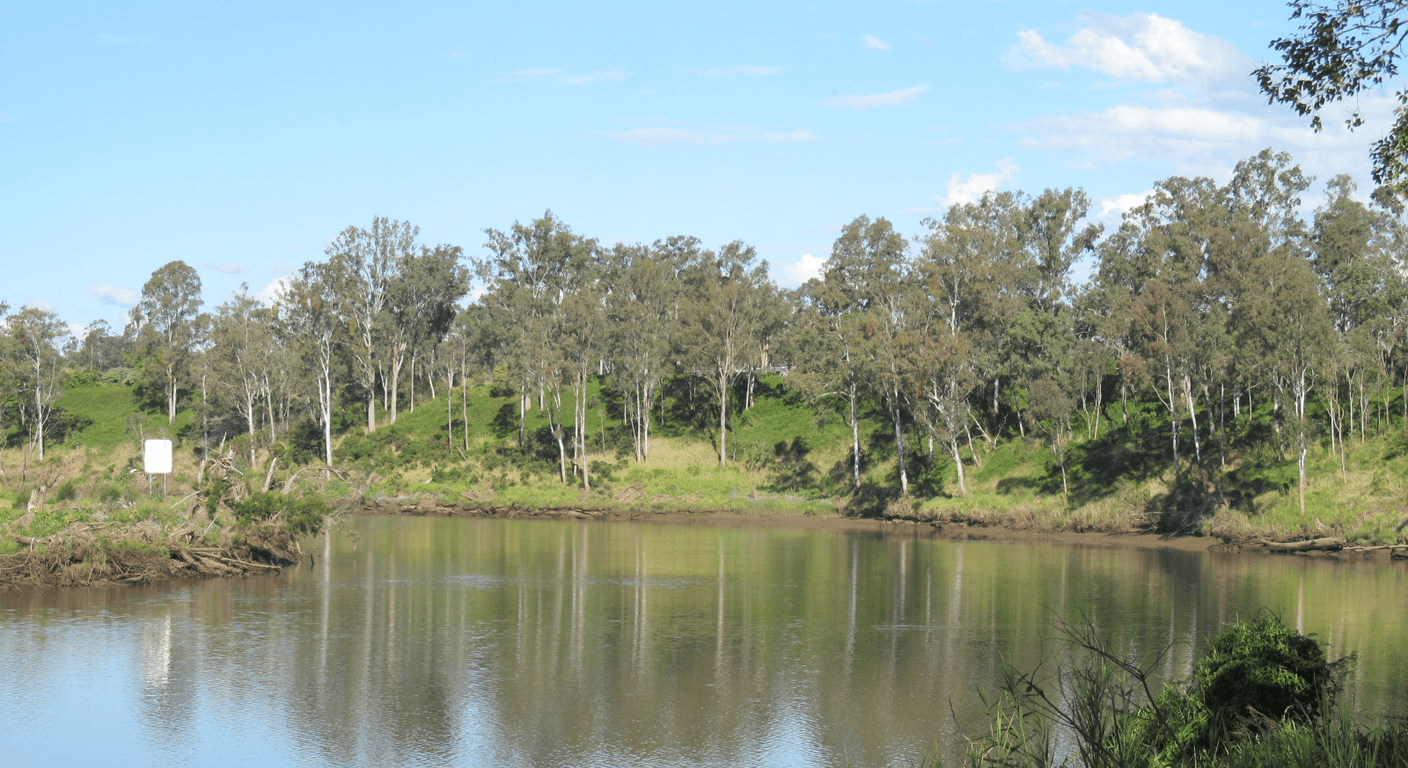
The ferry ramp at Moggill sits at the end of Moggill Ferry Road, a short descent through riverside vegetation. There's no grand infrastructure here — a modest landing, the river, and the ferry itself, which is workmanlike rather than picturesque. That honesty is part of its character.
Once aboard, the Brisbane River stretches in both directions — wider and more muscular than it can appear from the city's bridges. The cable above keeps the ferry tracking true as it crosses. It takes only minutes, but those minutes have a quality of stillness that's hard to manufacture. Fellow passengers, if there are any, tend to be locals heading to work or school, the odd cyclist, and occasionally a grey nomad who has done a little reading.
Disembarking on the Wacol side, you can simply turn around and ride back — which is entirely reasonable, and what many day visitors do. Or you can explore the Wacol area briefly before returning. Either way, the return crossing is included in the same nothing-at-all ticket price.
Picnic spots and riverside parks near Moggill
The Moggill area has a handful of pleasant spots suited to a quiet picnic before or after the crossing. Moggill Conservation Park, managed by Queensland Parks and Wildlife Service, offers bushland walking tracks and picnic facilities — the terrain is generally flat near the park entrance, making it accessible for those who prefer level ground. Confirm current facilities and any track closures at parks.des.qld.gov.au before visiting.
The riverbank near the ferry landing itself is informal rather than manicured, but there's shade and the sound of water, which is sometimes enough. Packing a simple lunch from one of the providores or bakeries in nearby Kenmore — a 10-minute drive back toward the city — is a practical and rewarding approach. Kenmore has a small shopping centre with a good range of food options.
For those who enjoy a longer sit with something warm, the Brookfield General Store (worth confirming current hours before the trip) has long been a local institution. It's the kind of place that feels like it has been there since before anyone thought to photograph it for social media — which, in the best possible way, it has.
Pairing the ferry with a drive through Brookfield
Brookfield sits a short drive north of Moggill, and the two make natural companions for a half-day outing. The Brookfield area is semi-rural by Brisbane standards — acreage properties, horse paddocks, remnant bushland, and a pace that feels genuinely removed from the city despite being within 30 kilometres of it. It's the kind of suburb that rewards slow driving.
Brookfield Road and its side streets offer a pleasant loop that can be covered in 20 to 30 minutes without any real planning. The Brookfield Showground hosts markets on selected Sundays — check current dates at local community pages or the Brisbane City Council events calendar, as schedules vary by season. If the market coincides with your visit, it's a worthwhile addition: local produce, plants, and the low-key sociability of a genuine neighbourhood event.
The drive back toward Brisbane via Fig Tree Pocket or along Moggill Road passes through more of Brisbane's leafy western corridor — large Moreton Bay figs, glimpses of the river, and the kind of suburban greenery that can catch you off guard after years of imagining Queensland as purely coastal. It's a reminder that this city has a very different face once you head inland and west.
Practical considerations for the day
The ferry's operating hours are set by Brisbane City Council and can be subject to change — temporary closures for maintenance, flooding, or other operational reasons do occur. Always confirm current hours and any closures directly via brisbane.qld.gov.au or by calling the council's contact line before making the drive. There is little more deflating than arriving at a river crossing to find the ferry is out of service for the week.
Vehicle capacity is limited, and while waits are usually short, they can stretch to two or three crossings on busy weekend mornings. If you're visiting in peak holiday periods, earlier in the morning tends to mean shorter queues. The boarding ramp has a modest incline — manageable for most travellers, but worth noting for anyone with significant mobility considerations. Walking passengers board with ease.
Sun protection is sensible year-round in Queensland, and the riverside offers little shade during midday in summer. The cooler months — April through September — are the most comfortable for this kind of outdoor, unhurried outing. Temperatures in Brisbane during those months are typically mild and dry, often ideal for a day spent largely outside.
Why this particular crossing matters
Cable ferries were once common across Queensland and New South Wales, linking communities that lacked bridges and providing passage across rivers that flooded too unpredictably for fixed infrastructure. Most were replaced by bridges as the twentieth century progressed. The Moggill Ferry has outlasted them — partly because the river at this point remains relatively narrow, partly because the surrounding community has retained enough of its rural character to make a bridge feel like overkill.
For travellers who are drawn to the way places used to work — the texture of older transport, the unhurried logic of a river crossing — the Moggill Ferry offers something that's genuinely rare. It is not a heritage attraction or a tourist reconstruction. It simply continues to operate, quietly, as it has for well over a century.
That continuity is its own kind of appeal. There's a particular pleasure in using something old and functional, something that connects you to the people who stood on the same ramp, watched the same river, and waited for the same ferry. No interpretive panel required.
Quick planning guide
| Ideal pace | Slow-paced and unhurried |
|---|---|
| Best months | April to September |
| Suggested stay | Half-day outing |
| Mobility level | Easy underfoot, with a modest boarding ramp incline |
| Cost level | Free |
| Comfort level | Casual and informal |
| Best for | Travellers who enjoy quiet history, slow drives and free experiences |
| Main planning consideration | Confirm current ferry operating hours and closures with Brisbane City Council before setting out |
Key takeaways
- The Moggill Ferry is free for all passengers and vehicles, making it one of the most accessible day trip experiences in greater Brisbane.
- The cable-guided crossing takes around five minutes — one of the last operating cable ferries in Queensland.
- Vehicle capacity is limited to a few cars per crossing, so short waits are normal, particularly on weekends.
- Always confirm current operating hours with Brisbane City Council before visiting, as temporary closures do occur.
- The ferry pairs well with a picnic in Moggill Conservation Park and a slow drive through Brookfield's semi-rural outskirts.
- April to September offers the most comfortable conditions for this outdoor, riverside day trip.
Recommended partners and links
Indicative prices only — always confirm with the operator before booking.
Frequently asked questions
Is the Moggill Ferry really free?
Yes — the Moggill Ferry is free for both passengers and vehicles. There is no fare, no booking, and no ticket required. It is operated by Brisbane City Council as a public transport service.
How long does the Moggill Ferry crossing take?
The crossing takes approximately five minutes from bank to bank. The ferry is cable-guided, meaning it tracks across the river rather than navigating freely, which keeps the journey short and predictable.
What are the Moggill Ferry operating hours?
Operating hours are set by Brisbane City Council and can vary or be suspended for maintenance and flooding. Always confirm current hours directly at brisbane.qld.gov.au before making the drive, as hours are not fixed year-round.
Can I visit the Moggill Ferry without a car?
Yes — walking passengers and cyclists can board the ferry. However, getting to the Moggill ferry landing by public transport is not straightforward, as services to the area are limited. Check current Translink routes at translink.com.au and confirm stop proximity to the ramp before planning a car-free visit.
Is the Moggill Ferry accessible for travellers with limited mobility?
The boarding ramp has a modest incline but is generally manageable for most travellers. The riverside area near the landing is informal rather than purpose-built for accessibility. Moggill Conservation Park has flat ground near its entrance. Anyone with significant mobility requirements should assess the ramp in person or contact Brisbane City Council for current accessibility detail.