The National Library's Treasures Gallery and the High Court's Public Hall sit ten minutes apart on a flat, lift-accessible lakeside path in Canberra, and both are free with no booking required. March to May and September to November offer the most comfortable walking conditions. Allow half a day for both, plus time to check whether the High Court is sitting. Access is straightforward: a short flight from Melbourne to Canberra Airport, or a coach connection via Sydney, makes this an easy overnight or two-night addition to a Canberra trip.
Why These Two Buildings Deserve Their Own Morning
Ask most visitors to name Canberra's free cultural highlights and you'll hear the same three: the War Memorial, the National Gallery, the Portrait Gallery. Fair enough — they're extraordinary. But the National Library of Australia and the High Court of Australia sit within easy walking distance of that familiar loop, and they're quieter, slower, and in their own ways just as compelling. For a group of friends who'd rather linger than rush, that's not a small thing.
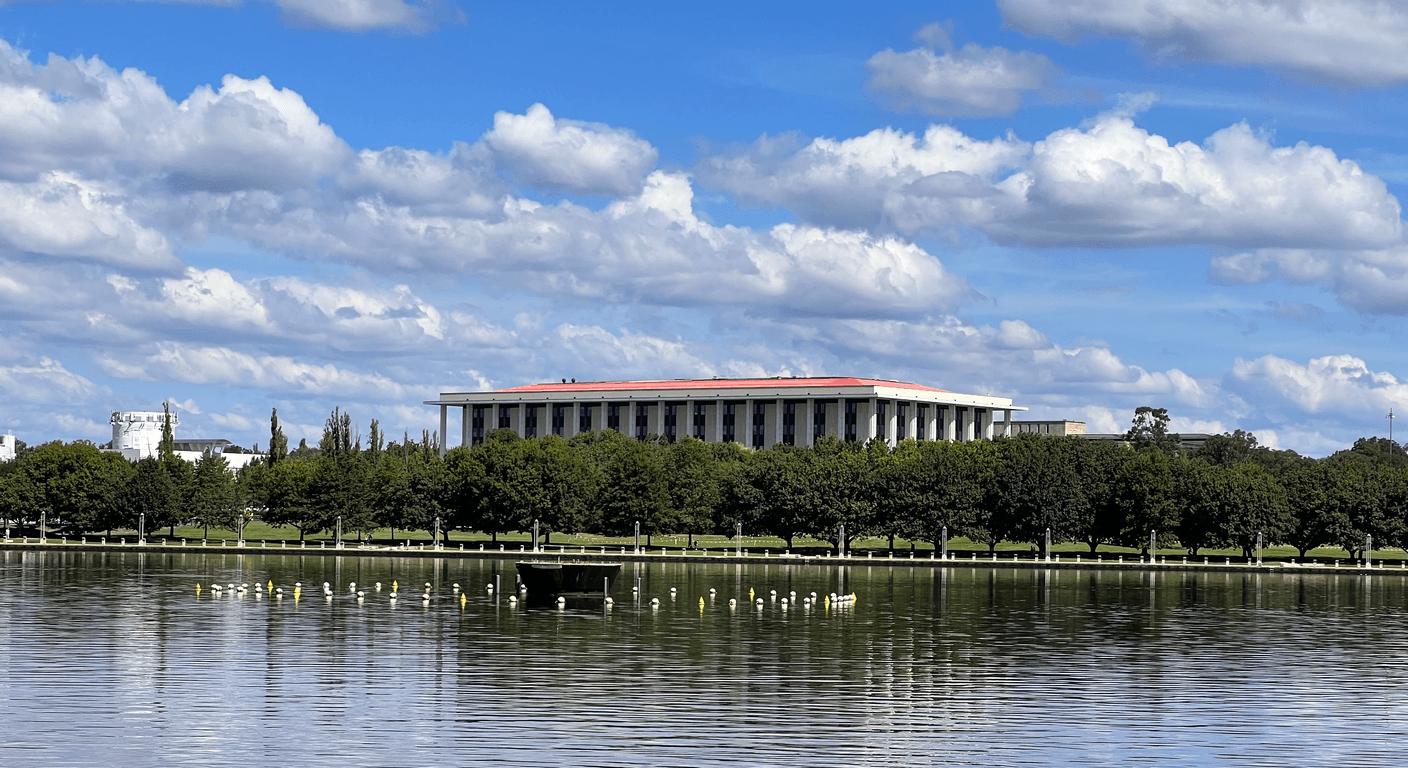
Both buildings face Lake Burley Griffin. The walk between them along the foreshore path is flat, shaded in parts, and takes about ten minutes at an easy pace. On a clear autumn morning the light on the water is quietly lovely. Neither building requires a booking for general entry. Neither charges admission. You can turn up, take your time, and leave when you're ready — which, after years of over-scheduled tourism, is its own kind of luxury.
The National Library's Treasures Gallery: Australia's Memory in One Room
The National Library building itself is worth a moment's pause before you walk in — its colonnaded facade and lakeside position give it the composed authority of a building that knows what it holds. Inside, the Treasures Gallery is a permanent, free display of some of the most significant documents, maps, manuscripts and objects in Australian custody. Captain Cook's Endeavour journal. Early colonial letters. Rare maps that show how Europeans imagined this continent before they understood it. The collection is rotated and conserved carefully, so what's on display shifts over time.
What makes the Treasures Gallery work for travellers who've done a lot of museums is its scale. It's not overwhelming. You can move through it in forty minutes or spend twice that reading the interpretive panels, which are written for adults rather than school groups. Display cases are well-lit and at a comfortable viewing height. Seating is available throughout the gallery space.
The Library also runs a rolling program of temporary exhibitions — some free, some ticketed — drawn from its vast collection. Check the website before you visit. The ground-floor café is a sensible spot for a coffee before or after the gallery, and the gift shop carries a good range of Australian books and prints. Lifts connect all levels of the building.
The High Court's Public Hall: Architecture as Civic Argument
A ten-minute walk east along the lake brings you to a building that looks, from the outside, like a bold statement from the 1980s — which it is. The High Court of Australia opened in 1980 and its design by Edwards Madigan Torzillo and Briggs is deliberately monumental. Step inside the Public Hall and the scale stops you. The central atrium soars. Natural light falls through vast glazed walls. Three tapestries by Australian artist Alan Sumner hang from the upper levels, each one depicting a legal concept through abstracted imagery. It's one of the more underrated interior spaces in the country.
Entry to the Public Hall is free, and the building is open to the public on weekdays. Informational displays explain the structure of Australia's judicial system and the history of the court's major decisions — the kind of constitutional history that shaped land rights, civil liberties and the relationship between federal and state power. For anyone who lived through the Whitlam era or followed the Mabo decision, standing in this building carries a particular weight.
Lifts serve all levels. The ground floor is fully accessible. Staff at the reception desk are helpful if you have questions about what's on display or how the building functions.
Can You Watch the High Court in Session?
This is the question worth asking before you go. The High Court sits in Canberra for specific periods during the legal year, and when it does, members of the public can sometimes observe proceedings from the public gallery — free of charge. Watching a constitutional matter argued before seven justices in full ceremonial regalia is an experience that's genuinely rare and genuinely free. But the sitting calendar is not continuous, and not every sitting day has available public gallery access.
The practical advice is simple: check the High Court's official website (hcourt.gov.au) well before your visit and confirm whether the court will be sitting during your dates. If it is, arrive early and follow the court's guidelines for public observers. Dress modestly and plan for security screening at the entrance — similar to what you'd expect at any court building.
Getting There: From Regional Victoria and Beyond
For travellers based in regional Victoria, the most practical route to Canberra depends on where you're coming from. From Melbourne, Rex Airlines and Qantas operate regular flights to Canberra Airport — flying time is under an hour, and the airport is about fifteen minutes from the lake precinct by taxi or rideshare. Confirm current flight options and fares directly with airlines.
Murrays Australia runs coach services between Sydney and Canberra, with indicative fares from around $40–$60 each way — confirm current pricing and timetables at murrays.com.au. From Melbourne, a coach option exists but the journey is long; most travellers from regional Victoria find a drive or a connecting flight more comfortable. Once in Canberra, Transport Canberra buses serve the lake precinct from the city centre and from Civic. The flat terrain around Lake Burley Griffin makes it manageable without a car if you're staying nearby.
Accommodation in the central Canberra precinct ranges from boutique hotels to serviced apartments. Staying within walking distance of the lake means you can reach both the Library and the High Court on foot from your room, which removes any transport complexity from the day entirely.
Putting Together the Day: A Sensible Order
Start at the National Library when it opens — typically 10am on weekdays, though confirm current hours on the website. The Treasures Gallery is quietest in the first hour. Allow ninety minutes to two hours, including the café stop. Then walk the foreshore path east toward the High Court, taking in the lake views along the way. Arrive at the High Court late morning and allow an hour for the Public Hall and its displays.
Lunch options cluster around the nearby Parkes precinct and the Kingston Foreshore, a short taxi or rideshare ride away. The Kingston Foreshore has a range of cafés and restaurants with outdoor seating that works well in the cooler months. If you're planning to observe a court sitting, check the morning's schedule at the reception desk when you arrive — sittings typically begin at 10.15am and break for lunch.
The afternoon is yours. The National Portrait Gallery and the National Gallery of Australia are both within easy reach of the lake precinct and both free to enter. But honestly, after a morning at the Library and the High Court, sitting by the lake with a decent coffee and watching the black swans go about their business is a perfectly reasonable way to spend an hour.
Accessibility, Comfort and Practical Matters
Both buildings are fully lift-accessible and climate-controlled, which matters in Canberra where summer temperatures can exceed 35°C and winter mornings can be sharp. The lakeside path between the two is paved and flat, though in winter the morning air can be cold enough to warrant a jacket. March to May and September to November offer the most comfortable conditions for walking between sites.
Neither venue requires advance booking for general admission. Photography is generally permitted in the Treasures Gallery without flash; check signage as you enter, as restrictions may apply to specific items. The High Court's Public Hall permits photography in common areas. Bags go through security screening at the High Court entrance — allow a few extra minutes for this.
Travel insurance is worth reviewing before any trip, particularly for travellers managing pre-existing health conditions. The Australian Government's Smartraveller service (smartraveller.gov.au) is a useful reference for general travel planning, even for domestic travel.
Quick planning guide
| Ideal pace | Slow and unhurried — a quiet morning rather than a rushed itinerary |
|---|---|
| Best months | March to May and September to November for comfortable lakeside walking |
| Suggested stay | Half a day for both sites; works well as part of an overnight or two-night Canberra visit |
| Mobility level | Easy — flat, paved foreshore path and fully lift-accessible buildings |
| Cost level | Free general entry to both venues |
| Comfort level | Comfortable and climate-controlled, with seating available in the Treasures Gallery |
| Best for | Travellers who prefer a quieter, slower cultural morning over Canberra's busier big-three attractions |
| Main planning consideration | Confirm the High Court's sitting calendar at hcourt.gov.au and the Library's current opening hours before you go |
Key takeaways
- The National Library's Treasures Gallery and the High Court's Public Hall are both free and fully lift-accessible, sitting ten minutes apart on a flat lakeside path.
- The Treasures Gallery holds some of the most significant documents in Australian history, including Cook's Endeavour journal — displayed in a gallery scaled for adults, not crowds.
- The High Court's soaring Public Hall is one of the most underrated interior spaces in Australia, with major tapestries and displays on constitutional history.
- Public court sittings at the High Court in Canberra can sometimes be observed free — but confirm the sitting calendar at hcourt.gov.au before you plan your visit.
- March to May and September to November are the most comfortable months for the lakeside walk between buildings.
- For travellers from regional Victoria, a short flight into Canberra Airport or a coach connection via Sydney makes this a very manageable overnight or two-night trip.
Recommended partners and links
Indicative prices only — always confirm with the operator before booking.
Frequently asked questions
Is the National Library of Australia free to enter?
Yes. General admission to the National Library of Australia, including the permanent Treasures Gallery, is free. Some temporary or ticketed exhibitions may have an entry fee — check the current program at nla.gov.au before visiting.
Can members of the public watch a High Court hearing?
Yes, when the High Court is sitting in Canberra, members of the public can generally observe proceedings from the public gallery free of charge. The court does not sit continuously, so confirm current sitting dates and public access arrangements at hcourt.gov.au before you travel.
Is the walk between the National Library and the High Court manageable for older travellers?
Yes. The foreshore path between the two buildings is flat, paved and takes around ten minutes at a comfortable pace. Both buildings have lifts serving all levels and are fully accessible for people with limited mobility.
What are the best months to visit Canberra for this kind of cultural day?
March to May (autumn) and September to November (spring) offer the most pleasant conditions — mild temperatures, good light and fewer school holiday crowds. Canberra summers can be very hot and winters cold, though both buildings are climate-controlled inside.
How do you get from regional Victoria to Canberra without a long drive?
The most practical options are a connecting flight through Melbourne Airport to Canberra Airport — flying time under an hour — or a coach service from Sydney if you're travelling with a group. Confirm current routes, fares and timetables with airlines and Murrays Australia (murrays.com.au) directly, as services change.