Kathmandu and Pokhara let older travellers experience Nepal's culture and Himalayan views without trekking. Mornings bring the clearest mountain views, and several unhurried days in each city suit the pace, with a short flight to Pokhara preferable to the six-to-seven-hour road trip. Highlights include Bhaktapur's restored medieval squares and lakeside views of the Annapurna range. Mobility is moderate: uneven stone paving suits steady walkers but challenges those using a frame or wheelchair.
Why Nepal makes sense for travellers who are done with roughing it
There is a version of Nepal that has nothing to do with base camps, altitude sickness, or twelve-day walks through remote valleys. That version centres on Kathmandu Valley, a UNESCO World Heritage landscape containing seven distinct monument zones — ancient temples, royal squares, and living religious traditions that have been accumulating for over a thousand years. For a traveller who wants cultural depth without physical ordeal, this is an extraordinarily rewarding destination.
Pokhara, a few hours west by road or a short domestic flight, offers a different kind of ease: a lakeside town where the Annapurna range appears to rise directly behind the buildings on a clear morning. You can sit at a café table and watch those peaks change colour over breakfast. No permits, no altitude, no gear required.
The honest reality is that Nepal is not a seamless, air-conditioned destination. There is dust, traffic, uneven stone paving, and occasional power interruptions. But for a traveller who has navigated the medinas of Morocco or the back lanes of Rome, the sensory intensity of Kathmandu is manageable — and for many, deeply engaging. The key is pacing yourself, choosing accommodation thoughtfully, and not trying to cover everything in one go.
What is the altitude situation for non-trekkers?
This is the question that stops many older travellers from considering Nepal at all, and it deserves a direct answer. Kathmandu sits at roughly 1,400 metres above sea level. Pokhara is even lower, at around 800 metres. These are not altitudes that cause altitude sickness in otherwise healthy travellers — they are comparable to parts of the Victorian High Country or the Swiss Plateau. The dramatic, oxygen-thin elevations that require acclimatisation schedules begin at 3,000 metres and above, which is trekking territory, not city territory.
If you have significant cardiac or respiratory conditions, you should discuss any travel to Nepal with your GP before booking. But for the majority of healthy travellers in the 60-to-75 age range, the altitudes of Kathmandu and Pokhara present no greater challenge than many European destinations. This is worth stating plainly because the altitude myth keeps a lot of people from a destination that would suit them very well.
Travel insurance is non-negotiable for Nepal. Make sure your policy covers medical evacuation, which can be expensive in remote areas — though if you are staying in the cities and valleys described in this guide, you are well within reach of reasonable medical facilities.
Kathmandu: how to spend your days in the valley
Kathmandu's heritage is concentrated in a handful of areas that reward slow, repeated visits rather than a single rushed sweep. Durbar Square, adjacent to the old royal palace, is the obvious starting point: a dense arrangement of temples, carved wooden architecture, and courtyards where pigeons, monks, and street vendors coexist with a certain ancient indifference. The square itself is cobbled and uneven underfoot — good supportive shoes matter here, and a walking stick is no embarrassment. Take your time; there is no queue to beat.
Swayambhunath, the hilltop stupa known informally as the Monkey Temple, involves a staircase climb that some travellers find challenging. There is a vehicle road to the top that taxis can use — worth knowing if the 365 steps are not appealing. The views across the valley from the stupa platform are wide and orienting, and the site itself, with its painted eyes gazing in four directions, is one of those places that stays with you. Pashupatinath, the great Hindu cremation temple on the Bagmati River, is another site in a different register entirely — confronting for some, profoundly moving for others. Non-Hindus cannot enter the main temple but can observe the ghats from the opposite bank.
The Thamel district, where most mid-range and boutique accommodation sits, is walkable but chaotic — narrow lanes, motorbikes, and persistent shopkeepers. It is genuinely manageable once you find your bearings, and it has good cafés, bakeries, and restaurants at every price point. For quieter accommodation, the Lazimpat or Jyatha neighbourhoods are worth considering. Kathmandu's air quality varies; on high-pollution days, a simple face mask is practical rather than dramatic.
Bhaktapur: the day trip that earns its own entry
Bhaktapur, about 13 kilometres east of central Kathmandu, is frequently described as the best-preserved medieval town in Nepal, and that description is not overcooked. The 2015 earthquake caused significant damage across the valley, but Bhaktapur's main squares have been substantially restored, and the town retains a quality of unhurried, lived-in antiquity that Kathmandu's busier centre sometimes lacks. Potters still work in Pottery Square. Thangka painters have workshops open to the street. The 55-Window Palace and Nyatapola Temple — Nepal's tallest pagoda — are genuinely impressive structures.
Getting there from Kathmandu is straightforward by taxi or private car, and many guesthouses can arrange this. There is an entry fee for the heritage zone, payable at the gate; confirm current rates locally or via the Nepal Tourism Board website, as fees have changed in recent years. The main squares involve stone paving and steps, so footwear with a grip is sensible. Most of the key sites are within a comfortable walking distance of each other once you are inside the old town.
A half-day is enough for a focused visit; a full day allows for a slower lunch, a wander through quieter lanes, and time to sit in one of the square's tea houses without feeling rushed. Many travellers find Bhaktapur more immediately accessible than central Kathmandu — there is less traffic, more breathing room, and a pace that suits an unhurried morning.
Pokhara: lakeside mornings and Himalayan views
The road journey from Kathmandu to Pokhara takes roughly six to seven hours and passes through mountain scenery that is itself worth the trip, though the road quality varies and the drive can be tiring. A domestic flight takes around 25 minutes and is the preferred option for most travellers who value their energy. Buddha Air and Yeti Airlines both operate this route; book in advance and confirm directly with the airline, as schedules and prices change seasonally.
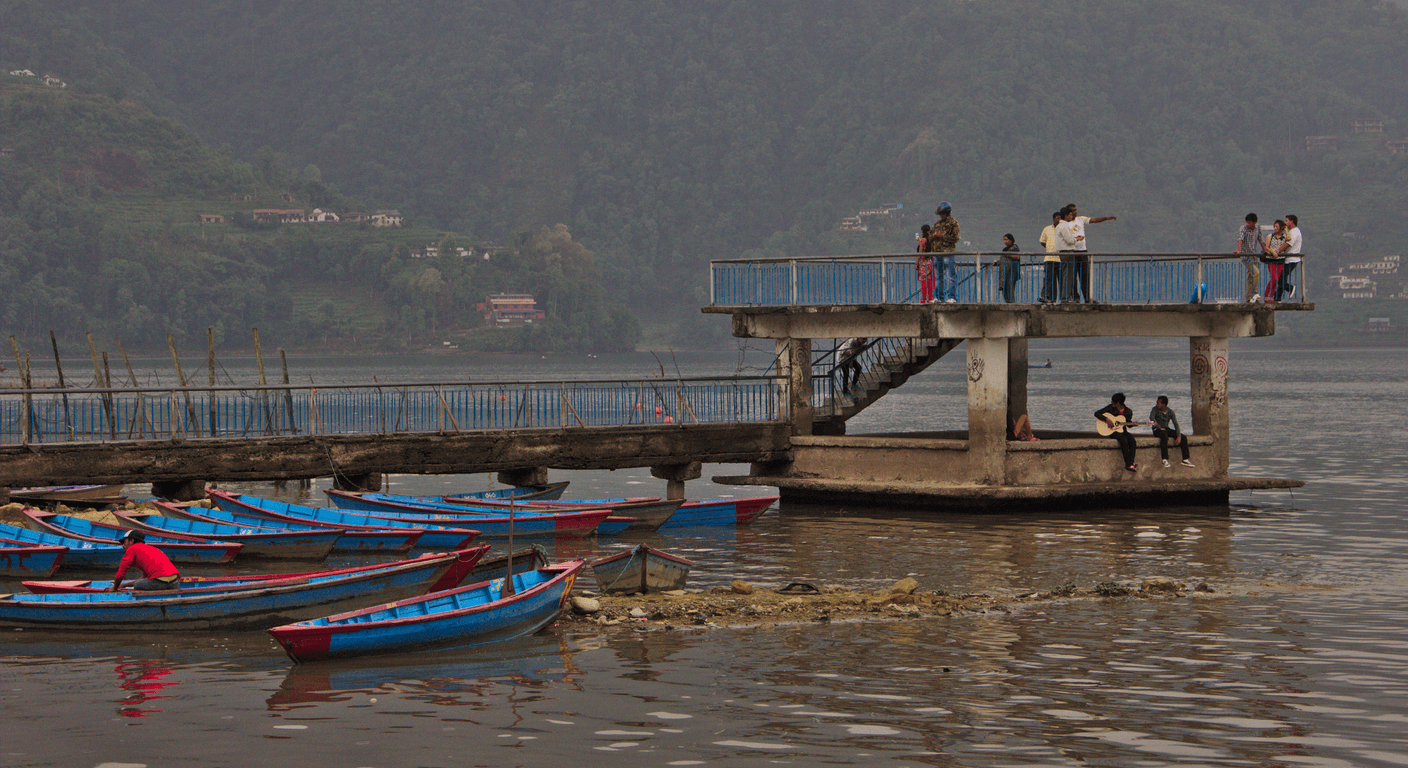
Pokhara's Lakeside district, along the shore of Phewa Lake, is the town's relaxed heart. The main street is lined with restaurants, guesthouses, and small shops, and the promenade along the lake is a pleasant place to walk in the early morning before the day warms up. The Annapurna range — including Machhapuchhre, the fishtail peak — is visible from the lakeside on clear days, most reliably in the early morning before cloud builds. This is mountain-watching at its most accessible: from a breakfast table, with a cup of tea.
Pokhara also has its own points of cultural interest beyond the view. The International Mountain Museum offers a well-curated account of Himalayan climbing history that is engaging even for non-climbers. The old Bazaar area, away from the tourist strip, gives a more local feel. Boat hire on Phewa Lake is a gentle activity that suits most mobility levels, and the World Peace Pagoda on the ridge above the lake can be reached by a combination of boat and a moderate uphill walk — or by road, which is worth asking about if the walk is not appealing.
Mountain flights: seeing the Himalayas from the air
For travellers who want a closer encounter with the high peaks without the physical commitment of trekking, mountain flights from Kathmandu offer a genuine alternative. These are short scenic flights — roughly an hour — that take a small aircraft along the Himalayan range at close range, giving window-seat views of Everest and the surrounding peaks. Buddha Air and Yeti Airlines both operate these flights. The critical caveat is weather: mountain flights are cancelled on cloudy or hazy days, which are common, and refunds or rescheduling are standard practice. Build flexibility into your itinerary if this is a priority.
Indicative pricing is roughly AUD 200–250 per person, but you should confirm current rates directly with the airline before booking, as prices fluctuate. The flights depart early in the morning when visibility is typically best. Most passengers report the experience as genuinely moving — there is something particular about seeing Everest from the air when you are not a climber, a kind of permission to witness something you had assumed was not for you.
A similar, shorter scenic flight option exists from Pokhara, with views of the Annapurna range. Again, weather dependency applies, so treat any mountain flight as a hoped-for bonus rather than a guaranteed itinerary item.
Practical matters: visas, costs, health, and getting around
Australian passport holders can obtain a tourist visa on arrival at Tribhuvan International Airport in Kathmandu, or apply in advance via Nepal's e-visa portal at nepaliport.immigration.gov.np. Visa fees and conditions change; always confirm current requirements via smartraveller.gov.au and the official Nepal Immigration portal before travel. The Australian Government's Smartraveller page for Nepal also carries current safety and health advisories, which are worth reading carefully and revisiting close to your departure date.
Nepal is generally a modest-cost destination for Australians. Mid-range guesthouses in Kathmandu's Thamel area run to roughly AUD 60–120 per night in indicative terms; Pokhara's Lakeside district is similar. Restaurant meals at decent sit-down places are modest — think indicatively AUD 10–20 for a main course, though prices at tourist-oriented restaurants in both cities have been rising. All costs quoted here are indicative only; confirm current prices on the ground or via accommodation booking platforms.
Getting around within Kathmandu is best done by taxi or app-based services such as Pathao or InDrive, which operate in the city and take the guesswork out of negotiating fares. For day trips to Bhaktapur or Patan, a private car arranged through your accommodation gives the most control over timing and comfort. The streets of Kathmandu are not generally friendly to walkers with significant mobility impairments — pavements are inconsistent, traffic is assertive, and the old heritage squares involve uneven stone surfaces. A traveller who walks comfortably for 30–45 minutes at a time will manage well; someone reliant on a walking frame or wheelchair will face real challenges in the heritage areas specifically.
Quick planning guide
| Ideal pace | Slow and unhurried, with repeat visits to key squares rather than one rushed sweep |
|---|---|
| Best months | No single best season noted; clear early mornings give the best chance of mountain views |
| Suggested stay | Several days in Kathmandu plus additional days in Pokhara, with a half to full day for Bhaktapur |
| Mobility level | Moderate — fine for travellers who walk comfortably for 30–45 minutes, difficult with a frame or wheelchair |
| Cost level | Budget-friendly to modest, though tourist-area prices have been rising |
| Comfort level | Basic to modest, with dust, traffic and uneven paving part of the experience |
| Best for | Healthy travellers aged 60–75 who want cultural depth without trekking or high altitude |
| Main planning consideration | Confirm visas, prices and mountain-flight weather flexibility in advance, and pack supportive footwear for uneven heritage sites |
Key takeaways
- Kathmandu sits at around 1,400 metres — an altitude that does not cause altitude sickness in most healthy travellers.
- Bhaktapur's medieval squares are reachable by taxi from Kathmandu and reward a full, unhurried day.
- Pokhara's Phewa Lakeside offers Annapurna views from street level, requiring no physical exertion beyond a morning walk.
- Mountain flights from Kathmandu give close views of Everest, but are weather-dependent and should be treated as a bonus, not a certainty.
- Australian travellers should confirm Nepal visa requirements and current travel advisories at smartraveller.gov.au before booking.
- Nepal's heritage zones involve uneven stone surfaces; good supportive footwear is practical and taxis are an honest alternative to uphill walks.
Recommended partners and links
Indicative prices only — always confirm with the operator before booking.
Frequently asked questions
Do I need to worry about altitude sickness in Kathmandu or Pokhara?
No, not for typical travellers. Kathmandu is at roughly 1,400 metres and Pokhara at around 800 metres — well below the elevations where altitude sickness becomes a risk. Altitude sickness generally becomes a concern above 3,000 metres, which is trekking territory. Travellers with significant cardiac or respiratory conditions should consult their GP before any international travel.
What visa do Australians need to visit Nepal?
Australian passport holders can obtain a tourist visa on arrival at Kathmandu's Tribhuvan International Airport, or apply in advance through Nepal's official e-visa portal. Fees and conditions change, so confirm current requirements at smartraveller.gov.au and at nepaliport.immigration.gov.np before you travel.
Is Nepal accessible for older travellers who don't trek?
Yes, with some caveats. The main heritage sites in Kathmandu and Bhaktapur involve uneven cobblestone and stone-paved squares that require sure footing. A traveller who walks comfortably for 30–45 minutes at a time will manage well. Taxis and private cars can replace uphill walks in many cases. Pokhara's lakeside promenade is flatter and generally easier going.
Can you actually see the Himalayas without trekking?
Yes. The Annapurna range is visible from Pokhara's lakeside on clear mornings. Everest and the main Himalayan chain can be seen on scenic mountain flights from Kathmandu, which take roughly an hour and operate weather permitting. These flights are offered by operators including Buddha Air and Yeti Airlines.
How much does a trip to Nepal cost for an Australian traveller?
Nepal is generally a modest-cost destination. Mid-range accommodation in Kathmandu or Pokhara runs to roughly AUD 60–120 per night in indicative terms, and sit-down restaurant meals are modest by Australian standards. All figures are indicative only and should be confirmed closer to travel, as tourism pricing in both cities has been changing.