The Bollenstreek's open tulip fields between Leiden and Haarlem bloom from mid-March to early May, peaking around mid-April, and unlike Keukenhof they're free and uncrowded. Two to four days, split between the two cities, suits the pace best. Trains, seasonal buses and flat cycling paths make it an easy-to-moderate outing. From Australia there are no direct flights — expect 21–24 hours via a Gulf or Asian hub, then a short train ride from Schiphol to base yourself.
Why the fields matter more than the gardens
Keukenhof is genuinely beautiful. Seventy-odd years of horticultural curation have produced something that earns its reputation. But one million visitors in eight weeks also means timed entry slots, crowded paths, and the particular exhaustion of navigating a busy attraction on a tight schedule. For travellers who find that sort of energy draining rather than energising, the surrounding Bollenstreek offers something better: the actual working tulip fields, in full commercial bloom, visible for free from roadsides, slow trains, and cycling paths.
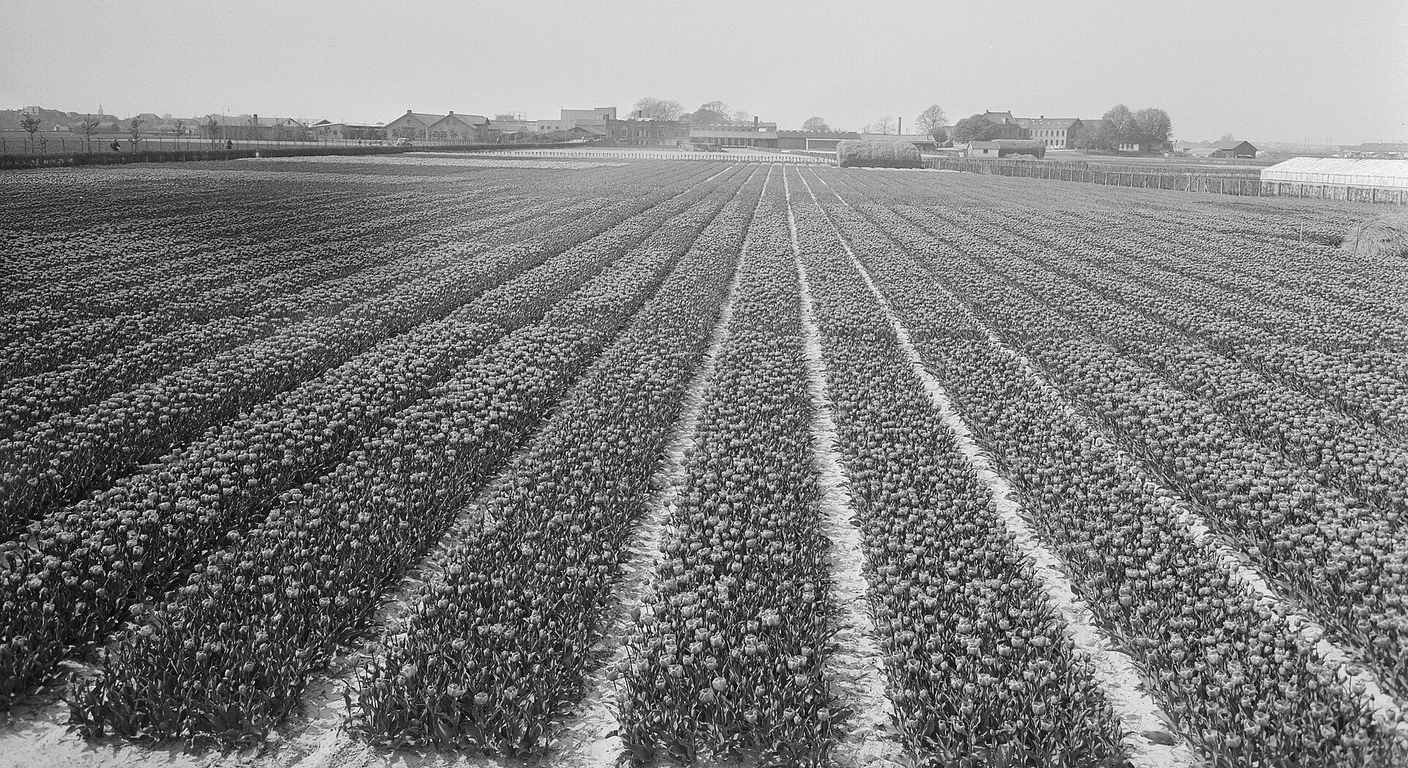
The Bollenstreek — literally 'bulb strip' — runs roughly 30 kilometres from Leiden in the south to Haarlem in the north, following the coastal dune belt that provides the sandy, well-drained soil Dutch bulb growers depend on. In April, the fields are a grid of pure colour, broken by the occasional windmill or farmhouse. There's no entry fee, no timed slot, no audio guide. You simply find a good vantage point and let it settle over you. That's the whole point.
Travelling as a couple, this region rewards a slow pace. One person can drive — though parking at field edges is limited and road manners matter — while the other manages the camera. Better still, take the train and let someone else navigate the narrow country roads entirely.
When do the tulips actually bloom — and why it's not a fixed date
The bloom window runs from mid-March through to early May, but calling it a 'window' overstates the certainty. Narcissi and hyacinths tend to open first, from mid-March, and their fragrance along the Bollenstreek roads can stop you in your tracks. Tulips follow from late March, reaching their fullest expression — the famous striped rows, colour-saturated from edge to edge — somewhere around the second and third weeks of April in a typical year.
The catch is that a warm spring can push peak bloom a week or two earlier, and a cold, wet spring delays it. The Keukenhof website publishes a weekly bloom update throughout the season, and it's genuinely reliable. Checking it before booking — or at minimum before confirming non-refundable elements of a trip — is simply good practice. Flexible accommodation bookings and travel insurance that covers itinerary changes give you room to move if the timing shifts.
Growers begin harvesting tulip heads (a process called 'knippen') shortly after peak bloom to redirect energy to the bulb — so a field that was striped crimson on Tuesday can look stripped and strange by the weekend. This is not a catastrophe, just the reality of an agricultural landscape. Spread your field visits across several days rather than saving them all for one outing.
How to see the fields without a car or a queue
The train between Leiden Centraal and Haarlem is one of the more quietly satisfying journeys in the Netherlands. It takes around 40 minutes, runs frequently, and passes through the heart of the bulb district — Hillegom, Lisse, Heemstede — with field views from the window that rival anything inside Keukenhof. A window seat on the right side heading north gives the best angles in the morning light. No booking required beyond a basic OV-chipkaart (the Dutch transit card, purchasable at station machines) or a contactless card.
Bus route 854 — the Tulip Express, operated seasonally — connects Leiden, the Keukenhof entrance, and Haarlem directly. It runs during the Keukenhof season and stops near the main field viewing areas. Confirm the current timetable and stops via the 9292 journey planner (9292.nl) or the Arriva regional transport website before you travel, as routes and numbers do change between seasons.
Cycling is the locals' preferred method, and the Netherlands has engineered its cycling infrastructure for exactly this. The LF Bollenroute is a signed long-distance cycling path that threads through the bulb fields — well-marked, mostly flat, and designed for leisure rather than speed. Renting a standard 'omafiets' (the upright Dutch city bike) from a hire shop in Leiden or Haarlem and following the route at your own pace is genuinely accessible for most reasonably active travellers. Electric-assist bikes are widely available and make a meaningful difference on the few gentle inclines, or simply if you want to cover more ground without fatigue.
Basing yourself: Leiden, Haarlem, or somewhere in between
Leiden is an underrated base. It's a proper Dutch university city — canals, gabled houses, excellent Indonesian and South Asian restaurants (a legacy of Dutch colonial history that resonates particularly for Indian Australian travellers), and a compact, walkable centre. The Rijksmuseum van Oudheden (national antiquities museum) and the Naturalis Biodiversity Center are both worth a morning. Accommodation ranges from canal-house hotels to larger comfortable properties near the station. April prices are higher than shoulder season; budget around AUD 200–350 per night for a solid mid-range double, though confirm current rates.
Haarlem is equally appealing and slightly more polished. The Grote Markt — the main square — is one of the Netherlands' finest, anchored by the Grote Kerk (Sint-Bavokerk), which Franz Liszt and a ten-year-old Mozart both played. The Frans Hals Museum holds a remarkable collection of Dutch Golden Age portraiture. Haarlem is also only 20 minutes by train from Amsterdam Centraal, which makes it a calmer alternative to staying in the capital while keeping it within easy reach.
Splitting the stay between both — two nights in Leiden, two in Haarlem — gives a natural rhythm and means you experience the fields from both ends of the route. Book accommodation with free cancellation where possible, given the bloom-timing uncertainty.
Getting there from Australia: the long-haul reality
There are no direct flights from Australia to Amsterdam. From Melbourne, Sydney, or Brisbane, expect a total travel time of roughly 21–24 hours, typically involving a single stopover in Dubai, Doha, Singapore, or Kuala Lumpur. Emirates, Qatar Airways, KLM (via a partner connection), and Singapore Airlines all serve Amsterdam Schiphol from Australian cities — confirm current routes and codeshares with your travel agent or directly with airlines, as scheduling changes regularly.
Schiphol Airport has direct train connections to Leiden (around 15 minutes) and Haarlem (around 20 minutes) — one of the most convenient airport-to-destination rail links in Europe. After 21-plus hours in the air, arriving into a quiet canal city rather than navigating a large unfamiliar metropolis is a genuine relief. Plan for a recovery night on arrival before attempting any serious sightseeing or cycling.
Jet lag heading west from Australia to Europe tends to be more disruptive than the return journey. A short eastbound stopover — one night in Dubai or Singapore on the way — can ease the transition considerably, though it adds to total travel time. Discuss this with your doctor if you have any cardiovascular or sleep conditions. Travel insurance covering pre-existing conditions is essential; compare policies carefully and declare everything.
Entry requirements and practical planning — confirm everything
Australian passport holders travelling to the Netherlands for tourism do not currently require a visa for stays up to 90 days within a 180-day period, as the Netherlands is part of the Schengen Area. However, the European Travel Information and Authorisation System (ETIAS) — an electronic pre-travel authorisation — is expected to be introduced for visa-exempt travellers. Check the current status and any entry requirements on Smartraveller (smartraveller.gov.au/destinations/europe/netherlands) well before you book, and again closer to departure. Requirements change, and the Smartraveller advice is the authoritative source for Australians.
The Netherlands uses the euro. ATMs are widely available, and contactless card payment is accepted almost universally — more so than cash in many places. Mobile data is straightforward with a European SIM or an international roaming plan; having offline maps downloaded is sensible for cycling in the fields where signal can be patchy.
Travel insurance is non-negotiable for this trip. Medical costs in the Netherlands are high without coverage, and a policy that includes pre-existing conditions, trip cancellation, and medical evacuation is the minimum standard. Compare policies through a comparison site such as comparetravelinsurance.com.au and read the product disclosure statement carefully before purchasing.
A few things that make the trip easier
April in the Netherlands is genuinely variable. Bright sunshine, cold wind, and light rain can all arrive in the same afternoon. Layering is the practical approach — a warm base, a light waterproof shell, and comfortable walking shoes with some grip. The fields can be muddy at edges after rain, and cycling in a crosswind requires a little determination. None of this is prohibitive; it's just the reality of spring in northern Europe.
The bloom is photogenic from almost any angle, but the best light is early morning — before tour coaches arrive at the popular viewpoints near Lisse. If you're based in Leiden, a morning train departure around 8am gets you into the fields in good light and ahead of the day-trippers. Carry a small daypack with water, snacks, and a light layer; there are cafés in most villages, but field-edge amenities are limited.
One practical note for couples travelling together: agree in advance on how much cycling you each want to do, and don't feel obliged to keep pace with anyone. The bus and train options are genuinely good, and a day that mixes a morning train journey with an afternoon stroll through Haarlem's old town is as satisfying as a full cycling day — possibly more so, depending on the wind.
Quick planning guide
| Ideal pace | Slow-paced, spread across several days rather than one rushed visit |
|---|---|
| Best months | Mid-March to early May, with peak colour typically mid-April |
| Suggested stay | 3-4 nights, split between Leiden and Haarlem |
| Mobility level | Moderate — flat cycling routes with easy train and bus alternatives |
| Cost level | Mid-range (around AUD 200-350 per night for accommodation) |
| Comfort level | Comfortable but weather can be variable — layering recommended |
| Best for | Couples and travellers who prefer quiet landscapes over crowded attractions |
| Main planning consideration | Bloom timing shifts year to year, so check the Keukenhof bloom calendar and book flexible accommodation |
Key takeaways
- The Bollenstreek's open tulip fields between Leiden and Haarlem are free to visit and far quieter than Keukenhof during peak bloom.
- Peak tulip colour typically falls in mid-April, but varies by a week or two depending on spring temperatures — check the Keukenhof bloom calendar before booking non-refundable travel.
- The train between Leiden and Haarlem passes directly through the bulb district; a window seat is one of the easiest and cheapest ways to see the fields.
- Electric-assist bike hire is widely available and makes the flat LF Bollenroute accessible to most active travellers over 50.
- From Australia, expect 21–24 hours of travel via a Gulf or Asian hub — plan a recovery night on arrival and consider travel insurance with pre-existing condition cover.
- Check current entry requirements, including ETIAS status, on smartraveller.gov.au before booking — requirements for the Schengen Area can change.
Recommended partners and links
Indicative prices only — always confirm with the operator before booking.
Frequently asked questions
Do you need a ticket to see the tulip fields in the Bollenstreek?
No. The open commercial flower fields in the Bollenstreek are visible from public roads, cycling paths, and train windows at no cost. Keukenhof Gardens, which is a separate curated garden attraction near Lisse, requires a paid entry ticket purchased in advance — confirm current pricing at keukenhof.nl.
When is the best time to visit the Dutch tulip fields for Australians travelling from Melbourne or Sydney?
Mid-April is the most reliable target for peak tulip bloom in the Bollenstreek, though a warm spring can bring it forward to late March and a cold spring can push it to late April. Australians should check the weekly bloom updates on keukenhof.nl and book flexible accommodation where possible, as exact timing varies year to year.
Can you see the Dutch tulip fields without hiring a car?
Yes. The train between Leiden Centraal and Haarlem runs through the heart of the bulb district and provides good field views from the window. The seasonal Tulip Express bus (route 854 during the Keukenhof season) connects Leiden, Lisse, and Haarlem with stops near the fields. Bike hire is also available from shops in both cities, with electric-assist options widely offered.
Do Australians need a visa to visit the Netherlands?
Australian passport holders currently do not need a Schengen visa for tourism stays of up to 90 days. However, the European ETIAS pre-travel authorisation system is expected to apply to visa-exempt travellers — check the current status on smartraveller.gov.au well before booking, as requirements can change.
Is the Bollenstreek suitable for travellers over 70 or those with limited mobility?
The Bollenstreek is largely flat, which favours older or less mobile travellers. Viewing the fields from a train window or the Tulip Express bus requires no physical exertion at all. Cycling on the LF Bollenroute is accessible for reasonably active travellers, particularly with an electric-assist bike, though field edges can be uneven. Keukenhof Gardens has paved paths and wheelchair hire available — confirm current accessibility facilities at keukenhof.nl.
- Keukenhof Official Site — bloom calendar, tickets and visitor information
- Smartraveller — Australian Government travel advice for the Netherlands
- NS (Nederlandse Spoorwegen) — Dutch national rail journey planner
- 9292 — Netherlands public transport journey planner
- MacBike — bike hire in the Netherlands
- Visit Holland — official Netherlands tourism information