Nightcliff, ten minutes north of Darwin's CBD, is best visited in the dry season (May to September), early morning before the heat builds. A flat, sealed two-kilometre foreshore path leads to a working jetty famous for west-facing sunsets, alongside a genuine neighbourhood Sunday market. Allow around ninety minutes for the walk plus an hour for the market. Mobility needs are minimal, and access is easy by car, taxi or Darwinbus from central Darwin.
What makes Nightcliff worth the detour from Darwin's CBD?
Darwin has its waterfront precinct, its markets at Mindil Beach, its museum. Nightcliff has none of the fanfare — and that's precisely the point. Ten minutes north of the city centre, this residential suburb sits on a low escarpment above the Timor Sea, and its foreshore path is where locals come to walk the dog, watch the tide, and eat something good from a paper bag. For a traveller from Melbourne or regional Victoria, it offers something a polished tourist strip rarely can: a sense of ordinary Darwin life, unhurried and unscripted.
The suburb itself is modest and comfortable. Families cycle past. Older residents sit in the shade. The path runs along the clifftop edge, sealed underfoot and wide enough for two to walk side by side without negotiating anyone. Shade shelters and timber benches appear at sensible intervals. Nobody is in a hurry. For a couple wanting a morning that feels genuinely restful rather than scheduled, Nightcliff asks very little and returns quite a lot.
The foreshore path — what to expect on foot
The sealed path follows the clifftop for around two kilometres, with the Timor Sea visible through coastal vegetation to the west. The cliffs themselves are modest — more gentle escarpment than dramatic headland — but the elevation is enough to catch a consistent sea breeze, which matters considerably in Darwin. The path connects several small reserves and picnic areas, and at no point does it demand anything beyond a comfortable walk.
Shade shelters are spaced along the route, each with seating, so there's no pressure to push on if the legs or the heat suggest otherwise. The surface is smooth and even, suitable for walking frames or anyone with a mild knee complaint. Early morning, between six and eight, is when the light is softest and the temperature genuinely pleasant. By ten o'clock in the dry season the sun has real authority. Plan accordingly.
The path connects to the jetty precinct at its southern end, making a natural turning point. Walk one way, rest at the jetty, return at your own pace. The whole return stroll, with stops, comfortably fills ninety minutes without feeling rushed. If Sunday is the day, factor in an hour at the market before or after.
Nightcliff Jetty — more than a sunset backdrop
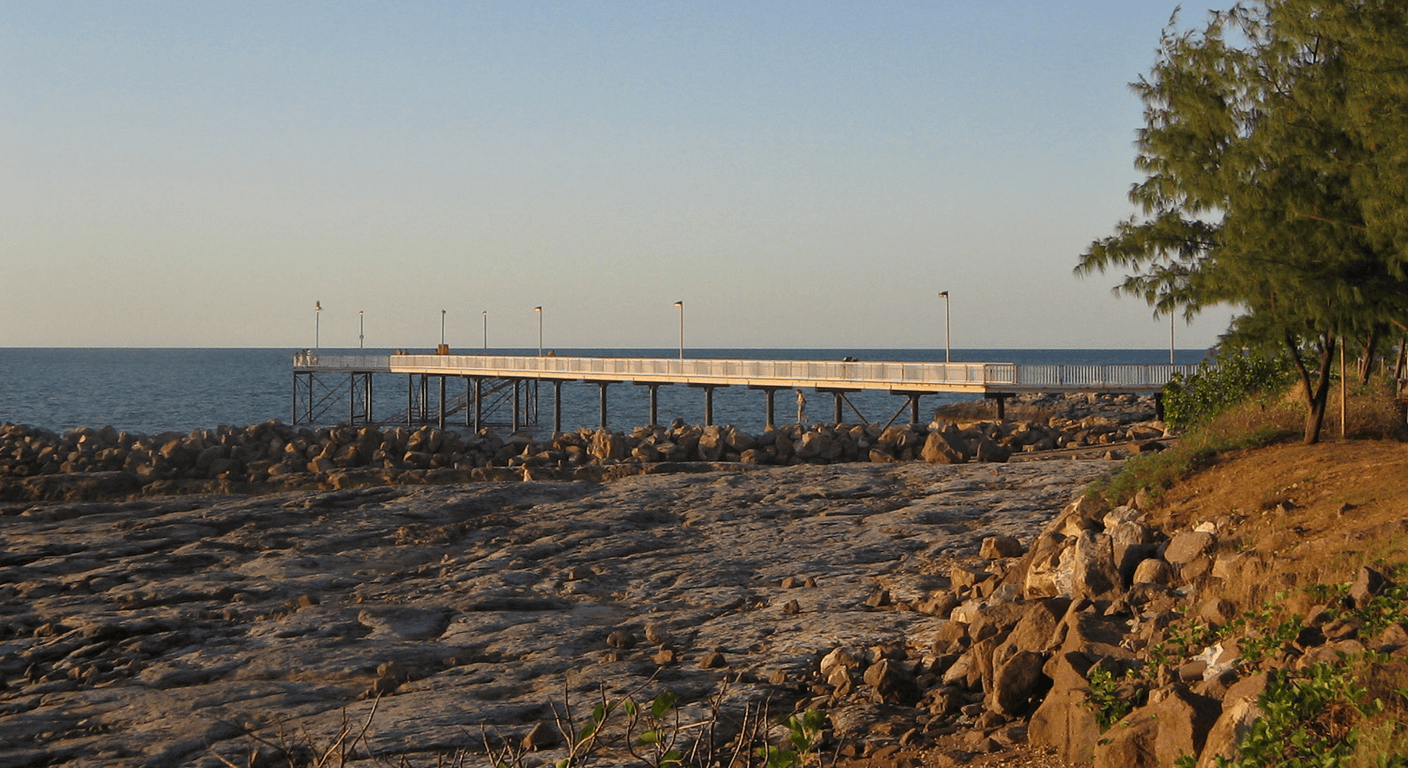
The Nightcliff Jetty extends out over the tidal flats and is a working part of local life rather than a manicured attraction. Fisherfolk set up early. Pelicans investigate. At low tide, the exposed mudflats stretch a considerable distance and the colours are genuinely interesting — rust, ochre, deep green mangrove. At high tide, the water comes in turquoise and still.
Sunset is the jetty's most celebrated moment, and earned it is. The Timor Sea faces west, and the light in the dry season turns the sky through orange and deep red without any fuss. Half of Darwin seems to know this; arrive twenty minutes before sunset and you'll have company — but the jetty is long enough that it never feels crowded. Bring a light layer for after dark; the breeze picks up once the sun drops.
There are no facilities at the jetty itself — no café, no toilets immediately adjacent — so plan around the market or the small shops on Pavonia Way nearby if needed. The jetty platform is flat and accessible, though the timber boards are spaced in the manner typical of older jetties; anyone with significant balance concerns should take care at the edges.
The Sunday market — what's actually there
The Nightcliff Sunday Market runs on the grassed area near the foreshore, typically from early morning until around noon — though hours can shift seasonally, so confirm with the City of Darwin website before making it the centrepiece of your day. It's a neighbourhood market in the honest sense: local growers, a handful of craft stalls, food vendors doing things with tropical fruit that you won't find in a supermarket south of Katherine.
Expect lychees, mangoes in season, rambutans, pawpaw, and the kind of fresh coconut products that Darwin's multicultural community has been refining for decades. Hot food stalls offer laksa, satay, fresh spring rolls and strong coffee. Prices are reasonable. The atmosphere is convivial without being loud. Nobody is selling you anything aggressively.
For a Greek Australian traveller with an eye for quality produce and an appreciation for community markets, Nightcliff's Sunday offering will feel pleasantly familiar in spirit — the instinct to gather around good food is, as it turns out, not uniquely Mediterranean. Go early for the best produce; by ten-thirty the lychees are usually gone.
Getting there from Darwin — practical transport options
From Darwin's CBD, Nightcliff is roughly ten kilometres north along the Stuart Highway and Bagot Road. By taxi or rideshare the fare is indicative of a short suburban trip — around $20–$30 each way; confirm current rates. Darwinbus services connect the city to Nightcliff; check current routes and timetables on the NT Government's public transport pages before relying on a specific service, as routes can change.
Driving is straightforward and parking is available near the foreshore reserve and market ground, though Sunday mornings can see it fill quickly. Arriving before eight gives you first choice of shaded spots. For grey nomads with a campervan already set up at a Darwin caravan park, the drive is negligible. There is no train service in Darwin.
If flying in from Melbourne, Sydney or Adelaide, Darwin receives direct flights and connections through most major carriers. Flight time from Melbourne is roughly four to four and a half hours. Darwin is in the Australian Central Standard Time zone (ACST), 30 minutes behind Melbourne in the same season — minimal adjustment required, which is one of the genuine advantages of travelling within Australia.
When to go, and what the seasons actually mean here
Darwin operates on two seasons, not four. The dry season, May through September, is the time to visit. Humidity drops to levels that feel almost familiar to southern Australians, temperatures sit in the mid-to-high twenties, and the evenings are genuinely pleasant. This is when the foreshore path is at its best — populated but not overcrowded, comfortable from early morning and again from late afternoon.
The wet season, October through April, brings something else entirely. The build-up from October onwards is oppressive: high humidity, gathering storms, temperatures that make a midday walk on any exposed path inadvisable. The monsoon rains from December through March can be spectacular, but they also close roads, saturate markets and reduce Darwin's appeal considerably for travellers accustomed to southern winters. Some grey nomads time their Top End visit deliberately to experience the dramatic wet season skies — but that's a knowing choice, not a default recommendation.
For a couple travelling from Victoria in June or July, Nightcliff in the dry season is a gentle revelation. The mornings are cool enough for a proper walk. The evenings are warm without being suffocating. And the contrast with a Melbourne winter, which you've left behind, is its own quiet satisfaction.
Practical notes for over-50 travellers
The foreshore path and market are both free. Sun protection is non-negotiable — hat, sunscreen, a light long-sleeved shirt. Hydration matters more than it seems in the tropics even on a dry-season day; carry water. The path has no significant gradients, and the market ground is grassed but generally even. A walking stick or trekking pole is not out of place and adds confidence on the jetty's timber boards.
There are public toilets near the market precinct and along the foreshore reserve — confirm locations on arrival. The nearest medical facilities are Darwin Private Hospital and Royal Darwin Hospital, both in the city. Travel insurance with pre-existing condition cover is always advisable for any trip; check your policy includes the Northern Territory and covers any relevant health considerations before you leave home.
For those considering a longer Darwin stay, Nightcliff pairs naturally with Mindil Beach Sunset Market (Thursday and Sunday evenings in dry season), the Museum and Art Gallery of the Northern Territory, and a day trip to Litchfield National Park — roughly ninety minutes south and notably more accessible than Kakadu for travellers who prefer a gentler pace. But Nightcliff on its own is enough for a morning. Sometimes that's the right size for a day.
Quick planning guide
| Ideal pace | Slow-paced, unscripted morning outing |
|---|---|
| Best months | May to September (Darwin's dry season) |
| Suggested stay | 90 minutes for the foreshore walk, plus an hour for the Sunday market |
| Mobility level | Easy — flat, sealed path with regular shaded seating |
| Cost level | Free (transport and food purchases aside) |
| Comfort level | Pleasant in the dry season mornings; humid and best avoided in the wet season build-up |
| Best for | Over-50 travellers, couples and grey nomads wanting a relaxed, authentic local morning |
| Main planning consideration | Go early (before 9am) to beat the heat and catch the market before produce sells out; confirm market hours seasonally |
Key takeaways
- Nightcliff's foreshore path is flat, sealed, shaded and free — one of Darwin's most accessible coastal walks for over-50 travellers.
- The dry season (May to September) is the only comfortable time to walk the path; midday heat is significant even then.
- Nightcliff Jetty faces west over the Timor Sea, making it Darwin's most reliable sunset-watching spot without a tourist price tag.
- The Sunday market is a genuine neighbourhood affair — tropical produce, hot food and coffee — not a curated visitor experience.
- Early morning (before 9am) is the optimal window for both the foreshore walk and the Sunday market; arrive late and the lychees will be gone.
- Confirm Sunday market hours with the City of Darwin before visiting, as times shift across the dry and wet seasons.
Recommended partners and links
Indicative prices only — always confirm with the operator before booking.
Frequently asked questions
Is the Nightcliff foreshore path suitable for travellers with mobility limitations?
Yes. The Nightcliff foreshore path is flat, sealed and wide, with shade shelters and benches at regular intervals. It is rated Easy for mobility and is suitable for most walkers, including those using walking sticks or frames. The jetty has flat timber boards, though anyone with significant balance concerns should take care near the edges.
What time does the Nightcliff Sunday market start and finish?
The Nightcliff Sunday market typically runs from early morning until around noon, but hours can vary by season. Always confirm current times with the City of Darwin (darwin.nt.gov.au) before making it the centrepiece of your visit.
What is the best time of day to walk the Nightcliff foreshore path?
Early morning, between six and nine, is the most comfortable time for the foreshore walk — the light is soft, the temperature is manageable and the sea breeze is reliable. Late afternoon from around four o'clock is the other good window, especially if you want to reach the jetty in time for sunset. Avoid the midday hours in any season.
How do you get to Nightcliff from Darwin CBD?
Nightcliff is roughly ten kilometres north of Darwin's CBD. By taxi or rideshare the journey takes around ten minutes; indicative fares are roughly $20–$30, but confirm current rates. Darwinbus services also connect the city to Nightcliff — check current routes and timetables on the NT Government's public transport website before travelling. Parking is available near the foreshore reserve if driving.
Is there a cost to visit Nightcliff foreshore and the Sunday market?
Entry to the Nightcliff foreshore path, jetty and Sunday market is free. Budget for food, produce and coffee at the market stalls, and for transport to and from Darwin's CBD.