Old Noarlunga, about 35 kilometres south of Adelaide and roughly 40–50 minutes away by train on the Seaford line, offers a free half-day trip centred on a flat four-to-five kilometre river loop through the Onkaparinga gorge. Winter brings the strongest river flows, while spring (August–October) adds wildflowers. The loop suits most older walkers on unpaved but level ground, with steeper gorge lookout trails reserved for confident, sure-footed walkers wanting extra challenge.
Why Old Noarlunga works as a day trip for older solo travellers
Old Noarlunga is the kind of place that does not announce itself loudly. There is no entry fee, no shuttle bus, and no crowds jostling for a photo spot. What you get instead is a quiet heritage township, a river that runs green and unhurried through a sandstone gorge, and a choice of walking that you can honestly calibrate to how your knees are feeling on the day. For a solo traveller in his late sixties who wants scenery without theatre, that is a reasonable deal.
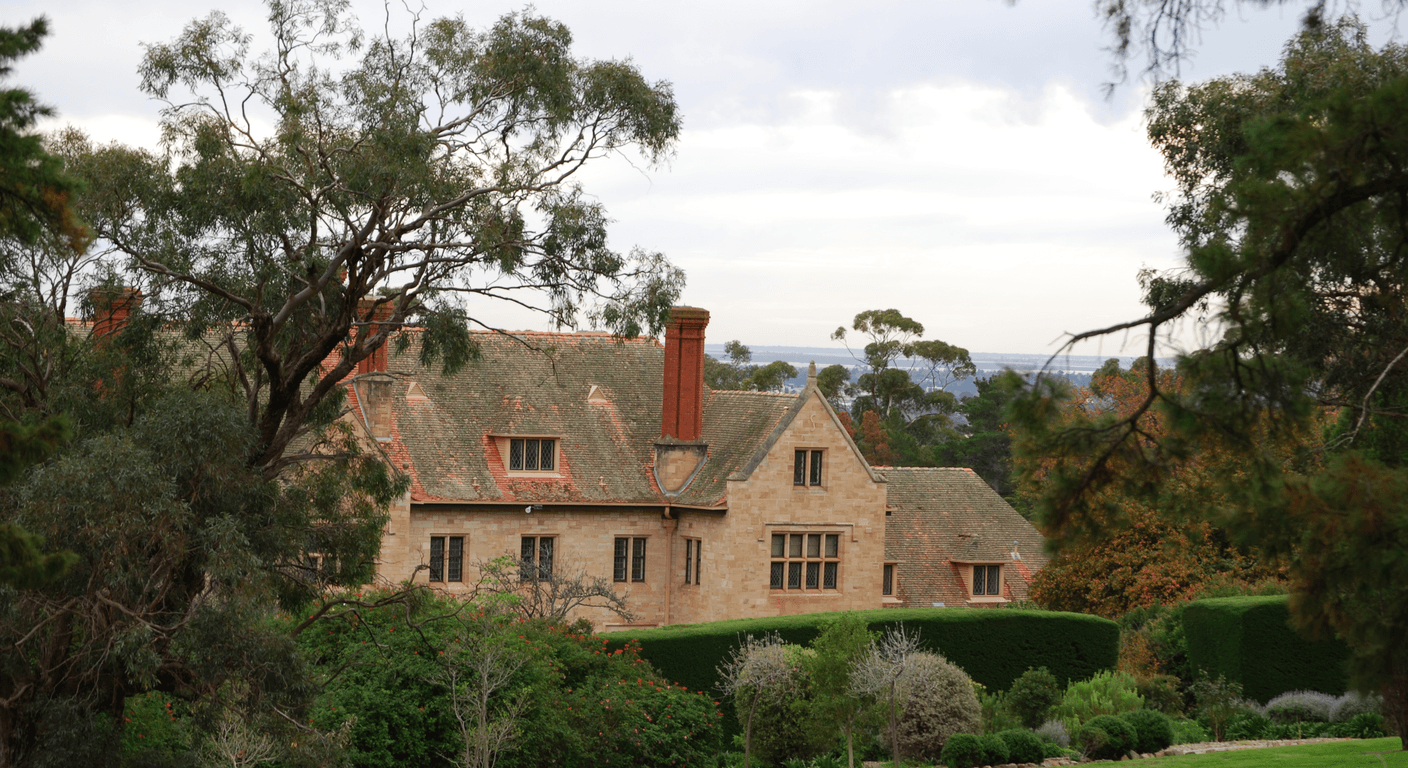
The village sits at the point where the Onkaparinga River emerges from its gorge before spreading toward the coast at Port Noarlunga. The gorge itself cuts through the Southern Mount Lofty Ranges and is protected as the Onkaparinga River National Park and the broader regional reserve. The township predates Federation and retains a handful of stone buildings, a church on the hill, and a pub that has been feeding locals and passing travellers for generations. It is not a tourist set-piece — it is just a real place that happens to be worth a day of your time.
Getting there from Adelaide: the Seaford train line
You do not need a hire car for this trip. The Seaford line runs from Adelaide's Gawler Place interchange and stops at Noarlunga Centre station, which is the closest rail point. From Noarlunga Centre it is roughly a two-kilometre walk or a short local bus connection to Old Noarlunga village — check the Adelaide Metro trip planner for current timetables and any bus connections, as these can vary by day of week.
The train journey from the city takes around 40 to 50 minutes depending on the service. Fares are calculated on the metro zone system; as a rough guide, budget around $5–$6 AUD each way for a standard adult fare, though concession rates apply and current prices should always be confirmed at adelaidemetro.com.au before you travel. The carriages are air-conditioned and the network accepts both Metrocard and contactless payment at most stations.
If you are driving from Victoria — perhaps mid-way through a longer South Australian trip — Old Noarlunga is straightforward off the Southern Expressway. Parking is available near the village oval and along Oval Road without any indicated fee, though you should check local signage on the day. That said, the train option removes any navigation stress and lets you look out the window as the city gives way to the southern suburbs and the Fleurieu's low hills.
The flat river loop: what to expect on the ground
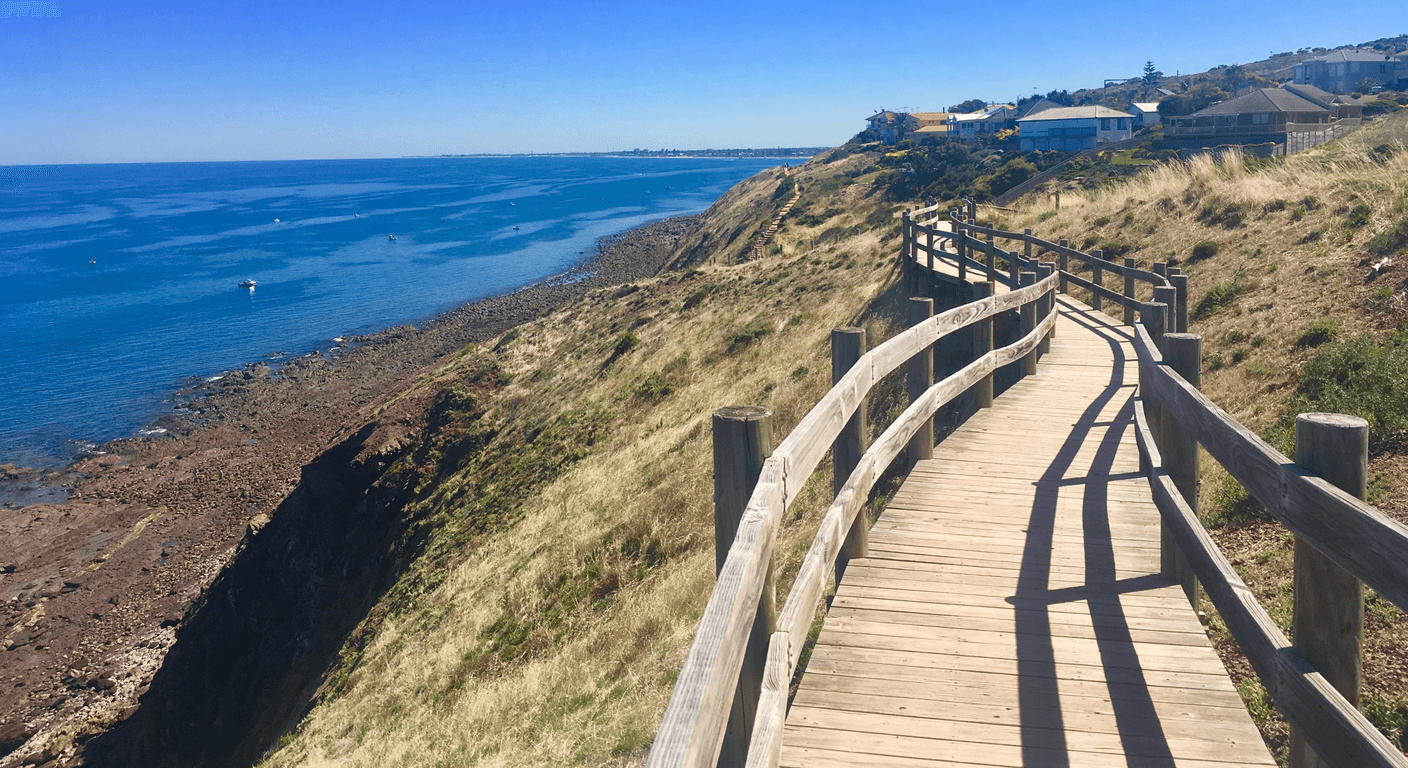
The river loop from Old Noarlunga is the walk to anchor your day around. It follows the Onkaparinga along relatively level ground through riparian vegetation — river red gums, reeds, and in spring, patches of native wildflowers along the banks. The circuit is generally around four to five kilometres depending on exactly which track sections you take, and the surface is a mix of compacted gravel and dirt path. It is not paved, so firm footwear is worth wearing, but the gradient is gentle enough that most reasonably mobile walkers will manage it comfortably.
The river itself is the reward. In winter and early spring, after decent rainfall, the Onkaparinga runs with genuine volume and the gorge walls reflect off the water in a way that feels quieter and more satisfying than anything you would queue for. By late summer the flow drops considerably and the character of the walk shifts — still pleasant, but drier and more exposed. If you are timing a visit from Victoria, late July through to mid-October is probably the most rewarding window.
There are no facilities along the loop itself — no toilets, no water taps, no cafes. Carry water and any snacks you need before you leave the village. The Old Noarlunga Hotel is the sensible place to anchor your start and finish, and the pub does a straightforward counter lunch that suits someone who has been on their feet for a couple of hours.
The gorge lookout trails: honest advice for confident walkers
If the flat river loop leaves you wanting more, the gorge lookout trails climb up from the valley floor and offer elevated views back across the river and the surrounding hills. These are a different proposition physically. The ascent involves uneven ground, exposed rock sections, and some reasonably sustained climbing. For a 69-year-old travelling solo, the honest assessment is: only attempt the lookout tracks if you are genuinely comfortable on rough terrain, you have told someone your plan, and you carry a fully charged phone.
The views from the higher points are broad and largely undeveloped — the gorge looks much as it would have a century ago, which is the point. But the tracks are not equipped with handrails or assistance infrastructure, and a turned ankle in that terrain without a companion nearby is a situation worth avoiding. There is no shame in completing the flat loop, sitting by the river for half an hour, and calling it a good day — that is not settling, that is sound judgement.
Trail condition information and maps for the Onkaparinga River National Park are available through the South Australian Department for Environment and Water at environment.sa.gov.au. It is worth checking these before you visit, as track closures after heavy rain do occur.
Old Noarlunga township: the pub, the church, and the stone buildings
The Old Noarlunga Hotel has been on this corner since the colonial era and remains a working country pub rather than a heritage experience manufactured for visitors. The front bar is the front bar. The bistro does reliable pub food — parmas, steaks, fish, and a daily special — at prices that reflect a suburban South Australian local rather than a tourist destination. Budget roughly $20–$28 for a main, though menus and pricing change, so confirm when you arrive. It opens for lunch most days but check current trading hours before you base your day around it.
St Philip's Anglican Church sits on the hill above the main settlement and is one of the older stone churches in the southern suburbs of Adelaide. The building dates to the 1840s and is listed with the National Trust of South Australia. The exterior is worth a short walk up the slope — the churchyard is quiet and the stonework gives a clear sense of how early settlers used local materials. Access to the interior depends on whether a service or volunteer is present; the National Trust SA website is the place to check for any organised visits.
The broader township retains a handful of other stone cottages and a general character that has not been heavily developed. It is not a museum precinct — people live here. That is precisely what makes it feel like a genuine detour rather than a constructed attraction. Allow yourself to walk slowly through the main street and along Oval Road without a specific agenda. The place rewards that kind of attention.
Timing your visit: spring wildflowers and winter river flows
The Onkaparinga gorge is one of those places where the season genuinely changes what you get. Winter — June through August — brings the best river flows, the gorge walls look their most dramatic, and the cooler temperatures are frankly comfortable for walking. If you are travelling from Victoria in winter, this is a trip that makes sense to combine with a broader Fleurieu Peninsula itinerary.
Spring, from August through October, adds wildflowers to the river banks and the surrounding scrubland. The Onkaparinga region supports native orchids, wattles, and various flowering ground covers that appear along the track edges. You do not need to be a botanist to appreciate them — they are simply there, along the path, in a way that rewards slow walking and makes the flat river loop feel like more than just exercise.
Summer visits are possible but the heat on the exposed sections of the gorge tracks can be significant, and the river runs low. If you do visit between December and February, start early — well before 10am — and carry more water than you think you will need. The pub opens from midday, so there is a logical rhythm to an early summer start followed by a cool drink in the beer garden.
Practical notes for the day: pacing, accessibility, and what to bring
The flat river loop is accessible for most older walkers who are comfortable on unpaved surfaces. It is not suitable for wheelchairs or mobility scooters in its current form — the track surface and some gentle undulations make that impractical. If you use a walking pole, bring it; the compacted gravel and occasional tree roots on the path make a single pole worth the effort of carrying it on the train.
There are no luggage storage facilities in Old Noarlunga, so travel light. A day pack with water (at least 1.5 litres), sunscreen, a hat, and a light layer for the shaded gorge sections is the sensible kit. The train does not have luggage restrictions for day packs, and Noarlunga Centre station has seating if you need to wait for a return service.
Mobile reception in the gorge is variable depending on your carrier. Do not rely on real-time navigation in the lower sections of the valley. Download an offline map before you leave — the South Australian DEW website has downloadable park maps — and note the general layout before you walk. Tell someone your plan for the day, particularly if you are travelling solo. It takes thirty seconds and is simply sensible practice.
Quick planning guide
| Ideal pace | Slow and unhurried, no fixed itinerary |
|---|---|
| Best months | June–October, for winter river flows and spring wildflowers |
| Suggested stay | Half a day, including the river loop and pub lunch |
| Mobility level | Easy on the flat river loop; Moderate to Active for the gorge lookout trails |
| Cost level | Free entry, with only train fare and a pub lunch as costs |
| Comfort level | Casual and low-key, no facilities along the trail itself |
| Best for | Solo older travellers wanting quiet river and gorge scenery without crowds |
| Main planning consideration | Confirm train/bus connections and check gorge trail conditions before setting out |
Key takeaways
- Old Noarlunga is a free day trip accessible by train on the Seaford line from Adelaide, roughly 40–50 minutes from the city.
- The flat Onkaparinga River loop is around four to five kilometres on unpaved but level ground, suitable for most older walkers in reasonable health.
- Gorge lookout trails involve genuine climbing on rough terrain and are best attempted only by confident walkers travelling with a companion or with a clear safety plan.
- Winter and spring offer the best conditions — higher river flows in winter, native wildflowers in spring from August through October.
- The Old Noarlunga Hotel is the practical anchor for the day: pub lunch after the walk, no bookings required for the bistro on a weekday.
- There are no facilities on the river loop itself, so carry water, wear firm footwear, and download an offline map before entering the gorge.
Recommended partners and links
Indicative prices only — always confirm with the operator before booking.
Frequently asked questions
Can you get to Old Noarlunga without a car?
Yes. The Seaford train line from Adelaide city runs to Noarlunga Centre station, which is around two kilometres from Old Noarlunga village. From the station you can walk or take a local bus connection — check the Adelaide Metro trip planner at adelaidemetro.com.au for current timetables and connections.
Is the Onkaparinga River walk suitable for seniors with limited mobility?
The flat river loop from Old Noarlunga is on compacted gravel and dirt with gentle gradients, and is manageable for most older walkers who are comfortable on unpaved surfaces. It is not suitable for wheelchairs or mobility scooters. The gorge lookout trails involve steep, rough terrain and are not recommended for anyone with significant mobility limitations.
Is there an entry fee for the Onkaparinga River National Park or Regional Reserve?
No. Entry to the Onkaparinga River National Park and the surrounding regional reserve is free. Confirm current access conditions at environment.sa.gov.au before your visit.
When is the best time of year to visit Old Noarlunga for the walk?
Late July through to mid-October is generally the most rewarding window. Winter brings strong river flows that make the gorge look its best, and spring from August onward adds native wildflowers along the trail edges. Summer visits are possible but the heat on exposed sections can be considerable — start well before 10am if visiting in December through February.
Is there somewhere to eat lunch in Old Noarlunga?
The Old Noarlunga Hotel is the main option for lunch and serves a standard pub bistro menu. It is a genuine local pub rather than a tourist venue. Confirm current trading hours directly with the hotel before your visit, as hours can vary by day of week and season.