Paronella Park, a Spanish-style castle and garden built by Catalan immigrant José Paronella in the 1930s, sits near Mena Creek in Far North Queensland, about two hours from Cairns or 45 minutes from Mission Beach by car, with no direct public transport. Dry season (May–October) suits visits best. Allow a full day to pair the daytime tour with the atmospheric evening light tour. Terrain is uneven with steps and humidity, making it a moderate rather than easy walk.
What is Paronella Park and why does it matter?
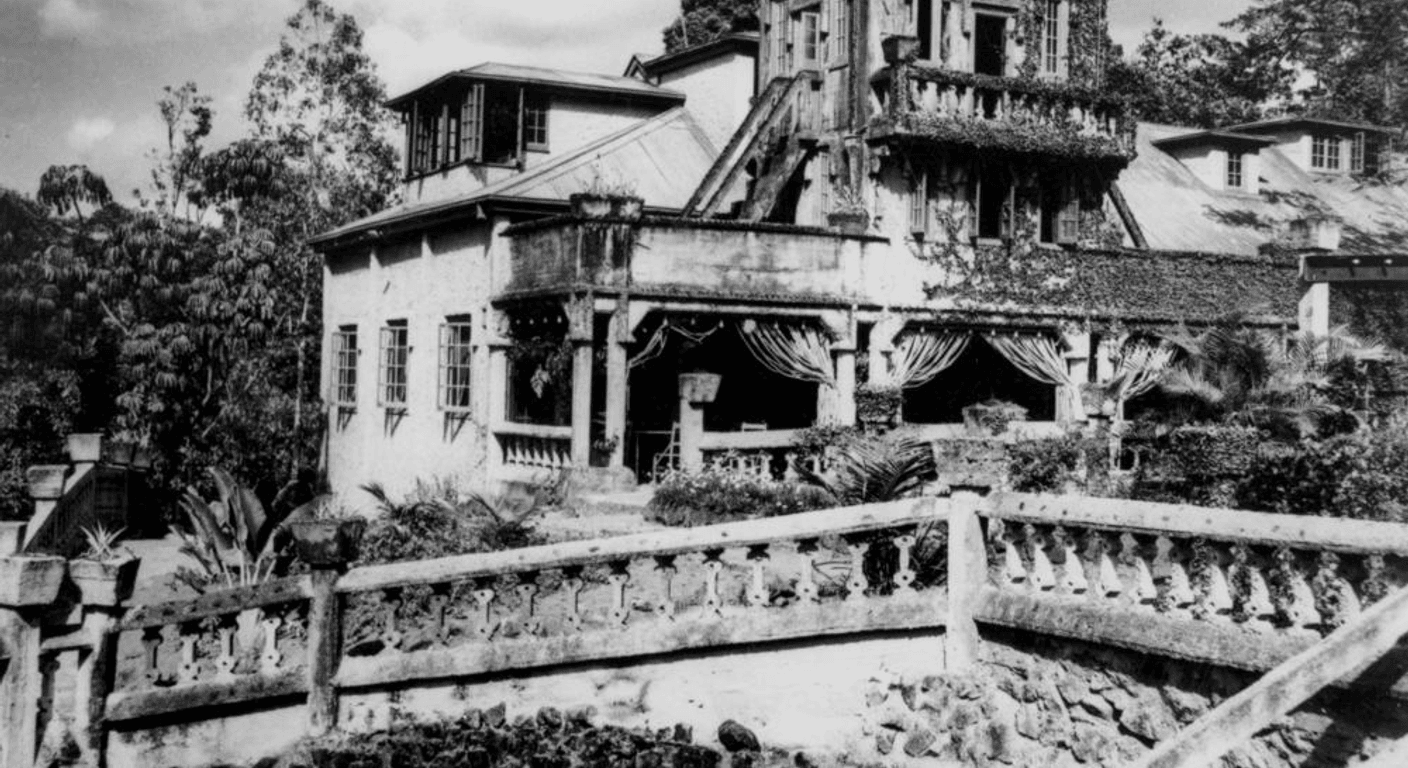
Paronella Park sits on a seven-hectare property along Mena Creek, roughly 25 kilometres inland from Innisfail in Far North Queensland. It is the life's work of José Paronella, a Catalan-born cane farmer who arrived in Australia in 1913, saved his money over two decades, and then spent the 1930s building what he called his pleasure gardens — complete with a castle, ballroom, tennis courts, a hydro-electric system and a grand kauri pine avenue. He opened it to the public in 1935. The place is not a reconstruction or a theme park. It is the original structure, weathered by cyclones, floods and a century of tropical growth, and that authenticity is exactly what gives it weight.
For a traveller who has seen a lot of Victoria's gold rush architecture and colonial homesteads, Paronella Park offers something genuinely different: a private folly built by a single immigrant with a romantic vision and the stubbornness to see it through. The ruins are listed on the Queensland Heritage Register, and the current owners — the Evans family, who have managed the property since the 1990s — continue careful conservation rather than heavy restoration. What you see is real, and the guided interpretation helps you understand what you are looking at rather than simply walking past it.
The surrounding rainforest is part of the Wet Tropics of Queensland World Heritage Area. Even on a clear day the humidity is notable, and after rain the creek, waterfall and moss-covered stonework take on a particular atmosphere that photographs rarely capture fully. It is the kind of place that rewards slow attention.
How do you get to Paronella Park from Cairns or Mission Beach?
By car from Cairns, the drive south along the Bruce Highway to the Mena Creek Road turnoff takes roughly one hour and 45 minutes to two hours, depending on traffic through Gordonvale and Innisfail. The road into the park is sealed and well-signposted from the highway. For a solo traveller, a hire car from Cairns Airport is the most practical option; the major national hire companies all operate from the terminal. Cairns Airport's website lists current operators. Driving gives you full control over your departure time, which matters if you are planning the evening tour.
From Mission Beach, the drive is considerably shorter — around 45 to 50 minutes via the El Arish–Mission Beach Road and then south to Mena Creek. Mission Beach is a logical overnight base if you want to break up the journey from Cairns and combine a morning at the beach with an afternoon and evening at the park. Accommodation in Mission Beach ranges from small self-contained units to modest resorts; Tourism Tropical North Queensland's website lists current options.
There is no direct public transport to Paronella Park from Cairns. Some operators run day tours from Cairns that include the park as part of a wider itinerary, but these are generally group coach tours and move at a pace set by the group rather than the individual. For a solo traveller who prefers to linger, a self-drive or pre-booked private transfer gives more flexibility. Confirm current tour options through the Paronella Park website or Tourism Tropical North Queensland.
What does entry include and what does it cost?
Entry to Paronella Park is ticket-based and at the time of writing is priced at around $50 to $60 per adult, though you should confirm current pricing directly with the park at paronellapark.com.au before you go. That entry price includes a guided tour — typically led by one of the park's own guides — as well as return visit rights, meaning you can come back again within a set period, often 24 hours, which makes the daytime and evening tours a natural pairing. Concession rates are available; check the park's website for current eligibility criteria, as these can include seniors cards.
The guided tour runs for roughly 45 minutes to an hour and covers the main castle ruins, the kauri avenue, the hydro-electric turbine house, the waterfall and the broader garden circuit. Guides are generally knowledgeable about both the history and the ecology, and the format is relaxed enough that you can ask questions without feeling rushed. The tour is included in the standard entry price, so there is no additional cost to join it — just check at the ticket desk for departure times when you arrive.
The evening light tour is a separate ticketed experience that typically runs after dark and uses lighting to illuminate the castle and waterfall. It has become one of the park's more talked-about offerings and runs on most evenings; check the park's website for current scheduling and whether it is included in the standard entry or requires a separate booking. If you are planning specifically around the evening tour, confirm availability when you purchase your ticket, as numbers can be limited on some nights.
What are the paths and terrain like — is it manageable for older travellers?
Paronella Park is honest about the fact that the terrain is uneven. The gardens include original stone steps, gravel paths, tree roots crossing walkways, and sections where the ground is damp or slippery after rain — which in the Wet Tropics can mean almost any time of year. For a traveller of 69 who is reasonably mobile but not looking to scramble, the key is unhurried pacing and the right footwear. Closed-toe shoes with a grip sole are strongly advised; sandals or smooth-soled shoes are a genuine slip risk on some sections.
The park does have some areas that are more accessible than others. The lower garden areas and the main castle façade are reachable without major steps, but the full circuit — including the upper viewing areas and the waterfall approach — involves a moderate amount of climbing and descending on uneven surfaces. If mobility is a consideration, it is worth calling the park ahead of your visit to ask which sections are most accessible and whether any recent improvements have been made. The staff are generally helpful in tailoring a route to individual needs.
Tropical humidity is a factor that catches some visitors off guard, particularly those arriving from Melbourne's cooler climate. Even in the dry season (roughly May to October), temperatures at Mena Creek sit in the high 20s to low 30s Celsius with noticeable humidity. Arriving early in the day, carrying water, wearing light breathable clothing and building in rest stops are all sensible strategies. The park has shaded seating areas and a café on site. Pacing yourself deliberately is not a compromise — it is simply how the park is best experienced.
What are the highlights of the daytime visit?
The kauri pine avenue is one of the first things that orients you to José Paronella's ambition. He planted these trees — native to Queensland but not to this exact location — as a formal approach to his castle, and they have grown into a cathedral-like corridor over nine decades. Walking beneath them gives a sense of scale and intention that the surrounding rainforest, beautiful as it is, does not provide on its own.
The castle ruins themselves are the centrepiece. The main structure — once a ballroom and entertainment space — has lost its roof to cyclones but retains its arched façade, stairways and terrace. The stonework is original, and the guided tour explains which sections date from Paronella's time and which have been stabilised more recently. The turbine house, where Paronella generated his own electricity from the creek long before the surrounding area had mains power, is a quietly impressive piece of practical ingenuity alongside the romanticism of the castle.
The waterfall at Mena Creek is accessible from within the park and, depending on recent rainfall, can range from a gentle cascade to a substantial flow. The steps leading down to the base of the falls are steep in sections and wet underfoot; take your time and use the handrails. Even if you choose not to descend fully, the view from the bridge above the falls is worthwhile and considerably easier on the knees.
Is the evening light tour worth staying for?
For a solo traveller who has already done the daytime circuit, the evening light tour offers a genuinely different experience of the same space. The park uses directional lighting to pick out the castle ruins, the kauri avenue and the waterfall, and the effect of the tropical darkness, the sound of the creek and the illuminated stonework is atmospheric in a way that the daylight visit is not. It is not a laser show or a theatrical production — it is quiet and considered, which suits the place well.
The tour moves at a gentle pace and is led by a guide who provides additional historical context. Because it runs after dark, the temperature drops slightly and the humidity can feel more manageable than in the middle of the afternoon, which is a practical bonus. Insects are present — bring repellent and consider long sleeves. The paths are lit but still uneven in places, so the same footwear advice applies as for the daytime visit.
If you are basing yourself in Mission Beach overnight, the timing works well: you can do the daytime tour in the mid-afternoon, have dinner at the park's café or bring your own food for a rest between tours, and then join the evening session before driving back to Mission Beach in the dark on a quiet rural road. Confirm the evening tour schedule and whether a separate booking is needed directly with the park, as this detail can change seasonally.
How does Paronella Park fit into a broader Far North Queensland itinerary?
Paronella Park works well as a standalone day trip from Cairns, but it sits in a part of Queensland that rewards a slower approach. Innisfail itself is a town with genuine Art Deco architecture — the legacy of rebuilding after a 1918 cyclone — and a short detour into the town centre before or after the park adds another layer of history to the day. The Johnstone River runs through Innisfail and the surrounding cane country has its own particular character, quite different from the resort atmosphere of Cairns or Port Douglas.
Further south, Mission Beach gives access to the Cassowary Coast, where southern cassowaries are still sighted in roadside vegetation and the beach is backed by littoral rainforest rather than development. Combining two or three nights in Mission Beach with a day at Paronella Park and a morning at Dunk Island (accessible by water taxi) makes for a coherent week that does not feel rushed. This is a part of Australia that rewards travellers who are not trying to tick off a list but are content to let a place reveal itself at its own pace.
For a Victorian traveller, flying into Cairns is the standard entry point — Cairns Airport has direct flights from Melbourne on multiple carriers. From Cairns, the drive south through the tablelands or along the coast opens up steadily, and the change in landscape from the dry woodland north of Cairns to the dense wet tropics around Innisfail is noticeable. Allow at least three to four days in the region to avoid spending most of your time in the car.
Quick planning guide
| Ideal pace | Slow and unhurried, with rest stops built in |
|---|---|
| Best months | Dry season, roughly May to October |
| Suggested stay | Half to full day, ideally overnight nearby to combine daytime and evening tours |
| Mobility level | Moderate — uneven paths, stone steps and slippery sections after rain |
| Cost level | Mid-range (around $50–$60 entry, concessions available) |
| Comfort level | Good with shaded seating and a café, but tropical humidity is a factor |
| Best for | Solo or slow-paced travellers interested in history, gardens and eccentric personal endeavour |
| Main planning consideration | Uneven terrain and humidity call for grip footwear and a relaxed pace; no direct public transport, so self-drive or private transfer is needed |
Key takeaways
- Paronella Park is a Queensland Heritage-listed site built by a Spanish immigrant in the 1930s — not a reconstruction, but an original ruin in an active rainforest.
- Entry is around $50–$60 per adult including a guided tour and return visit rights; confirm current pricing and concession eligibility directly with the park.
- The drive from Cairns takes roughly one hour and 45 minutes; from Mission Beach, around 45 to 50 minutes — there is no direct public transport to the park.
- Paths are uneven, steps are numerous and the tropical humidity is real: closed-toe grip shoes and an unhurried pace are not optional, they are essential.
- The evening light tour is a separate, quieter experience of the illuminated ruins and waterfall — worth combining with the daytime visit if you are staying nearby.
- Mission Beach makes a practical overnight base for pairing the daytime and evening tours without a long night drive back to Cairns.
Recommended partners and links
Indicative prices only — always confirm with the operator before booking.
Frequently asked questions
How much does Paronella Park entry cost for seniors?
At the time of writing, adult entry to Paronella Park is around $50 to $60 and includes a guided tour and return visit rights. Concession pricing is available — check the current rates and eligibility criteria directly at paronellapark.com.au before you visit, as prices are subject to change.
Is Paronella Park suitable for travellers with limited mobility?
The park's paths include uneven ground, tree roots, original stone steps and wet surfaces, so it is not fully accessible for all mobility levels. Some sections of the garden and the castle façade can be reached without major steps, but the full circuit involves moderate climbing. Contact the park directly before your visit to discuss which areas suit your mobility needs.
How far is Paronella Park from Cairns?
Paronella Park at Mena Creek is roughly 130 kilometres south of Cairns by road, a drive of around one hour and 45 minutes via the Bruce Highway. There is no direct public transport; the most practical option for an independent traveller is a hire car from Cairns Airport.
What is the best time of year to visit Paronella Park?
The dry season — broadly May to October — is generally more comfortable for walking, with lower humidity and reduced chance of heavy rain. However, the park is open year-round, and the wet season brings a different atmosphere with fuller waterfalls and lush vegetation. Check the park's website for any seasonal closures or reduced hours.
What is the Paronella Park evening light tour?
The evening light tour uses directional lighting to illuminate the castle ruins, kauri avenue and waterfall after dark, offering a quieter and atmospherically different experience from the daytime visit. It typically runs on most evenings; check the park's website for current scheduling, whether it requires a separate booking, and whether it is included in the standard entry price.