Piran, a small Venetian-era town on Slovenia's Istrian coast, is best visited in the shoulder seasons of May–June or September–October, when temperatures sit around 20–26°C and crowds thin. Its defining highlight is the compact, car-free old town — stone lanes, a harbour square and Venetian architecture largely unchanged since the fifteenth century. Mobility is moderate, given steep cobbled streets in the upper town, and access requires roughly 22–25 hours flying to Ljubljana via a European hub, then a two-hour bus to Piran.
Why Piran Works So Well for Older Australian Travellers
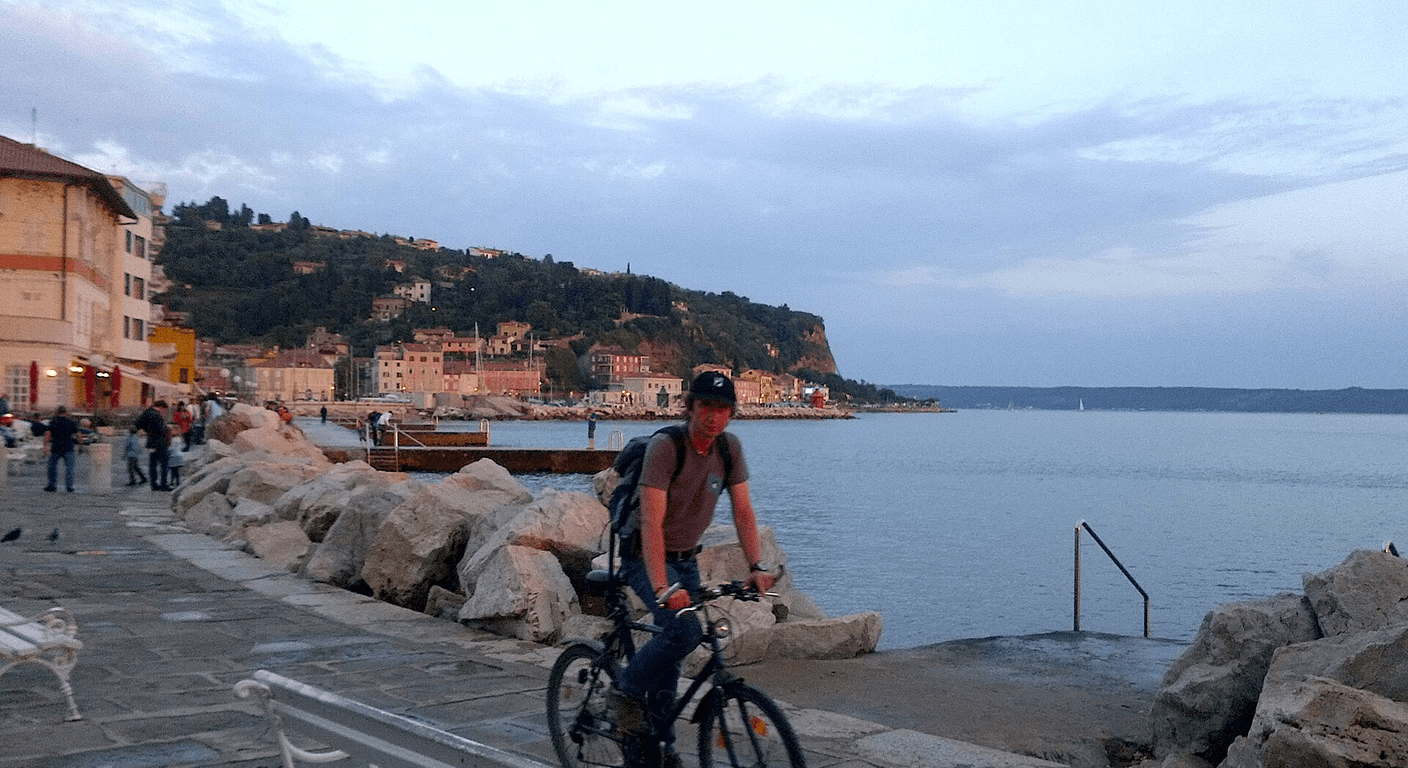
Most Australians doing a European circuit spend their Adriatic time in Croatia — Dubrovnik, Split, Hvar. Piran is the quieter argument for taking the road less driven. It's a genuinely medieval town of around 4,000 people, compact enough to walk end-to-end in twenty minutes on a flat day, with a harbour that faces southwest toward Italy and a skyline unchanged in essentials since the fifteenth century. The Venetian influence isn't decorative — it's structural. The loggia, the lion of Saint Mark above doorways, the Gothic window tracery on crumbling palazzi. It rewards slow looking.
For a solo traveller in his late sixties, the rhythm of Piran suits rather than strains. Breakfast in a café on Tartinijev trg, the oval main square named for the baroque violinist Giuseppe Tartini who was born here. A morning walk along the sea wall. Lunch somewhere with a view of the boats. A rest. Then the late afternoon light on the stone, which is extraordinary in September. The town doesn't demand performance. It simply exists, and it lets you exist alongside it.
The practical case is also sound. Slovenia uses the euro, English is widely spoken, the food is excellent and underpriced compared to Italy just across the water, and the country has a well-earned reputation for safety and political stability. None of that is incidental when you're travelling alone and want to concentrate on the place rather than logistics.
Getting There from Australia: The Honest Flight Picture
There's no pretending this is a short journey. Melbourne or Sydney to Ljubljana — Slovenia's small, well-organised capital — involves roughly 22–25 hours of total travel time, almost always with a connection through a major European hub: Dubai, Doha, Singapore, Frankfurt or Vienna. Qantas, Emirates, Qatar Airways and Singapore Airlines are the carriers Australians typically use for the European leg. Vienna is a particularly convenient hub if you want to continue by train, as Austrian Federal Railways (ÖBB) runs a straightforward service to Ljubljana.
Ljubljana's Jože Pučnik Airport is small and manageable — a genuine relief after a long-haul connection through a vast hub. From the airport, a shuttle bus or taxi covers the 25-kilometre run to the city centre in around 30 minutes. Build in at least one full recovery night in Ljubljana before continuing south to Piran. Jet lag at this latitude hits differently than trans-Tasman travel, and the Piran old town's hills will feel considerably steeper on four hours' broken sleep.
Australians travelling to Slovenia enter the Schengen Area — the 90-days-in-180-days rule applies. As of mid-2025, Australians do not require a visa for short stays, but the European Travel Information and Authorisation System (ETIAS) has been flagged for introduction. Do not assume the rules at time of writing still apply when you travel: check smartraveller.gov.au and the official EU ETIAS site for current requirements before booking anything.
Ljubljana to Piran: Two Hours by Bus, No Car Required
The Ljubljana–Piran bus is one of the more civilised inter-city connections in central Europe. Arriva Slovenija operates direct services from Ljubljana's main bus station (Avtobusna postaja Ljubljana, a short walk from the old town) to Piran, with the journey taking around two hours through green Karst plateau country. The fare is indicative around €8–€12 one way — confirm current pricing and timetables on the Arriva website before travel, as schedules vary seasonally.
The bus drops passengers at Piran's main car park and bus terminal on the landward edge of the peninsula, a five-to-ten minute walk from the harbour square. From there, porters with trolleys are available for luggage, or most hotels will arrange transfer if you contact them in advance — worth doing if you're travelling with a larger bag and want to avoid negotiating cobblestones on arrival. Piran itself is car-free within the old town walls, which is one of the more quietly satisfying facts about the place: no traffic noise, no exhaust fumes, just stone and sea air.
Returning to Ljubljana by bus is equally straightforward, and from Ljubljana you can continue by train to Vienna, Venice or Zagreb depending on your wider itinerary. The Slovenian rail network is modest but the Ljubljana–Vienna corridor is well served. Check timetables on the ÖBB or Slovenian Railways (SŽ) websites, and book seat reservations for overnight services in advance.
Walking the Old Town: What to Expect on the Ground
Piran's old town is built on a peninsula and the terrain follows the shape of the land — which means it slopes. The harbour-level streets and Tartinijev trg are relatively flat and straightforward. The lanes climbing toward the Venetian walls and the Church of St George at the top of the hill are another matter: narrow, paved in uneven stone, and genuinely steep in sections. None of it is impassable for a reasonably fit traveller, but it does require attention underfoot and a slower pace than a flat city would.
The best approach is to do the uphill sections in the cool of the morning, when the light is also better for photographs. The view from the town walls and the bell tower — which can be climbed for a small fee — is worth the effort: the Adriatic stretching toward Trieste to the northwest, the Istrian hills behind, and the red rooftops of the town below. Take your time going down; wet cobblestones after an overnight shower are slippery. A pair of low-heeled walking shoes with grip is more useful here than anything fashionable.
For travellers with significant mobility limitations, Piran is honestly not the easiest destination. Much of what makes it beautiful — the medieval street pattern, the stone surfaces, the verticality — is also what makes it challenging for those who rely on a walking frame or have difficulty with uneven ground. The harbour promenade and the main square are accessible and pleasant in their own right, but the upper town will require a realistic assessment before committing to the destination.
Where and What to Eat: The Adriatic on a Plate
The food in Piran is the Adriatic's quieter, less celebrated version of what the Italian coast charges a premium for. Squid, sea bass, bream, scallops and the local specialty of buzara — shellfish cooked in white wine, garlic and breadcrumbs — appear on almost every menu. The quality is generally high and the prices noticeably more reasonable than comparable restaurants in Trieste or Venice. A main course of grilled fish with a glass of local Malvazija white wine runs roughly €18–€28 at a mid-range restaurant, indicative — confirm current pricing locally.
The restaurants along the harbour front are the obvious choice and some are genuinely good, though the best local advice is to walk one or two streets back from the water before choosing a table. Restaurants off the main tourist circuit tend to have shorter menus and fresher produce. Ask at your hotel or accommodation for current recommendations — in a town this small, locals know exactly which kitchen is having a good season and which has coasted on its location for too long.
Tartinijev trg has several cafés well suited to the long, unhurried breakfast that makes slow travel feel like slow travel. A coffee and pastry, a newspaper or a book, the morning light shifting across the stone. Slovenian coffee culture leans Italian — espresso-based, taken seriously — and the café standard is reliably high. For wine, Istrian Malvazija and Refošk (a local red) are the regional choices worth exploring.
When to Go: Shoulder Season Is the Sensible Choice
July and August in Piran are hot, crowded and expensive. The town's small harbour fills with day-trippers from Portorož — the larger resort town a kilometre along the coast — and the lanes that feel atmospheric in spring feel considerably less so when shared with several thousand other visitors. The accommodation prices reflect this. For an older traveller who values comfort and quiet over peak-season energy, July and August are worth avoiding.
May and June offer warm, settled weather — typically 20–26°C — with the sea warming up for those who want to swim, and the restaurants and accommodation operating at full capacity without full-season pressure. The light in late May is exceptional. September and October are arguably even better: the summer visitors have largely gone, the sea is at its warmest, the hills behind Piran are beginning to turn, and the pace of the town returns to something closer to its own natural rhythm. October can bring rain, so pack a light waterproof layer.
Note that Slovenia is in the northern hemisphere — seasons are reversed from Australia's. Travelling from Melbourne in September means leaving late winter and arriving at the beginning of European autumn. This is actually a pleasant psychological bonus for Victorian travellers who've had enough of a grey Melbourne August.
Practical Matters: Money, Insurance and Staying Connected
Slovenia uses the euro. ATMs are available in Piran though the town is small, so withdrawing cash in Ljubljana before departure is sensible. Card payments are widely accepted at restaurants and hotels, but some smaller cafés and market stalls prefer cash. A Wise or similar multi-currency card is a practical tool for managing exchange costs without bank fees — check current fee structures on the provider's website before travel.
Travel insurance for a traveller aged 69 with any pre-existing medical conditions requires careful attention. Standard policies vary significantly in what they cover, and European medical costs — while lower than the United States — are not trivial. Compare policies through a reputable Australian comparison service and read the pre-existing conditions clauses before purchasing. The Australian Government's Smartraveller website (smartraveller.gov.au) has current safety and entry information for Slovenia and should be consulted in the weeks before departure, not just at the planning stage.
Mobile coverage in Piran is good — Slovenian carriers use European 4G/5G networks and roaming on an Australian plan with a European add-on works reliably. Alternatively, purchasing a local SIM in Ljubljana is straightforward and inexpensive. Most hotels and cafés offer WiFi. The nearest hospital with emergency services is in Koper, about 13 kilometres north — your hotel can advise on local medical facilities and the nearest English-speaking GP, and it's worth noting this before you need it rather than after.
Quick planning guide
| Ideal pace | Slow-paced |
|---|---|
| Best months | May–June and September–October (shoulder season) |
| Suggested stay | A few relaxed days, given the town's small size |
| Mobility level | Moderate — flat harbour area, but steep cobbled lanes in the upper old town |
| Cost level | Mid-range, generally cheaper than comparable Italian coastal towns |
| Comfort level | Comfortable outside peak summer, with good cafés and easy walking at harbour level |
| Best for | Solo travellers or couples seeking quiet, authentic medieval atmosphere over crowded ports |
| Main planning consideration | Long haul-plus-connection flight to Ljubljana requires a recovery night before continuing by bus to Piran |
Key takeaways
- Piran's Venetian harbour precinct and seafood restaurants offer a genuine Adriatic experience without Italy's prices or crowds.
- The old town is car-free but built on a peninsula — cobblestoned lanes and uphill sections require sure-footed walking shoes.
- Shoulder season — May–June and September–October — delivers the best combination of comfortable temperatures and manageable visitor numbers.
- From Melbourne or Sydney, expect 22–25 hours of travel to Ljubljana, always with a European hub connection — build in a recovery night before continuing to Piran.
- The Ljubljana–Piran bus takes around two hours and costs roughly €8–€12 one way; no car is needed for the trip.
- Confirm current Schengen entry requirements and ETIAS status at smartraveller.gov.au before booking, as rules can change.
Recommended partners and links
Indicative prices only — always confirm with the operator before booking.
Frequently asked questions
How do you get from Ljubljana to Piran?
Arriva Slovenija operates direct bus services from Ljubljana's main bus station to Piran, taking approximately two hours through the Karst plateau. The fare is indicatively around €8–€12 one way — confirm current timetables and pricing at arriva.si before travel. No car is required; the old town itself is car-free.
Do Australians need a visa to visit Slovenia?
As of mid-2025, Australians do not require a visa for short stays in the Schengen Area, which includes Slovenia. The 90-days-in-180-days rule applies. However, the European ETIAS authorisation system has been flagged for introduction. Always confirm current entry requirements at smartraveller.gov.au and the official EU ETIAS website before booking travel.
Is Piran suitable for travellers with limited mobility?
Piran is rated Moderate for mobility. The harbour promenade and main square (Tartinijev trg) are relatively flat and accessible. The lanes climbing toward the town walls and the Church of St George are steep and paved in uneven stone. Travellers who rely on a walking frame or have significant difficulty with uneven ground should assess the destination carefully before committing.
What is the best time of year to visit Piran?
May–June and September–October are the recommended shoulder seasons for travellers over 50. Temperatures are comfortable — typically 18–26°C — crowds are manageable, and accommodation prices are lower than the July–August peak. October can bring occasional rain; a light waterproof layer is advisable. July and August are hot and busy.
How much does it cost to stay in Piran?
Boutique hotels and guesthouses in the Piran old town cost roughly €90–€180 per night in shoulder season, indicatively — prices rise significantly in July and August. A mid-range dinner of grilled fish with local wine runs roughly €25–€40 per person at a harbour-front restaurant. All figures are indicative; confirm current rates directly with providers before booking.