Canberra's lakeside precinct pairs the National Museum of Australia and Questacon, linked by a flat 2.5–3km walk around Lake Burley Griffin. Spring (September–November) or autumn (March–May) suit the outdoor walk best, and a full unhurried day covers both venues, ideally with at least two nights in Canberra for those travelling from regional Victoria. The Bark Petition and Holden gallery are standout highlights. Both sites are largely wheelchair-accessible with lifts and ramps, reached via V/Line-coach connections or a short flight into Canberra Airport.
Why this lakeside pairing works so well for a group day out
The National Museum of Australia and Questacon sit on opposite shores of Lake Burley Griffin, connected by a flat, paved path along the water's edge. For a group of women travelling together — the kind who like to talk through what they have just seen over a decent coffee — this layout is almost ideal. You can visit one institution in the morning, walk or take a short bus ride to the other after lunch, and be back at your accommodation before fatigue sets in.
Neither place demands that you rush. The National Museum's permanent galleries are free and extensive, so you can linger over the things that genuinely interest you and skip what does not. Questacon has a paid entry, but the concession rate makes it reasonable, and the building itself is architecturally striking in a way that earns its place on the lakefront. The combination of social history and hands-on science gives a group something to discuss all evening.
For those travelling from regional Victoria — say, a long weekend trip up the Hume or a V/Line connection through to Canberra — this precinct is a natural anchor for the cultural part of the visit. It is flat, it is well signposted, and it does not require a hire car if you are comfortable with Canberra's bus network.
The National Museum of Australia: what to expect inside
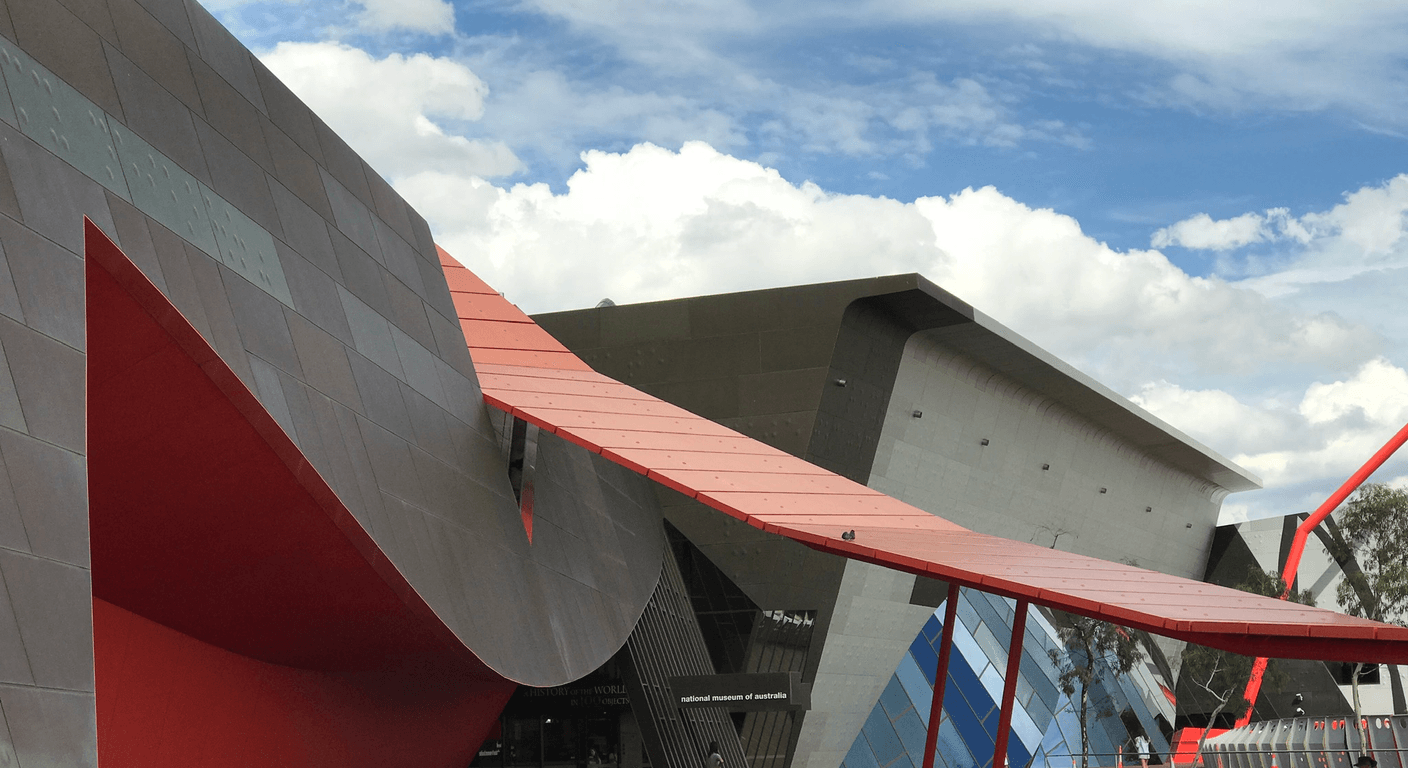
The museum's permanent collection is genuinely free, and that matters for a group on a mixed budget. The building itself, designed by Ashton Raggatt McDougall and opened in 2001, is a bold piece of architecture on the Acton Peninsula — worth a few minutes outside before you go in. Inside, the galleries cover Australian history from deep time to the recent past, and they do so with objects that carry real weight.
Two things tend to stop people in their tracks. The first is the Bark Petition — a 1963 document from Yolŋu leaders in Arnhem Land, presented to the federal parliament on bark as a formal statement of land rights. It is a small object with an enormous story, and the museum presents the context clearly. The second is the social history of the Holden, which sounds like a quirky inclusion until you stand in front of it and realise how much of Australian family life, working life, and cultural identity is wrapped up in that car. For women who grew up in Australia in the 1960s and 70s, this section has a particular resonance.
The café on site is a reasonable place for a mid-morning break. The museum also has accessible toilets throughout and lifts between levels, which matters when you are planning a full day on your feet. Prams and wheelchairs are accommodated, so if grandchildren or a friend using a mobility aid joins the group, the building handles it without fuss. Confirm current opening hours at nma.gov.au before you go, as hours can shift on public holidays.
The walk between the two: the lakeshore path explained
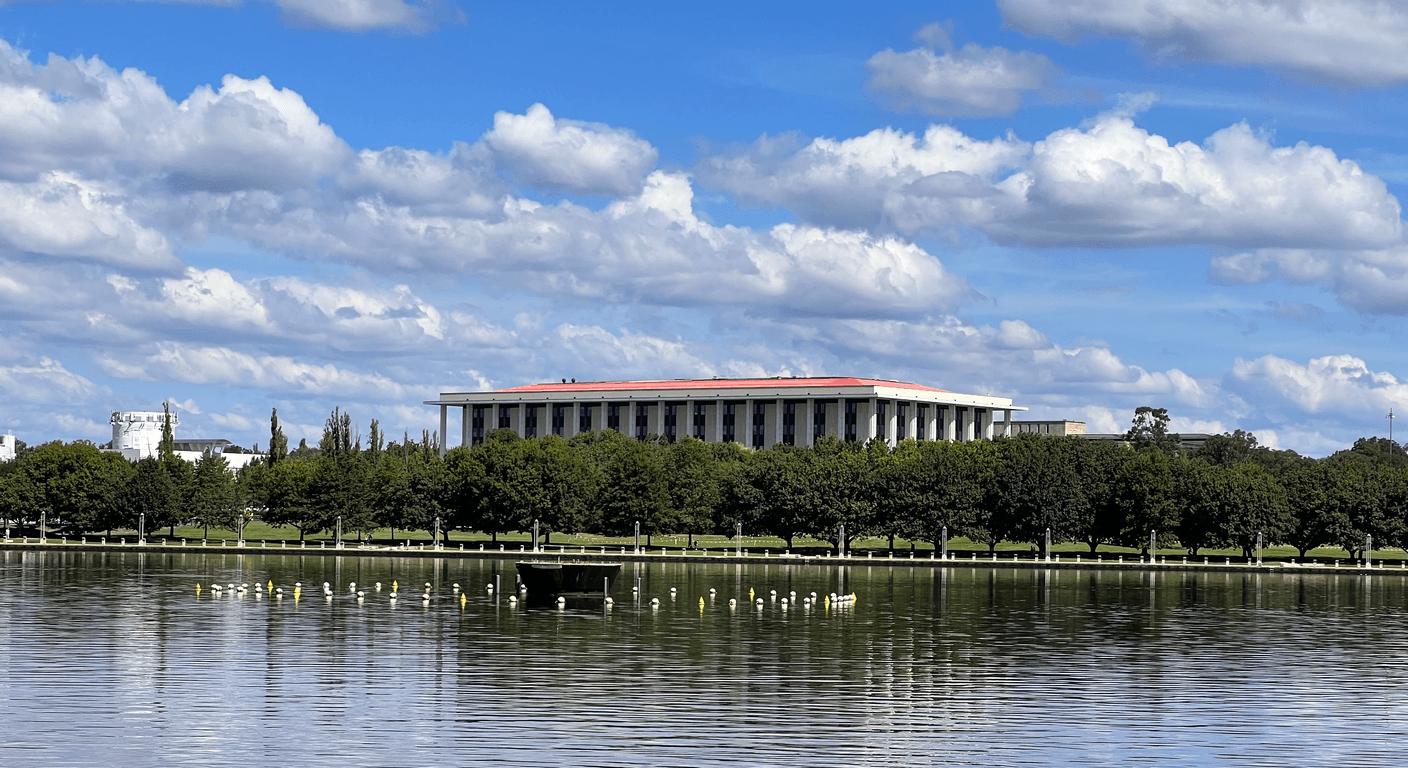
The path between the National Museum on the Acton Peninsula and Questacon on King Edward Terrace is roughly 2.5 to 3 kilometres, depending on which route you take. It follows the northern and then eastern shore of Lake Burley Griffin, and it is almost entirely flat and sealed. For most of the group, this is a pleasant walk of around 35 to 45 minutes that serves as a natural decompression between two rich institutions.
The views across the lake toward Parliament House and the Carillon are genuinely attractive, and the path is wide enough that you can walk two abreast and still talk comfortably. There are benches at intervals, which is worth knowing if anyone in the group needs to rest. The path is also suitable for those using walking poles or a cane, though anyone using a wheelchair or scooter should check current path conditions with the National Capital Authority, as sections near the waterfront can be affected by maintenance works.
If the walk feels like too much — and there is no shame in that, depending on the weather or how much energy the morning has already used — Transport Canberra buses run between the precincts. Check the current route map at transport.act.gov.au, as Canberra's bus network has been updated in recent years and stop locations may have changed. A taxi or rideshare is also a straightforward option for a group splitting the cost.
Questacon: is it worth it for adults without children?
The honest answer is yes, provided you go in with the right expectations. Questacon is an interactive science centre, and some of its exhibits are designed with younger visitors in mind. The free-fall slide, for instance, is not for everyone — and nobody needs to go near it. But the building houses a substantial number of exhibits aimed at genuine scientific curiosity: earthquake simulations, weather phenomena, mathematics made visible, and the physics of everyday objects. Adults who are willing to press a button or turn a handle find it rewarding.
The concession entry rate is worth asking about specifically. Seniors cards, pension concession cards, and similar Australian government-issued cards are typically accepted, though you should confirm what is currently recognised at questacon.edu.au before you travel. Indicatively, concession entry has been in the range of around $19 to $23, but prices do change and the website is the authoritative source. A group booking may also attract a different rate — worth a phone call if there are six or more of you.
The building is largely accessible, with lifts and ramps throughout. Some exhibits require a degree of physical engagement — crouching, reaching, gripping — but there is always something nearby that does not. The staff are generally helpful in pointing visitors toward exhibits that suit their pace. Allow two to two and a half hours if you want to move through the main galleries without feeling rushed.
Pacing the day: a practical structure for over-50s
A sensible approach is to arrive at the National Museum when it opens — typically 9am, but confirm at nma.gov.au — and spend the morning there. Give yourself three hours if you want to see the permanent collection properly and have a coffee break. The museum café or the outdoor terrace near the entrance are reasonable spots to regroup before the walk or transit to Questacon.
Lunch between the two institutions is worth factoring in. There are cafés and food options near the Parliamentary Triangle, and the waterfront area has some casual options. Questacon has its own café, which is fine for a light lunch or afternoon tea. If the group prefers a proper sit-down meal, it is worth researching restaurants in the Barton or Kingston areas nearby, which have a stronger dining scene — Visit Canberra's website is a useful starting point for current options.
By mid-afternoon, most people have absorbed as much as they comfortably can. Questacon by 2pm gives you two hours before the typical 5pm close, which is enough without being a sprint. The flat terrain of the whole precinct means that physical tiredness, rather than the walking itself, is usually the limiting factor. Building in a sit-down moment every 90 minutes or so makes the day feel manageable rather than depleting.
Getting to Canberra from regional Victoria: transport options
From regional Victoria, the most comfortable option for many groups is the train-coach connection via V/Line to Melbourne, then a Murrays or NSW TrainLink coach service to Canberra. The journey from Melbourne to Canberra takes roughly six to eight hours by coach depending on the route, so an overnight stay in Canberra of at least two nights makes the trip worthwhile. Check vline.com.au for the Victorian leg and the relevant coach operator's website for the Canberra connection.
Flying from Melbourne (Tullamarine or Avalon) to Canberra Airport is faster and increasingly affordable for off-peak travel, with the airport sitting about ten kilometres from the city centre. Taxis, rideshares, and the Canberra Airport Shuttle service connect the airport to central accommodation. For a group sharing costs, the shuttle or a taxi to accommodation in the city or near the lake is straightforward.
Once in Canberra, the cultural precinct around Lake Burley Griffin is accessible by bus from most central accommodation. Transport Canberra's route network and the My Way card (the local equivalent of a Myki) cover the main tourist corridors. For a group that prefers flexibility, a hire car shared across the group can also work well, particularly if the itinerary extends beyond the lakeside precinct to places like the Australian War Memorial or the National Gallery of Australia.
A note on accessibility, weather, and what to bring
Canberra's climate is more extreme than coastal Victoria — colder in winter, hotter in summer, and subject to sharp temperature swings in spring and autumn. The ideal visiting window for comfort on the lakeshore walk is roughly September to November or March to May. In summer, the afternoon heat can be significant, and the exposed path along the lake offers limited shade. In winter, the walk is brisk; both institutions are well heated inside, which can actually make a winter visit pleasant if you dress in layers.
Both the National Museum and Questacon have accessible entry, accessible toilets, and facilities for visitors with mobility aids. The National Museum's website includes a dedicated accessibility page with detail on lift locations, hearing loops, and tactile elements. Questacon similarly publishes accessibility information at questacon.edu.au — it is worth reading this in advance if anyone in the group has specific requirements, rather than discovering limitations on the day.
Comfortable, flat shoes are the main practical requirement for the day. A small backpack or tote for water, sunscreen, and a light layer covers most contingencies. Both institutions have bag storage or cloakroom options if you do not want to carry everything around. Credit cards are accepted widely throughout; carrying some cash is still sensible for smaller café purchases, though most places are now card-friendly.
Quick planning guide
| Ideal pace | Slow and unhurried — one institution per half-day with breaks built in |
|---|---|
| Best months | September to November or March to May, for the most comfortable lakeshore walk |
| Suggested stay | A full day for both venues; at least two nights in Canberra if travelling from regional Victoria |
| Mobility level | Easy — flat, sealed paths and accessible buildings with lifts and ramps |
| Cost level | Budget-friendly — the National Museum's galleries are free and Questacon offers concession entry |
| Comfort level | High — both venues are well heated/cooled with benches along the connecting path |
| Best for | Groups of friends or over-50s travellers who prefer substance over spectacle |
| Main planning consideration | Confirm current opening hours, bus routes, and Questacon concession pricing before travelling |
Key takeaways
- The National Museum of Australia's permanent galleries are free to enter, making it one of the best-value cultural experiences in Canberra for any budget.
- Questacon concession entry is indicatively around $19–$23, but confirm current pricing at questacon.edu.au before you travel.
- The flat, sealed lakeshore path between the two institutions is roughly 2.5 to 3 kilometres and takes around 35 to 45 minutes at a comfortable pace.
- Both institutions are largely accessible for visitors using wheelchairs, walking aids, or mobility scooters — check each venue's accessibility page for current detail.
- The bark petition and the Holden gallery at the National Museum are among the most talked-about exhibits for Australian visitors in their 60s and 70s.
- Spring and autumn are the most comfortable seasons for the outdoor lakeshore walk; summer heat and winter cold can both be significant in Canberra.
Recommended partners and links
Indicative prices only — always confirm with the operator before booking.
Frequently asked questions
Is the National Museum of Australia free for seniors?
The National Museum of Australia's permanent galleries are free for all visitors, including seniors. Some special or ticketed exhibitions carry a separate admission charge, typically around $20–$25 — confirm what is currently on and what it costs at nma.gov.au before your visit.
Does Questacon offer a concession or senior discount?
Questacon offers a concession entry rate that is typically available to holders of Australian government-issued concession cards, including seniors cards. The indicative concession price has been in the range of around $19–$23, but you should confirm the current rate and which cards are accepted at questacon.edu.au, as prices are subject to change.
Can you walk between the National Museum and Questacon?
Yes. A flat, paved path along the shore of Lake Burley Griffin connects the two institutions, covering roughly 2.5 to 3 kilometres. The walk takes around 35 to 45 minutes at a relaxed pace. Transport Canberra buses and rideshare are alternatives for those who prefer not to walk.
Is Questacon worth visiting for adults who do not have children with them?
Yes, for adults who are genuinely curious about science and happy to engage with interactive exhibits. The building covers earthquake simulation, weather phenomena, physics, and mathematics in ways that reward adult visitors. Some exhibits are designed for younger children, but there is enough content across the galleries to make a two-hour visit worthwhile for most adults.
What is the best time of year to visit this Canberra precinct?
Spring (September to November) and autumn (March to May) offer the most comfortable conditions for the outdoor lakeshore walk between the two institutions. Canberra summers are hot and the exposed lakefront path offers limited shade; winters are cold, though both institutions are well heated inside.