QVMAG in Launceston, Tasmania, is the largest regional museum and art gallery in Australia, split across two free sites — the Royal Park Art Gallery and the Inveresk Museum — linked by a flat, twenty-minute riverside walk or a short drive. Each site suits a relaxed half-day, with colonial art, thylacine natural history displays, and railway heritage as highlights. Mobility is easy, with level access and seating throughout, and Launceston Airport sits about fifteen kilometres from the city.
What exactly is QVMAG and why does it matter for travellers?
The Queen Victoria Museum and Art Gallery holds the distinction of being the largest regional museum and art gallery in Australia — a fact that surprises many visitors who arrive expecting something modest. It operates across two separate sites in Launceston, Tasmania, and both are free to enter. That combination of scale and no entry cost makes it genuinely unusual in the Australian cultural landscape.
For couples travelling in their sixties and seventies, QVMAG represents the kind of day out that does not require rushing. The collections are substantial enough to fill a full day if you visit both sites, but each campus also works well as a standalone half-day. You can choose your pace, sit when you need to, and step out for coffee without missing anything that cannot be revisited.
The institution has been part of Launceston's civic identity since the nineteenth century and holds collections spanning colonial Tasmanian art, natural history, Chinese heritage, astronomy, and railway history. It is, in short, the kind of place that rewards curiosity rather than checklist tourism.
The two sites: Royal Park Art Gallery and Inveresk Museum
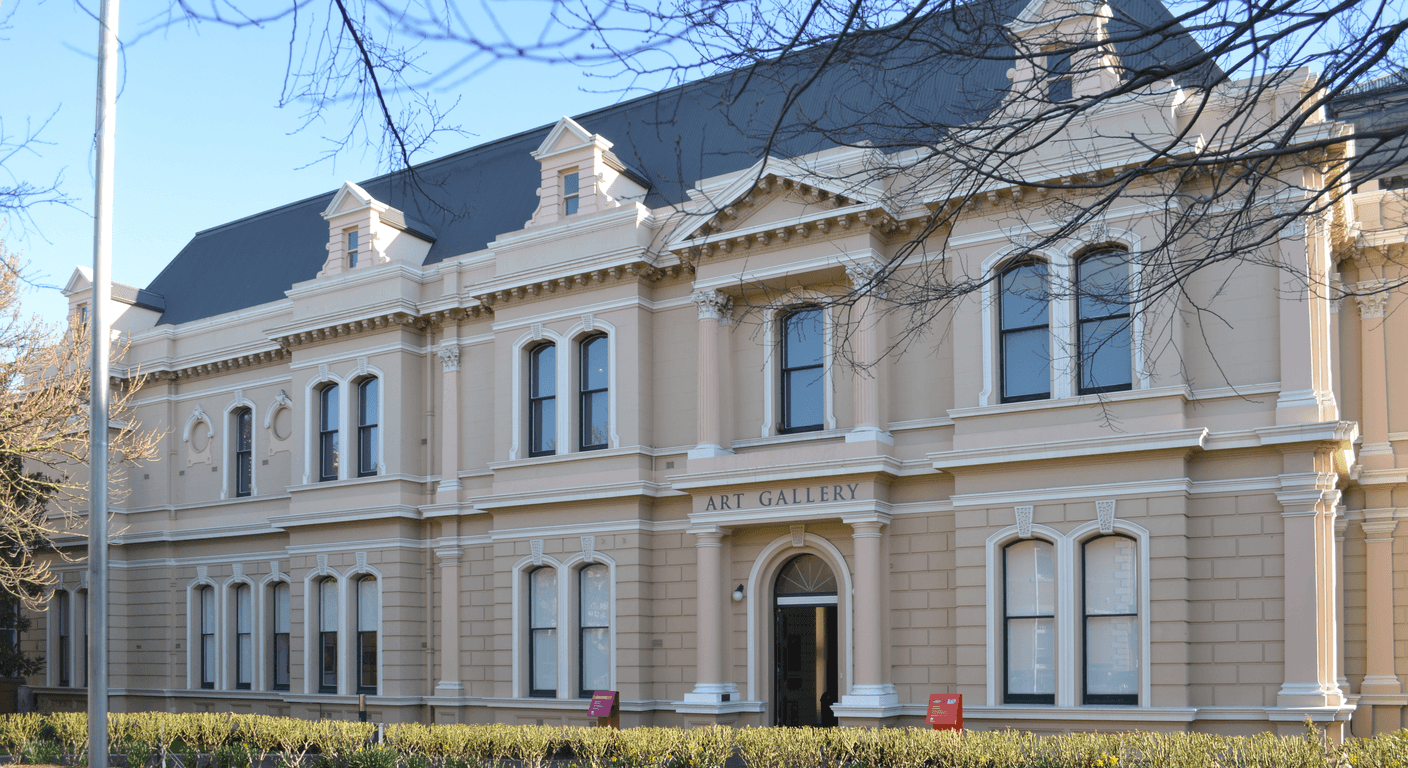
The Art Gallery sits at Royal Park, close to Launceston's city centre on Wellington Street. This is where the fine and decorative arts collections live — colonial paintings, Tasmanian landscapes, applied arts, and temporary exhibition galleries that rotate throughout the year. The building itself has a calm, considered atmosphere, with good natural light in the gallery spaces and seating throughout.
The Museum at Inveresk occupies a converted railway workshop in the former Inveresk railyards precinct, a short distance north-east of the city centre along the Esk River. The scale here is more industrial — appropriately so, given that the building once housed locomotive maintenance. Inside, you will find natural science displays, Tasmanian fauna specimens, a Chinese joss house, and an extensive collection of railway carriages and equipment that fills the heritage workshop floor.
The two sites are connected by a flat, paved riverside walking path that takes around twenty minutes at a comfortable pace. The walk itself is pleasant and largely level, following the South Esk River through light parkland. For those who prefer not to walk between sites, it is a short drive or taxi ride, and parking is available at both locations. Confirm current accessibility details directly with QVMAG before your visit, as conditions can vary.
What will you find at the Royal Park Art Gallery?
The Art Gallery's permanent collection covers several centuries of art with particular strength in colonial and early Australian work. Tasmanian landscapes from the nineteenth century give a grounding sense of how European settlers saw and interpreted this part of the world — sometimes romantically, sometimes with a documentary eye. There are also works by significant Australian artists held here that you would not expect to encounter outside a major metropolitan gallery.
Applied arts and decorative objects from the colonial era sit alongside the fine art collections, giving a rounder picture of Tasmanian material culture. Temporary exhibitions cycle through the dedicated exhibition spaces, and the QVMAG website lists current and upcoming shows. It is worth checking before you visit so you can plan time around anything that particularly interests you.
Seating is available throughout the gallery, which matters on a long visit. The building is accessible, with level entry and lifts where needed, though confirming specific accessibility requirements with the gallery directly is always advisable. The surrounding Royal Park is a pleasant place to sit outside between galleries, and central Launceston's cafes and restaurants are within easy walking distance.
What will you find at the Inveresk Museum?
The Inveresk site is where QVMAG's natural science and social history collections are housed, and the former railway workshop setting gives the whole place an atmospheric quality that a purpose-built museum rarely achieves. The railway collection alone — full-scale carriages, locomotives, and equipment displayed in the original workshop space — is worth the visit for anyone with an interest in industrial history or the story of how Tasmania was connected by rail.
The natural history galleries cover Tasmanian fauna, geology, and palaeontology in considerable depth. The Tasmanian tiger (thylacine) material held here is among the most significant in the world, and the broader fauna displays give a clear sense of the island's distinctive ecology. For a traveller with a background in science or natural history, this section alone could absorb several hours.
One of the less-publicised highlights is the Chinese joss house — a nineteenth-century place of worship brought here from the Weldborough goldfields — which sits within the museum as a quietly extraordinary piece of social history. It speaks to the Chinese community's presence in colonial Tasmania in a way that is both respectful and genuinely moving. The Inveresk precinct also includes café facilities and a pleasant outdoor area along the riverbank.
How to plan a day across both sites
A practical approach for a couple is to begin at the Art Gallery when it opens in the morning, spend two to three hours there at a relaxed pace, then walk or drive to Inveresk for the afternoon session. Both sites open from around 10am, and closing times are typically late afternoon — confirm current hours on the QVMAG website before you go, as hours can change with seasons or events.
The riverside walk between the two sites is a genuine pleasure if the weather is cooperative and mobility allows. It is flat and paved for most of its length, and the Esk River scenery provides a natural break between the two very different cultural experiences. If the weather turns or energy is lower than expected, a short drive or taxi between the sites is entirely sensible — Launceston is a compact city and the trip takes only a few minutes.
Lunch options are available at both ends of the day. The Inveresk precinct has café facilities on site, and the area around Royal Park connects easily to central Launceston's dining scene. For those who prefer a longer midday break, Launceston's city centre — with its mix of cafes, restaurants, and the famous Cataract Gorge nearby — is well within reach of both sites.
Getting to Launceston and around the city
Launceston is served by regular flights from Melbourne and other mainland capitals, with Launceston Airport located around fifteen kilometres south of the city. Rex Airlines and Qantas/QantasLink both operate on the Melbourne–Launceston route; check current schedules and fares directly with the airlines. Indicative return fares from Melbourne vary considerably by season and booking lead time — budget roughly and confirm current pricing.
Within Launceston, Metro Tasmania operates local bus services, and the city is compact enough that taxis and rideshare options are practical for getting between QVMAG's two sites or from accommodation to either campus. Car hire is straightforward from the airport and gives flexibility if you are combining QVMAG with wider Tasmanian travel. The QVMAG website and Visit Launceston both carry useful orientation information.
Launceston itself suits a pace that is slower than the major capitals. The accommodation range is solid — from well-appointed hotels in the city centre to character-filled heritage properties — and the restaurant and café culture has developed considerably over recent years. For a couple spending two or three nights, QVMAG sits naturally alongside the Cataract Gorge, Tamar Valley wine country, and the city's historic streetscapes as a reason to linger.
Practical considerations for older and mobility-conscious travellers
Both QVMAG sites have been developed with accessibility in mind, and the institution is generally well set up for visitors who need seating, level access, or more time to move through spaces. The Art Gallery at Royal Park is housed in a building with level entry and internal lifts; the Inveresk Museum, given its heritage workshop origins, has some variation in floor surfaces but is broadly accessible. Contacting QVMAG directly before your visit is the best way to confirm specific requirements.
The riverside walk between the two sites is flat and paved, making it suitable for most mobility levels, though it is not a sealed footpath its entire length — wear comfortable, supportive footwear. There is no obligation to walk; driving or taking a taxi between the sites is equally practical and takes only a few minutes. Neither site charges for entry, so there is no financial pressure to cover both in one visit if energy or weather suggests otherwise.
QVMAG does not require bookings for general admission to its permanent collections, which makes it easy to fit into a flexible itinerary. Temporary or special exhibitions may occasionally have ticketing arrangements — check the QVMAG website for current details. The institution's café facilities and the proximity of central Launceston mean there is no need to plan around meal logistics with any great precision.
Quick planning guide
| Ideal pace | Slow and unhurried, one site per half-day |
|---|---|
| Best months | Comfortable year-round; check seasonal opening hours before visiting |
| Suggested stay | Half a day per site, or a full day for both |
| Mobility level | Easy — level entry, lifts, seating throughout, and a flat paved link path |
| Cost level | Free entry to both sites |
| Comfort level | High, with cafes on site and central Launceston nearby |
| Best for | Couples and older travellers wanting a relaxed, free cultural day |
| Main planning consideration | Confirm current hours and accessibility details with QVMAG, and decide whether to walk or drive between the two sites |
Key takeaways
- QVMAG is the largest regional museum and art gallery in Australia, and both of its Launceston sites are free to enter.
- The Art Gallery at Royal Park focuses on colonial and Australian fine art; the Museum at Inveresk covers natural science, railway history, and social heritage.
- The two sites are connected by a flat, twenty-minute riverside walk — or a short drive for those who prefer not to walk.
- Each site comfortably fills a half-day at a relaxed pace, making a full QVMAG day one of the most rewarding free cultural experiences in regional Australia.
- Seating is available throughout both sites, and accessibility is generally good — confirm specific requirements with QVMAG before visiting.
- Launceston's compact city centre means cafes, restaurants, and other attractions are within easy reach of both QVMAG campuses.
Recommended partners and links
Indicative prices only — always confirm with the operator before booking.
Frequently asked questions
Is QVMAG free to visit?
Yes. Entry to both QVMAG sites — the Art Gallery at Royal Park and the Museum at Inveresk — is free of charge. Some special temporary exhibitions may have separate ticketing arrangements; check the QVMAG website at qvmag.tas.gov.au for current details before your visit.
How far apart are the two QVMAG sites?
The Art Gallery at Royal Park and the Museum at Inveresk are roughly twenty minutes apart on foot via a flat, paved riverside path along the South Esk River. By car or taxi, the trip takes only a few minutes. Both sites also have parking available.
Is QVMAG accessible for visitors with limited mobility?
Both sites are broadly accessible, with level entry and internal lifts at the Art Gallery, and generally accessible floor areas at the Inveresk Museum, though the heritage workshop building has some variation in floor surfaces. Contact QVMAG directly to confirm specific accessibility requirements before your visit.
Do you need to book to visit QVMAG?
No booking is required for general admission to QVMAG's permanent collections at either site. This makes it easy to include in a flexible itinerary. For special exhibitions or events, check the QVMAG website for any ticketing requirements.
What are QVMAG's opening hours?
QVMAG's sites generally open from around 10am, with afternoon closing times. Hours can vary seasonally or around events and public holidays. Always confirm current opening hours on the official QVMAG website at qvmag.tas.gov.au before your visit.