Samoa lies roughly six hours from eastern Australian cities, with the dry season from May to October offering the calmest seas and most comfortable conditions. A stay of one to two weeks allows time in Apia, a beach fale for cultural immersion, and the To Sua Ocean Trench, the destination's signature turquoise swimming hole. Mobility is moderate — most activities are easy, though reaching the trench requires a steep ladder descent. Sunday closures shape the entire itinerary.
Why Samoa Works Differently From the Rest of the Pacific
There's a particular kind of Pacific holiday that's become almost entirely predictable: the overwater bungalow, the buffet breakfast, the excursion desk. Samoa hasn't entirely escaped that template, but it hasn't surrendered to it either. The fa'a Samoa — the Samoan way — is not a tourism slogan. It's a functioning social and spiritual code that shapes daily life, from the way villages are organised around the malae (village green) and church to the genuine authority of the matai (chiefs) in community decisions.
For travellers over 50 who've done Bali twice and found Fiji's resort strips a little hollow, Samoa offers something more substantive. The island of Upolu, where most visitors base themselves, is small enough to navigate without anxiety — the drive from Apia to the southern coast takes under an hour — and large enough to reward slow exploration. Savai'i, the larger and less-visited western island, is for those who genuinely want to feel like they've stepped off the tourist map. A ferry connects the two.
The comparison with Fiji is worth making plainly. Samoa is generally more affordable at the accommodation and meal level, less developed in terms of resort density, and culturally more cohesive. It's not undiscovered — Australians and New Zealanders have been coming here for decades — but the pace and the priorities haven't been reoriented around visitor convenience. That requires a small adjustment in expectation, and most travellers over 50 find that adjustment easy and ultimately welcome.
Getting There: The Six-Hour Reality From Australian Cities
Flights from Sydney or Brisbane to Apia's Faleolo International Airport run roughly six hours, typically with Samoa Airways or via a connection through Auckland or Fiji on other carriers. From Melbourne, add around an hour to the Sydney leg, or connect through Sydney. The routing is straightforward by Pacific standards — this isn't a journey that requires a 24-hour marathon — but it does cross the International Date Line, which can disorient even experienced travellers. Samoa sits on the western side of the line, so flying from Australia you effectively skip a calendar day on the way there and gain it back returning.
A recovery night on arrival is genuinely advisable, not just a precaution. Apia itself is a perfectly good place to ease in — the fish market opens early, the seawall promenade is flat and pleasant in the morning cool, and the pace of the town centre is gentle enough that an afternoon wander feels like acclimatisation rather than effort. Book your first night at a conventional hotel or resort rather than a fale; the fale experience is best appreciated once you've slept properly.
Confirm current entry requirements before booking anything. Samoa has historically offered visa-free entry for Australian passport holders for stays up to 60 days, but entry conditions can change. The definitive source is smartraveller.gov.au, and it's worth checking again in the weeks before departure, not just at the planning stage. Travel insurance that covers pre-existing medical conditions is essential; confirm your policy covers the Pacific region and includes medical evacuation, since Samoa's hospital facilities are limited by Australian standards.
When to Go: Reading the Wet and Dry Seasons Honestly
Samoa's dry season runs from May to October. Temperatures sit in the high 20s, humidity is manageable, and the trade winds make outdoor time genuinely comfortable. This is the window most Australian travellers aim for, and for good reason — the ocean is calmer for snorkelling, the roads are easier after rain, and the heat doesn't compound the tiredness that long days of cultural exploration can bring.
The wet season, November to April, brings higher humidity, afternoon downpours and the possibility of cyclones from December through March. That's not a reason to rule it out entirely — Samoa in the wet season is lush, green and considerably cheaper, and the rain tends to come in concentrated bursts rather than all-day grey. But for travellers who prefer predictability in their itinerary, or who find high humidity physically draining, the dry season is the clearer choice.
Easter and the Christmas–New Year period see a significant influx of Samoan diaspora returning from New Zealand and Australia, which lifts the atmosphere considerably but also fills accommodation. If travelling in those windows, book well ahead. The weeks either side of those peaks — late April or mid-January — can offer a reasonable compromise of good weather and easier availability.
The To Sua Ocean Trench: What to Know Before You Commit to the Ladder
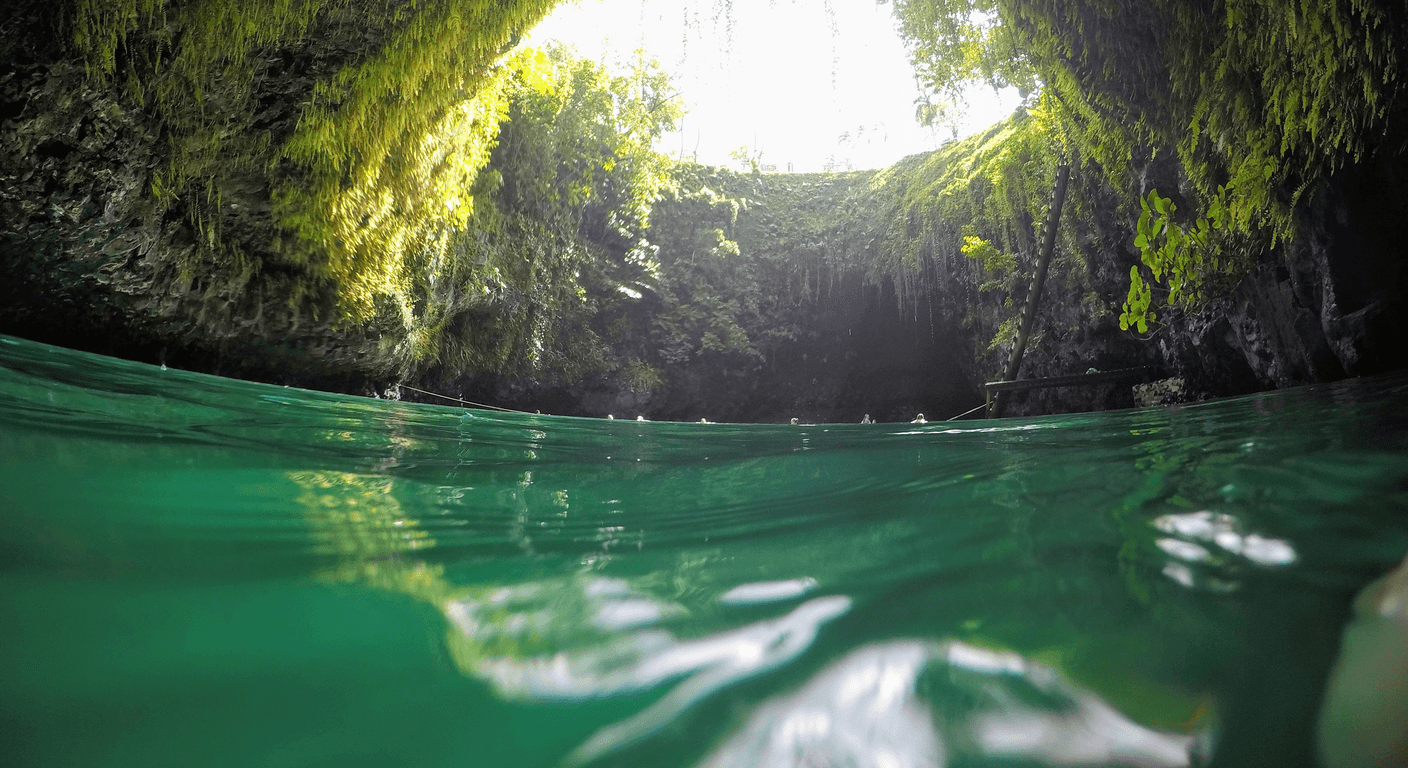
The To Sua Ocean Trench on Upolu's south coast is one of those places that photographs can't fully prepare you for — not because of its scale, but because of its peculiar intimacy. Two large sinkholes connect underground to the sea, creating a turquoise swimming pool of extraordinary depth and colour, surrounded by lush gardens. The entry fee is modest (confirm current pricing at the site or through the Samoa Tourism Authority), and the grounds are well maintained by the local family who operate it.
The ladder. This is the piece of information that matters most for travellers over 50. To reach the water, you descend a wooden ladder that drops roughly ten metres, nearly vertical, with rope handholds. It is steep. The rungs can be slippery. Coming back up requires upper body strength and a degree of knee confidence. There is no alternative route down. Some travellers find it manageable with care and a slow pace; others — particularly those with shoulder, knee or hip concerns — make the entirely reasonable decision to view the trench from the platform above and consider that sufficient. Both responses are legitimate. What's not useful is underestimating it.
The surrounding garden area and the viewing platform are accessible without the ladder, and the setting alone justifies the visit. There are also tidal pools closer to the ocean edge of the property that can be explored at low tide on more level ground. Arrive in the morning when light falls directly into the water; by early afternoon the shadows shift. The drive from Apia is around 45 minutes on the Cross Island Road — a driver or hire car is the practical option, since public transport doesn't serve this route reliably.
Beach Fales and Conventional Resorts: How to Mix Them Sensibly
A beach fale is an open-sided thatched structure, typically raised slightly off the ground, with a mat floor and a mosquito net. Privacy is minimal — you're sleeping in what amounts to a very beautiful shed on the beach, with communal bathroom facilities nearby. Meals are prepared by the village family who run the fale operation, usually fresh fish, coconut-based dishes and taro, eaten together with other guests. The cost is indicatively around AUD 80–150 per person per night including meals, though this varies — confirm directly with operators.
For travellers over 50, the honest approach is to mix rather than commit entirely to one mode. Open a stay with two or three nights at a conventional resort or guesthouse — Aggie Grey's in Apia has history and comfort, and there are several well-regarded properties on the north-west coast — then move to a fale for two nights to experience the village rhythm properly. The fale is where the cultural texture is; the resort is where the hot shower and the reliable bed are. There's no virtue in being uncomfortable for its own sake.
When staying at a fale or visiting a village, modest dress is expected. Shoulders covered, knees covered. This applies to both men and women. Samoan hosts are unfailingly gracious, but the expectation is genuine rather than performative, and respecting it matters. Lavalavas (wrap-around cloths) are widely available in Apia markets and are the simplest solution — comfortable in the heat and appropriate everywhere.
Sunday in Samoa: The One Rule That Runs Everything
Sunday in Samoa is not a quiet day in the Australian secular sense. It is a day of church attendance, family meals, rest and genuine observance. Most shops are closed. Many beaches have restricted or no access through village land. Fale operators will not have activities running. Even some resort restaurants operate on reduced hours. Attempting to treat Sunday as a normal touring day will result in a frustrating itinerary and, more importantly, signals a disregard for local values that travellers here should actively avoid.
The practical response is simple: plan Sunday around it. Check into your accommodation on Saturday, attend a church service on Sunday morning if invited or if you're comfortable doing so (visitors are generally welcome, though dress modestly and arrive on time), spend the afternoon reading or swimming at your own accommodation's beach, and treat the enforced stillness as part of the experience rather than an inconvenience. It's one of the few places left in the Pacific where a day genuinely stops. That's not nothing.
Some resorts arrange Sunday umu (underground oven) feasts for guests — a traditional meal cooked in a pit with hot stones, shared communally. This is worth enquiring about when booking. It's one of those occasions where the food is secondary to the atmosphere and the conversation around it.
Apia's Markets and the Practical Business of Getting Around
The Fugalei Market in Apia is the city's produce heart — stalls of taro, breadfruit, papayas, coconuts and local greens, with vendors who have been selling from the same spot for years. The fish market on the waterfront opens early and moves fast; by mid-morning the serious action is done. Neither requires significant walking stamina — both are compact, covered in parts, and best visited in the cooler morning hours. Apia's seawall promenade connects them and is flat, pleasant and walkable at any pace.
Getting around Upolu independently is easiest with a hire car or a private driver arranged through your accommodation. The roads on the main island are in reasonable condition on the sealed routes, though the south coast road has sections that reward a vehicle with some clearance. Apia itself has an informal bus system — converted trucks with wooden bench seating — that is cheap and characterful, but not reliably timetabled and not suited to anyone with hip or knee concerns. Taxis are available and the fares are modest; confirm the rate before getting in.
Costs in Samoa are indicatively lower than Fiji for comparable accommodation and meals, particularly outside the main resort strip. A good restaurant meal in Apia runs roughly AUD 20–40 per person; a cold Vailima beer (the local brew, and very decent) is a few dollars. These are indicative figures only — confirm current pricing locally. The overall trip budget, once flights are factored in, is competitive with a mid-range Fiji holiday and generally delivers more cultural substance for the spend.
Quick planning guide
| Ideal pace | Slow-paced, built around village rhythms and Sunday observance |
|---|---|
| Best months | May to October, the dry season |
| Suggested stay | One to two weeks, mixing Apia, a fale stay and possibly Savai'i |
| Mobility level | Moderate — most sights are easy, but the To Sua ladder demands strength and steady knees |
| Cost level | Budget-friendly to mid-range, generally cheaper than Fiji |
| Comfort level | Mixed — basic beach fale nights balanced with conventional resort comfort |
| Best for | Travellers over 50 wanting an authentic, culturally intact Pacific experience |
| Main planning consideration | Respecting Sunday closures and confirming entry requirements and evacuation-inclusive travel insurance beforehand |
Key takeaways
- Samoa is roughly six hours from eastern Australia — accessible without the marathon routing of longer Pacific or Asian destinations.
- The To Sua Ocean Trench ladder is steep and nearly vertical; assess your own knee and shoulder confidence honestly before committing to the descent.
- Sunday is a genuine day of rest and church across the whole country — build your itinerary around it, not over it.
- Mixing two nights in a beach fale with conventional resort accommodation gives cultural depth without sacrificing comfort.
- The dry season, May to October, offers the most comfortable conditions for travellers who prefer lower humidity and calmer seas.
- Travel insurance covering pre-existing conditions and medical evacuation is essential — confirm your policy covers the Pacific before you book flights.
Recommended partners and links
Indicative prices only — always confirm with the operator before booking.
Frequently asked questions
Do Australians need a visa to visit Samoa?
Australian passport holders have historically been granted visa-free entry to Samoa for stays up to 60 days, but entry requirements can change. Always confirm current rules at smartraveller.gov.au before booking, and check again in the weeks immediately before travel.
Is the To Sua Ocean Trench accessible for older travellers with mobility concerns?
The swimming area at To Sua requires descending a steep, near-vertical wooden ladder of roughly ten metres. There is no alternative route to the water. Travellers with knee, hip or shoulder concerns should assess this honestly — viewing the trench from the platform above is a perfectly worthwhile alternative. The surrounding gardens and tidal pools are accessible without the ladder.
How does Samoa compare in cost to Fiji for Australian travellers?
Samoa is generally more affordable than Fiji at the accommodation and meals level, particularly outside the main resort areas. Indicative resort rates, beach fale stays and restaurant meals tend to run lower than comparable Fiji options, though flights from Australia are broadly similar in price. Confirm all current costs directly with providers before budgeting.
What is a beach fale and is it suitable for travellers over 50?
A beach fale is an open-sided thatched sleeping structure on the beach, typically with communal bathroom facilities and meals included, operated by a local village family. It offers genuine cultural immersion at a lower price point than resorts. For travellers over 50, mixing one or two fale nights with conventional hotel accommodation is the most comfortable approach — the experience is rewarding, but privacy and facilities are limited.
What is the best time of year for Australians to visit Samoa?
May to October is Samoa's dry season and the most comfortable period for Australian visitors — temperatures are in the high 20s, humidity is lower, and the ocean is generally calmer for swimming and snorkelling. The wet season (November to April) is cheaper but brings higher humidity and the possibility of cyclones between December and March.