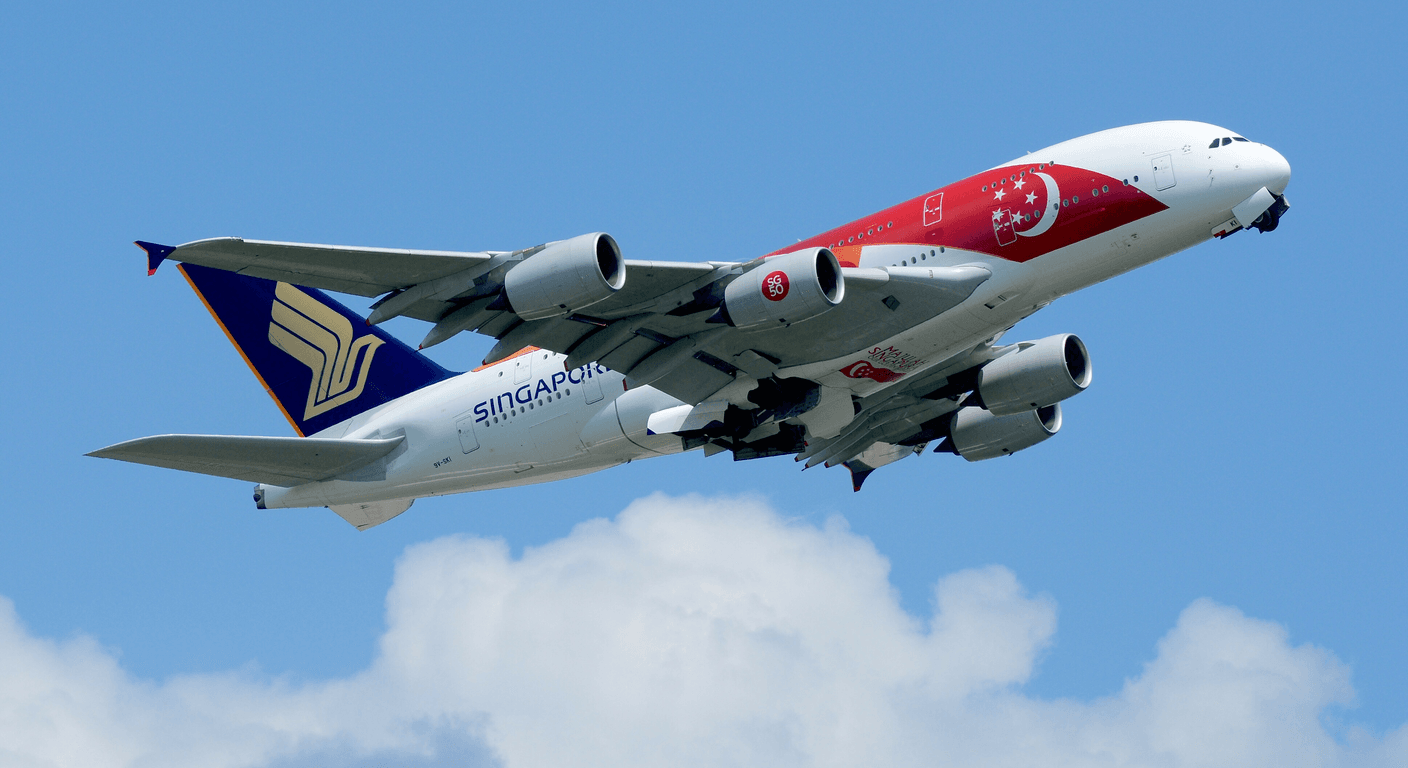
Singapore Airlines' expanded Sydney services in 2026 add more departure options for Australian travellers over 50 connecting to Europe and Asia via Changi Airport. Flights from Sydney to Singapore take around 8 hours; Changi is one of the most comfortable transit hubs in the world for older travellers, with flat-access terminals and short walks. Best months to fly are April–May and September–October. Mobility rating: Easy for transit, Economy suits shorter legs, Premium Economy or Business for long-haul. Confirm current schedules and fares directly with Singapore Airlines.
What the expanded Sydney schedule actually changes
More flights on a route means more departure times — and for travellers over 50, that detail is not trivial. A morning departure from Sydney rather than a midnight red-eye can mean the difference between arriving at Changi refreshed and arriving in a fog. Singapore Airlines' additional Sydney services in 2026 give travellers more options to time their departure around their own sleep patterns, which is the kind of flexibility that used to require booking a connecting domestic flight through Melbourne or Brisbane.
The Sydney–Singapore leg takes around 8 hours. That's a manageable stretch — long enough to sleep if you depart in the evening, short enough to endure in Economy if you pick the right seat. From Changi, onward connections to London Heathrow, Rome Fiumicino, Frankfurt, Zurich and a dozen Asian cities run frequently. Singapore Airlines operates a hub-and-spoke model through Changi, and it works well. Layover times of 2–4 hours are standard on many routings; if you want more breathing room, you can book a longer connection deliberately or add a stopover night.
Confirm current schedules directly with Singapore Airlines at singaporeair.com or through a licensed travel agent before booking. Timetables shift, and the specific departure times that suit you may not be the ones prominently advertised. A good travel agent who works regularly with Singapore Airlines can check availability across cabin classes and flag any promotional fare windows — worth a phone call.
Changi Airport: why it matters so much for older travellers
There's a reason Changi keeps appearing in conversations about the best airports in the world for transit comfort. The terminals are flat, wide, generously air-conditioned and well-signed in English. Distances between gates are manageable — and where they're not, there are trains between terminals that take minutes. Seating is plentiful and genuinely comfortable, not the punishing plastic perches common in European hubs. Clean toilets are frequent and accessible. This is not a small thing after eight hours in the air.
Singapore Airlines passengers transiting through Changi can access the SilverKris Lounge if they're travelling in Business Class or hold KrisFlyer Elite Gold status. For those in Premium Economy or Economy, there are paid lounge options at Changi (the Plaza Premium Lounge, for example) that cost around SGD $60–$80 per person for a session — worth it on a long transit. Showers, hot food, reclining chairs. Compare that to spending the same time in the main terminal and the math is straightforward.
If your connection is longer than six hours and you have the energy for it, Singapore offers a free or low-cost visa-free transit tour through the Singapore Tourism Board's Changi Stopover programme. Check current availability at visitsingapore.com — the programme has operated in various forms and the specifics change. For a solo traveller who wants to see a little of the city without the overhead of planning, it's a practical option. For anyone who'd rather rest, staying airside is equally sensible.
Choosing the right seat and cabin for your body
Economy on Singapore Airlines is a step above many carriers — the seats are a reasonable 31–32 inches of pitch on most configurations, and the in-flight entertainment is extensive. That said, eight hours in Economy to Singapore followed by another 12–13 hours to London is a long time in a narrow seat for anyone with knee, hip or back concerns. The honest answer is that Premium Economy is worth serious consideration for the Sydney-to-London or Sydney-to-Europe routing if budget allows.
Singapore Airlines' Premium Economy cabin offers around 38 inches of pitch, a wider seat and a footrest — not a fully flat bed, but meaningfully more comfortable than Economy for a 13-hour leg. The fare gap between Economy and Premium Economy varies considerably with booking timing, but indicatively you're looking at roughly $1,400–$2,800 more per person return on a Sydney–London routing. For a long-haul journey where how you arrive matters as much as the cost, that's a calculation only you can make. Business Class offers a fully flat bed and is genuinely restorative — from around $6,500–$9,000+ return, depending on availability and routing.
For seat selection specifically: on the Sydney–Singapore leg, window seats on the left side of the aircraft offer better light management for daytime flights if you want to sleep. On the longer Europe legs, an aisle seat gives you freedom to stand and stretch without disturbing anyone — important for circulation on legs over 10 hours. Use the Singapore Airlines seat map at booking, or check seatguru.com for independent seat-by-seat notes on the specific aircraft type on your routing. Always confirm the aircraft type hasn't changed closer to departure.
Baggage allowances and what to know before you pack
Singapore Airlines' checked baggage allowance varies by cabin class and fare type. As a general guide: Economy fares include either 25kg or 30kg checked baggage depending on the fare tier; Premium Economy typically includes 35kg; Business Class includes 40kg. These figures are indicative — confirm your specific allowance at booking, as it appears on your ticket, and again before you pack. The airline's website at singaporeair.com has a baggage calculator tool.
Carry-on allowance is 7kg in Economy and Premium Economy, 10kg in Business. For travellers who pack medications, mobility aids or medical equipment, there are separate provisions — contact Singapore Airlines directly before travel to clarify what needs to be declared or pre-arranged. Mobility aids including folding wheelchairs and walking frames are generally carried free of charge and handled separately from hold baggage, but the process requires advance notice at booking.
One practical note on the single-supplement question as it relates to baggage: solo travellers often carry more than couples who share a single allowance across two tickets. If you're travelling alone and packing for a longer Europe trip, it's worth calculating whether your planned luggage fits within the allowance before you book. Overweight baggage fees at check-in are steep — and avoidable.
The shape of a Singapore transit day — what it actually looks like
Take an indicative evening departure from Sydney — say 9:00pm or 10:00pm, which is common on Singapore Airlines routes. You arrive at Changi around 5:00am–7:00am Singapore time (Singapore is 2 hours behind Sydney in Australian Eastern Standard Time, 3 hours behind in daylight saving). That means you've likely slept 4–6 hours on the plane, you're in a modern terminal with good light and air conditioning, and you have anywhere from 90 minutes to several hours before your onward connection. This is the best-case scenario for a stopover.
If you've booked a deliberate overnight stopover in Singapore, the picture changes. You clear immigration — Singapore is a quick, efficient process for Australian passport holders, typically 15–25 minutes — collect bags, and take the MRT train from Changi to the city centre in around 30–35 minutes for roughly SGD $2. A comfortable hotel in the city runs from around SGD $200–$350 a night (indicative; confirm current rates). The Duxton, the Fullerton and the M Social are all well-regarded options in different price brackets; check Tourism Singapore's site for current options. A full day in Singapore — the Botanic Gardens, a hawker centre lunch, a walk through Chinatown — is not strenuous. It's a city built for walking in short bursts with frequent air-conditioned rest points.
If you're transiting same-day with a longer layover — say 5–7 hours — the Jewel complex at Changi itself is genuinely worth the time. It's connected to Terminals 1, 2 and 3 by covered walkway, has a large indoor waterfall, cafes, restaurants and seating at every turn. You don't need to clear immigration to access Jewel from the transit zone. For a solo traveller who wants a pleasant few hours without the logistics of entering the city, it's an easy call.
Booking timing, fare variability, and avoiding the common mistakes
Singapore Airlines fares on the Sydney route are dynamic — meaning the same seat can cost significantly more or less depending on when you book, what dates you choose, and how much inventory remains. Fares to Europe via Singapore tend to be sharpest 4–6 months out from departure, particularly for Premium Economy and Business. Leaving it to 6–8 weeks out in peak European summer (June–August) is where travellers get stung. April–May and September–October departures are generally better value and more comfortable on arrival at European destinations.
KrisFlyer, Singapore Airlines' frequent flyer programme, is worth joining even if you don't fly frequently. Miles accumulate across partner airlines and can be used toward upgrades — and the programme has no joining fee. Status credits from Singapore Airlines flights count toward KrisFlyer Elite tiers, which unlock lounge access and priority boarding. For a traveller who does one significant international trip a year, the maths on accruing miles toward a future upgrade are at least worth understanding. The KrisFlyer programme is managed at singaporeair.com.
Travel insurance is non-negotiable on a routing like this — and for travellers over 65 with pre-existing conditions, finding appropriate cover requires planning, not an afterthought. Australian insurers are required to offer cover for pre-existing conditions but can charge significantly more or apply exclusions. Compare policies specifically for medical evacuation, trip cancellation and pre-existing condition cover before booking any airfare. The Smartraveller website at smartraveller.gov.au has a plain-English guide to travel insurance for Australians that's worth reading. And yes — declare everything honestly, because an undisclosed condition that leads to a claim being rejected is an expensive lesson.
A solo traveller's perspective — and a couple's perspective
A solo traveller's perspective: Singapore Airlines is a comfortable airline for solo travel. The crew are attentive without being intrusive, and a single traveller in a window seat with a good book and the entertainment system is not a lonely proposition. The practical advantages of solo travel on this routing are real — you choose your seat without compromise, you control your transit time at Changi, and you can decide at the last minute to add a Singapore stopover night without coordinating with anyone. The financial reality is that the airfare itself carries no single supplement — you pay for one seat, full stop. Where single supplements bite is on tour packages or hotel packages booked through third-party operators at either end. Ask explicitly before booking any land package.
A couple's perspective: two travellers on this routing share a baggage allowance effectively, can book adjacent seats more reliably, and can split the decision-making on upgrades — one partner in Premium Economy, one in Economy is an option some couples choose on a tight budget, though it's not for everyone. Couples also have more flexibility on stopovers: one rests at the hotel while the other explores. The main consideration for couples is that Premium Economy seats are configured 2-4-2 on most Singapore Airlines widebody aircraft, which means a couple can sit together at a window-and-middle pair. Confirm the aircraft configuration for your specific flight at booking.
Quick planning guide
| Ideal pace | One night minimum stopover in Singapore recommended for long-haul connections to Europe |
|---|---|
| Best months | April–May and September–October (shoulder season, cooler Singapore humidity, better European weather) |
| Suggested stay | 1–2 nights in Singapore as a transit stopover; 2–3 weeks total for a Europe or deeper Asia itinerary |
| Mobility level | Easy — Changi Airport is among the world's most accessible transit hubs; flat, wide, well-signed |
| Cost level | Economy from around $900–$1,400 return Sydney–Singapore (indicative, confirm with airline); Premium Economy from roughly $2,800–$4,200 return; Business from around $6,500+ return |
| Comfort level | High — Singapore Airlines consistently rated for cabin comfort and service quality |
| Best for | Solo travellers, couples and small groups connecting to Europe, the UK, or Southeast Asia; those who value a quality stopover over a direct red-eye |
| Main planning consideration | Fare variability is significant — book 4–6 months out for better availability on preferred cabin classes; single supplement applies on tour packages booked through third parties, not on the airfare itself |
Key takeaways
- Singapore Airlines' expanded Sydney services in 2026 give over-50 travellers more departure time options for connecting to Europe and Asia via Changi.
- Changi Airport is one of the most accessible and comfortable transit hubs in the world for older travellers — flat, wide, well-signed and generously seated.
- Premium Economy is worth serious consideration for Europe-bound legs over 12 hours; the seat pitch and footrest make a measurable difference on arrival.
- Fares are most competitive booked 4–6 months out; April–May and September–October are the best-value and most comfortable months to travel.
- The Singapore Airlines airfare carries no single supplement — solo travellers pay for one seat; single supplements apply only on third-party tour or hotel packages.
- Travel insurance covering pre-existing conditions must be arranged before booking, not after — confirm cover with your insurer and check Smartraveller's guidance first.
Recommended partners and links
Indicative prices only — always confirm with the operator before booking.
Frequently asked questions
How long is the flight from Sydney to Singapore on Singapore Airlines?
The Sydney to Singapore flight on Singapore Airlines takes approximately 7 hours 50 minutes to 8 hours 20 minutes depending on routing and winds. Singapore is 2 hours behind Australian Eastern Standard Time (3 hours behind during daylight saving), so an evening departure from Sydney arrives at Changi in the early morning. Confirm the exact flight duration for your specific service at singaporeair.com.
Does Singapore Airlines charge a single supplement on flights from Sydney?
No. Singapore Airlines airfares are priced per seat — a solo traveller pays for one seat with no single supplement applied by the airline. Single supplements are a feature of tour packages and some hotel packages booked through third-party operators, not of the airfare itself. Always ask tour operators explicitly whether a single supplement applies before confirming a booking.
What is the baggage allowance on Singapore Airlines from Sydney?
As a general guide, Singapore Airlines Economy fares include 25kg or 30kg checked baggage depending on fare tier; Premium Economy includes 35kg; Business Class includes 40kg. Carry-on is 7kg in Economy and Premium Economy, 10kg in Business. Your specific allowance appears on your ticket. Confirm at singaporeair.com using the baggage calculator, and contact the airline in advance if you're travelling with mobility aids or medical equipment.
Is Changi Airport accessible for travellers with mobility concerns?
Yes. Changi Airport is widely regarded as one of the most accessible airports in the world. Terminals are flat and wide, inter-terminal trains run frequently, wheelchair assistance is available on request (arrange through Singapore Airlines at booking), and seating throughout the terminals is plentiful and comfortable. The Jewel complex — accessible from the transit zone — has lifts, flat access and extensive seating. Request any mobility assistance you need when booking your flight.
Do I need a visa to transit through Singapore?
Australian passport holders do not currently require a visa for transit through Singapore or for short stays. However, visa and entry requirements can change — confirm the current rules with the Singapore Immigration and Checkpoints Authority or via Smartraveller at smartraveller.gov.au before you travel. Never rely on secondhand information for visa rules.