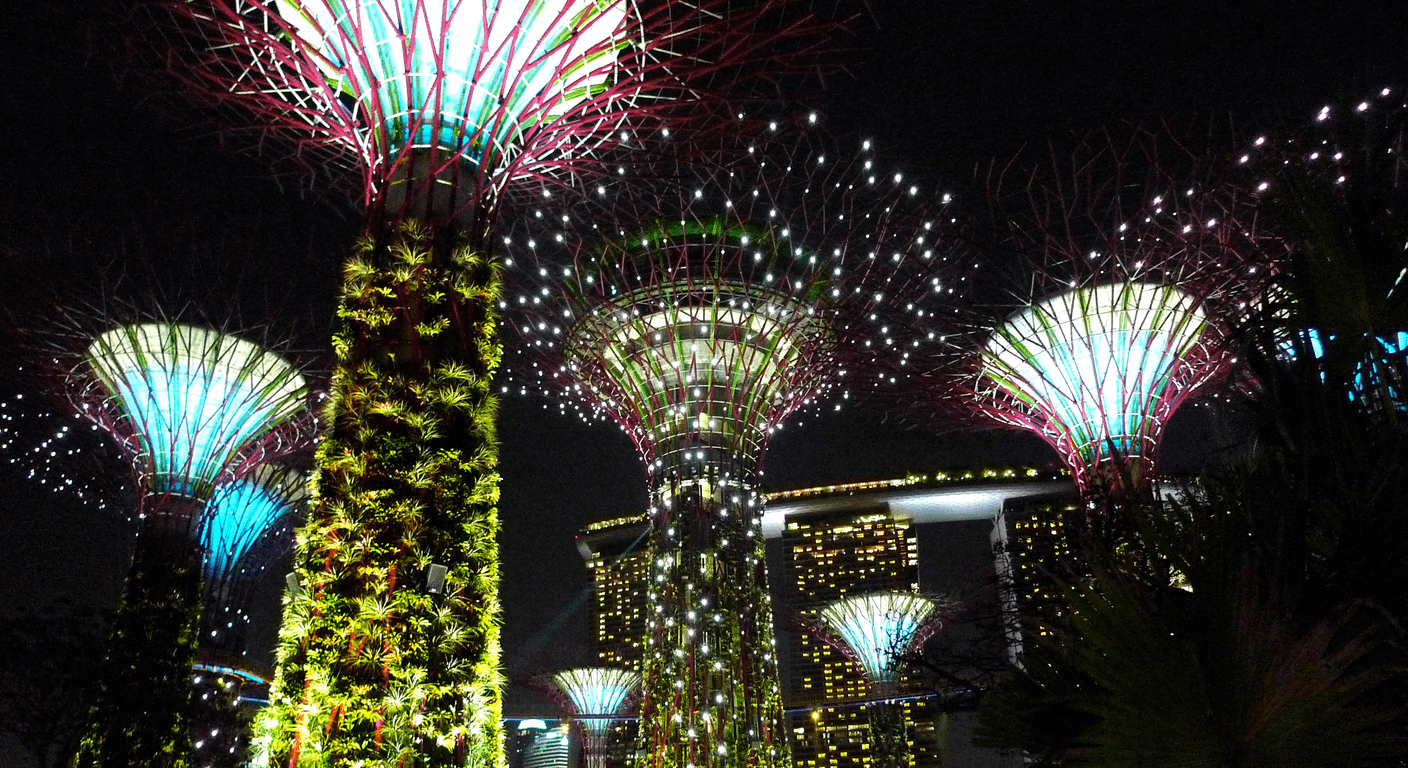
Singapore suits a two or three day stopover between Australia and Europe, breaking up the long-haul flight so travellers arrive rested rather than exhausted. There's no single best season — it's warm and humid year-round — so mornings before 10am and evenings after 6pm are best for outdoor sightseeing, with air-conditioned midday breaks. The Gardens by the Bay Supertree light show is a standout. Mobility is easy to moderate, with flat paths and lift access, and the MRT runs direct from Changi into the city in about 30 minutes.
Why Singapore Makes Sense as a Stopover
Breaking a long-haul flight to Europe in Singapore is not a compromise — it is genuinely one of the better decisions a traveller can make at this stage of life. The flight from Melbourne to Singapore runs around eight hours, which is manageable. What follows, if you push straight through to a European destination, is another twelve to fourteen hours. Taking two or three days in Singapore between those legs means you arrive in Europe rested rather than wrecked.
Singapore is also unusually well set up for independent travellers who are not looking to rush. The city is compact, the public transport system is among the cleanest and most reliable in Asia, English is spoken everywhere, and the food culture means you can eat exceptionally well for very little money. For a solo traveller in his late sixties, it combines the ease of a first-world city with the sensory interest of somewhere genuinely different from home.
The honest caveat is the climate. Singapore sits just over one degree north of the equator, and the heat and humidity are constant year-round — typically 30 to 33 degrees with humidity above 80 percent for much of the day. This is not a reason to avoid it, but it does require a different approach to pacing than you would use in, say, London or Rome.
Getting from Changi Airport into the City
Changi Airport is consistently rated among the best-run airports in the world, and the transit experience is straightforward. Once you clear immigration and collect luggage, the MRT's East-West Line connects directly from the airport basement (Changi Airport station) to the city centre. The journey to City Hall or Raffles Place takes around 30 minutes and costs a very small amount — indicatively around SGD 2 or so, though you should confirm current fares at the station.
To use the MRT, you will need a stored-value card. The most practical option for a short visit is the Singapore Tourist Pass, available from TransitLink offices at the airport, which offers unlimited MRT and bus travel for a flat daily fee. Alternatively, your Australian Visa or Mastercard contactless bank card now works directly on MRT fare gates in Singapore — tap on, tap off, and the correct fare is deducted. This is genuinely convenient and removes the need to queue for a transit card if you arrive tired.
Taxis and ride-share (Grab is the dominant app in Singapore) are also widely available from the airport. A taxi to the central hotel districts — Marina Bay, Orchard Road, or Bugis — costs indicatively around SGD 25 to 40 depending on time of day and surcharges; confirm with the driver or the app before you commit. For a first arrival, particularly with luggage, some travellers find a taxi simpler than navigating the MRT. The MRT, however, is worth learning quickly — it will serve you well for the rest of the stay.
Where to Stay: Precincts That Work for This Kind of Visit
For a short stopover, location matters more than usual. Staying close to the MRT and within walking distance of at least one worthwhile precinct saves time and energy. The Bugis and Bras Basah area sits between the colonial civic district and Kampong Glam, and is well connected by the MRT's East-West and Downtown lines. It is a practical base that keeps you close to several of the most rewarding parts of the city without requiring a taxi for every outing.
The Marina Bay precinct is another sensible choice, particularly if you plan to visit Gardens by the Bay — it is a short walk or one MRT stop away. Hotels in Marina Bay tend to sit at the higher end of the price range, but the convenience is real. Orchard Road, Singapore's main shopping corridor, is a third option if air-conditioned comfort is a priority; the entire strip is essentially a linked series of shopping centres, which sounds less interesting than it is when you are looking for somewhere cool to sit midday.
Whatever area you choose, confirm that the hotel has a lift, a ground-floor or low-floor lobby entrance, and is within a few minutes' walk of an MRT station. These details matter more than they might once have, and most Singapore booking platforms allow you to filter for accessibility features.
How to Spend Your Time: A Loose Two-Day Shape
The most effective approach to Singapore in two or three days is to treat mornings and evenings as your active periods, and the middle of the day — roughly 11am to 3pm — as your rest and recovery window. The Singapore Botanic Gardens is an ideal morning destination. It opens at 5am and is best before 10am, when the light is softer and the temperature has not yet climbed fully. The gardens are free to enter (the National Orchid Garden inside charges a small fee, indicatively around SGD 5 for seniors; confirm on the National Parks Board website), and the paths are well maintained and largely flat. The MRT's Circle Line stops at Botanic Gardens station, right at the Tanglin Gate entrance.
Kampong Glam, the historic Malay-Arab quarter, is worth a morning or a late afternoon. Arab Street and Haji Lane are the main draws — a compact grid of textile shops, perfumeries, modest cafes, and the golden-domed Sultan Mosque. The architecture is distinctive, the streets are walkable, and it is genuinely interesting rather than a tourist set piece. The area is flat and easy on the feet. Bugis MRT station is the nearest stop.
For the colonial civic district — the Padang, St Andrew's Cathedral, the National Museum, the Asian Civilisations Museum along the river — a morning walk covers the ground comfortably. The Asian Civilisations Museum (acm.org.sg) is air-conditioned, thoughtfully curated, and well worth two hours; it sits right on the Singapore River at Empress Place. The National Museum of Singapore (nationalmuseum.sg) is similarly rewarding and cool. Both have lift access and seating throughout.
Gardens by the Bay: Why Dusk Is the Right Time to Go
Gardens by the Bay is one of those places that earns its reputation. The Supertree Grove — a cluster of tree-like vertical garden structures between 25 and 50 metres tall — is impressive in daylight, but the evening light-and-sound show, the Garden Rhapsody, transforms the experience into something genuinely worth arranging your day around. It runs twice nightly (indicatively at 7:45pm and 8:45pm; confirm current times on the official Gardens by the Bay website before you visit) and is free to watch from the ground.
The two glass conservatories — the Flower Dome and the Cloud Forest — are the paid components of the visit and are worth the entry fee, particularly the Cloud Forest, which contains a spectacular indoor waterfall and a mountain of tropical and highland plants. The air-conditioning inside is a genuine relief if you have spent the afternoon outdoors. Both conservatories are fully accessible by lift and have seating throughout.
Getting to Gardens by the Bay is straightforward: the MRT's Circle Line stops at Gardens by the Bay station, or you can walk from Bayfront station (Downtown Line or Circle Line) in around ten minutes along a covered pedestrian path. A visit that arrives around 4pm, takes in the conservatories, has a meal at the Satay by the Bay hawker centre on site, and stays for the evening Supertree show fits comfortably into an afternoon and evening without feeling rushed.
Eating Well Without Spending Much: Hawker Centres Explained
Hawker centres are Singapore's answer to the food court, but the comparison undersells them. They are open-air or semi-enclosed complexes of individual stalls, each typically specialising in one or two dishes, and the food is cooked fresh to order. Quality is consistently high — many stall operators have been perfecting the same dish for decades — and prices are among the lowest you will find in any developed city. A full plate of chicken rice, laksa, char kway teow, or nasi lemak costs indicatively around SGD 4 to 7 at most hawker centres; confirm prices at the stall, as they vary.
For a first visit, Maxwell Food Centre in Chinatown and Lau Pa Sat in the CBD are both accessible, well-known, and easy to navigate. Lau Pa Sat occupies a Victorian cast-iron market building on Raffles Quay and is particularly atmospheric in the evening, when the surrounding streets are closed and satay stalls set up along the road outside. Ordering is simple: walk around, choose a stall, order and pay at the counter, and find a table. Cold drinks — fresh sugar cane juice, barley water, or a local beer — are sold separately from drinks stalls within the centre.
Sitting down for a hawker meal at a pace that suits you is one of the pleasures of Singapore travel. There is no pressure to move on, the seating is generally covered, and the people-watching is excellent. For travellers managing dietary requirements, most stalls will accommodate simple requests, and vegetarian and halal options are widely available and clearly signed.
Practical Matters: Health, Entry, and Pacing Yourself
Before any international trip from Australia, the first stop should be smartraveller.gov.au. The Australian Government's Smartraveller website carries current entry requirements, visa information, health advisories, and safety ratings for Singapore. Entry requirements can change, and what applied on a previous trip may not apply now. As of the time of writing, Australian passport holders do not require a visa for short stays in Singapore, but you should confirm this and check any current health declarations or digital arrival card requirements on the official Singapore Immigration and Checkpoints Authority site (ica.gov.sg) before you fly.
The humidity deserves plain talk. It is not dangerous for most healthy travellers, but it is relentless, and it catches people out when they underestimate it. Sweat evaporates slowly in high humidity, which means your body's cooling system works less efficiently than you are used to. Drink water consistently throughout the day — not just when you feel thirsty. Wear loose, light-coloured clothing in natural fibres. Build genuine rest into the middle of each day: a museum, a shopping centre, the hotel room, or a long lunch somewhere air-conditioned. This is not laziness; it is sensible management of a different climate.
If you have any cardiac or respiratory conditions, or take medications affected by heat, speak to your GP before the trip. Travel insurance that covers medical expenses in Singapore is essential — costs at private hospitals can be significant. The MRT system is largely accessible, with lifts at most stations, but some older stations have steps between platforms. The PTV-equivalent app for Singapore is the MyTransport.SG app, which gives real-time MRT information and is free to download.
Quick planning guide
| Ideal pace | Slow-paced — active mornings and evenings, air-conditioned rest through the midday heat |
|---|---|
| Best months | Year-round; consistently warm and humid, so no single ideal season |
| Suggested stay | Two to three days, ideally as a stopover en route to or from Europe |
| Mobility level | Moderate — flat, well-maintained paths and lift access throughout, but heat and humidity add effort |
| Cost level | Budget-friendly for food (hawker meals from around SGD 4–7); accommodation ranges to premium in precincts like Marina Bay |
| Comfort level | High — English widely spoken, modern accessible transport, and air-conditioned refuges built into most itineraries |
| Best for | Over-50 independent travellers breaking a long-haul flight to Europe who want an easy, walkable, well-organised city |
| Main planning consideration | Managing heat and humidity by scheduling outdoor activity for morning and evening and building genuine air-conditioned rest into the middle of the day |
Key takeaways
- Singapore's MRT accepts Australian contactless bank cards directly at the fare gates — no transit card required for a short visit.
- Mornings before 10am and evenings after 6pm are the most comfortable times to be outdoors; plan rest or air-conditioned activities for midday.
- A full hawker centre meal in Singapore costs indicatively around SGD 4 to 7 — some of the best-value food in any city accessible from Melbourne.
- The Gardens by the Bay Supertree evening light show, the Garden Rhapsody, is free to watch from ground level and runs twice nightly.
- Always check current Singapore entry requirements and health advisories on smartraveller.gov.au before you fly — requirements can change.
- A two or three day Singapore stopover on the Europe run means you arrive at your final destination rested, not exhausted from a single 22-hour journey.
Recommended partners and links
Indicative prices only — always confirm with the operator before booking.
Frequently asked questions
Do Australians need a visa to stop over in Singapore?
Australian passport holders do not currently require a visa for short stays in Singapore, but entry requirements can change. Always confirm the current rules on smartraveller.gov.au and the Singapore Immigration and Checkpoints Authority site at ica.gov.sg before you travel.
What is the easiest way to get from Changi Airport to the city centre?
The MRT's East-West Line runs directly from Changi Airport station to the city centre in around 30 minutes. Your Australian contactless Visa or Mastercard bank card works on the fare gates — tap on and tap off. Taxis and Grab ride-share are also available from the airport arrivals halls.
Is Singapore manageable for a solo traveller in their late 60s?
Singapore is one of the more practical cities in Asia for independent older travellers. English is spoken everywhere, the MRT is clean and largely accessible, the food is affordable, and the main precincts are walkable. The main challenge is the year-round heat and humidity, which requires deliberate pacing and regular rest in air-conditioned spaces.
When is the best time to visit Gardens by the Bay?
Arriving around 4pm allows you to visit the conservatories (the Flower Dome and the Cloud Forest) in air-conditioned comfort during the hottest part of the afternoon, then stay for the free Supertree evening light show, the Garden Rhapsody, which runs twice nightly. Confirm current show times at gardensbythebay.com.sg before your visit.
How do you use a hawker centre if you have never been to one before?
Walk around the centre first to see what is on offer, then choose a stall, order and pay directly at the counter, and find any available table — tables are shared and that is normal. Drinks are sold separately from dedicated drinks stalls within the same centre. Prices are displayed at each stall and payment is usually cash, though many stalls now accept cards or QR payment.
- Smartraveller – Singapore Travel Advice (Australian Government)
- Visit Singapore – Official Tourism Site
- Gardens by the Bay – Official Site
- Singapore Botanic Gardens – National Parks Board
- Asian Civilisations Museum
- National Museum of Singapore
- TransitLink – MRT Fares and Tourist Pass
- Singapore Immigration and Checkpoints Authority – Entry Requirements