Solo travellers over 50 on Murray River and European river cruises routinely pay a single supplement of 50–100% above the per-person twin share price — effectively paying for a cabin designed for two. A handful of operators offer dedicated solo cabins at no surcharge; others run seasonal solo promotions. Shoulder season (March–May and September–October on the Murray) is the best time to find reduced loadings. Mobility rating: Easy. Access from Melbourne, Adelaide and Sydney is straightforward by car, coach or regional rail to embarkation ports.
Why the single supplement is a solo traveller's most expensive companion
River cruise cabins are priced on the assumption that two people share them. That's the business model, and operators are reasonably transparent about it — once you ask. What they're less transparent about is the size of the loading. A 'single supplement' sounds modest. In practice, on a seven-night Murray River cruise, it can mean paying an extra $1,200 to $3,000 on top of the twin-share rate, for the privilege of sleeping alone in a cabin built for two.
The maths is straightforward and the injustice is real. If a seven-night Murray cruise is advertised at $3,500 per person based on twin share, the operator collects $7,000 for that cabin. A solo traveller paying a 100% supplement also pays $7,000 — for exactly the same cabin, the same meals, the same excursions — and the operator loses nothing. The supplement isn't covering a cost. It's covering a preference, and charging the solo traveller for it.
For women over 50 travelling alone — a demographic that makes up a substantial and growing share of river cruise passengers — this is the defining financial question before any booking. It deserves a direct answer, not a call to a sales desk. This guide attempts to give one.
What do Murray River operators actually charge solo travellers?
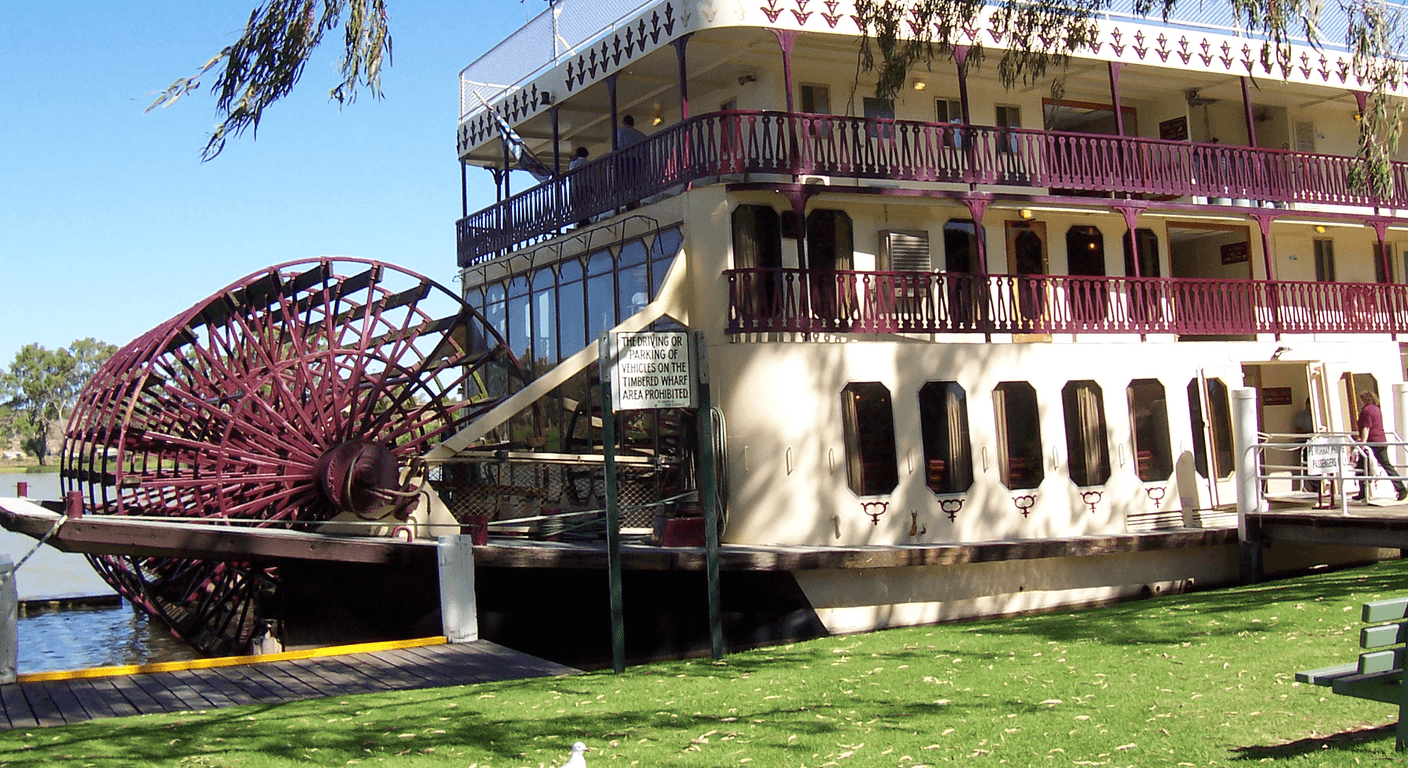
PS Murray Princess, operated by Sealink/Kelsian and departing from Mannum in South Australia, is the most accessible Murray option for travellers from regional Victoria and South Australia. Their solo supplement has historically been applied at around 50–75% of the twin-share per-person rate on most cabin categories, though this varies by sailing and season. The vessel has a small number of single-occupancy cabins — ask for these specifically, as they're not always prominently advertised and availability is limited. Confirm current rates and cabin availability directly with the operator before comparing any quoted fare.
APT, whose Murray itineraries operate aboard the Murray Princess and their dedicated Murray river vessels, applies a solo supplement that has ranged from 50% to 100% depending on cabin grade and departure date. APT has run periodic 'solo traveller' promotions — particularly in the shoulder season March–May window — that reduce or waive the supplement on selected sailings. These are not standing offers; they appear without much fanfare and disappear just as quietly. Signing up for APT's email list and asking your travel agent to flag solo promotions is the most reliable way to catch them.
Scenic's Murray River product sits at the premium end of the market, with a correspondingly steep solo loading — typically 100% on standard cabins, though Scenic has occasionally offered solo-friendly pricing on select departures. The honest reality is that Scenic's pricing rewards couples and penalises solo travellers more consistently than its Murray competitors. That's not a reason to rule it out — the product quality is genuine — but it's a reason to negotiate hard or wait for a promotion. Always ask whether a share-match programme exists; Scenic has offered this on some European sailings and it's worth asking if the same applies to Murray departures.
How European river lines compare — and where the gap is widest
European river cruising — Rhine, Danube, Douro, Rhône — has a similar structural problem but a wider range of responses to it. Viking River Cruises, which dominates the European market for Australian travellers, applies a solo supplement of around 50% on most staterooms, and has dedicated solo staterooms on some vessels at no supplement. These sell out fast. Avalon Waterways has a similar structure, with solo supplements generally in the 25–75% range depending on the suite category and departure date. Both operators run seasonal solo promotions that Australian travellers routinely miss because they don't ask.
The operators doing it genuinely better are worth naming. Riviera Travel (UK-based, bookable through Australian agents) has built a reputation for lower solo supplements — some sailings at 10–25% loading — and a transparent solo-cabin policy that doesn't require negotiation. Emerald Cruises has introduced dedicated solo staterooms on some European vessels at zero supplement on selected departures. These are smaller cabins, but they're priced honestly. If the cabin suits you, the saving over a standard solo-supplement fare can be $2,000–$4,000 on a 14-night European sailing.
The European comparison matters for Murray travellers because it sets a benchmark. If a European river line can profitably offer solo cabins at no supplement, a Murray operator can too. The difference isn't geography or vessel size — it's commercial will. Saying so plainly to an operator's reservations desk, and asking what their solo cabin policy is, is not unreasonable. It's a fair question from a customer segment that the industry has historically undertreated.
Shoulder season, share-match and other practical levers
Shoulder season is the single most reliable way to reduce solo supplement pain on the Murray. March to May and September to October bring cooler temperatures, thinner crowds and, critically, operators more willing to negotiate or waive supplements to fill cabins. A solo supplement that sits at 75% in peak July school-holiday season may drop to 25–50% on a mid-April sailing. The river is also more pleasant — summer heat on the Murray in January and February is not trivial, and a shaded deck doesn't fix 38-degree afternoons.
Share-match programmes pair solo travellers with a same-sex cabin partner, eliminating the supplement entirely. Not all operators offer this, and those that do require you to ask — it's rarely promoted. PS Murray Princess has offered share-matching on request; APT has done so on selected European sailings. The obvious caveat is that you're sharing a small cabin with a stranger, which suits some travellers and not others. For a five-night Murray sailing, many people find it perfectly comfortable. For a 14-night Danube cruise, it's a more significant commitment.
Solo departures — where an operator specifically prices a group sailing for solo travellers at the per-person twin-share rate — exist but are rare in the Australian river cruise market. They're more common in the small-ship expedition sector. Worth watching for: Intrepid Travel and G Adventures (primarily land-based but increasingly river-adjacent) price their tours without single supplements as a standing policy, not a promotion. If your interest is cultural travel by water and land, that policy difference is worth considering against a dedicated river cruise product.
Negotiating your fare: what actually works
The most effective thing a solo traveller can do is call the operator directly and ask three specific questions. First: do you have dedicated solo cabins, and what is their price? Second: is there a share-match programme on this sailing? Third: what is the solo supplement waiver policy for shoulder-season departures? These questions signal that you know the market, and operators respond differently to informed customers than to general enquiries. A travel agent who specialises in river cruising — and there are several in regional Victoria and South Australia who do exactly this — can ask these questions on your behalf with more leverage.
Loyalty programmes deserve a mention, though they're often misunderstood. APT, Scenic and Viking all offer returning-passenger discounts. These discounts typically apply to the base fare, not the supplement — meaning a 5% loyalty discount on a $4,500 twin-share base fare saves you $225, while the solo supplement still adds $2,250. Don't let a loyalty discount obscure the supplement maths. Calculate your total price, not the discounted percentage.
Travel insurance is non-negotiable for solo travellers, and it's worth flagging the specific issue of pre-existing conditions for the over-50 market. Standard travel insurance policies may exclude cardiac, respiratory or orthopaedic conditions unless declared and approved. For a solo traveller without a travel companion to assist in a medical situation, comprehensive cover — including medical evacuation — is not optional. Compare policies through a broker familiar with mature traveller needs, and declare everything. The cost of comprehensive cover is real; the cost of inadequate cover is catastrophic. The Smartraveller website (smartraveller.gov.au) is the correct starting point for current advice.
A solo traveller's perspective versus a couple's perspective
A solo traveller's perspective: the supplement is the headline issue, but it's not the only one. River cruise cabin layouts are almost universally designed for two — twin beds or a double, two wardrobes, two sinks in many cases. A solo traveller in a standard twin cabin has more space than they need and pays more than they should. The social dynamic onboard is generally friendly — river cruises attract a sociable demographic — but the industry hasn't caught up with the reality that a significant share of its passengers are travelling alone and would prefer a product designed for them, not a product designed for two with a penalty fee attached.
A couple's perspective: the supplement issue is someone else's problem, which is exactly why it persists. Couples travelling river cruises are the majority, they're comfortable, and they have no financial incentive to push back on a pricing structure that advantages them. The advocacy case for fairer solo pricing has to be made loudly by solo travellers themselves, by travel agents who represent them, and by publications willing to name the operators doing it well and those doing it poorly. The good news for couples is that operators who fix their solo pricing tend to improve the overall product — better cabin design, more flexible booking policies, clearer fare transparency.
Seniors Card, concessions and what you're probably not claiming
The Victorian Seniors Card (seniorsonline.vic.gov.au) and equivalent state cards offer discounts with some coach and transport operators that feed into Murray embarkation ports — worth checking before booking your transfers to Mannum, Renmark or Echuca. V/Line services connecting regional Victoria to Murray towns carry Seniors Card concessions on eligible fares; confirm current applicable routes and discounts at vline.com.au or ptv.vic.gov.au before booking.
For international river cruising, the Commonwealth Seniors Health Card does not provide direct travel discounts, but some travel insurance providers offer reduced premiums to holders — confirm with your insurer. Currency conversion on European sailings is a recurring cost that solo travellers, paying in full themselves rather than splitting with a partner, feel more acutely. Using a travel card with no foreign transaction fees (Wise and similar) reduces the quiet tax that banks charge on every euro you spend. It's not glamorous advice. It saves real money.
One concession that solo travellers routinely miss: some Australian travel agents offer a fee rebate or cashback on river cruise bookings, particularly for repeat clients. This is separate from operator discounts and is the agent's commission returned in part to the traveller. Ask your agent directly whether they operate this way. Not all do, but those who work primarily with the over-50 market often do, because repeat business and referrals matter more to them than the commission margin on a single booking.
Quick planning guide
| Ideal pace | 5–7 nights minimum to settle in and feel the rhythm of the river |
|---|---|
| Best months | March–May and September–October for cooler temps and better solo pricing |
| Suggested stay | 7 nights (Murray); 8–15 nights (European) |
| Mobility level | Easy — flat decks, elevator access on most vessels, gangways can be steep at low-water moorings |
| Cost level | Murray: roughly $250–$650 per person per night depending on cabin grade and supplement loading; Europe: $350–$900+ AUD equivalent |
| Comfort level | High — river cruising is low-sea-motion, with all meals and excursions typically included |
| Best for | Solo women travellers, friends groups, culturally curious over-50s who want independence without the logistics of self-drive touring |
| Main planning consideration | The single supplement can add $1,500–$5,000+ to a Murray cruise and significantly more on a European sailing — always ask directly about solo cabin availability before comparing total fares |
Key takeaways
- A 100% single supplement on a Murray River cruise means the solo traveller pays the same as two people — for a cabin the operator loses nothing on.
- PS Murray Princess and APT both have limited solo cabins and share-match options; ask specifically, as neither prominently advertises them.
- Shoulder season — March to May and September to October on the Murray — consistently produces the lowest solo supplement loadings.
- European operators Riviera Travel and Emerald Cruises have dedicated solo cabins at zero or low supplement on selected sailings, setting a benchmark Australian operators could meet.
- Loyalty discounts apply to the base fare, not the supplement — always calculate your total solo price, not the discounted percentage.
- Travel insurance covering pre-existing conditions and medical evacuation is non-negotiable for solo travellers; declare everything and compare policies before booking.
Recommended partners and links
Indicative prices only — always confirm with the operator before booking.
Frequently asked questions
What is a typical single supplement on a Murray River cruise?
On the Murray River, single supplements typically range from 50% to 100% of the per-person twin-share rate, depending on the operator, cabin grade and departure date. This means a solo traveller on a $3,500 per-person twin-share cruise may pay an additional $1,750 to $3,500. Shoulder-season sailings in March–May and September–October generally carry lower loadings. Always confirm the exact dollar figure — not just the percentage — with the operator before booking.
Which Murray River cruise operators offer solo cabins with no single supplement?
As of 2025–26, dedicated solo cabins at no supplement are available on a limited basis on the PS Murray Princess — ask specifically when enquiring, as they're not prominently advertised and availability is restricted. APT and Scenic do not consistently offer zero-supplement solo cabins but have run seasonal promotions. Confirm current solo cabin availability directly with each operator, as policies change between seasons.
How do Murray River single supplements compare to European river cruises?
Both markets apply supplements in the 50–100% range on standard cabins, but European operators including Riviera Travel and Emerald Cruises have introduced dedicated solo staterooms at 10–25% supplement or zero supplement on selected sailings — a standard the Murray market has not yet matched consistently. Viking and Avalon also have solo cabins on some European vessels, though these sell out quickly.
What is a share-match programme and which river cruise operators offer it?
A share-match programme pairs two solo travellers of the same gender in a shared twin cabin, eliminating the single supplement for both. PS Murray Princess and APT have offered share-matching on request on some sailings; it is not a standing offer and must be requested directly. The arrangement suits some travellers on shorter sailings; on longer cruises, sharing a small cabin with a stranger requires more consideration.
Can a solo traveller negotiate a lower single supplement with river cruise operators?
Yes, and it's more effective than most solo travellers expect. Calling the operator directly and asking about solo cabin availability, share-match programmes and shoulder-season supplement waivers signals market knowledge and often produces a better offer than a standard web enquiry. A travel agent who specialises in river cruising can negotiate on your behalf with additional leverage. The shoulder season — March to May and September to October on the Murray — is the strongest position from which to negotiate.
- PS Murray Princess — Sealink/Kelsian official site
- APT Touring — Murray River Cruises
- Scenic Luxury Cruises & Tours — Australia
- Smartraveller — Australian Government travel advisory
- Victorian Seniors Card — Seniors Online Victoria
- V/Line — Regional Victoria rail and coach services
- Public Transport Victoria — fares and concessions