Florence suits solo over-50 travellers well, with compact walkable neighbourhoods, English-speaking staff, and a strong culture of solo dining. The best months are April–May and September–October, avoiding summer heat and crowds. A stay of seven to ten nights gives time to settle without rushing. Solo hotel rooms run roughly AUD 180–320 a night depending on neighbourhood and category. Mobility is Moderate — cobblestones and steps are unavoidable. Fly via Singapore, Dubai or Doha; total travel time from eastern Australia is around 22–26 hours.
Getting There From Australia: The Flight Reality
Florence doesn't have a major international airport — that's the first thing to settle. You'll fly into Rome Fiumicino or Milan Malpensa, then either take a domestic connection or, far more satisfying, the train. The Rome-to-Florence high-speed rail takes around 1.5 hours and drops you at Santa Maria Novella station, which is within walking distance of most of the hotels worth staying at. The train is smooth, the seats are wide, and you arrive in the centre rather than a suburban bus terminal.
From Sydney or Melbourne, expect around 22–24 hours of total travel via Singapore, Dubai or Doha — all of which have reasonable transit lounges if you're connecting. Perth adds roughly two hours. Book a window seat for the long haul if you want to sleep; aisle if you need to move. Either way, build in a recovery night on arrival before you do anything cultural. Florence in jet-lag is just a blur of marble.
Jet lag runs roughly eight to nine hours behind Australian eastern time in Italian summer. That means your body wakes you at 5am local time for the first few days — which, honestly, is when the Piazza della Repubblica is at its most civilised and the light on the Arno is extraordinary. Work with it. Confirm visa requirements and Schengen entry rules well before booking — Australia's relationship with EU entry requirements is subject to change, and ETIAS pre-registration (the EU travel authorisation system) may apply; check Smartraveller at smartraveller.gov.au for current advice.
Choosing the Right Neighbourhood for a Solo Traveller
The centro storico — the historic centre — is the obvious choice, and for a solo traveller staying ten nights, it's the right one. You want to be able to walk back to your hotel after dinner without negotiating a taxi or a bus. The area between Santa Maria Novella station and the Duomo is well-lit, busy until around 11pm, and safe for solo women. Petty theft exists — keep your bag across your body, not on your shoulder — but the neighbourhood is not dangerous. Street harassment is less pronounced than in Rome or Naples; Florence has a different tempo.
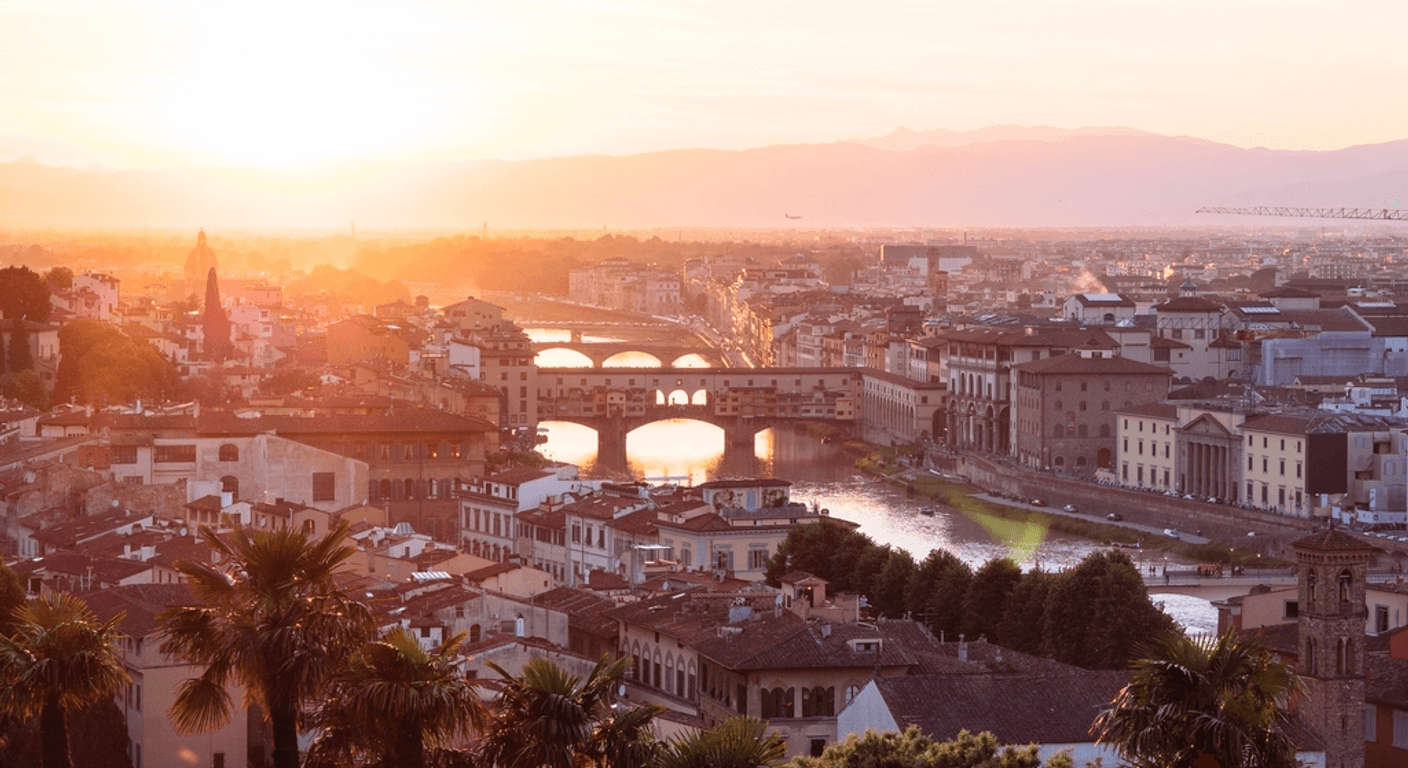
The Oltrarno, on the south bank of the Arno, deserves serious consideration. It's slightly less touristed, has some of the city's best restaurants and aperitivo bars, and the Ponte Vecchio gives you a beautiful five-minute walk into the centro storico. Hotels here tend to be smaller — boutique rather than chain — which suits solo travellers who want staff who'll actually remember your name by day three. Expect to pay roughly AUD 180–260 a night for a comfortable single room in this neighbourhood; confirm current rates directly with the hotel.
Avoid booking a hotel near the train station purely on price. The blocks immediately around Santa Maria Novella have improved, but some streets still feel grim after dark, and it's not the Florence you came for. A fifteen-minute walk east puts you in a completely different city. If mobility is a concern and you want to minimise walking, the Duomo neighbourhood — within 500 metres of the cathedral — gives you the shortest distances to most major sights, though hotel prices reflect that convenience.
The Single-Room Pricing Reality in AUD
Solo travellers pay more per night in Florence than couples, full stop. Hotels price rooms, not per person, so a double room shared between two comes to half the per-person cost. A single room — or a double sold as a single — in a well-located 4-star hotel in the centro storico or Oltrarno runs roughly AUD 200–320 a night in April, May, September and October. July and August push that up and also make the city genuinely uncomfortable in the heat. Shoulder season is better in every way. Always confirm current rates with the hotel directly — online platforms add fees and don't always show last-minute adjustments.
Some operators and small-group tour packages that include accommodation do charge a single supplement — sometimes as much as 50–80% of the per-person double rate. If you're booking a Florence-based small-group tour that includes hotel nights, ask the operator directly: Is there a single supplement? Is there a share-match programme? Are there solo-departure dates where the supplement is waived? Operators who can't answer these questions clearly are not worth your money. The better small-group operators — including some Australian-run Italy specialists — have moved to single-friendly pricing; it's worth hunting for them.
One approach that works well for the solo over-50 traveller: book your own hotel independently (you control the room, the dates, the neighbourhood) and layer small-group day tours on top. You get the social connection without the accommodation markup. You also avoid the rigidity of a fully packaged itinerary, which matters when your body decides it needs a rest day.
Walkability, Cobblestones, and Knowing Your Limits
Florence is a walker's city. The Duomo to the Uffizi is a twelve-minute walk. The Uffizi to Ponte Vecchio is four minutes. The Accademia — where Michelangelo's David lives — is twenty minutes from most centro storico hotels. None of this requires a taxi or a bus. The flat riverside path along the Lungarno is the city's great free pleasure: smooth underfoot, gorgeous at dusk, and with benches.
The cobblestones, though. They are real, they are uneven, and they are everywhere in the historic centre. Comfortable leather shoes or well-cushioned walking shoes are not optional — they are the difference between a good day and a miserable one. If you have knee or hip issues, pack trekking poles (you'll see locals using them; it's not conspicuous). The Piazzale Michelangelo lookout involves a sustained uphill walk of about twenty-five minutes from the Ponte alle Grazie — beautiful, worth it, but honest about what it asks. The cathedral dome climb (463 steps, no lift) is genuinely demanding and can be skipped without missing the city.
Mobility aids and wheelchairs face real difficulty in Florence's historic centre — the cobblestones and narrow medieval lanes are not easily navigated. If mobility is significantly limited, a ground-floor or lift-accessible hotel room matters enormously; confirm this at booking, not on arrival. The major museums — the Uffizi, the Accademia, the Bargello — have lift access to their main gallery floors, but check the museum's own website for current accessibility information before you go.
What a Day in Florence Actually Looks Like: Hour by Hour
This is the information that rarely appears in guides. Here's an honest account of how a day runs for a solo traveller based at a hotel in the Oltrarno, visiting the Uffizi. Wake naturally around 7am (jet lag helps early). Hotel breakfast runs 7:30–10:00 in most 4-star properties — take your time, this is where you'll meet other travellers, including other Australians, which happens more often than you'd think. Aim to leave the hotel by 9:00.
Your Uffizi timed-entry ticket (booked in advance; essential) might be for 9:30am. Walk from the Oltrarno across Ponte Vecchio: ten minutes. The gallery opens its ground-floor entrance to ticketholders from 9:15. Allow two to three hours inside — not more, because the Uffizi is large enough to exhaust you if you're not selective. Choose two or three rooms to spend real time in rather than walking through everything. By 12:00 you're out. There's a good café on the Piazza della Signoria nearby; sit outside, have a coffee and something small. The square has benches if you just want to rest.
Lunch from 12:30 to 1:30 — solo dining in Florence is entirely normal. The Oltrarno side has trattorias where a two-course lunch with a glass of wine runs roughly AUD 35–55; confirm prices at each venue. Back at the hotel by 2:30 for a rest — genuinely recommended, not a concession. Out again at 5:00 for the passeggiata along the Lungarno. Aperitivo from 6:00 to 7:00 (Campari spritz, a small plate of snacks, around AUD 12–18). Dinner at 7:30. Back before 10:00. That is a full, rich day that doesn't wreck you. The parts you can skip: the queue at the Ponte Vecchio jewellery shops (nothing to do there), any organised photo stop at Piazzale Michelangelo after noon (the light is better in the late afternoon anyway).
How to Meet Other Travellers: Hotel Breakfasts, Small Tours, and the Conversation That Just Happens
The hotel breakfast table is underrated as a social space. In a mid-size Florence hotel — say, thirty to sixty rooms — the breakfast room fills with the same people each morning. Solo travellers, couples, the occasional small group. The ritual of making your own coffee at the machine, choosing between the cornetto and the fruit plate, and sitting at a table for one near a window: it invites conversation without demanding it. By day three, you'll know the couple from Hamburg and the solo woman from Toronto who's also doing the Uffizi. This is not engineered socialising — it's just what happens when people share a room at the same time every morning.
Small-group walking tours are the other reliable answer. Context Travel runs scholar-led walks of eight people maximum; the format is seminar-style, which means conversation is built into the structure. Walks of Italy offers shared departures with no solo supplement. Both operate in English and attract a high proportion of older, independent travellers — not the twenty-two-year-old backpacker crowd. A morning tour followed by an informal lunch with two or three people from the group is a genuinely common outcome. You don't have to manufacture it.
For travellers who want more structured social connection, some boutique hotels in Florence now offer optional communal dinners — one night a week, a long table, guests who opt in. Ask about this at booking. It's not universal, but it exists. The alternative is the wine bar, where a solo woman at the counter with a Chianti Classico and no obvious agenda is treated with exactly the respect that implies.
Practical Matters: Insurance, Health, Cards, and Things Nobody Tells You
Travel insurance is non-negotiable for this trip. If you have pre-existing conditions — and statistically, many over-50 travellers do — you need a policy that covers them explicitly. Don't assume; read the product disclosure statement. Australian insurers who offer cover for pre-existing conditions include specialist travel insurers; compare carefully and declare everything. The nearest major hospitals to Florence's centro storico are the Careggi University Hospital and Santa Maria Nuova, the latter being central and well-regarded for tourist medical situations. Emergency number in Italy: 118 for medical, 112 for general emergency.
Card surcharges in Florence are real and occasionally outrageous (yes, this is worth calling out). Some smaller restaurants and shops still prefer cash; carry EUR 50–100 in notes for markets, small cafés, and anywhere that looks like it might have a handwritten sign about card minimums. ATMs — called Bancomat — are plentiful in the centro storico. Use those attached to major Italian banks rather than the standalone tourist-targeted machines, which carry higher fees.
Holders of an Australian state Seniors Card should check whether any Florence-based museum or attraction offers a reciprocal concession — it's unlikely for international venues, but EU residents over 65 receive free or discounted entry to state museums, and some Italian museums extend this to all visitors over 65 regardless of nationality. Bring your passport as proof of age; it's worth asking at the ticket desk even if it's not advertised. The Uffizi, for instance, has a reduced-rate ticket for over-65 visitors from EU countries — confirm current policy at uffizi.it before you go.
Quick planning guide
| Ideal pace | Slow to moderate — one or two sights per day, long lunches, evening passeggiata |
|---|---|
| Best months | April–May and September–October |
| Suggested stay | 7–10 nights |
| Mobility level | Moderate — cobblestones throughout, some steep climbs (Piazzale Michelangelo, cathedral dome), but the centro storico is largely flat |
| Cost level | Mid to upper — budget AUD 180–320/night for a solo room, plus meals AUD 25–70 per sitting |
| Comfort level | High — Florence is well set up for independent travellers, English widely spoken |
| Best for | Solo women, culturally curious travellers, art lovers, food-focused travellers, small-group tour joiners |
| Main planning consideration | Single-room surcharges and booking flexibility — see section on solo pricing honesty |
Key takeaways
- A solo hotel room in Florence runs roughly AUD 200–320 a night in shoulder season — book the Oltrarno or Duomo neighbourhood, not the station precinct.
- Cobblestones are unavoidable in the centro storico; comfortable, cushioned shoes are the single most important packing decision.
- The hotel breakfast table and small-group walking tours are the two most natural ways to meet other travellers without forced socialising.
- Always ask any tour operator directly whether a single supplement applies and whether a share-match or solo-departure alternative exists.
- Fly into Rome or Milan and take the high-speed train to Florence — it's around 1.5 hours from Rome and drops you in the city centre.
- Visitors over 65 may be eligible for reduced or free entry to Italian state museums — bring your passport and ask at the ticket desk.
Recommended partners and links
Indicative prices only — always confirm with the operator before booking.
Frequently asked questions
Is Florence safe for solo women over 50?
Florence is generally considered safe for solo women, including at night in the central neighbourhoods. Petty theft — bag snatching, pickpocketing in crowds near the Duomo and Ponte Vecchio — is the main risk. Keep your bag across your body, don't leave valuables visible, and the city is straightforward to navigate alone. The Oltrarno and centro storico are well-lit and populated until late evening.
What does a solo hotel room in Florence cost in Australian dollars?
A comfortable single room in a well-located 4-star hotel in Florence's historic centre or Oltrarno neighbourhood runs roughly AUD 180–320 per night in the April–May and September–October shoulder seasons. July and August push prices higher and bring intense heat. Always confirm current rates directly with the hotel, as online platforms add fees and rates vary significantly by date.
Do I need to book Uffizi tickets in advance as a solo traveller?
Yes. The Uffizi Gallery requires timed-entry tickets that sell out well in advance, particularly in peak season. Book through the official Uffizi website at uffizi.it. Solo travellers have an advantage here — a single ticket is easier to secure than a group allocation, and you can choose off-peak entry times (early morning is best for crowds and light).
How do I get from the airport to my Florence hotel as a solo traveller?
Most international travellers fly into Rome Fiumicino or Milan Malpensa, then take the high-speed Frecciarossa train to Florence Santa Maria Novella station — around 1.5 hours from Rome, roughly 1 hour 45 minutes from Milan. The station is central and walkable to most recommended hotels, or a short taxi ride. Florence's own Peretola airport handles some European connections; a taxi from there to the centre takes around fifteen minutes.
What travel insurance do I need for Florence if I have pre-existing conditions?
You need a policy that explicitly covers your pre-existing conditions — not one that excludes them by default. Read the product disclosure statement carefully and declare all conditions at the time of purchase. Compare specialist Australian travel insurers who offer pre-existing condition cover. Check Smartraveller at smartraveller.gov.au for current Italy travel advice and recommended insurance guidance before you buy.