New Zealand's South Island suits over-50 Australian travellers best in March–April or October–November, when crowds thin and alpine roads are stable. Allow at least 10–14 days to pace Christchurch, the Mackenzie Basin, Queenstown and Milford Sound without exhaustion. The defining experience is the sheer scale of the physical landscape — fiords, glaciers, braided rivers — accessible by scenic rail, coach or self-drive rental. Mobility rating: Moderate. Direct flights from Melbourne, Sydney and Brisbane reach Christchurch in roughly 3–4 hours.
Why the South Island works so well for Australian over-50 travellers
There's a reason experienced Australian travellers keep returning to the South Island rather than chasing somewhere harder. No language barrier, no currency confusion beyond a mild decimal adjustment, no jet lag to speak of. The flight from Melbourne to Christchurch is around three and a half hours — shorter than Sydney to Darwin. You land, pick up a rental car or join a coach, and you're moving the same afternoon. The healthcare system is solid, ACC covers accident injuries (though emphatically not your pre-existing conditions or medical repatriation — that's what your travel insurance is for), and the roads are generally well-maintained and signposted.
What the South Island offers that's genuinely rare is wilderness at a scale that feels cinematic but doesn't require you to be athletic to experience. You can stand at the edge of Aoraki/Mount Cook's terminal moraine, watch the Tasman Glacier calve into its lake, or cruise a fiord so deep the water is black — and do all of it without lacing up a pair of hiking boots. That's not a compromise. It's the point.
For a solo male traveller in his late sixties from Victoria, the practical comfort level is high. New Zealanders are straightforwardly friendly without being cloying. Solo dining doesn't carry the awkwardness it might in some Asian or European destinations. Pub culture is recognisable. And the pace — if you set it yourself — can be exactly what you need.
Getting there: flights, entry and the first night
Direct services from Melbourne (Tullamarine) and Sydney to Christchurch operate year-round with Air New Zealand and seasonally with Jetstar. From Brisbane, connections typically route via Sydney or Auckland — add at least two hours to your travel day. Perth travellers are looking at a full day's journey either way; a night in Sydney or Auckland before continuing is worth considering rather than arriving at Christchurch frazzled. Indicative return economy fares from Melbourne or Sydney sit roughly in the AUD $350–$700 band in shoulder season; confirm current fares with airlines before planning.
New Zealand is visa-free for Australian citizens. You'll need a valid Australian passport. The NZTa (New Zealand Transport Agency) recognises your Australian driver's licence — you don't need an international permit. If you plan to self-drive, confirm your car rental excess cover is sorted before you leave; many Australian credit cards carry rental car cover but read the fine print on what's excluded in NZ.
Book your first night in Christchurch before anything else. The city's accommodation stock has evolved considerably since the 2010–2011 earthquakes — there are excellent mid-range hotels in the central city now, around AUD $180–$250 a night for a well-located room (confirm current rates with the property). Don't attempt to drive south on arrival day. A recovery night and a slow morning in the Botanic Gardens or Te Pae Convention precinct sets a far better tone for the fortnight ahead.
Pacing a self-drive circuit: the honest itinerary
The temptation is to drive Christchurch–Queenstown in a day via SH1 and SH8. Resist it. That's roughly five to six hours of driving through some of the most spectacular terrain in the Southern Hemisphere, most of which you'll be too tired to appreciate by the time you reach Tekapo. Break it across two days: Christchurch to Lake Tekapo (about three hours), then Tekapo to Queenstown via Twizel and the Mackenzie Basin (another three to four hours, depending on stops). This is not being cautious — it's just not being stupid.
Lake Tekapo is the natural overnight stop and earns it. The Church of the Good Shepherd on the lakeshore is one of those sights that photographs badly and looks extraordinary in person — particularly at dawn or dusk. The town has good accommodation (around AUD $150–$220 a night for a comfortable motel or lodge; confirm rates), a reliable hot pools complex (Tekapo Springs) that's excellent for tired legs after a long drive, and the kind of night sky that reminds you why people bother with the southern hemisphere.
From Queenstown, day trips radiate naturally — Arrowtown is 20 minutes and has excellent food and a gold-rush history worth half a day. The Gibbston Valley wineries are accessible by car or organised tour. Wanaka is an hour north and considerably quieter than Queenstown, worth considering as an alternative base if the tourist density of central Queenstown wears thin. For Milford Sound, the day trip from Queenstown is long (see the 'Shape of the Day' section below) but manageable; alternatively, base yourself in Te Anau overnight and do it without the four-hour coach return.
The shape of the Milford Sound day: what actually happens, hour by hour
The standard Queenstown–Milford Sound coach-and-cruise day trip is the South Island's most booked experience and also the one that exhausts people the most reliably. Here's what the day actually looks like. Coaches typically depart Queenstown around 7:00–7:30am. The drive to Milford Sound is approximately four hours each way, including a comfort stop at Te Anau (around 9:00–9:30am, where there's a proper cafe and accessible toilets). You pass through the Homer Tunnel — a single-lane, unlined rock tunnel that some passengers find claustrophobic; it's about 1.2km long and the coach pauses at the entrance for oncoming traffic. Allow 10–15 minutes for the tunnel crossing.
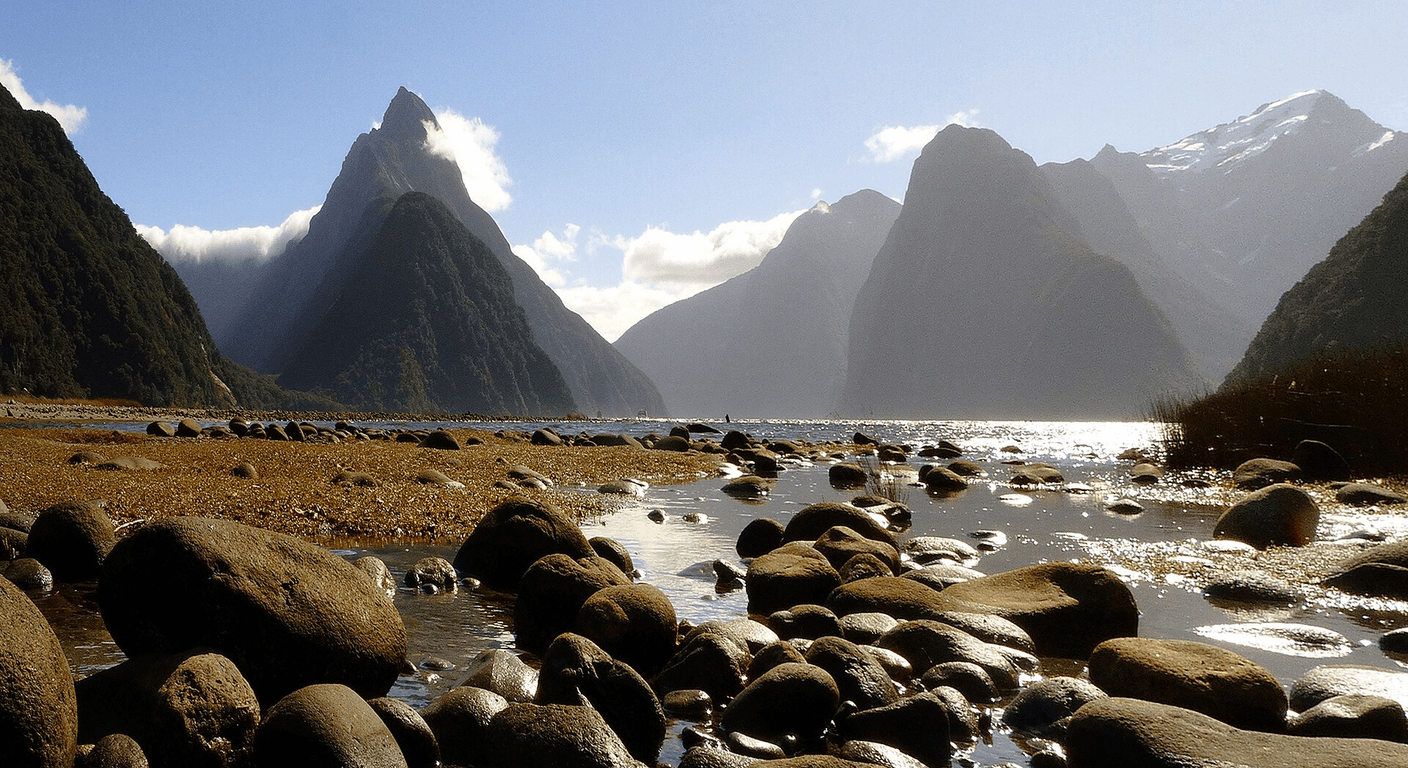
You arrive at Milford Sound wharf around 11:30am–noon. The cruise itself runs roughly 1 hour 40 minutes to 2 hours, depending on operator. Decks can be cold and windy even in summer — bring a proper layer regardless of what the forecast says in Queenstown. The upper open deck is worth the wind for the view of Mitre Peak and Stirling Falls; the lower enclosed lounge is warm and has seating if you need a break. Most cruise vessels have accessible toilets onboard. Lunch is typically served during the cruise — included in some packages, additional cost in others (confirm when booking).
You're back on the coach by roughly 2:30–3:00pm, arriving in Queenstown around 6:30–7:00pm. That's a 12-hour day with perhaps 2 hours of genuine fiord experience at the end of it. It's a long day — honest. The alternative: stay one night in Te Anau (around AUD $150–$200 for a comfortable motel; confirm rates), take the morning cruise, and drive back to Queenstown in the afternoon — about 2.5 hours. You'll see the same fiord, feel considerably less wrecked, and have the bonus of Te Anau's glowworm caves accessible the evening before if you want them. The overnight option is the better call for most over-50 travellers, and it's the one the tour operators don't push because the day trip sells more seats.
Scenic train options: TranzAlpine and Coastal Pacific
KiwiRail's scenic trains are among the few genuinely world-class rail journeys accessible without a long-haul flight, and they deserve a proper place in any South Island itinerary rather than being treated as optional extras. The TranzAlpine runs Christchurch to Greymouth across the Southern Alps — four and a half hours of viaducts, beech forest, river gorges and the Otira Tunnel. The open-air observation carriage is the place to be, weather permitting. Carriages are comfortable, the catering trolley is adequate (bring your own snacks if you're particular), and the seating is wide enough to be comfortable for most passengers. Fares run from around NZD $219 one-way in shoulder season; confirm current pricing with KiwiRail.
The Coastal Pacific runs Christchurch to Picton along the Kaikōura coastline — a route that was closed for 14 months after the 2016 Kaikōura earthquake and has been running again since 2018. It's a different experience to the TranzAlpine: ocean on one side, Kaikōura Ranges on the other, seals on the rocks if you're lucky. This one integrates naturally with a Marlborough wine region extension if you're considering adding the top of the South Island. The Interislander ferry Picton–Wellington is a scenic crossing in its own right (about three and a half hours), useful if you want to add Wellington before flying home.
One practical note on luggage: scenic trains have overhead storage but no large luggage hold. If you're self-driving and catching the train as a one-way experience, you'll need to arrange a vehicle positioning service or leave bags with accommodation. Several operators in Christchurch and Greymouth offer this. It's manageable but worth sorting before the day, not on it.
Accessible walks versus strenuous hikes: what's actually doable
The South Island's marketing leans heavily on the Great Walks — Milford Track, Routeburn, Kepler. These are multi-day, hut-based, backcountry experiences that require solid fitness, advance booking (sometimes months ahead) and the ability to carry a pack over uneven alpine terrain. They're not what this guide is about, and that's not a concession — the accessible day walks on the South Island are genuinely excellent in their own right.
The Lake Tekapo area has the Tekapo Canal Walk — flat, sealed, about 3km each way, with the turquoise glacial water beside you the entire time. At Aoraki/Mount Cook, the Kea Point Track is a 2km return walk to a moraine wall with glacier views — rated easy, though the last few hundred metres have some uneven ground. The Hooker Valley Track (4.4km return) is the more famous option and is well-graded, but it crosses three swing bridges and has a gradual elevation gain; comfortable for most fit walkers, worth checking current conditions with the Department of Conservation before you go. In Queenstown, the Frankton Arm Walkway along the lakefront is flat, accessible and pleasant without being demanding.
Around Milford, the Key Summit walk on the Routeburn Track is sometimes offered as a day walk option — it's graded moderate and involves around 760m of elevation gain over 5km, which is a serious half-day. Skip it if your knees have opinions. The Lake Marian track near Milford is spectacular but steep; not the one to attempt after a long coach day. The short walk to the Chasm (a dramatic gorge on the Milford Road) is five minutes from the carpark, paved, and genuinely worth the stop.
Shoulder season, costs and a few things most guides don't mention
March–April and October–November are the right months. December–February brings peak crowds, peak prices, campervans blocking every lookout, and Milford Road queues that can stretch an hour at the Homer Tunnel. In autumn (March–April), the introduced deciduous trees in Arrowtown, Wanaka and the Mackenzie Basin turn extraordinary colours — this is not marketing copy, it's a genuine seasonal phenomenon that photographs better than the summer green. Spring (October–November) is less reliable weatherwise but the crowds haven't arrived and accommodation is easier to secure.
Costs in New Zealand have risen noticeably since 2022. Budget around AUD $200–$280 a night for solid mid-range accommodation (motels, lodges, smaller boutique hotels) in peak shoulder season; confirm current rates with each property. Dining out is not cheap — a main course at a decent Queenstown restaurant runs NZD $35–$55. The card surcharge situation in New Zealand is, frankly, irritating: many operators and restaurants add 1.5–2.5% for card payments, including Visa and Mastercard. Carry some NZD cash for smaller purchases and check the surcharge before you tap.
On travel insurance: this is not optional for a 69-year-old travelling from Australia, regardless of how well you feel. New Zealand's ACC scheme covers treatment costs for accidents but does not cover medical evacuation, pre-existing conditions, cancellation costs or any illness. Compare policies that explicitly cover pre-existing conditions through the Australian Government's MoneySmart comparison tools or an independent broker. Declare everything. The Smartraveller advisory for New Zealand is currently 'exercise normal safety precautions' — check it before you travel at smartraveller.gov.au. Solo travellers: leave a copy of your itinerary with someone at home, and check in regularly. It's common sense, not alarm.
A solo traveller's perspective and a couple's perspective
Solo traveller: The South Island is one of the most comfortable solo destinations an Australian in his late sixties can choose. Self-driving solo is genuinely easy — the roads are well-signed, the distances are manageable, and pulling over at your own pace without negotiating with anyone is one of the quiet pleasures of the trip. Solo dining in Queenstown and Christchurch is unremarkable; sit at the bar in most good restaurants and you'll have company if you want it. The single-supplement sting applies on coach tours and some cruise packages — check carefully. Operators like Scenic Luxury Coaches & Tours and APT (both offering New Zealand itineraries) vary considerably in how hard they penalise solo travellers; some offer share-match programs, others charge 30–50% on top. Ask directly before booking. If a solo supplement is unavoidable, factor it into your cost comparison against self-drive.
Couples: The South Island is a natural couples' destination — the scenic drives, the winery lunches, the long dinners in Queenstown — and the logistics of a self-drive suit two people sharing costs comfortably. Where couples sometimes go wrong is trying to do too much in too little time because one person wants more activity than the other. Build in a half-day at Wanaka or Tekapo with no agenda. The best South Island memories tend to come from the unscheduled hour by the lake, not the third guided walk.
Quick planning guide
| Ideal pace | Slow-travel: 2–3 nights per region, no more than 3–4 hours driving per day |
|---|---|
| Best months | March–April (autumn colour, smaller crowds) or October–November (spring, before peak summer) |
| Suggested stay | 10–14 days minimum; 16–18 days for a genuinely relaxed circuit |
| Mobility level | Moderate — most headline sights are accessible with short, flat walks; Milford and Fiordland require planning |
| Cost level | NZD is roughly 0.90–0.93 AUD (confirm before travelling); budget around AUD $200–$280 per night for solid mid-range accommodation |
| Comfort level | High — New Zealand infrastructure is reliable, English-speaking, and healthcare is readily available in main centres |
| Best for | Self-drive explorers, scenic rail enthusiasts, nature lovers who want grandeur without extreme exertion, solo travellers wanting safe independent travel |
| Main planning consideration | Travel insurance with pre-existing condition cover is non-negotiable; confirm ACC (NZ Accident Compensation) does not replace your Australian travel insurance |
Key takeaways
- March–April and October–November are the best months for the South Island: smaller crowds, cooler temperatures and autumn colour in the Mackenzie Basin and Arrowtown.
- Allow at least 10–14 days — cramming Christchurch, Tekapo, Queenstown and Milford Sound into a week produces exhaustion, not memories.
- The Milford Sound day trip from Queenstown is a 12-hour day for roughly 2 hours of fiord time; staying overnight in Te Anau is the smarter option for most over-50 travellers.
- New Zealand's ACC covers accident treatment costs but does not replace Australian travel insurance — declare all pre-existing conditions and check your policy explicitly covers medical evacuation.
- Solo travellers should confirm single supplement charges before booking any coach tour or cruise package; supplements of 30–50% are common and some operators offer share-match alternatives worth asking about.
- The TranzAlpine (Christchurch–Greymouth) is one of the most accessible and rewarding scenic rail journeys reachable from Australia without a long-haul flight — build it in rather than treating it as optional.
Recommended partners and links
Indicative prices only — always confirm with the operator before booking.
Frequently asked questions
Do Australians need a visa to visit New Zealand?
Australian citizens do not need a visa to enter New Zealand and can stay indefinitely. A valid Australian passport is required. Confirm entry requirements with the New Zealand Immigration website before travelling, as rules can change.
How long is the flight from Australia to Christchurch?
Direct flights from Melbourne or Sydney to Christchurch take approximately 3–4 hours. From Brisbane, flights typically connect via Sydney or Auckland, adding travel time. Perth travellers should allow a full day's journey and consider an intermediate overnight stop.
Is the South Island suitable for travellers with limited mobility?
Many of the South Island's signature sights — Milford Sound cruises, Lake Tekapo, Aoraki/Mount Cook lookouts, scenic trains — are accessible to travellers with moderate mobility. The Great Walks (Milford Track, Routeburn) are not suitable for those with mobility limitations. Confirm accessibility specifics with individual operators and accommodation before booking.
What is the best way to get from Christchurch to Queenstown?
Self-drive via SH1 and SH8 through the Mackenzie Basin is the most flexible option, taking 5–6 hours in total — best broken into two days with an overnight stop at Lake Tekapo. Domestic flights (Air New Zealand, Jetstar) operate Christchurch–Queenstown in about an hour if driving is not preferred. Coach tours also cover this route with stops included.
Does New Zealand's ACC scheme replace Australian travel insurance?
No. New Zealand's Accident Compensation Corporation (ACC) covers treatment costs for accidents that occur in New Zealand, but it does not cover pre-existing medical conditions, illness, medical evacuation back to Australia, trip cancellation or lost luggage. Comprehensive Australian travel insurance with pre-existing condition cover is essential.
Want the next guide like this?
Choose your state, the subjects you care about, or both. We will let you know when a new guide lands. Email once a week at most, or a quiet phone notification on the day it publishes. No advertising, no sponsored content, and we never pass your details to anyone.