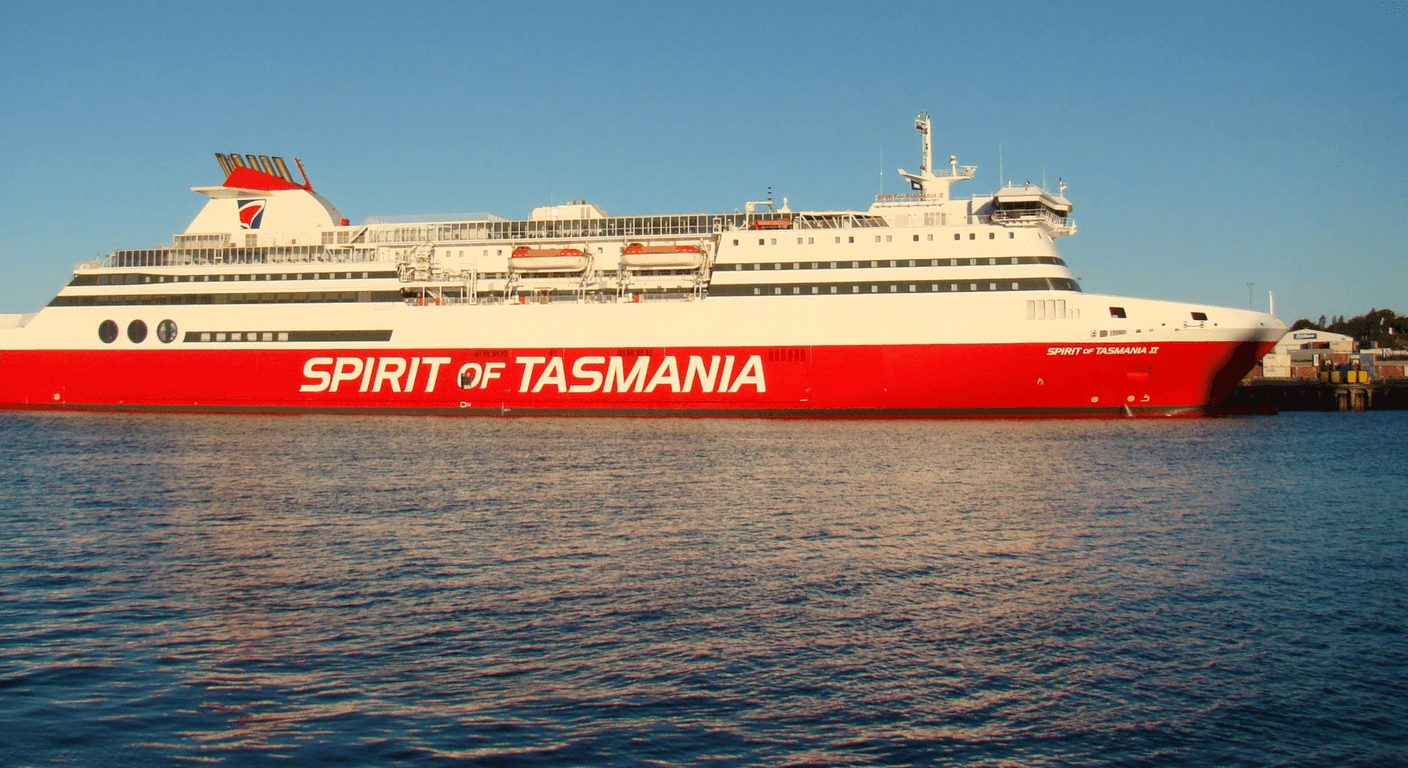
The Spirit of Tasmania sails overnight between Geelong and Devonport, a crossing of roughly nine to eleven hours across Bass Strait. October to April brings the mildest weather and best value, with late October, November and March striking a good balance of price and crowds. A private cabin, not a recliner, is essential for real sleep, and terminal staff readily assist with mobility aids, wheelchairs and scooters. Fares swing from around $400 to over $900 each way, so early booking and pre-boarding seasickness tablets matter more than most other preparations.
Why the Spirit of Tasmania makes sense at this stage of life
There's a particular freedom in arriving somewhere with your own car already waiting. No rental counter, no negotiating over the boot space, no wondering whether the walker or the portable CPAP will fit. The Spirit of Tasmania between Geelong and Devonport offers exactly that: you drive on, you sleep (in a proper cabin), and you drive off in Devonport ready to go. For a group of friends from regional Victoria, it also means the journey down the Princes Freeway to Geelong is familiar ground before anything unfamiliar begins.
The crossing takes roughly nine to eleven hours depending on conditions and scheduling. That's long enough to be worth doing properly, and not so long that a good night's sleep can't cover most of it. The vessel carries hundreds of passengers and their vehicles, so the car deck is organised and well-managed — loading and unloading follow a clear sequence, and staff are accustomed to assisting passengers who need extra time or have mobility equipment to manage.
Cabins versus recliners: there is only one sensible answer
The recliner option exists. It's cheaper. It is also, frankly, a poor choice for an overnight crossing if you're over 50 and value your back, your sleep, and your mood on arrival. Recliners are in shared spaces, the lighting is never quite right, and the moment Bass Strait picks up any swell, the noise and movement in an open cabin becomes hard to ignore. A private cabin — even the most straightforward twin or double — gives you a door that closes, a proper bunk or bed, and somewhere to put your medications and your dignity.
Cabin categories range from basic inside cabins to larger suites with windows. For a friends group travelling together, booking two adjacent inside or porthole cabins is a reasonable approach that keeps costs manageable while still giving everyone a proper bunk. Porthole cabins offer natural light in the morning, which helps with orientation after a night at sea. Book cabins as early as possible — they sell before recliners do, especially in the October-to-April peak window.
One practical note: keep your day bag with you when you go to the cabin. Medications, seasickness tablets, phone charger, a book, a light layer — these should not be locked in the car on the vehicle deck, which is inaccessible once sailing begins. It sounds obvious, and people forget it every single sailing.
What does Bass Strait actually feel like?
Honest answer: it depends entirely on the night. Bass Strait is one of the rougher stretches of water on the Australian coast — it's shallow, exposed, and subject to Southern Ocean swells that don't have much land to slow them down before they arrive. On a calm night in late November, the crossing can feel almost placid. On a winter evening with a westerly running, the vessel moves in ways that remind you this is the ocean, not Port Phillip Bay.
Seasickness tablets are not optional packing. Take them before you board, not after you feel unwell — they work preventively, not reactively. The most commonly available over-the-counter option in Australia is dimenhydrinate (Dramamine or equivalent); some travellers prefer hyoscine patches (Scopolamine), which require a prescription and are worth discussing with your GP before departure. Ginger tablets are a gentler alternative for those sensitive to drowsiness. If you have any history of motion sickness at all, treat this crossing as you would a long bus ride on winding roads: medicate early, eat lightly beforehand, and choose a cabin mid-ship where movement is least pronounced.
The ship itself is large and reasonably stable by ferry standards — this is not a small catamaran. Most passengers sleep through uneventful crossings without a second thought. But 'most' is not 'all', and Bass Strait has earned its reputation. Pack accordingly and the odds are strongly in your favour.
Loading your car and mobility equipment: what to expect
The Geelong terminal at Corio is purpose-built for this service. Check-in opens several hours before departure and it's worth arriving early — not because you'll miss the sailing, but because early check-in means a better position on the vehicle deck, which can make unloading faster on arrival. Staff at the terminal are experienced at assisting passengers with mobility aids, wheelchairs, scooters, and oversized vehicles. If you're travelling with a mobility scooter or power wheelchair, declare it at booking — there are designated spaces and the loading process is managed accordingly.
Vehicles are secured on the car deck for the crossing, and the deck is closed to passengers once underway. Everything you need overnight must come with you to your cabin. For a friends group road-tripping Tasmania, this usually means each person has a small overnight bag prepared before boarding. It's a minor discipline that becomes second nature by the return crossing.
Devonport's terminal on the Mersey River is similarly straightforward. Disembarkation follows vehicle deck order, so there's typically a wait of twenty to forty minutes from docking before your car is ready. That's enough time for a coffee in the onboard café — the ship's food and beverage options are functional rather than memorable, but the coffee works.
Fares, timing and booking strategy
Fares on the Spirit of Tasmania vary more than almost any other transport product in Australia. A cabin plus standard vehicle can be as low as around $400 each way in the quietest winter periods, or well above $900 in peak school holiday windows. The difference between booking in March versus January for a late-January sailing can be hundreds of dollars per couple. Always check the official Spirit of Tasmania website directly — third-party booking sites rarely offer better pricing and sometimes carry outdated information.
October to April is broadly the best window for Tasmanian travel: longer days, milder temperatures, and the island's landscapes at their most photogenic. January and the first week of February are the busiest and most expensive periods. Late October, November, and March offer a reasonable balance of good weather and manageable crowds. For a friends group flexible with dates, Tuesday and Wednesday sailings tend to be quieter and cheaper than weekend departures.
Timetables change seasonally — the number of weekly sailings increases in summer and reduces in winter. In 2026, confirm current schedules on the Spirit of Tasmania website before building your itinerary. The crossing currently departs from Geelong in the evening and arrives in Devonport in the morning, though exact times shift. Build in a recovery morning on both ends: don't schedule a long drive the day you arrive, and don't pack a full activities day immediately before your return sailing.
Making the most of the crossing itself
The Spirit of Tasmania is not a cruise ship. There are no casinos, no elaborate entertainment programmes, no formal dining. What there is: a buffet restaurant, a bar, a café, an outdoor deck, and a shop. For an overnight sailing, that's adequate. The outdoor deck in calm conditions is genuinely pleasant in the evening — watching the lights of Geelong recede and the darkness of Bass Strait settle in has a particular quietness to it.
For a group of friends, the bar area in the early evening is where the sailing actually begins in a social sense. A glass of something, the novelty of being at sea, the mild absurdity of having driven your car onto a ship — it's a good start to a Tasmanian adventure. After that, an early night in the cabin is the sensible move. Arrival in Devonport is early morning, and the whole day ahead is yours.
The return sailing typically departs Devonport in the evening as well, arriving back in Geelong the following morning. Use the afternoon before departure to be in Devonport rather than rushing from a distant part of the island — the town has a pleasant foreshore, a good farmers' market on Saturdays, and the House of Anvers chocolate factory nearby at Latrobe if you need a reason to arrive early.
Tasmania with your own car: why it changes everything
Tasmania is genuinely best explored by car. Public transport between regional centres exists but is limited; the national parks, the remote coastlines, and the small towns that make the island distinctive are simply not accessible any other way. Flying and renting is an option, but it means negotiating airport car rental with your own equipment, and it removes the particular pleasure of the crossing itself.
With your own vehicle already loaded, a friends group from regional Victoria can drive off in Devonport and head directly to the Tamar Valley wine region, or south towards Launceston, or west along the Bass Highway — without any intermediate logistics. Camping gear, walking poles, a portable fold-up chair, a favourite pillow: it all comes with you. For travellers who've accumulated the equipment that makes travel comfortable, that matters.
A Tasmania Parks Holiday Pass is worth purchasing if you're planning more than a couple of national park visits — it covers vehicle entry to all national parks and reserves for a set period. Check current pricing at parks.tas.gov.au and confirm whether it's available for purchase at the Devonport terminal or must be bought in advance online. Either way, it's one of the better-value decisions on a Tasmanian road trip.
Quick planning guide
| Ideal pace | Relaxed overnight crossing, with a recovery morning built in on both ends |
|---|---|
| Best months | October to April, with late October, November and March offering the best balance of weather and fares |
| Suggested stay | One overnight crossing each way, plus flexible extra days exploring Tasmania by car |
| Mobility level | Easy - staff assist with mobility aids, wheelchairs, scooters and oversized vehicles |
| Cost level | Variable - from around $400 to over $900 each way depending on season, with cabins costing more than recliners |
| Comfort level | High in a private cabin; poor in a shared recliner, especially in rough seas |
| Best for | Friends groups over 50 travelling with their own vehicle and mobility equipment |
| Main planning consideration | Book a private cabin as early as possible and take seasickness tablets before boarding, not after |
Key takeaways
- A private cabin on the Spirit of Tasmania is worth every dollar more than a recliner for overnight crossings — sleep quality on arrival depends on it.
- Bass Strait can be genuinely rough; take seasickness tablets before boarding, not after the swell starts.
- Keep medications and overnight essentials in your day bag — the vehicle deck is inaccessible once sailing begins.
- Fares vary enormously by season; a cabin plus vehicle can range from around $400 to well over $900 each way — always confirm current prices on the official site.
- October to April offers the best balance of Tasmanian weather and manageable fares, with late October, November and March particularly good value.
- Travelling with mobility aids or a scooter is straightforward — declare it at booking and terminal staff manage the rest.
Recommended partners and links
Indicative prices only — always confirm with the operator before booking.
Frequently asked questions
How long does the Spirit of Tasmania crossing from Geelong to Devonport take?
The crossing takes roughly nine to eleven hours depending on conditions and the specific timetable in operation. It's an overnight sailing, typically departing Geelong in the evening and arriving in Devonport the following morning. Confirm current departure and arrival times on the Spirit of Tasmania website before booking, as schedules change seasonally.
Is it worth booking a private cabin on the Spirit of Tasmania, or are recliners fine?
For travellers over 50, a private cabin is strongly recommended. Recliners are in shared open spaces, offer no real rest on a rough crossing, and leave you stiff and tired on arrival. A cabin — even a basic inside cabin — gives you a door, a proper bunk, and the ability to sleep through the crossing. The price difference is meaningful, but so is arriving in Tasmania ready to enjoy it.
How rough is Bass Strait on the Spirit of Tasmania crossing?
Bass Strait has a legitimate reputation for rough conditions. It's a shallow, exposed stretch of water open to Southern Ocean swells, and conditions vary significantly by season and weather. Calm crossings are common, particularly in summer, but rough nights occur year-round. Seasickness tablets taken before boarding — not after you feel unwell — are the most effective precaution. Mid-ship cabin placement also reduces the sensation of movement.
Can you take a mobility scooter or wheelchair on the Spirit of Tasmania?
Yes. The Spirit of Tasmania accommodates mobility scooters, power wheelchairs, and other mobility aids. Declare your mobility equipment at the time of booking so the appropriate vehicle deck space is allocated. Terminal staff at both Geelong and Devonport are experienced at assisting passengers with mobility needs during loading and unloading.
What is the best time of year to take the Spirit of Tasmania to Tasmania?
October to April is the most practical window for most travellers — Tasmanian days are longer, temperatures are milder, and the island's landscapes are at their most accessible. January and early February are the most expensive and crowded periods. Late October, November and March offer good weather with fewer crowds and lower fares. Winter sailings (June to August) are cheaper but Bass Strait is more reliably rough and Tasmanian weather more challenging.