The Pyengana Valley, 20 minutes inland from St Helens on Tasmania's northeast coast, pairs cloth-matured cheddar from a 130-year-old working dairy with an easy 20-minute return walk to the 90-metre St Columba Falls. A half-day suits the valley itself, though two to three nights in St Helens allows time to enjoy the wider region. Weekday mornings outside the December-January peak are quietest. Mobility is easy, and access requires a hire car, since no public transport reaches either stop.
Why Pyengana Works So Well for a Day Out
There's a particular satisfaction in a day that has a clear shape: drive out, eat something worth eating, walk somewhere worth walking, drive back. Pyengana delivers exactly that, without demanding a complicated itinerary or an early alarm. From St Helens — the northeast coast's largest town and a natural base — the valley is roughly 20 minutes inland along the Pyengana Road, which is sealed the whole way to the dairy.
The valley itself is dairy country: green, quiet, hemmed in by forested ridges. On a clear morning the light across the paddocks is genuinely lovely, and the drive is part of the experience. Travelling solo, you set the pace entirely. Stop for the cows if you like. Nobody's waiting.
Pyengana Dairy: Cheese, Lunch and a Reason to Linger
Pyengana Dairy has been producing cloth-matured cheddar on this site since 1895. That longevity matters — it's not a boutique food experience constructed for tourists, but a working operation that also happens to welcome visitors. The cheese is bandaged in cloth and aged in the traditional manner, which produces a sharper, more complex flavour than the block cheddar most supermarket shelves offer. You can taste before you buy, which is as it should be.
The Holy Cow Cafe attached to the dairy serves lunch and light meals in an unfussy setting. Mains have run around $20-35, though you should confirm current pricing and hours directly with the dairy before making the drive — seasonal variations apply, and some days see earlier closes than others. The menu leans toward honest country cooking rather than fine dining, which suits the surroundings. A cheese platter alongside the view across the paddock is a perfectly reasonable lunch for one.
Stock up on cheddar to take home. It travels well in a cooler bag and makes an excellent gift — or a better in-room snack than anything a motel minibar has ever offered.
St Columba Falls: How to Get There and What to Expect
From the dairy, St Columba Falls is roughly ten minutes further along the Pyengana Road. The sealed surface gives way to a short gravel stretch for the final approach to the carpark — take it slowly and the average sedan handles it without drama. Campervans and motorhomes should check current road conditions via the Tasmania Parks and Wildlife Service before setting out.
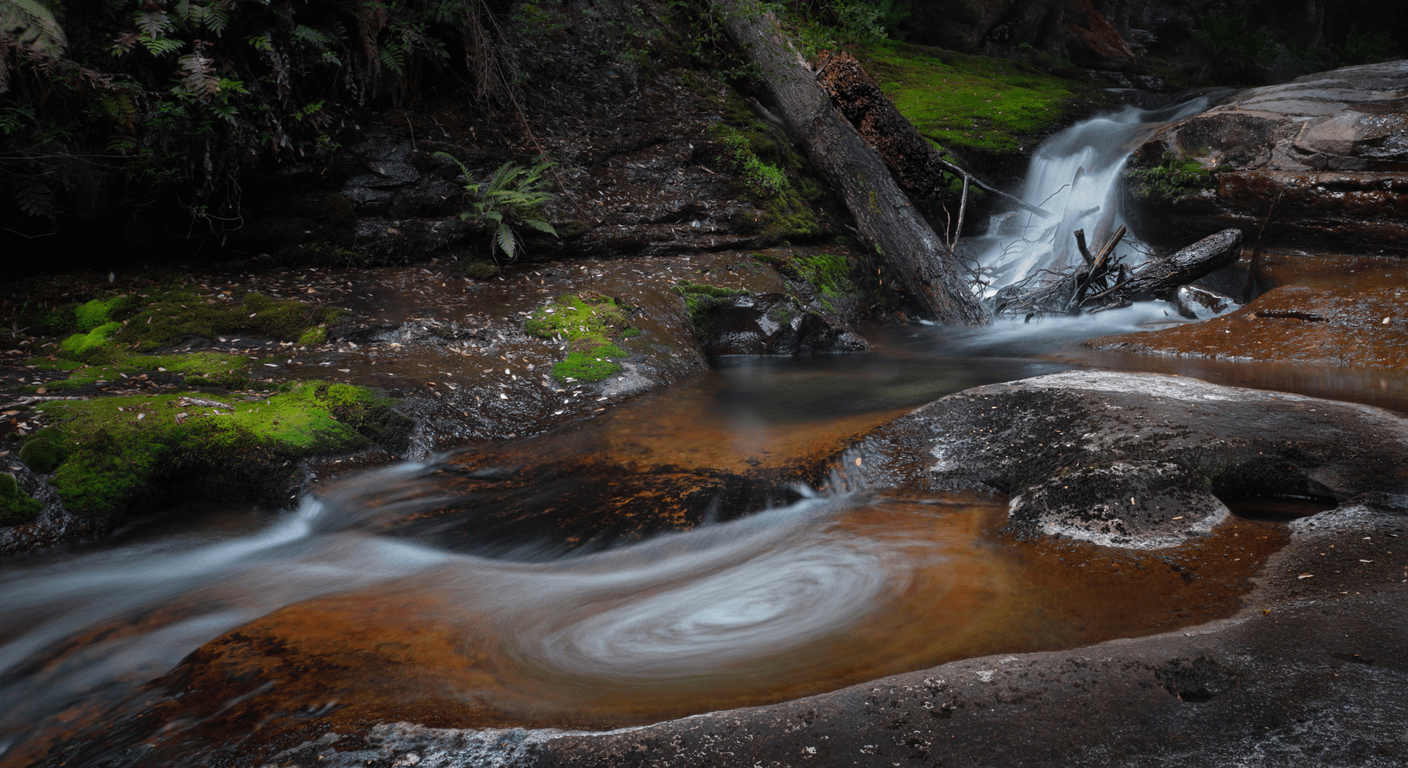
The falls carpark has basic facilities including toilets. The return walk to the viewing platform is around 20 minutes — flat to gently undulating, through cool temperate rainforest of myrtle, sassafras and tree ferns. The path is well-maintained and wide enough to be comfortable. Sensible walking shoes are sufficient; full hiking boots are unnecessary.
St Columba Falls drops around 90 metres in a single sheet over a dolerite face. In winter and after rain the volume is dramatic; in summer it runs more slender but no less photogenic. Entry is free. On a weekday in the shoulder season, you may have the viewing platform largely to yourself — one of those small, unhurried moments that solo travel does particularly well.
Getting to St Helens: The Practical Reality from Victoria
For a Victorian traveller, the most straightforward approach is a direct flight from Melbourne (Tullamarine or Avalon) to Launceston, then a self-drive northeast along the Tasman Highway — around two to two-and-a-half hours to St Helens, depending on how many roadside stops tempt you along the way. Rex Airlines and Qantas both serve Launceston from Melbourne; confirm current schedules before booking.
An alternative is flying into Hobart and driving north up the east coast — a longer drive but a beautiful one, and it allows you to take in the Freycinet Peninsula or Bicheno en route. Either way, allow at least two or three nights in St Helens to make the most of the northeast. Pyengana is a half-day; the broader region warrants more time than most travellers allow it.
Car hire is essential — there's no public transport to Pyengana or the falls. Booking a vehicle in advance through Launceston Airport is straightforward. Automatic transmission is the practical choice; the roads are easy but you'll want your attention on the scenery, not a gearstick.
Practical Considerations: Pacing, Comfort and What to Bring
The walk to St Columba Falls is classified as easy, but the forest floor can be damp and the viewing area near the falls receives spray. Waterproof layers and non-slip footwear are worth packing regardless of the forecast — Tasmanian weather in the northeast is generally milder than the highlands, but it shifts quickly. A light rain jacket takes up no space and earns its place every time.
Solo travellers should be aware that mobile coverage in the valley is limited or absent in places. Download offline maps before leaving St Helens, and let someone know your rough itinerary if you're inclined to that sort of sensible precaution. The roads are good and the walk is safe, but the peace of mind costs nothing.
If you're planning to visit in the peak summer months of December and January, a weekday morning start avoids the modest but real crowds that gather at the falls on weekends. The dairy tends to be busier on weekends too. Midweek, the valley is quiet in a way that feels genuinely restorative.
Where to Stay: St Helens as a Base
St Helens offers a reasonable range of accommodation for a town of its size — motel-style rooms, self-contained cottages and holiday parks suit different budgets and preferences. The town sits on Georges Bay, and a few properties have water views worth paying a small premium for. Booking ahead in January and over Easter is advisable; the rest of the year, availability is generally comfortable.
The town has a supermarket, a handful of cafes and restaurants, a bakery and a bottle shop — enough to provision a few days without effort. The broader northeast has a growing food and wine culture, with Pipers Brook and Kreglinger wine estates a reasonable drive west if you're inclined to extend the trip into a longer self-drive circuit.
Travel Insurance: Worth Saying Plainly
Domestic travel insurance is easy to overlook for a Tasmanian trip, but it's worth considering — particularly if you're booking flights and accommodation well in advance. Pre-existing conditions are relevant to policy terms; read the product disclosure statement carefully and compare options through a service like Compare the Market or directly with providers you trust.
The walk to St Columba Falls poses no particular medical risk for a fit 60- or 70-year-old, but remote-ish locations and limited mobile coverage are a reminder that a little preparation is simply sensible travel, not overcaution.
Quick planning guide
| Ideal pace | Slow and unhurried — one morning easily covers both stops |
|---|---|
| Best months | Year-round, though weekday mornings outside the December-January peak avoid the modest weekend crowds |
| Suggested stay | Half-day for Pyengana itself; two to three nights in St Helens to take in the wider northeast |
| Mobility level | Easy — a flat to gently undulating 20-minute return walk on a well-maintained path |
| Cost level | Budget-friendly — the falls are free to visit and cafe mains run around $20-35 |
| Comfort level | Casual and relaxed, with basic facilities at the falls carpark and an unfussy cafe at the dairy |
| Best for | Solo travellers and couples after a low-effort, scenic day trip with a clear structure |
| Main planning consideration | Car hire is essential, as there's no public transport to Pyengana or St Columba Falls |
Key takeaways
- Pyengana Valley is 20 minutes inland from St Helens and combines cloth-matured cheddar at a 130-year-old dairy with a free, easy walk to a 90-metre waterfall.
- The walk to St Columba Falls is roughly 20 minutes return on a well-maintained path through cool temperate rainforest — suitable for most fitness levels.
- Confirm Pyengana Dairy's opening hours before driving out, as they vary seasonally.
- The final approach to the falls carpark is gravel — take it slowly in a standard car; campervans should check current road conditions with Tasmania Parks and Wildlife.
- St Helens is the practical base for the northeast, reachable by flying into Launceston and self-driving around two hours along the Tasman Highway.
- Mobile coverage in the valley is limited — download offline maps before leaving St Helens.
Recommended partners and links
Indicative prices only — always confirm with the operator before booking.
Frequently asked questions
Is St Columba Falls suitable for older travellers with limited mobility?
Yes. The return walk is around 20 minutes on a well-maintained, relatively flat path through rainforest. Sturdy non-slip footwear is recommended as the track can be damp, but the walk does not require hiking fitness or poles. The viewing platform is accessible without significant exertion.
What are the opening hours for Pyengana Dairy?
Hours vary seasonally and can change. Check the Pyengana Dairy website at pyenganadairy.com.au or call ahead before making the drive. Visiting midweek in the shoulder season generally means a quieter experience at the cafe.
Is there an entry fee for St Columba Falls?
No. St Columba Falls is managed by Tasmania Parks and Wildlife Service and entry is free. Basic facilities including toilets are available at the carpark.
Can you do Pyengana as a day trip from Launceston?
It's a long day from Launceston — around two to two-and-a-half hours each way — but it is possible if you make an early start. A more comfortable approach is to base yourself in St Helens for two or three nights and treat Pyengana as a relaxed half-day excursion.
What is the best time of year to visit Pyengana and St Columba Falls?
October to April offers the best combination of reliable weather, long daylight hours and good road conditions. The falls run more powerfully after rain and through winter, but the access road is more pleasant in the drier months. Avoid school holiday weekends if possible — midweek visits are noticeably quieter.