The Noosa Everglades, part of Cooloola National Park on Queensland's Sunshine Coast, are one of only two everglades systems on Earth. Guided electric-boat cruises glide across tannin-dark, mirror-still water, best seen on calm morning departures before 8am, with June to September the most comfortable months. A full-day tour suits a two-night Noosa stay. Mobility demands are low — mostly seated, flat boardwalks at Kinaba — though boarding requires a careful step down. Fly into Sunshine Coast Airport at Marcoola, then transfer to Noosa Heads for tour pick-up.
What exactly are the Noosa Everglades, and why do they matter?
The term 'everglades' describes a very specific hydrological system: a slow-moving, shallow river of water filtering through sedge plains and paperbarks, sustaining extraordinary biodiversity while remaining almost entirely undisturbed by human development. There are only two such systems on Earth — the Noosa Everglades in south-east Queensland, and the Florida Everglades in the United States. That comparison is not marketing language; it is a geological and ecological fact that gives this place genuine weight.
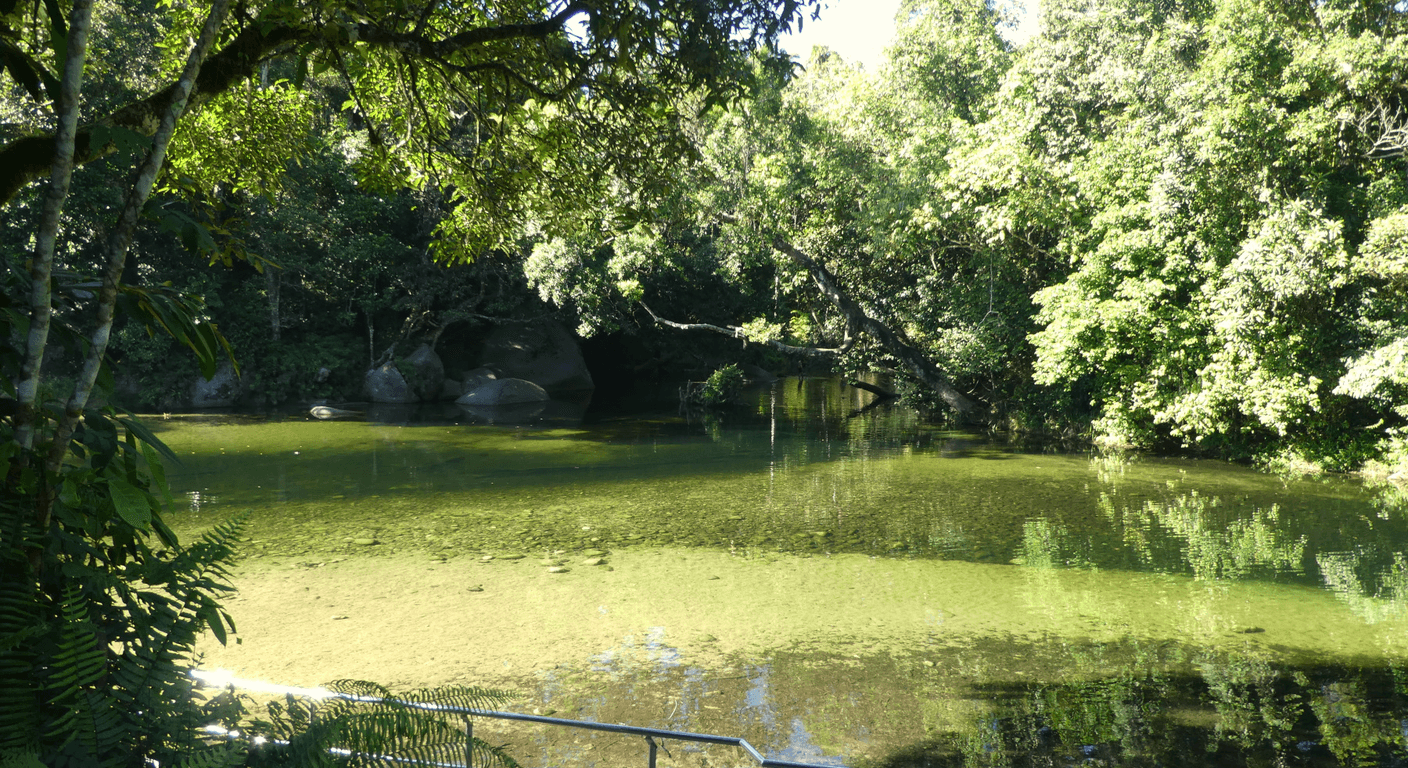
The Noosa Everglades occupy the upper reaches of the Noosa River within Cooloola National Park, part of the Great Sandy Biosphere Reserve. The water picks up tannins from the surrounding vegetation, turning it the colour of dark tea, and on still mornings this dark surface becomes a near-perfect mirror of the sky and trees above — hence the popular name, the 'river of mirrors'. The effect is most pronounced in the early hours, before any breeze disturbs the surface.
For a traveller from Victoria, this landscape feels genuinely foreign. There are no mountains, no ocean views, no heritage streetscapes — just flat, silent water, ancient paperbarks, and a sky full of waterbirds. That very unfamiliarity is part of the appeal. It is the kind of place that slows a person down without any effort.
Getting to Noosa from Victoria: the practical starting point
Most Victorian travellers will fly into Brisbane or the Sunshine Coast Airport at Marcoola. The Sunshine Coast Airport option is closer — it sits roughly 40 kilometres south of Noosa township — and is served by direct flights from Melbourne on Jetstar and Virgin Australia. From Sunshine Coast Airport, a pre-booked shuttle or hire car gets you to Noosa Heads in around 40–50 minutes depending on traffic. Confirm current flight and transfer options at the time of booking, as services change seasonally.
Noosa township — specifically Noosa Heads and nearby Noosaville — is a comfortable base. It is well-supplied with accommodation ranging from serviced apartments to quieter motel-style options, and the town itself is walkable for anyone reasonably mobile. A hire car is the most practical option if you plan to reach Elanda Point independently, but most guided tour operators pick up from Noosa Heads or Noosaville, removing the need to drive yourself.
For a Victorian solo traveller making this a standalone trip, two nights in Noosa is a sensible minimum — one full day for the Everglades, and time on either side to settle in and recover from travel. Noosa is not a budget destination, but it is a genuinely pleasant place to be based, with good cafes, a calm river precinct, and no shortage of flat, easy walking along the Noosa River foreshore.
How do the guided electric-boat cruises work?
The standard guided tour departs from either Noosa Heads, Noosaville, or the Elanda Point boat ramp on the western shore of Lake Cootharaba. Operators typically offer half-day and full-day options. The full-day experience is the one worth doing — it allows time to travel deep into the upper river system, reach the Kinaba Information Centre by boat, and return without feeling rushed. Half-day tours give a flavour of the lake but often do not penetrate far enough into the everglades proper.
Electric boats are now the standard on reputable tours — quiet, emission-free, and steady enough for passengers to sit comfortably and observe wildlife without engine noise disturbing the birds. There is no paddling required. You board, find a seat, and let the guide navigate. For travellers with hip or knee concerns, the low-sided boats do require a careful step down from the jetty; ask your operator about boarding arrangements when you book, as some have better boarding setups than others.
Guides on quality tours carry solid ornithological knowledge. Expect to see azure kingfishers, sea eagles, ospreys, jacanas, and a rotating cast of herons and egrets depending on the season. Dolphins occasionally enter the lower lake from the Noosa River mouth. Wildlife sightings are never guaranteed, but the Everglades consistently delivers for birdwatchers. Bring binoculars if you have them — a compact pair packs easily.
Why do mornings give the best reflections on the river?
The mirror-water effect that gives the Noosa Everglades its visual reputation depends almost entirely on wind. When the surface is glassy and undisturbed, the tannin-dark water reflects the sky, clouds, and paperbarks so precisely that photographs look inverted — it is genuinely difficult to tell which way is up. This condition is most reliable in the early morning, before sea breezes develop along the Sunshine Coast coast.
Most full-day tours depart between 7:00 and 8:00 in the morning for exactly this reason. By mid-morning, even a light breeze is enough to break the reflection. Travellers who book afternoon tours or choose to self-paddle in the afternoon will find the water more textured and the famous mirror effect largely absent. If the reflection is a priority — and for many people it is the whole point — morning departure is not optional.
Weather plays a role too. Overcast mornings with low cloud can produce some of the most dramatic reflections, as the grey sky and dark water merge at the horizon. Clear blue mornings produce the classic postcard image. Rain is less common in the drier months of June through September, which also happen to be the most comfortable for Queensland travel from a temperature perspective.
The Kinaba Information Centre: worth the stop
Kinaba sits at the northern end of Lake Cootharaba, accessible only by boat or a long walk through the national park. Most full-day tours include a stop here. The Queensland Parks and Wildlife Service operates the centre, which provides interpretive displays on the ecology, hydrology, and Indigenous cultural significance of the Cooloola area. Following upgrades completed in late 2025, the displays are clearer and the surrounding boardwalk more accessible than in previous years.
The boardwalk at Kinaba extends into the paperbarks and sedge, giving a ground-level perspective on the everglades vegetation that you cannot get from the water. It is flat and well-maintained, suitable for most visitors who can walk short distances. Toilets are available on site. The stop is typically 30–45 minutes, which is enough time to explore the boardwalk, read the displays, and eat a packed lunch at the picnic area if your operator has included one.
The Kinaba stop also serves a practical function: it breaks the return journey and gives legs a chance to stretch. For anyone travelling with lower-back stiffness or circulation concerns from sitting, that break makes the full-day tour considerably more comfortable. Mention any mobility needs to your operator when booking so they can factor in appropriate pacing.
What does a guided tour cost, and what is included?
Indicative pricing for guided full-day Noosa Everglades tours runs from roughly $165 to $185 per person as of early 2026, though this varies by operator, season, and what is included in the package. Half-day tours are typically available from around $120 per person. These are indicative figures only — confirm current pricing directly with your chosen operator before booking, as costs change and seasonal variations apply.
Most full-day tours include the boat, guide, national park entry, and at least a light lunch or morning tea. Some operators include kayak hire for those who want to paddle a short section independently, though this is always optional. Check what is included carefully when comparing operators, as the headline price does not always reflect equivalent value.
For solo travellers, it is worth asking whether single-supplement pricing applies or whether the per-person rate is fixed regardless of group size. Most guided tours run on a per-person basis with no single supplement, which is one of the genuine financial advantages of joining a group tour rather than hiring your own vessel. Groups are typically small — often eight to twelve people — which keeps the experience personal.
Accessibility, pacing, and honest notes for over-50 travellers
The Noosa Everglades is, by the standards of Australian wilderness experiences, genuinely accessible. You are sitting on a boat for the majority of the day, moving at a gentle pace through flat water. There are no hills, no long walks, and no requirement for physical exertion beyond boarding and disembarking. For travellers in their 60s and 70s who have moved away from physically demanding travel, this is one of the more rewarding nature experiences available precisely because it does not ask much of the body.
The honest caveats are these: boarding electric boats from a low jetty or pontoon does require some balance and a reasonable step down, which can be awkward for travellers with hip replacements, significant knee problems, or balance concerns. The sun exposure on open water is real — a wide-brimmed hat, long sleeves, and SPF50+ sunscreen are not optional in Queensland. Bring more water than you think you need, even in the cooler months. Seats on boats are typically padded but not ergonomic; if lower-back support matters to you, a small travel cushion is worth packing.
The full-day format — typically six to eight hours door to door — is a long day for anyone, not just older travellers. If you are prone to fatigue, build a rest day into the itinerary for the following day rather than scheduling onward travel. Most Noosa accommodation can hold luggage if you need to check out in the morning and return in the afternoon. The experience itself is not exhausting, but travel days on either side of it can be.
Quick planning guide
| Ideal pace | Slow-paced, full-day guided cruise with a midday walking break |
|---|---|
| Best months | June to September, for drier weather and calmer morning water |
| Suggested stay | Two nights in Noosa as a minimum base |
| Mobility level | Easy — mostly seated on the boat, flat boardwalk at Kinaba, but boarding requires a careful step down |
| Cost level | Mid-range, roughly $120 to $185 per person for guided tours |
| Comfort level | Comfortable with sun exposure to manage; padded but non-ergonomic boat seating |
| Best for | Birdwatchers and travellers who prefer low-exertion nature experiences |
| Main planning consideration | Book an early morning departure for the mirror-water effect and confirm boarding arrangements with the operator if balance or joint issues are a concern |
Key takeaways
- The Noosa Everglades is one of only two everglades systems on Earth — a fact, not a marketing claim.
- Morning departures (before 8:00 am) are essential for the mirror-water reflection effect; afternoon wind breaks the surface.
- Guided electric-boat full-day tours require no paddling and are suitable for most travellers with average mobility.
- Indicative full-day tour pricing runs from roughly $165 per person — confirm current costs directly with operators.
- The Kinaba Information Centre is accessible only by boat and includes a flat boardwalk and interpretive displays upgraded in late 2025.
- Fly into Sunshine Coast Airport (Marcoola) for the most direct access; most operators offer pick-up from Noosa Heads or Noosaville.
Recommended partners and links
Indicative prices only — always confirm with the operator before booking.
Frequently asked questions
Do you need to be fit or active to do the Noosa Everglades by boat?
No. Guided electric-boat tours require no paddling or physical exertion beyond boarding and disembarking. Most of the day is spent seated on the boat. Travellers with moderate mobility concerns generally manage the experience well, though those with significant balance or hip problems should discuss boarding arrangements with their operator before booking.
What time of year is best for visiting the Noosa Everglades from Victoria?
June through September offers the most comfortable temperatures for Queensland travel — warm but not humid — and is also the drier season, which increases the chance of still, glassy mornings ideal for the mirror-water effect. Summer months (December–February) are hot and humid and carry a higher chance of afternoon storms, though the everglades operate year-round.
Can you visit the Noosa Everglades without a guided tour?
Yes — self-hire kayaks and canoes are available from operators at Elanda Point, and you can paddle independently into the Noosa River system. However, for over-50 travellers unfamiliar with the waterways, a guided tour is strongly recommended. The river system is large, navigation is not obvious, and guides provide safety, context, and wildlife identification that significantly enhances the experience.
How far is the Noosa Everglades from Noosa Heads?
The Elanda Point boat ramp, the main departure point for independent paddlers, is roughly 40 kilometres south of Noosa Heads by road. Most guided tour operators depart from Noosa Heads or Noosaville and travel to the everglades by road transfer before boarding, so the distance is handled within the tour itinerary.
Is the Kinaba Information Centre accessible for older visitors?
The Kinaba Information Centre is accessible only by boat or a long walk through national park terrain — there is no road access. Once you arrive by boat, the boardwalk and centre building are flat and manageable for most visitors who can walk short distances. Toilet facilities are available on site. Queensland Parks upgraded the precinct in late 2025; confirm current accessibility details with your operator or Queensland National Parks before visiting.