Table Cape's tulip fields near Wynyard bloom for a short window from late September to mid-October, best visited on a mid-week morning for soft light and quiet. The day trip pairs the farm with the flat, sealed lighthouse lookout walk and Wynyard's foreshore, optionally extending to Burnie. Terrain is mostly easy, though the farm's grass can be uneven. Access requires flying into Burnie-Wynyard Airport and hiring a car, as public transport doesn't reach the headland.
What makes Table Cape worth the trip?
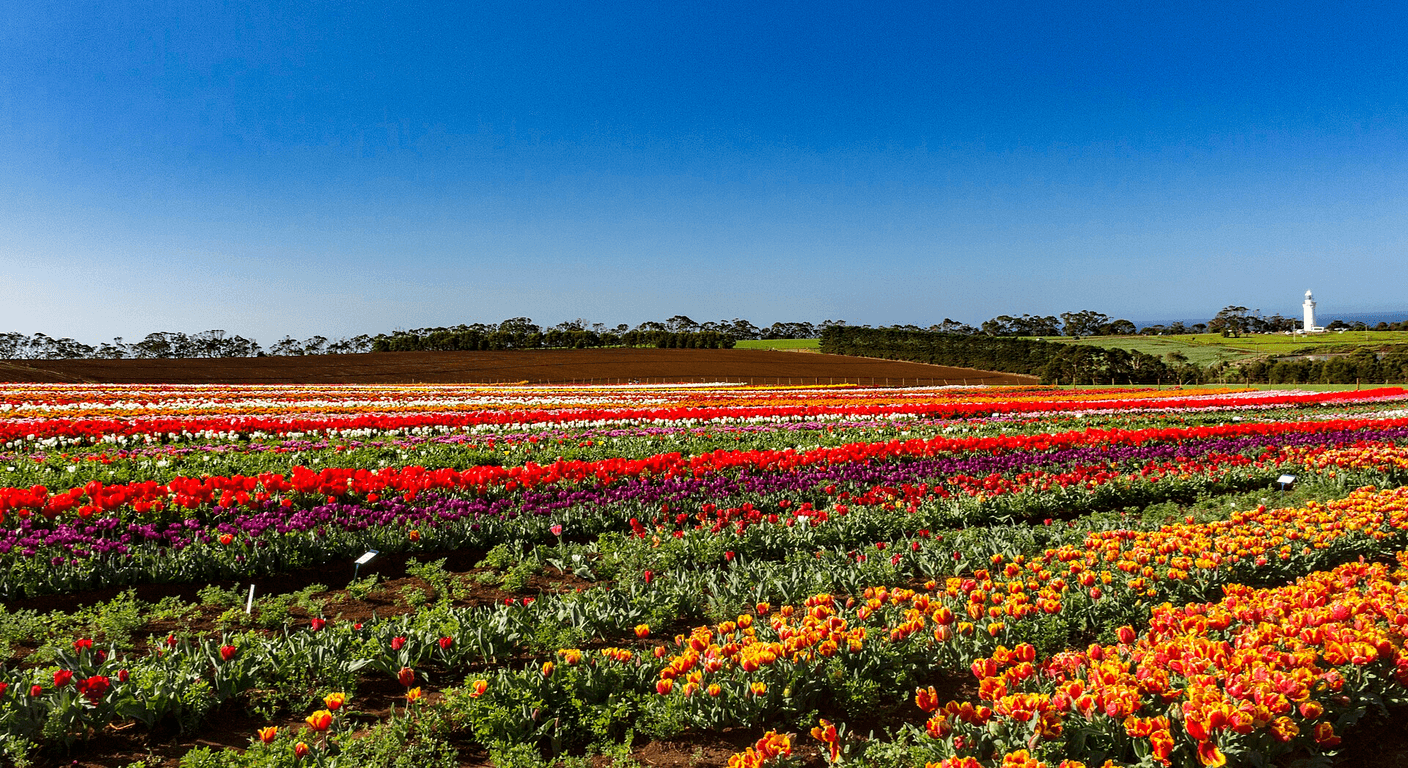
Table Cape is a blunt volcanic headland that juts into Bass Strait roughly five kilometres north of Wynyard. The plateau sits around 170 metres above sea level, and on a clear spring day the view — tulip rows in one direction, open ocean in the other — is the kind of thing that stays with you. It is not a theme park experience. It is a working farm that opens its gates for a defined period each year, and the simplicity of that is part of the appeal.
For a solo traveller in his late sixties, Table Cape offers something that busier tourist attractions do not always manage: genuine quiet. You can take your time along the rows, sit on the grass near the clifftop, and watch the light shift over the Strait without feeling hurried. The paths at the lookout and around the lighthouse precinct are largely flat and well-maintained, which matters when you are pacing yourself across a full day.
The combination of the tulip farm, the lighthouse viewpoint, and the short drive into Wynyard for lunch means you can build a satisfying itinerary without overloading it. Add Burnie if energy allows, or keep it simple. Either way, the day works.
When does the tulip season run, and how long does it last?
The bloom typically falls in the last week of September and runs into mid-October, though exact dates shift year to year depending on the season's warmth and rainfall. The farm usually announces its opening dates through its website and social media channels in the weeks leading up to the event. Confirming those dates before you book flights or accommodation is essential — the window can be as short as two to three weeks.
Arriving mid-week tends to mean fewer visitors and easier parking. Weekends during peak bloom can draw reasonable crowds, particularly on fine days when families from Burnie and further afield make the short drive. For a solo traveller who prefers a quieter atmosphere, a Tuesday or Wednesday morning is worth aiming for if your schedule allows.
Outside the bloom season, the tulip farm is not open to the public, but the clifftop lookout and the area around the Table Cape Lighthouse are accessible year-round at no charge. If you miss the flowers, the headland itself remains worth visiting for the coastal views and the sense of scale the plateau provides.
What does the tulip farm visit actually involve?
Entry to the farm during the bloom season is indicatively priced at around $10 to $15 per adult, though you should confirm the current rate directly with the farm before travelling, as pricing can change between seasons. Once inside, you walk among rows of commercial tulip varieties planted in blocks of colour — the farm grows bulbs for the horticultural trade, so the plantings are practical as well as photogenic. There is no formal guided tour; you move at your own pace.
The terrain across the farm is reasonably even, though parts of the paddock can be uneven underfoot after rain. Sturdy walking shoes are a sensible choice over sandals. There is usually a small on-site stall selling bulbs and cut flowers, and a basic refreshment option during the season, though you should not count on a full cafe experience at the farm itself — save that for Wynyard.
Photography is the main activity for most visitors, and the light in the morning is generally more flattering on the flower colour than the harsher midday sun. Arriving when the farm opens gives you the best of the light and the quietest conditions. Allow roughly an hour to ninety minutes at the farm, more if you are inclined to sit and take it slowly.
What is the Table Cape Lighthouse and how do you visit it?
The Table Cape Lighthouse was built in 1888 and remains an active navigational structure. It sits near the edge of the plateau and the approach from the small car park involves a short, flat walk along a sealed path. The views from the clifftop near the lighthouse are expansive — on a clear day you can see west along the coastline toward Rocky Cape and east toward the Emu River mouth and Burnie's port.
The lighthouse precinct is managed and the grounds are accessible year-round at no charge. The lighthouse itself is not always open internally for visitors, so if a tower climb is something you are hoping for, it is worth checking current access arrangements with the Waratah-Wynyard Council or Discover Tasmania before the trip. The external setting and the clifftop walk are the main draw regardless.
The path from the car park to the viewing area near the lighthouse is flat and sealed, which makes it accessible for most travellers. There are no formal amenities at the lighthouse itself, so if you have mobility considerations or rely on facilities, plan accordingly and use Wynyard's public amenities before or after the visit.
How do you get to Table Cape from Victoria, and from Wynyard?
For a Victorian traveller, the most practical approach is to fly into Devonport or Burnie-Wynyard Airport (also known as Burnie Airport, located at Wynyard). Virgin Australia and Qantas both service the Burnie-Wynyard route from Melbourne, with flight times of around an hour. Confirming current schedules and fares through the airlines directly is advisable, as regional services can change. Hiring a car at the airport is the most flexible option for exploring the area, and the drive from Wynyard township to Table Cape takes around ten to fifteen minutes.
Public transport to Table Cape itself is not practical. TassiLink and Redline Coaches connect Wynyard to Devonport and Burnie, but the headland requires a vehicle or a taxi or rideshare from town. If you are not driving, it is worth contacting the Wynyard Visitor Information Centre to ask about any local shuttle or tour options that may operate during the tulip season.
The road to Table Cape is sealed and straightforward, following Table Cape Road north from Wynyard. Parking at the farm and at the lighthouse lookout is available, though it can fill on busy bloom-season days. Arriving before 10am generally avoids the worst of the parking pressure.
How do you make a full day of it — Wynyard and Burnie?
Wynyard itself is a pleasant town to spend time in without rushing. The foreshore along the Inglis River estuary has a flat walking path that suits a post-lunch stroll, and the town's main street has a handful of cafes that do honest food without pretension. The Wynyard Visitor Centre is located near the foreshore and worth a brief stop for local information and to pick up any current event details.
If you want to extend the day, Burnie is roughly twenty minutes east along the Bass Highway. It is a working port city with a well-regarded regional gallery — the Makers' Workshop on Civic Square combines the Burnie Regional Museum and a working craft space, and it is worth an hour or two. The foreshore walk along Burnie's waterfront is flat and accessible. Lunch or coffee options in Burnie are broader than in Wynyard if you are particular about your choices.
A comfortable itinerary might run as follows: arrive at Table Cape Farm when it opens, spend an hour to ninety minutes among the tulips, walk across to the lighthouse lookout, then drive back into Wynyard for a late morning coffee and a foreshore walk before lunch. If energy and interest allow, the drive to Burnie fills the afternoon neatly before heading back to your accommodation. It is a full but not exhausting day.
Practical notes on accessibility, pacing, and what to bring
The lighthouse lookout path and the Wynyard foreshore walk are both flat and manageable for most older travellers. The tulip farm itself involves walking on grass and farm ground, which can be uneven in places — poles or a walking stick are useful if you use one at home. The farm is not a manicured garden, so set your expectations accordingly and dress for the weather, which on the north-west Tasmanian coast can shift quickly even in spring.
Layering is sensible. A light waterproof jacket is worth having in your bag even if the morning looks fine. The plateau at Table Cape is exposed to the Bass Strait and wind is a near-constant companion. Sun protection matters too — the spring sun at elevation can be stronger than it feels, and there is limited shade at the farm.
If you are travelling solo, the self-contained nature of the day works in your favour. There are no group tours required, no bookings to coordinate with others, and the pace is entirely your own. Carry water and a snack given that the farm's refreshment options are limited, and have your accommodation and the farm's contact details saved offline in case mobile coverage is patchy on the headland.
Quick planning guide
| Ideal pace | Slow, self-paced |
|---|---|
| Best months | Late September to mid-October (tulip bloom season) |
| Suggested stay | A full day trip from Wynyard, extendable to Burnie |
| Mobility level | Moderate — flat sealed paths at the lookout, uneven grass at the farm |
| Cost level | Budget-friendly (farm entry around $10–$15; lighthouse and lookout free) |
| Comfort level | Casual and exposed — pack layers for coastal wind and sun |
| Best for | Solo travellers and older visitors who prefer scenery at an unhurried pace |
| Main planning consideration | Confirm the farm's exact bloom dates before booking flights or accommodation |
Key takeaways
- Table Cape's tulip season runs roughly late September into mid-October — confirm exact dates with the farm before booking travel, as the window is short and weather-dependent.
- Farm entry during bloom is indicatively around $10–$15 per adult; the lighthouse lookout and clifftop walk are free year-round.
- The lighthouse precinct path is flat and sealed, making it accessible for most older travellers, while the farm itself involves some uneven grass terrain.
- Flying into Burnie-Wynyard Airport and hiring a car is the most practical approach from Victoria; public transport does not reach Table Cape directly.
- Wynyard's foreshore and cafes pair naturally with the farm visit, and Burnie — twenty minutes east — adds a regional gallery and waterfront walk if you want a fuller day.
- Arriving at the farm when it opens on a mid-week morning gives the best light for the tulip rows and the quietest conditions on the plateau.
Recommended partners and links
Indicative prices only — always confirm with the operator before booking.
Frequently asked questions
How much does it cost to visit the Table Cape Tulip Farm?
Entry to the tulip farm during the bloom season is indicatively around $10 to $15 per adult, though prices can change between seasons. Always confirm the current entry fee directly with the farm via their website before travelling. The clifftop lighthouse lookout nearby is free to visit year-round.
When is the best time to visit Table Cape for the tulips?
The bloom typically peaks in late September to mid-October, though the exact dates vary each year based on seasonal conditions. The farm publishes opening dates on its website as the season approaches. Mid-week mornings during the open period tend to be quieter and offer better morning light for the flower rows.
Is Table Cape accessible for older travellers with mobility considerations?
The sealed path to the lighthouse lookout is flat and suitable for most older travellers. The tulip farm itself is on open farmland with grass and potentially uneven ground, so sturdy footwear is advisable and a walking pole may be helpful. There are no formal accessibility facilities at the farm itself, so plan toilet stops in Wynyard before or after the visit.
Can you visit Table Cape without a hire car?
Getting to Table Cape without a vehicle is difficult. There is no public transport to the headland. From Wynyard, a local taxi or rideshare is an option, and it is worth contacting the Wynyard Visitor Information Centre before your trip to ask whether any seasonal shuttles or local tours operate during the tulip season.
Is Table Cape worth visiting outside the tulip season?
Yes. The Table Cape Lighthouse precinct and clifftop lookout are accessible year-round at no charge and offer broad views across Bass Strait toward Rocky Cape and Burnie. The tulip farm itself is not open to the public outside the bloom period, but the headland remains a worthwhile stop on any visit to north-west Tasmania.