Hobart's Intercity Cycleway follows the Derwent River's western bank for about 18 kilometres, flat and traffic-separated, making it one of Tasmania's easiest rides for over-50 travellers. Best visited October to April, a two to three-night Hobart stay allows a relaxed morning ride to Glenorchy and an afternoon at Salamanca. Rated moderate for mobility — no hills, but sustained cycling fitness needed — and reached via a short flight from Melbourne or the overnight Spirit of Tasmania ferry.
Why This Ride Works for Over-50 Travellers
Flat is underrated. Most celebrated cycling routes in Australia involve at least one punishing climb — the Intercity Cycleway does not. The path runs along the western shore of the Derwent River from Hobart's waterfront precinct northward through Moonah and Glenorchy toward Old Beach, and the elevation profile is, by any measure, negligible. For a solo traveller in his late sixties, that's not a compromise. That's the point.
The surface is sealed for the overwhelming majority of the route. Large sections are separated from motor traffic by a dedicated corridor, which removes the low-level anxiety that shadows on-road riding. You set your own pace, stop when the river light catches your eye, and turn around whenever you feel like it. There's no loop to complete, no group to keep up with, and no guide waiting impatiently at the next gate.
Hobart itself is a compact, walkable city — easy to navigate solo, genuinely interesting at any hour, and with enough good cafes and restaurants to make an early evening return feel like a reward rather than an afterthought. The cycleway slots naturally into a two or three-night stay and requires no specialist equipment beyond a hire bike and a decent layer for the Tasmanian morning cool.
Getting to Hobart from Victoria
From Melbourne, the flight to Hobart takes roughly an hour and fifteen minutes — one of the more civilised interstate hops in Australia. Jetstar, Virgin Australia and Qantas all operate the route; confirm current schedules and fares before booking. It's short enough that jet lag is not a factor, though Hobart sits in the same time zone as Melbourne, so there's no adjustment at all.
The Spirit of Tasmania remains an option for travellers who'd rather not fly, sailing overnight from Geelong to Devonport. From Devonport, Hobart is roughly two and a half hours south by road. It's a longer commitment, but for a solo traveller who enjoys the crossing itself — and who might want to bring a bike rather than hire one — it has a certain logic. Confirm current sailing schedules and fares with Spirit of Tasmania directly.
Taxis and rideshare from Hobart Airport to the city centre take around 20 minutes and cost roughly $35–$50, indicative only. Accommodation along or near the waterfront puts you closest to the cycleway's southern starting point. Sullivan's Cove and the Battery Point area are both within easy walking distance of where the path begins.
Understanding the Route: Where to Start and When to Turn Back
The cycleway's southern end sits near the Hobart waterfront, close to the Regatta Ground at the foot of Queens Domain. From there, the path tracks the river northward through Moonah, past the Glenorchy Arts and Sculpture Park, and on toward Berriedale, Claremont and eventually Old Beach — a total of around 18 kilometres one way. The full distance, ridden out and back, is 36 kilometres. That's manageable for a regular cyclist, but it's a long half-day, and there's no particular reason to push to the end on a first visit.
A smarter approach for most riders is to aim for Glenorchy — around 10 to 11 kilometres from the waterfront — which gives a round trip of roughly 20 to 22 kilometres. This takes perhaps two to two and a half hours at a comfortable pace with stops, leaves time for lunch back in town, and still delivers the best of what the path offers: wide river views, the low industrial hum of Moonah giving way to quieter stretches, and the occasional pelican showing complete indifference to passing cyclists.
Elwick, just before Glenorchy, makes a natural turning point for anyone who'd prefer a shorter ride. The Elwick Racecourse sits nearby and the river views here are particularly open. There are no hills to negotiate on the return — a detail worth appreciating — and the tailwind that sometimes builds from the north in the afternoon can make the final kilometres feel almost effortless.
Bike Hire in Central Hobart: What to Know
Several operators offer bike hire in central Hobart, with standard hybrid and comfort bikes well suited to a flat sealed path. Electric-assist bikes are available through some providers — worth considering if the return leg feels like it deserves a little mechanical encouragement. Indicative daily hire rates sit around $35–$50, though this varies by operator and bike type. Confirm current availability and pricing directly before you travel, as the hire market in smaller cities can shift.
Helmets are mandatory in Tasmania and should be included with any reputable hire. A rear rack or small bag is useful for carrying water, a light layer and a snack. The path has no significant service points between Hobart and Glenorchy, so bring enough water for the ride — particularly in the warmer months when a clear Tasmanian summer day can surprise with its intensity.
If you're travelling with your own bike, Spirit of Tasmania offers vehicle and bicycle transport. For a fly-in visitor, hire is the practical choice. Book ahead if travelling in peak summer (December to February), when demand on hire fleets from both tourists and locals is at its highest.
What You'll See Along the Derwent
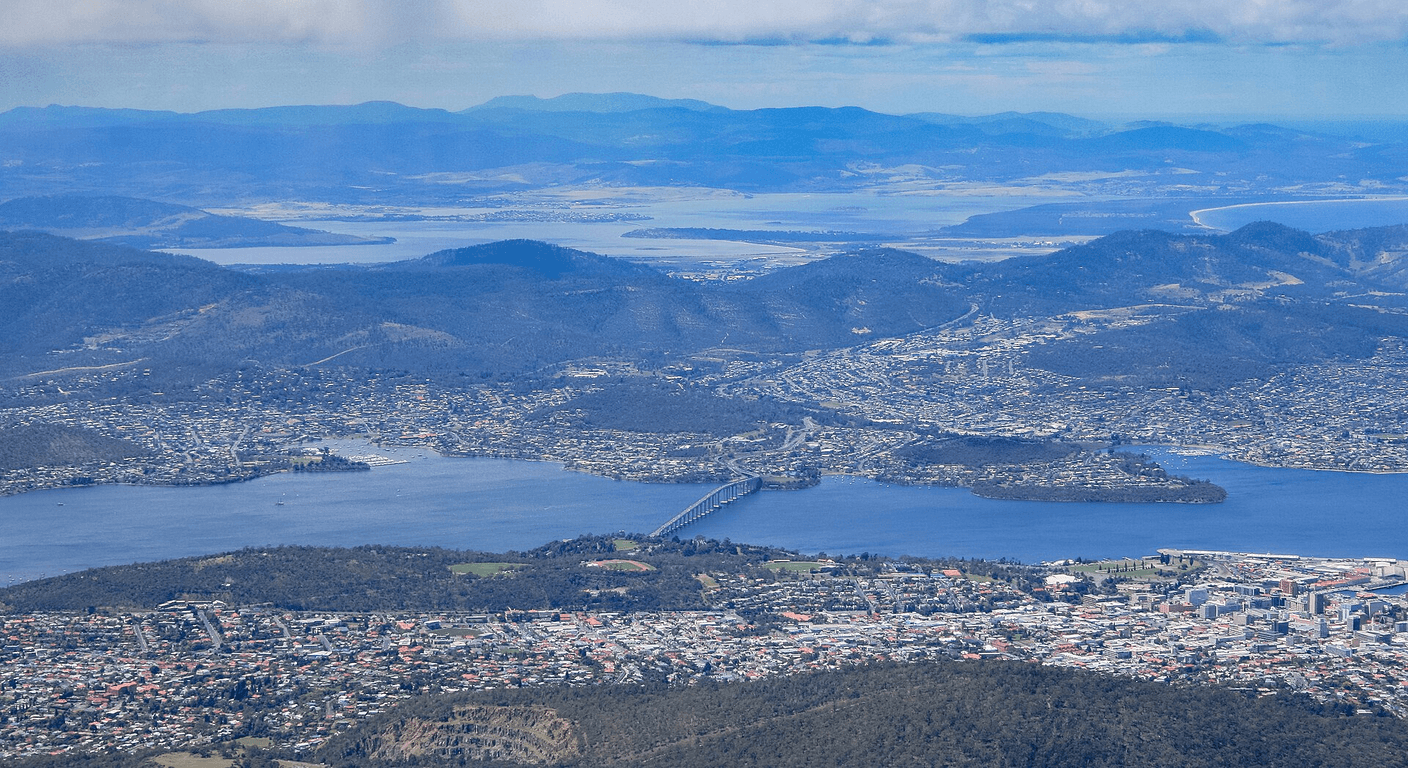
The Derwent is wide here — wider than most people expect. On a clear morning the water is a flat, cold grey-blue, and Mount Wellington (kunanyi) sits above the city to the south-west, snow-capped for a good portion of the year. The mountain doesn't leave your peripheral vision for most of the ride north; it's an oddly grounding presence for a riverside path in a small city.
The Glenorchy Arts and Sculpture Park, known as GASP, is worth a slow roll-through rather than a sprint past. The sculpture installations sit along a waterfront precinct that was, not many years ago, an unremarkable industrial margin. It's now a thoughtfully designed public space — free to enter, no booking required — and one of those places that rewards curiosity rather than tick-box tourism. Confirm current opening information with the City of Glenorchy before visiting.
Birdlife along the route is quietly impressive. Black swans are common on the river, as are various wading birds at low tide. The path passes through patches of native planting that attract smaller species. None of this requires binoculars to enjoy — it's ambient, unhurried, and exactly the kind of thing a solo traveller can absorb at his own pace without needing to explain it to anyone.
Practical Comfort: Accessibility, Rest Points and Weather
The path's flat, sealed surface makes it accessible to most riders who are comfortable on a bike and have no significant lower-limb issues. Electric-assist hire bikes extend that accessibility further. The route is not suitable for wheelchair users, but for ambulatory travellers with moderate fitness, it presents no serious physical demands. If the saddle starts to make itself known around the 8-kilometre mark — and it will — that's a perfectly good reason to stop, stretch and watch the river for a while.
Hobart's weather deserves honest attention. The city has a cool-temperate climate, and even in summer the mornings can be brisk. A light windproof layer is worth packing regardless of the forecast. Afternoon winds along the Derwent can strengthen, making the northward leg trickier later in the day — starting early and riding north first is the sensible approach. In winter, the path remains open but conditions can be cold and wet; October through April is the comfortable window for most visitors.
Public toilets are available at various points along the route, including near the Regatta Ground at the start and in Moonah and Glenorchy. Rest benches are positioned at intervals. The path is well-used by locals, which means you're rarely entirely alone — a reassurance for solo travellers, without the path ever feeling crowded.
Before and After the Ride: Making a Day of It in Hobart
The waterfront precinct around Salamanca Place and Constitution Dock is a short walk from where the cycleway begins, and it's among the more satisfying urban waterfronts in Australia — unpretentious, working in places, and with a farmers' market on Saturday mornings that's genuinely worth building a weekend around. Mures Fish Centre at Constitution Dock has been serving fresh Tasmanian seafood for decades; the upper-level restaurant and the lower fish bar both deliver honest, well-sourced meals without the performance of fine dining.
MONA — the Museum of Old and New Art at Berriedale — sits near the cycleway's northern stretch and is reachable by the MONA ROMA ferry from the Brooke Street Pier, which makes a satisfying alternative for the return leg if you're happy to lock a hire bike at Berriedale and catch the boat back. Confirm current MONA opening hours and ferry schedules at mona.net.au and monaroma.com.au before building it into your day.
For a solo traveller spending two nights in Hobart, the cycleway fits neatly into day one — morning ride, waterfront lunch, afternoon exploring Salamanca. Day two can be given over to kunanyi/Mount Wellington by bus or organised tour, or to a drive up the Channel Highway to Huonville, where the Huon Valley's orchards and cider scene offer a different register entirely. Hobart rewards a considered pace and a loose itinerary.
Quick planning guide
| Ideal pace | Slow-paced and self-directed, with frequent stops |
|---|---|
| Best months | October to April |
| Suggested stay | Two to three nights in Hobart |
| Mobility level | Moderate — flat, sealed and hill-free, but requires sustained cycling fitness; not wheelchair accessible |
| Cost level | Budget-friendly — the path is free; hire bikes run roughly $35–$50 a day |
| Comfort level | Comfortable, with rest benches, public toilets and cafes along the way |
| Best for | Solo or independent travellers wanting a low-stress, scenic cycling day out |
| Main planning consideration | Book bike hire ahead in peak summer (December–February) and ride north early to beat afternoon winds |
Key takeaways
- The Intercity Cycleway runs roughly 18 kilometres from Hobart's waterfront to Old Beach along the Derwent — flat, sealed and largely traffic-separated.
- A comfortable out-and-back to Glenorchy (around 20–22 kilometres total) suits most first-time riders and takes two to two and a half hours at a relaxed pace.
- The path is free to use; bike hire in central Hobart costs roughly $35–$50 per day, indicative — confirm current rates before booking.
- Electric-assist bikes are available through some Hobart hire operators, extending the ride's accessibility for those who want a little mechanical support.
- October to April is the best riding window; start early to use the calmer morning conditions and ride north first to make the return easier.
- The Glenorchy Arts and Sculpture Park (GASP) is a free, worthwhile stop along the route — no booking required, but confirm current access before visiting.
Recommended partners and links
Indicative prices only — always confirm with the operator before booking.
Frequently asked questions
How long does it take to ride the Hobart Intercity Cycleway?
A comfortable out-and-back ride from the Hobart waterfront to Glenorchy — roughly 20 to 22 kilometres in total — takes around two to two and a half hours at a relaxed pace with stops. The full 36-kilometre return to Old Beach and back suits experienced riders and takes most of a half-day. There's no obligation to complete the full distance.
Is the Hobart Intercity Cycleway suitable for older or less confident cyclists?
Yes. The path is flat, sealed and separated from motor traffic for most of its length, making it one of the more accessible recreational rides in Australia. Electric-assist bikes are available through some Hobart hire operators, which further reduces the physical demand. The route is not suitable for wheelchair users, but ambulatory riders with moderate fitness should find it comfortable.
Where can you hire a bike for the Intercity Cycleway in Hobart?
Several operators offer bike hire in central Hobart, including hybrid and electric-assist options. Indicative daily rates are around $35–$50, but availability and pricing can change, so confirm directly with operators before you travel. Helmets are legally required in Tasmania and should be included with any reputable hire.
What is the best time of year to ride the Hobart Intercity Cycleway?
October through April offers the most comfortable riding conditions. Spring and autumn are particularly pleasant — warm enough to ride without heavy gear, calm enough to avoid the stronger afternoon winds that can develop along the Derwent in summer. The path is open year-round, but winter conditions can be cold and wet.
Is there a cost to use the Hobart Intercity Cycleway?
The cycleway is free to use. The main cost for visitors is bike hire, which runs roughly $35–$50 per day through central Hobart operators, indicative only — confirm current rates before booking. MONA, if you choose to visit near the northern end of the route, charges a separate entry fee; check mona.net.au for current pricing.