Tamar Island Wetlands, ten minutes from central Launceston off the West Tamar Highway, is a flat 2.5-kilometre return boardwalk best allowed one and a half to two hours, ideally on an autumn or winter morning when light is softer and bird activity richer. The defining highlight is close, unhurried encounters with black swans, pelicans and purple swamphens. Mobility is Easy, with no booking required. Melbourne travellers can reach Launceston via a direct one-hour flight, or fly into Hobart and drive two hours north.
Why Tamar Island Works So Well as a Solo Excursion
There's a particular pleasure in a walk you can do entirely on your own terms. No guide, no group pace, no pressure to keep moving. Tamar Island Wetlands is that kind of place. Ten minutes north of Launceston's centre on the West Tamar Highway, it asks almost nothing of you — no booking, no car shuttle, no steep terrain — and gives back a great deal in return.
For a solo traveller, the flat boardwalk has an added appeal: you're never far from other visitors or the interpretation centre, which makes it feel safe and well-managed without being crowded. The wildlife doesn't wait for permission either. Black swans move through the reed beds with the unhurried confidence of residents who know they're the main attraction, and purple swamphens — that glossy, improbable bird with the red bill and absurdly large feet — are almost guaranteed sightings.
What the Walk Actually Involves
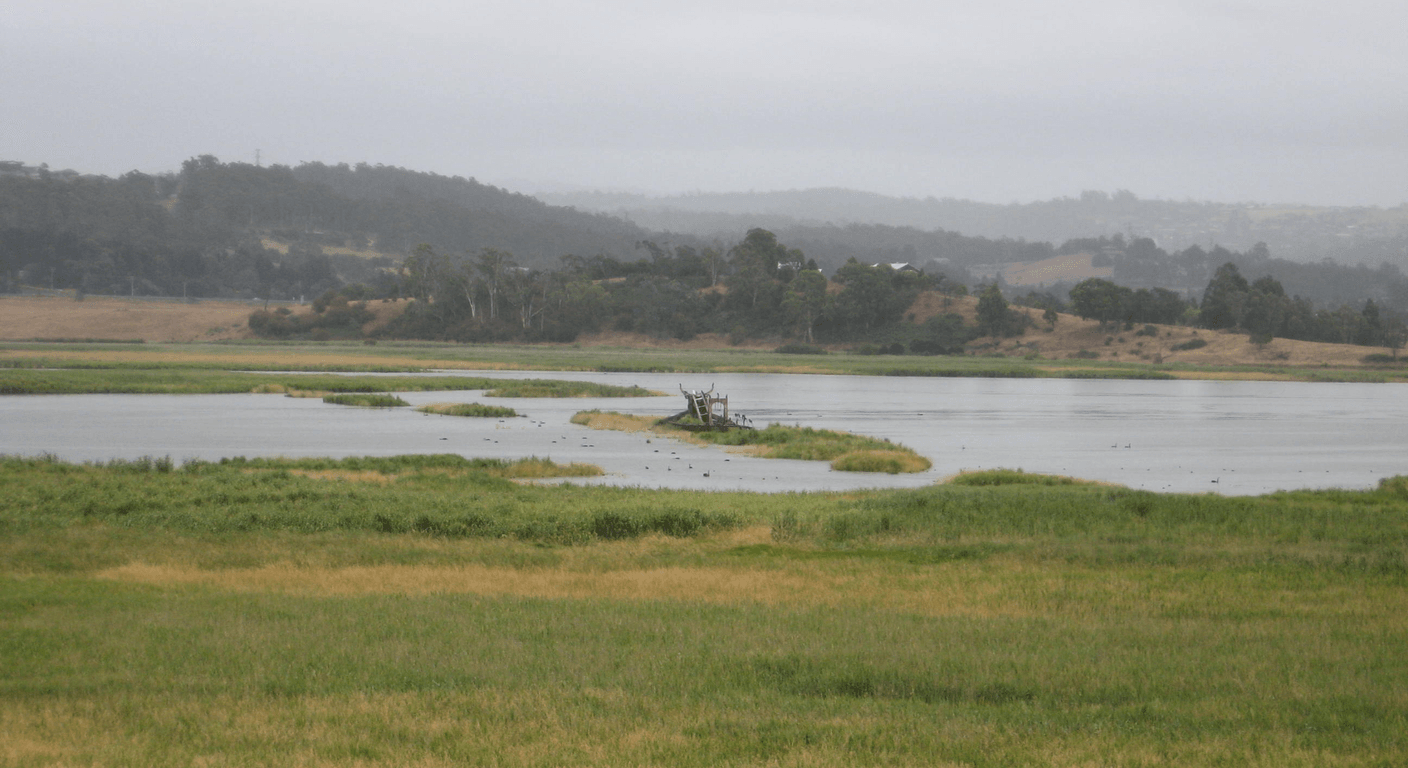
The boardwalk runs roughly 2.5 kilometres return from the interpretation centre out to the island and back. At a birdwatcher's pace — which is to say, stopping often, scanning the reeds, watching a pelican decide whether to move — you'd allow an hour and a half to two hours comfortably. The surface is flat and well-maintained, making it suitable for most mobility levels, though it's worth confirming current boardwalk conditions with Parks & Wildlife Service Tasmania before your visit, particularly after wet weather.
The interpretation centre at the entry is a good place to start rather than skip. It sets the ecological context for what you're about to walk through — the wetlands are part of the broader Tamar Estuary system, and understanding a little of that makes the birds more interesting, not less. Entry is by small donation; confirm the current amount and opening hours directly with the Parks & Wildlife Service Tasmania, as these can vary seasonally.
Shade is the honest limitation here. The boardwalk is largely open, with reed beds offering atmosphere but minimal canopy. In summer, a morning start — before ten o'clock if possible — makes the difference between a pleasant walk and an uncomfortable one. A wide-brimmed hat, sunscreen and a water bottle are not optional extras. In autumn and winter, the light is softer and the bird activity often richer, and you'll have the place more to yourself.
The Birds: What You're Likely to See
Black swans are practically guaranteed — the wetlands support a healthy resident population, and they move through the open water and reed margins throughout the day. Australian pelicans are frequent visitors, their sheer size making them easy to spot even without binoculars. Purple swamphens are almost comically present, stalking the boardwalk edges with great purpose.
Binoculars genuinely reward the effort of carrying them. The reed beds hold smaller species — Australasian grebes, little pied cormorants, the occasional Latham's snipe in season — that you'd simply miss without glass. If you don't own a pair, a lightweight compact model is worth borrowing or buying before the trip. The Tamar Valley as a whole is serious birdwatching country, and this walk is a fine introduction to it.
The estuary setting means bird activity shifts with the tide as much as the time of day. Arriving in the two hours after a low tide can concentrate wading birds along the exposed margins. It's not science, it's observation — which is, after all, the whole point of being here.
Getting There from Launceston (and from Victoria)
From central Launceston, the wetlands are around ten minutes by car along the West Tamar Highway heading north-west. Parking is available at the interpretation centre. If you're not driving, it's worth checking current taxi and rideshare availability in Launceston — services exist but are not as frequent as in larger cities, so a return booking is sensible.
From Victoria, the most straightforward approach is a direct flight from Melbourne to Launceston, which takes around an hour with Virgin Australia or Qantas — confirm current routes and schedules, as these change. Alternatively, flying into Hobart and driving north through the Midlands Highway takes around two hours and opens up the possibility of a longer Tasmanian loop. Either way, a night in Launceston before heading to the wetlands makes the morning walk feel unhurried rather than rushed.
Launceston's accommodation options are genuinely good for solo travellers — the city centre is compact and walkable, and several well-regarded small hotels and guesthouses sit within easy reach of restaurants and the Cataract Gorge. It's a comfortable base, and the wetlands are just one of several easy half-days available from the city.
Combining the Wetlands with a Broader Launceston Day
A morning at Tamar Island pairs naturally with an afternoon in Launceston itself. The Cataract Gorge Reserve — a ten-minute walk from the city centre — is another flat-to-moderate option with chairlift access across the gorge if the legs need a rest. The Queen Victoria Museum and Art Gallery, split across two campuses, is worth a couple of hours for its colonial and natural history collections; confirm opening hours at qvmag.tas.gov.au.
Lunch at one of the cafes along Brisbane Street or in the Seaport precinct rounds out a day that's full without being exhausting. Launceston has developed a quiet confidence in its food culture — Tasmanian produce, good coffee, nothing to prove. It suits a certain kind of traveller very well.
For those with a few extra days, the Tamar Valley wine region extends north along both banks of the river, with cellar doors that are generally relaxed about solo visitors and don't require bookings. Driving the valley at your own pace — stopping when something catches the eye — is one of the more satisfying ways to use a rental car in northern Tasmania.
Practical Considerations Worth Knowing
Travel insurance is non-negotiable for any trip, and travellers with pre-existing conditions should confirm coverage before booking — not all standard policies include everything, and Tasmania, while domestic, is still a flight and a stay away from home. The Australian Government's Smartraveller site (smartraveller.gov.au) is the right place to check current advice even for domestic travel.
Photography is one of the quiet rewards here. The light on the estuary in the early morning is soft and directional, and the birds are close enough for a decent smartphone shot. A telephoto lens opens up more possibilities, but it's not necessary to enjoy the place. What matters is slowing down enough to notice what's actually there.
The wetlands are managed by the Parks & Wildlife Service Tasmania, and the small donation at the entry contributes to that management. It's one of those places where the cost is almost beside the point — the value is entirely in the experience.
Is This Walk Right for You?
If you walk comfortably for an hour or more on flat ground, Tamar Island is well within reach. The boardwalk is not a challenging environment — it's a deliberate, gentle one. That's not a concession, it's a design. The wetlands reward attention, not exertion.
For solo travellers in particular, there's something reassuring about a place with this much structure and this little pressure. You can linger at the interpretation centre, walk to the island, sit for a while watching the swans, and return at whatever pace suits you. Nobody is timing you. The birds certainly aren't.
Quick planning guide
| Ideal pace | Slow and unhurried, self-timed |
|---|---|
| Best months | Autumn and winter for cooler light and richer birdlife; summer works with an early morning start |
| Suggested stay | 1.5–2 hours for the walk, plus one night in Launceston for an unhurried morning visit |
| Mobility level | Easy — flat, well-maintained boardwalk suitable for most mobility levels |
| Cost level | Budget-friendly — entry by small donation only |
| Comfort level | Comfortable but largely unshaded; hat, sunscreen and water recommended |
| Best for | Solo travellers wanting a gentle, low-pressure nature walk |
| Main planning consideration | Confirm current boardwalk conditions, donation amount and opening hours with Parks & Wildlife Service Tasmania, and plan around the lack of shade in summer |
Key takeaways
- Tamar Island Wetlands is a flat 2.5-kilometre return boardwalk walk, ten minutes from central Launceston, rated Easy for mobility.
- Entry is by small donation at the interpretation centre — confirm current amount and opening hours with Parks & Wildlife Service Tasmania before visiting.
- Black swans, Australian pelicans and purple swamphens are reliable sightings; binoculars significantly improve the experience.
- Morning visits are strongly recommended in summer — the boardwalk is largely unshaded and exposed to full sun by mid-morning.
- From Victoria, a direct one-hour flight to Launceston makes this a genuine short-break destination, ideally with at least one night in the city.
- The walk pairs well with an afternoon at Cataract Gorge or the Queen Victoria Museum and Art Gallery for a full and unhurried Launceston day.
Recommended partners and links
Indicative prices only — always confirm with the operator before booking.
Frequently asked questions
Is Tamar Island Wetlands suitable for walkers with mobility limitations?
The boardwalk is flat and purpose-built, making it one of the more accessible nature walks in Tasmania. It is generally suitable for walkers using sticks or frames, though you should confirm current surface conditions with Parks & Wildlife Service Tasmania before visiting, particularly after wet weather.
How long does the Tamar Island Wetlands walk take?
The boardwalk is approximately 2.5 kilometres return. At a relaxed birdwatcher's pace with stops, allow one and a half to two hours, including time at the interpretation centre at the start.
What is the entry cost for Tamar Island Wetlands?
Entry is by small donation at the interpretation centre. The amount is indicative and may change — confirm the current figure directly with Parks & Wildlife Service Tasmania or on arrival.
When is the best time of year to visit Tamar Island Wetlands?
April to October offers milder temperatures and is generally the most comfortable time to visit. In summer (December to February), a morning start before ten o'clock is strongly advised, as the boardwalk is largely unshaded and can become very warm by mid-morning.
How do you get to Tamar Island Wetlands from Launceston without a car?
The wetlands are around ten minutes by taxi or rideshare from central Launceston along the West Tamar Highway. Rideshare availability in Launceston is more limited than in larger cities, so booking a return trip in advance is recommended. Confirm current public transport options with Metro Tasmania or the Launceston Visitor Information Centre.