Thai Airways International flies from Sydney, Melbourne and Brisbane to Bangkok (Suvarnabhumi), with connections across Asia. For over-50 travellers, the flight runs roughly 9–10 hours from Melbourne or Sydney. Economy is serviceable but tight for long legs; Royal Silk Business Class offers a lie-flat seat worth serious consideration on overnight sectors. Best months to fly are November to February (cool-season Bangkok). Mobility rating: Easy to Moderate. Book an aisle seat and confirm baggage allowance before departure.
Where Thai Airways fits in the Australia–Bangkok market
Thai Airways operates flights from Sydney, Melbourne and Brisbane to Bangkok Suvarnabhumi (BKK). From Melbourne, you're looking at roughly 9 hours 30 minutes; from Sydney, a shade under 9 hours; Brisbane sits around 8 hours 45 minutes. These are not short sectors. They're long enough to feel in your lower back by the last two hours, and short enough that some travellers underestimate the preparation they need.
The carrier positions itself as a full-service airline, which means checked baggage is included in the base fare — no nickel-and-diming on a 30 kg bag the way budget carriers operate. That matters when you're packing for a two-week trip and have no interest in wrestling a carry-on into an overhead locker at 11 pm. The onboard product is Thai-flavoured in the best sense: the food is genuinely good, the crew are attentive, and the aircraft — typically a Boeing 777 or 787 Dreamliner on Australian routes — is well-maintained following the airline's rehabilitation period.
What Thai Airways is not is the cheapest way to Bangkok. Qantas codeshares, Singapore Airlines via Changi, and carriers like Cathay Pacific or Malaysia Airlines will all appear in fare comparisons. Some will be cheaper. The question for a solo traveller in his late 60s is whether the trade-offs — a stop in Singapore or Kuala Lumpur, different cabin configurations, varying baggage rules — are worth the saving. Sometimes yes. Often no.
Economy class: the honest assessment for long legs and older bodies
Economy on Thai Airways is standard long-haul economy — no more, no less. Seat pitch is around 32–34 inches depending on aircraft and configuration, which is adequate if you're of average height and build, and genuinely uncomfortable if you're tall or have any hip, knee or lower back issues. The seats recline, though not dramatically, and the person in front will almost certainly use that recline within the first hour. That's the reality on any full-service economy cabin.
For a 69-year-old travelling solo, the aisle seat is non-negotiable. Request it at booking — don't wait for check-in. On a 777 in a 3-3-3 configuration, the aisle seat in the middle section (seats D or G depending on the row) means you're stepping over nobody to walk the cabin, which you should do every 90 minutes minimum. Set a quiet alarm on your phone if you need a prompt. Compression socks are not optional on this sector — they're the single most useful thing you can pack in your hand luggage, and any GP worth consulting before a long-haul trip will say the same.
The entertainment system on Thai Airways is solid — a decent library of films, TV series and music, with a screen size that's usable without squinting. Noise-cancelling headphones from home will improve the experience significantly over the airline-provided ones. Hydration matters more than most travellers acknowledge: the cabin air is dry, alcohol compounds that dryness, and arriving in Bangkok dehydrated makes the first day harder than it needs to be. Water, not wine, for at least half the flight.
Royal Silk Business Class: when the upgrade genuinely makes sense
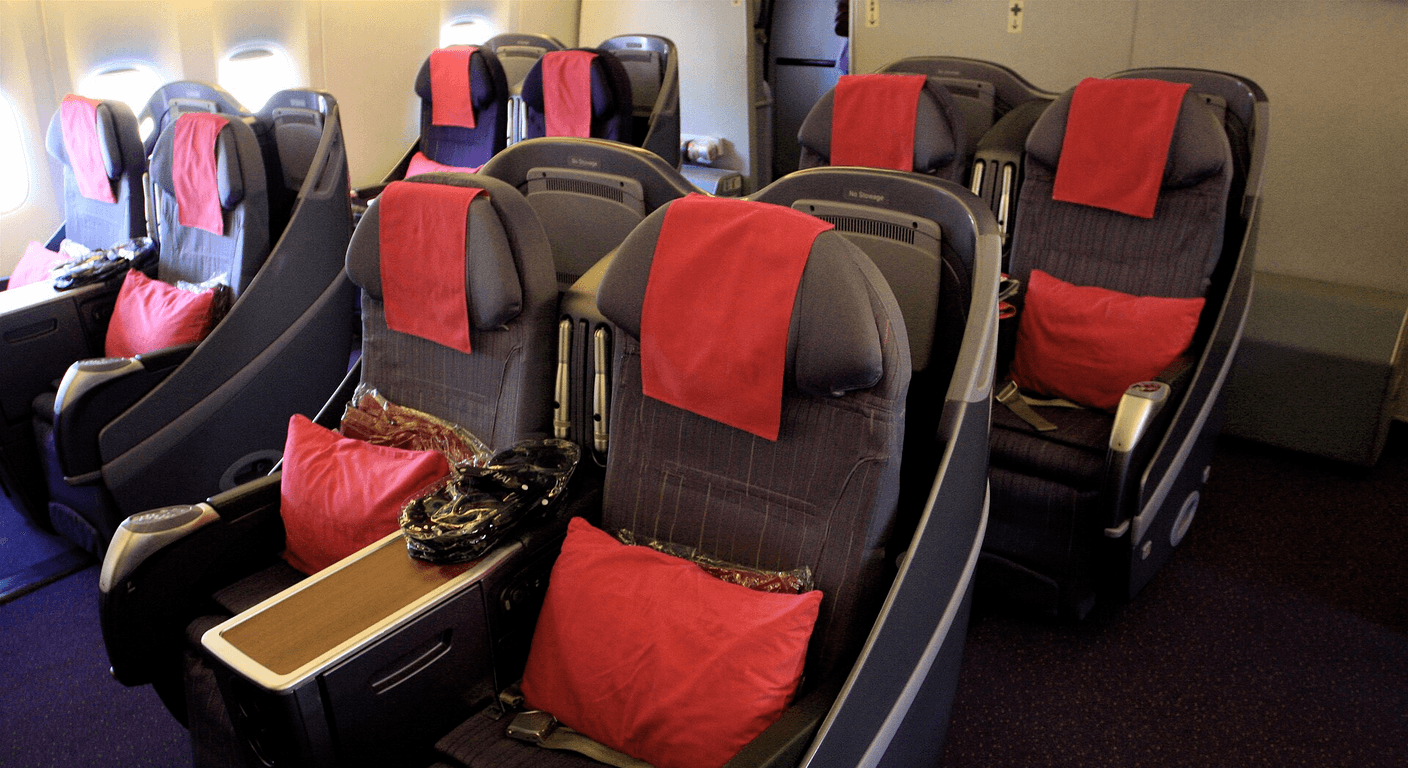
Thai Airways' Royal Silk Business Class on the Boeing 787 Dreamliner features fully lie-flat seats in a 1-2-1 configuration, which means every passenger has direct aisle access. For a solo traveller, this is significant — no climbing over a seatmate at 2 am. The seat converts to a bed of around 180 cm, and while the padding isn't quite at the Emirates or Singapore Airlines level, it's genuinely comfortable for sleeping. An overnight sector from Melbourne departing around 10 pm and arriving Bangkok around 5–6 am local time is the scenario where this cabin pays for itself.
The pricing gap is real and substantial. Royal Silk Business typically runs from around $4,500 to $7,000 return from Australian cities (indicative, and you should confirm current pricing directly with Thai Airways or a travel agent — fares shift). That's a serious amount of money. But frame it this way: arriving in Bangkok after a reasonable night's sleep, having eaten well and not spent nine hours folded into an economy seat, means your first day is usable rather than a write-off. For a solo traveller with a finite number of days in Thailand, that has genuine value.
The lounge access that comes with Business Class is worth factoring in too. Thai Airways uses the Royal Orchid Lounge at Bangkok Suvarnabhumi, and at Australian departure airports, eligible passengers typically access partner lounges. A quiet pre-departure hour with a proper meal and a shower facility (if available) sets the tone for the journey. If you're a Qantas Frequent Flyer with status, check what reciprocal lounge benefits apply before assuming you're covered.
Stopover options: is breaking the journey worth it?
The Melbourne–Bangkok sector is long enough to consider a stopover, but it's not the 14-hour ordeal of a Sydney–London flight. A stopover makes sense if you want to see somewhere en route, not purely to recover from the flight. Bangkok is a natural hub for onward connections to Chiang Mai, Phuket, Koh Samui, or international destinations like Kathmandu, Colombo or Bali — Thai Airways' network covers these well.
If you're routing through Bangkok with a day or two in hand before heading north to Chiang Mai, use it deliberately. Bangkok's BTS Skytrain connects Suvarnabhumi with the city centre in around 30 minutes (the Airport Rail Link, around $2–3 AUD equivalent — confirm current fares). A mid-range hotel near a BTS station in the Sukhumvit or Silom area runs around $80–$150 AUD per night for a comfortable, well-located property. A proper night's sleep and a day at your own pace before flying on is a far better use of time than rushing straight to a connecting flight.
For those considering a stopover elsewhere — say, Singapore or Kuala Lumpur if routing via a codeshare — that's a separate booking decision that depends on your onward carrier. Thai Airways itself doesn't offer a Changi or KLIA transit product in the same way Singapore Airlines or Malaysia Airlines do on their home turf. Stick with what the carrier does well: Bangkok as hub, then let the Thai Airways regional network do the work.
Baggage allowances: what's included and what to watch
Thai Airways includes checked baggage in the base fare across its cabin classes — a genuine advantage over the budget carriers and some low-cost hybrid options. In Economy (Royal Orchid Plus or standard), the allowance is typically 20–30 kg checked, depending on the fare class purchased. Business Class passengers generally receive 40 kg. Carry-on is typically 7 kg in Economy and a slightly more generous allowance in Business.
The critical word here is 'typically'. Thai Airways has updated its fare structure and baggage rules through its rehabilitation period, and the specific allowance attached to your ticket depends on the fare class, not just the cabin. A discounted economy fare may carry a lower baggage allowance than a flexible economy fare in the same seat. Read the fare conditions before booking, or ask your travel agent to confirm what's included. Checking a bag at the airport because you assumed the allowance would cover you is an expensive and avoidable lesson.
For a solo traveller packing for two to three weeks in Thailand — a mix of Bangkok, perhaps a northern city and a coastal area — a 23–30 kg checked bag is usually ample. Thailand is a country where lightweight cotton clothing is both practical and widely available cheaply if you need extras. There's no need to overpack, and a lighter bag makes moving between hotels considerably easier, particularly if you're managing transfers independently.
Managing stiffness, jet lag and the Bangkok arrival
The Melbourne–Bangkok flight departs in the evening and arrives in the early morning, which is actually a reasonable schedule for managing jet lag. You arrive into a time zone that's three hours behind Australian Eastern Standard Time (or four hours behind AEST in summer, noting Thailand doesn't observe daylight saving). The adjustment is gentler than a Europe or US flight. Most travellers find they adapt within a day or two, particularly if they resist the urge to nap heavily on arrival and instead stay awake until a local bedtime.
Stiffness on a 9–10 hour sector is real. The cabin aisle walk every 90 minutes isn't just good advice — it's how you arrive functional rather than stiff and irritable. Stretch your calves, rotate your ankles, and if the seatbelt sign is off, take a proper walk to the rear galley and back. Some travellers find a small lumbar cushion or rolled blanket placed in the lower back helps significantly in economy. Thai Airways provides a pillow and blanket on long-haul sectors; use them.
On arrival at Suvarnabhumi, the airport is large and the walk from the gate to immigration can be considerable. If you have any mobility concerns or simply want to avoid a long walk after 10 hours in a seat, request a wheelchair or airport buggy transfer at check-in or through your booking. This is a free service and there's no stigma attached to using it — it's a practical choice that saves energy for the days ahead. Bangkok's Suvarnabhumi has good facilities, and immigration queues can be long; the e-visa on arrival or pre-arranged visa (confirm current requirements at the Thai embassy website or Smartraveller before booking) will save time.
Practical considerations for solo travellers: fares, single supplements and what to confirm
On the airfare itself, solo travel is straightforward — you pay for one seat, and Thai Airways doesn't impose a solo supplement on the ticket price. That clarity is welcome. The single supplement issue surfaces when you book land packages or group tours in Thailand through an operator, which is a separate matter from the airline fare. If you're booking a Thai Airways Holidays package that includes accommodation, ask directly whether the hotel component carries a single supplement, and if so, how much. Some operators will waive it on request or offer solo-friendly room categories.
Economy fares from Melbourne or Sydney to Bangkok on Thai Airways run from around $900 to $1,400 return in an indicative range for advance purchase, with higher fares during peak season (December–January, school holidays). Business Class sits roughly in the $4,500–$7,000 return band. These figures are indicative and can shift significantly based on how far in advance you book, the fare class, and whether you're flexible on travel dates. Always confirm current pricing with Thai Airways directly or through a licensed travel agent — fare comparison sites are a useful starting point, but they don't always capture all conditions.
Travel insurance is essential and must include pre-existing medical conditions if applicable. Australian insurers vary widely in how they handle pre-existing conditions for travellers over 65. Compare policies carefully, and don't assume a standard policy covers everything. The Australian Competition and Consumer Commission (ACCC) has guidance on travel insurance for older Australians; Smartraveller's Thailand page is the correct starting point for current advisories, entry requirements and health considerations. Check both before you book anything.
Quick planning guide
| Ideal pace | Fly overnight, arrive Bangkok morning, take a full recovery day before onward travel or sightseeing |
|---|---|
| Best months | November to February for Bangkok (cool, dry season); avoid April (Songkran crowds and heat) and monsoon season June–October if possible |
| Suggested stay | Minimum 10 nights to justify the flight; 2–3 weeks allows a relaxed pace with regional add-ons |
| Mobility level | Moderate — Bangkok's skytrain (BTS) and metro (MRT) are accessible, but street-level walking involves heat, uneven footpaths and occasional steps |
| Cost level | Economy fares from around $900–$1,400 return (Melbourne/Sydney to Bangkok, indicative); Royal Silk Business around $4,500–$7,000 return — confirm current pricing with the airline or your travel agent |
| Comfort level | High in Business; adequate in Economy with the right seat and preparation |
| Best for | Solo travellers and couples wanting a direct-ish carrier with Asian network connections; those who value a full-service airline with checked baggage included |
| Main planning consideration | Single supplement on land packages is a separate issue from airfare; solo travellers pay for one seat, which is straightforward — the supplement hits on Thai hotel packages or group tours booked through operators |
Key takeaways
- Thai Airways flies Melbourne, Sydney and Brisbane to Bangkok in roughly 9–10 hours — long enough to take cabin comfort seriously, not so long that a stopover is essential.
- Royal Silk Business Class on the 787 Dreamliner offers a lie-flat seat with direct aisle access — on an overnight sector, that's a meaningful upgrade, not just a luxury.
- Always request an aisle seat at booking, not at check-in — it's the single most practical decision for managing a long-haul sector as a solo traveller.
- Thai Airways includes checked baggage in the base fare, but the specific allowance depends on fare class — read the conditions before assuming 30 kg is included.
- Solo travellers pay for one seat and face no airline-level single supplement; the supplement risk sits in land packages and group tours, not the airfare itself.
- Compression socks, cabin walks every 90 minutes, and a full recovery day in Bangkok before onward travel are not optional extras — they're the difference between a good trip and a grinding one.
Recommended partners and links
Indicative prices only — always confirm with the operator before booking.
Frequently asked questions
Does Thai Airways fly directly from Melbourne and Sydney to Bangkok?
Yes. Thai Airways operates non-stop flights from Melbourne (Tullamarine) and Sydney to Bangkok Suvarnabhumi (BKK). Flight time from Melbourne is approximately 9 hours 30 minutes; from Sydney, around 8 hours 45 minutes. Brisbane services also operate, though routing can vary — confirm current schedules directly with Thai Airways before booking.
What is the baggage allowance on Thai Airways from Australia?
Thai Airways includes checked baggage in the base fare. Economy passengers typically receive 20–30 kg depending on the fare class purchased; Business Class passengers generally receive 40 kg. The specific allowance is tied to the fare class, not just the cabin, so check the conditions of your specific ticket before travelling. Carry-on is typically 7 kg in Economy.
Is Thai Airways Business Class worth the cost for older Australian travellers?
For an overnight sector of 9–10 hours, Royal Silk Business Class on the Boeing 787 offers a fully lie-flat seat with direct aisle access — every seat can reach the aisle without climbing over anyone. If arriving in Bangkok functional and rested matters to your itinerary, the upgrade has genuine practical value. Indicative return fares sit around $4,500–$7,000 from Australian cities; confirm current pricing with Thai Airways or a travel agent.
How do I manage jet lag flying from Australia to Bangkok?
Bangkok is three hours behind Australian Eastern Standard Time (four hours in summer), making the adjustment gentler than flights to Europe or the Americas. The evening departure from Australia and early-morning Bangkok arrival suits most travellers. Stay awake until local bedtime on arrival day, keep hydrated on the flight, and plan a low-activity first day. Most travellers adapt within 24–48 hours.
Does Thai Airways charge a single supplement for solo travellers?
No. On the airfare itself, solo travellers simply pay for one seat — there's no airline-level single supplement. A single supplement can arise when booking land packages or group tours that include accommodation, depending on the operator. Always ask operators directly whether a single supplement applies to the hotel or tour component, and by how much, before confirming a package booking.