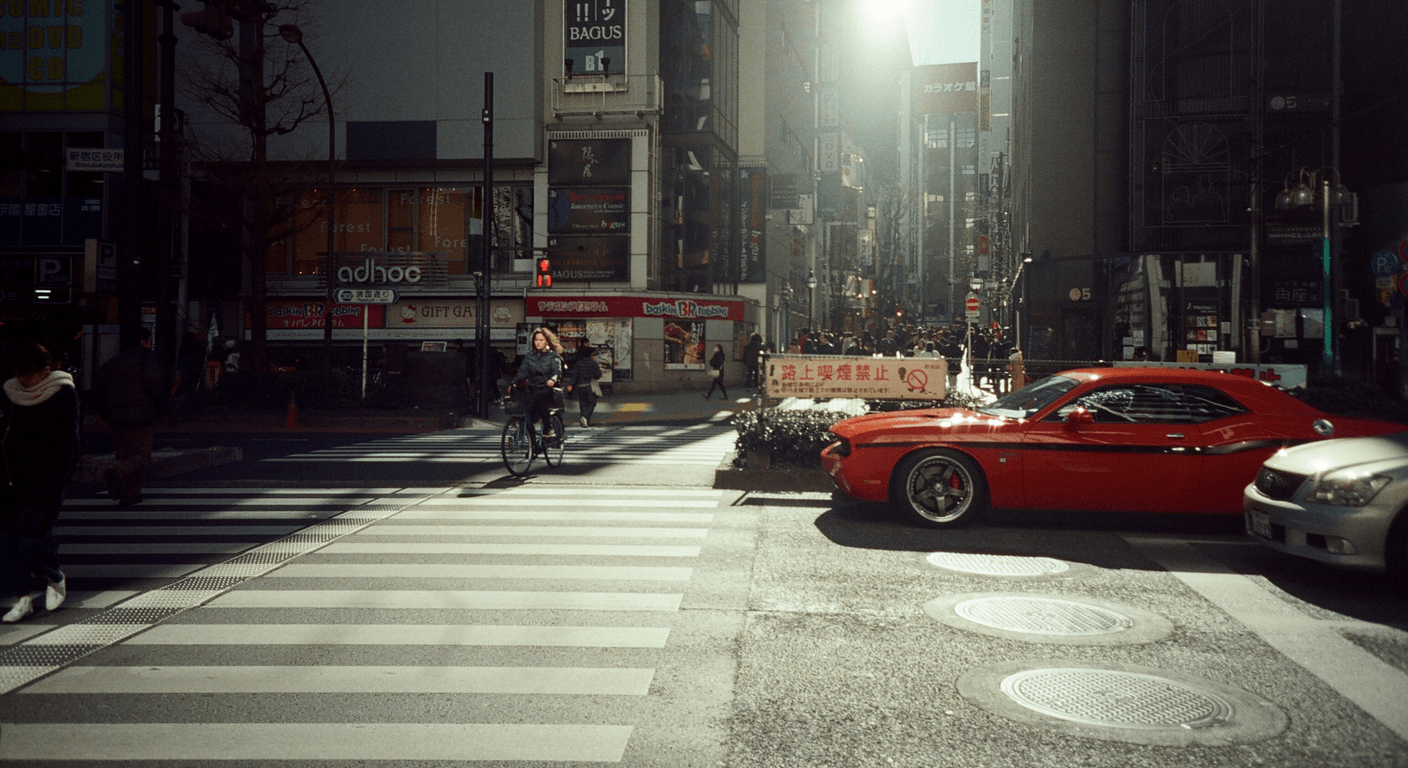
Tokyo rewards travellers over 50 who plan for scale, not spontaneity. Best visited in spring (late March–early April, cherry blossom) or autumn (October–November, mild and clear). Allow at least ten nights for a first trip. The defining experience is the sheer density of culture, food and order — but the city's walking distances and subway complexity catch many visitors off guard. Mobility rating: Moderate. From eastern Australian cities, expect a 9–10 hour direct flight to Haneda, or 11–12 hours to Narita. Private airport transfers and Narita Express are strongly recommended over local subway with luggage.
Getting from Narita or Haneda to your hotel: do not attempt the subway with luggage
This is the single most important practical decision of your Tokyo trip, and the vlogs never mention it because their creators travel with a backpack and boundless energy. For anyone arriving at Narita — which is roughly 60 kilometres from central Tokyo — the local subway is not the right first move. One seasoned Australian traveller reported multiple transfers on an unfamiliar line, a train breakdown mid-route, and a journey that was advertised as 20 minutes turning into 90, all while managing a full suitcase in a crowded carriage with nowhere to put it. That is not the beginning anyone wants after a long-haul flight.
The Narita Express (N'EX) is the sensible option: a dedicated, seated, luggage-friendly train that runs directly to Shinjuku, Shibuya, Tokyo and other major stations. Fares are around AUD $45–$55 one-way (confirm current pricing with JR East before you travel), and the journey takes roughly 60–90 minutes depending on your stop. It is clean, punctual, and has proper luggage space above and beside your seat. If your hotel is near a station the N'EX serves, this is the answer. A fixed-price private transfer from Narita will cost considerably more — indicatively AUD $180–$280 depending on vehicle and service; confirm directly with operators — but for travellers with mobility considerations, multiple bags, or a later arrival when fatigue is real, it is money well spent.
Haneda is far more manageable. It sits much closer to central Tokyo, and both the Tokyo Monorail and the Keikyu Line connect directly to the city for around AUD $15–$25 (confirm current fares). The monorail is elevated, scenic and genuinely easy. Still, if you're arriving late at night or your hotel is across town from the terminal, a fixed-price taxi or private transfer from Haneda is a reasonable call — Japanese taxis are metered, scrupulously honest, and while not cheap (allow AUD $40–$80 depending on distance; confirm), they will get you and your bags to the door without a single transfer. Confirm all fares and timetables with the operator or airport directly before you travel.
The queue reality: what the viral sushi and udon videos don't tell you
If you've watched even a handful of Tokyo food videos online, you've seen the queues. What those videos rarely show is the full context: a 7am opening at a famous sushi counter with eleven people already waiting outside at 6am. That is not an exaggeration — it's a documented reality at the most-shared spots, particularly in Tsukiji outer market and certain ramen and udon institutions. For a couple or solo traveller who has flown nine hours, adjusted to a three-hour time difference and is trying to make the most of a fortnight, standing on a footpath for two hours before breakfast is a significant ask. And that's before you factor in the fact that you may still not get a seat if the group ahead of you is large.
The honest alternative is not a compromise. Tokyo has thousands of exceptional restaurants at every price point, most of them unbothered by social media fame. Many of the best tempura, soba, izakaya and kaiseki meals available to a visitor happen in places that are simply excellent rather than algorithmically viral. Department-store basement food halls — known as depachika — are a genuine revelation: Isetan in Shinjuku, Mitsukoshi in Ginza, and Takashimaya in Nihonbashi all have basement floors of prepared food, sushi, wagashi sweets and ready meals of a quality that would embarrass most Australian restaurants. No queue. No reservation. Sit on a bench outside or take it back to the hotel.
Where you do want to eat at a specific restaurant, book ahead. Japan's restaurant reservation platform Tableall (tableall.com) and the English-language interface of Tabelog (tabelog.com/en) allow advance bookings for many sought-after places. For the truly famous counters that don't take reservations, the practical move is arriving at opening time on a weekday (Tuesday through Thursday tends to be quieter than weekends) rather than lining up an hour before. Going at off-peak hours — 11am for lunch before the 12–1pm rush, or 5:30pm for dinner before 7pm — makes a real difference. The vlogs are right that Tokyo's food is extraordinary. They're just not telling you the full story about how to actually access it without sacrificing your morning.
Eating on the go: a cultural note worth knowing before you wander
Tokyo's streets are famously clean, and one reason is a deeply held social norm: eating while walking is considered poor form in most contexts. You'll see it done occasionally, particularly with street food near market stalls, but the expectation in most neighbourhoods is that you find a spot — a low wall, a bench, a designated eating area near the stall — and eat there before continuing. It's a small thing, but getting it wrong in a crowded shopping street can draw quiet, polite disapproval that feels uncomfortable.
The practical upshot for travellers: when you buy street food or a convenience-store onigiri (and yes, 7-Eleven in Japan is genuinely good — the egg salad sandwich is not a joke), look for the small standing area near the register or outside the shop. Konbini — convenience stores — often have a counter or ledge for exactly this purpose. At temple and shrine precincts, there are usually designated spots near the food stalls. This is not a hardship; it's actually a pleasant habit that slows you down in a city that can otherwise turn into a blur of movement.
Pacing Tokyo's scale: the thing that exhausts people who didn't expect it
Tokyo is not a city you can cover in the way you might cover, say, Kyoto or Hobart. It is enormous — Greater Tokyo is home to over 37 million people — and the distances between its famous neighbourhoods are significant. Shinjuku to Asakusa is roughly 10 kilometres. Shibuya to Akihabara is further. Walking everything is not realistic for most visitors, and even with the subway, each journey involves stairs, platform changes and a degree of route-reading that adds cognitive load on top of physical effort.
The smarter approach is to anchor each day in one neighbourhood and go deep rather than wide. Spend a morning in Yanaka (one of the few areas that survived WWII bombing, genuinely atmospheric, flat streets, excellent coffee shops) and an afternoon in nearby Ueno for the museums. Dedicate a full day to Shinjuku — the east side for Kabukicho and Golden Gai, the west side for department stores and the free observation deck at the Tokyo Metropolitan Government Building. Don't try to do Harajuku, Shibuya and Roppongi in the same day. You'll arrive home having technically visited everything and genuinely absorbed nothing.
Tokyo's subway map looks terrifying to first-timers, and frankly it is complicated, but a Suica or Pasmo IC card (loaded with yen at the airport machine or any station) makes paying seamless — tap on, tap off, no paper tickets. The walking distances inside some major interchange stations, particularly Shinjuku and Tokyo Station, are themselves a workout. Shinjuku Station has over 200 exits. Allow extra time at interchanges, and don't assume the 'nearby' exit is close to where you want to go. Google Maps in Tokyo is remarkably accurate for subway routing; use it freely.
Is the JR Pass worth it for over-50s doing day trips?
The JR Pass is a topic that generates more debate than it probably deserves. For a Tokyo-only trip, the honest answer is: probably not. The JR Pass covers JR lines, including the Narita Express and the shinkansen, but not the Tokyo Metro or Toei subway lines that you'll use most days in the city. If your entire trip is in Tokyo, a Suica card is all you need.
Where the JR Pass earns its keep is on a combined itinerary: Tokyo plus Kyoto, Osaka, Hiroshima, or Hakone. A 14-day pass is currently priced (confirm with JR before purchase, as prices have increased in recent years) at around AUD $500–$560 per person for the standard class — indicative only, confirm current rates via the JR Pass official site or an authorised agent before buying. If you're doing Tokyo, a shinkansen to Kyoto, a day trip to Hiroshima, and the return journey, the maths works. If you're doing Tokyo plus one day trip to Nikko or Kamakura, run the numbers individually first. Nikko in particular is well served by the Tobu Railway from Asakusa, which is not covered by the JR Pass but is very affordable.
One practical note: the JR Pass must now be purchased before you leave Australia (the in-country purchase option was discontinued). Buy through an authorised agent or the JR Pass official site. For a detailed look at Japan's rail options for mature Australian travellers, see the Senior Travel Australia guide to Japan — it covers the shinkansen, regional passes and luggage forwarding services (takuhaibin) that make travelling between cities far more comfortable than hauling bags onto trains.
Where to stay for fewer stairs and easier access
Tokyo's hotel stock is exceptional by international standards, but the choice of neighbourhood matters enormously for older travellers. The two most practical bases for a first trip are Shinjuku and Ginza. Shinjuku gives you direct access to the N'EX from the airport, enormous shopping and dining options within walking distance, and connections to almost everywhere else. Ginza is quieter, more refined, closer to Tsukiji outer market for an early breakfast (without the 6am queue theatre), and well served by multiple subway lines. Both have a wide range of hotels with lifts, luggage storage, and English-speaking front desks.
Avoid staying in areas where your hotel requires multiple subway changes from the airport — the fatigue of an airport transfer compounds quickly when you add a long walk from an unfamiliar station exit. Ask specifically when booking whether the hotel has step-free access from the street to the lobby and lifts to all floors. Japanese hotels are generally excellent on this front, but 'traditional' style guesthouses and some older business hotels have narrow corridors and stairs to certain room categories. If you want a ryokan experience — and it is worth having at least one night in one — look for ryokan with Western-style beds as an option alongside futon on tatami, as getting up from floor level is not comfortable for everyone.
Budget indicatively: a well-located, mid-tier business hotel in Shinjuku or Ginza runs around AUD $200–$280 per night for a twin or double room. Upper-tier hotels (Keio Plaza, Park Hyatt, Conrad Tokyo) are AUD $400–$800+ per night — confirm all rates directly with the property before booking, as prices fluctuate significantly by season. Tokyo's accommodation prices have risen noticeably since 2023 as international tourism rebounded strongly; book well ahead, especially for cherry blossom and autumn foliage seasons.
A solo traveller's perspective and a couple's perspective
A solo traveller's perspective: Tokyo is one of the safest cities in the world for solo travel, and particularly for solo women. The cultural norms around public behaviour — quiet, orderly, non-confrontational — make street harassment essentially absent. Solo dining is entirely normal; many restaurants have counter seating specifically designed for it. The single-supplement question is relevant for any pre-booked tour or package to Japan: many group tour operators charge a single supplement of 20–40% on top of the twin-share rate, which can add AUD $500–$1,500 to a two-week itinerary depending on the tour. Some operators offer a share-match programme or specifically priced solo departures — ask directly before booking, and be sceptical of operators who don't address it clearly. Travelling independently in Tokyo as a solo person is genuinely achievable and, for the right traveller, enormously freeing.
A couple's perspective: Tokyo rewards couples who are willing to divide and reconquer for a morning or afternoon. One partner may want to spend three hours in the teamLab digital art spaces; the other may prefer the quiet of Yanaka's old cemetery and coffee shops. The city is safe and well-signed enough that splitting up for a few hours and meeting at a depachika for a shared lunch is a perfectly sensible approach. For couples where one person has more limited mobility than the other, the flat, wide streets of Ginza, the Imperial Palace East Gardens, and the accessible galleries at the National Museum of Western Art in Ueno are all genuinely manageable. The subway, however, is a joint project — plan routes together and allow more time than the map suggests.
Quick planning guide
| Ideal pace | Slow to moderate — one or two neighbourhoods per day, with rest built in |
|---|---|
| Best months | Late March–April (cherry blossom) or October–November (autumn colour, cooler temps) |
| Suggested stay | 10–14 nights for a first visit |
| Mobility level | Moderate — flat in many areas but subway stairs, cobbled temple precincts and long walking distances require planning |
| Cost level | Mid-upper — roughly AUD $200–$350 per night for a well-located hotel with lift access; meals from AUD $15 to $80+ depending on style |
| Comfort level | High, once you're settled — hotels are immaculate, food is extraordinary, public spaces are calm |
| Best for | Culturally curious couples, solo women travellers, food lovers, design enthusiasts, anyone who wants an orderly, safe international city |
| Main planning consideration | Airport transfer strategy, pacing across Tokyo's enormous footprint, and restaurant booking well ahead for sought-after spots |
Key takeaways
- Take the Narita Express or a private transfer from the airport — the local subway with luggage is a punishing introduction to Tokyo.
- Viral restaurant queues start before dawn; eat just as well by going off-peak, booking ahead, or exploring depachika basement food halls.
- Eating while walking is culturally discouraged in Tokyo — find a spot to stand or sit before you eat.
- Anchor each day in one neighbourhood and go deep; trying to cross Tokyo twice in a day will wear you out faster than the jet lag.
- The JR Pass earns its cost only if you're taking the shinkansen to Kyoto or beyond — for a Tokyo-only trip, a Suica card is enough.
- Solo travellers should ask directly about single supplements before booking any Japan group tour — some operators charge 30–40% above twin-share rates.
Recommended partners and links
Indicative prices only — always confirm with the operator before booking.
Frequently asked questions
What is the easiest way to get from Narita Airport to central Tokyo for older travellers?
The Narita Express (N'EX) is the most practical option: a direct, seated, luggage-friendly train to major central Tokyo stations, taking roughly 60–90 minutes and costing around AUD $45–$55 one-way (confirm current fares with JR East before travel). A fixed-price private transfer is more expensive — indicatively AUD $180–$280 depending on the service — but worthwhile for late arrivals or travellers with significant mobility considerations. The local subway with luggage is not recommended: multiple transfers, crowded carriages and no guaranteed luggage space make it a poor first experience of Tokyo.
How do you avoid long queues at Tokyo's famous restaurants?
Book ahead where possible using platforms such as Tableall or Tabelog's English interface. For restaurants that don't take reservations, arrive at opening time on a weekday (Tuesday to Thursday tends to be quieter) rather than queuing an hour before. Go at off-peak times — before noon for lunch, around 5:30pm for dinner. Department-store basement food halls (depachika) at places like Isetan Shinjuku or Mitsukoshi Ginza offer exceptional food with no queuing at all.
Is the JR Pass worth buying for a Tokyo trip?
Not for a Tokyo-only trip. The JR Pass covers JR lines and the Narita Express but not the Tokyo Metro and Toei subway lines used most days in the city. A Suica or Pasmo IC card is all you need for getting around Tokyo. The JR Pass becomes cost-effective when your itinerary includes shinkansen travel to Kyoto, Osaka or Hiroshima. The pass must be purchased before leaving Australia — confirm current prices and authorised agents before buying, as prices have increased in recent years.
Is Tokyo safe for solo women travellers over 50?
Tokyo is consistently rated among the safest cities in the world for solo travel, including for solo women. Public behaviour norms are quiet and non-confrontational, solo dining is entirely normalised (many restaurants have dedicated counter seating for solo diners), and street harassment is essentially absent. Solo travellers booking group tours to Japan should ask specifically about single supplement costs, as these can add AUD $500–$1,500 or more to a two-week itinerary depending on the operator.
What are the best Tokyo neighbourhoods to stay in for accessibility and convenience?
Shinjuku and Ginza are the most practical bases for first-time visitors over 50. Shinjuku offers direct N'EX airport access and extensive dining and shopping within walking distance. Ginza is quieter, well-connected by multiple subway lines, and close to Tsukiji outer market. Both neighbourhoods have a wide range of hotels with lifts and step-free lobby access. Confirm accessibility specifics directly with your hotel before booking, as some older business hotels and traditional guesthouses have stairs to certain room categories.