Vietnam suits over-50 Australians, especially solo travellers, who secure an e-visa, register with Smartraveller and time their trip for October to March, when the north is cool and dry and the south enjoys its best season. A three-week north-to-south itinerary works well, covering Hanoi, Hoi An, Hue and Ho Chi Minh City. Mobility is moderate, easier with a private driver, though busy street crossings need care. Direct flights from Australia's east coast take nine to ten hours.
Getting There: Flights from Australian East-Coast Cities
Direct and one-stop flights connect Melbourne, Sydney and Brisbane to Ho Chi Minh City (Tan Son Nhat Airport) and Hanoi (Noi Bai Airport). Vietnam Airlines operates services out of Sydney and Melbourne, and several carriers including Qantas, Jetstar and Cathay Pacific offer codeshare or connecting itineraries via hubs such as Singapore, Hong Kong or Kuala Lumpur. Flight times run roughly nine to ten hours direct to Ho Chi Minh City, and a touch longer to Hanoi.
For travellers over 50, the choice of entry city matters as much as the fare. Flying into Ho Chi Minh City and ending in Hanoi — or the reverse — allows a logical north-to-south or south-to-north journey without backtracking. Open-jaw tickets (fly into one city, out of another) are available and are often the most sensible option for a full-country itinerary. Check fares through the airline's official site and compare via established Australian travel agencies. Confirm baggage allowances carefully, particularly if you plan to take medication or medical equipment.
Melbourne travellers should note that Tullamarine has good international connections for this route, and the flight schedule generally offers early-morning and late-evening departure options. If a long overnight flight is uncomfortable, a brief stopover in Singapore or Kuala Lumpur — even just a hotel night — can make the journey far more manageable and costs relatively little when booked in advance.
Do Australians Need a Visa for Vietnam, and How Does the E-Visa Work?
Yes, Australians need a visa to enter Vietnam. The good news is that the single-entry and multiple-entry e-visa system is straightforward and available entirely online through the official Vietnam Immigration Department portal. As of 2025, the e-visa is valid for up to 90 days and costs indicatively around US$25, though fees can change — always confirm the current fee and process on the official portal (evisa.xuatnhapcanh.gov.vn) and cross-check with the Australian Government's Smartraveller page for Vietnam.
The application requires a passport-style photo, a scan of your passport data page and a credit or debit card for payment. Processing typically takes three business days, though applying at least a week before departure is sensible. Your passport must be valid for at least six months beyond your intended departure date from Vietnam — check this before you do anything else.
Register on Smartraveller before you travel. It takes five minutes, costs nothing, and means the Australian Government can contact you or your emergency contact if a significant event occurs while you are overseas. It is one of those steps that feels unnecessary until it is not.
North, Centre or South — How to Plan Your Route
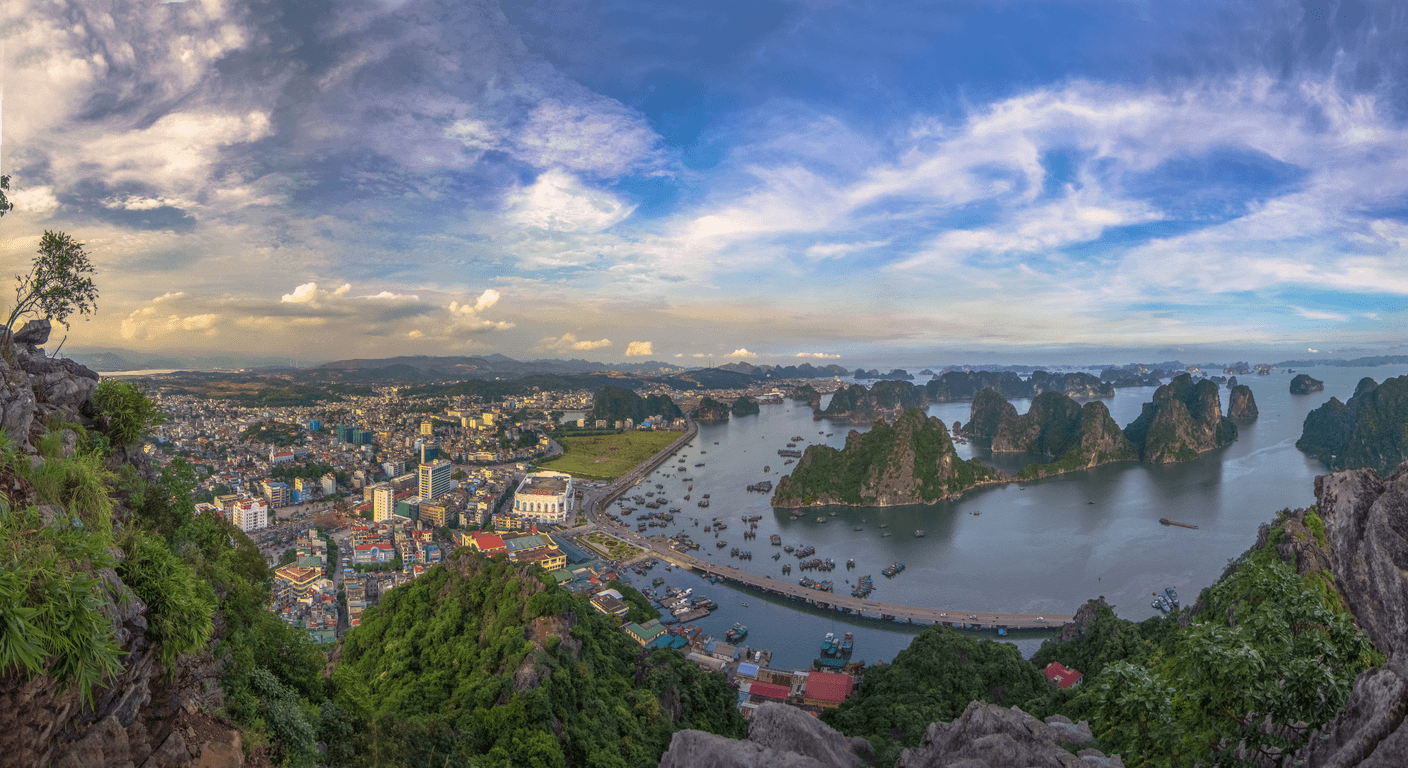
Vietnam stretches over 1,600 kilometres from north to south, and the regions feel genuinely distinct in culture, cuisine and landscape. Hanoi in the north is the capital — quieter and more formal than Ho Chi Minh City, with French colonial architecture, excellent street food and proximity to Halong Bay. If a multi-day bay cruise appeals, it pairs naturally with a Hanoi base. The brand's Halong Bay couples guide covers that experience in more detail and is worth reading alongside this guide.
The central region — Hue, Danang and Hoi An — is often the highlight for travellers who value history and a slower pace. Hoi An in particular suits solo travellers well: it is compact, walkable in its ancient town core, and has a well-developed tourism infrastructure including good mid-range and boutique hotels. The food in Hoi An is among the best in the country. Hue's imperial citadel and royal tombs reward a half-day or full day of gentle exploration.
Ho Chi Minh City (still commonly called Saigon) in the south is energetic and commercial — fascinating for a few days of history, markets and excellent Vietnamese-French cuisine, and a logical starting point for a Mekong Delta experience. The brand's Mekong cruise content goes into the river journey in more depth. A practical three-week itinerary for an over-50 traveller might run: arrive Ho Chi Minh City, three nights; Mekong day trip or overnight; fly to Danang for Hoi An and Hue, four to five nights; train or fly to Hanoi, three nights; Halong Bay cruise, two nights; return to Hanoi to fly home.
Why Vietnam Suits Over-50 Budgets: What Comfort Actually Costs
Vietnam offers a genuine quality-to-price ratio that is difficult to find elsewhere in Asia. A well-located three-star or boutique hotel in Hoi An's old town or Hanoi's French Quarter costs indicatively around AUD 80–160 per night — comfortable, clean, often with breakfast included and staff who are used to international guests. Four-star hotels in Ho Chi Minh City at a similar indicative range would be considered good value by any measure. Always confirm current rates directly with the hotel or through an established booking platform.
Meals are where the budget advantage becomes most obvious. A bowl of pho or banh mi from a reputable street stall or small restaurant costs indicatively a few Australian dollars. A proper sit-down meal with a glass of local beer at a mid-range restaurant in Hoi An runs indicatively around AUD 15–30 per person. Even at quality restaurants with wine, it is rare to spend what a main course alone costs in Melbourne. Daily indicative budgets at a comfortable, unhurried pace — good accommodation, a mix of restaurant and street-food meals, entry fees and a guided tour every second day — sit roughly in the AUD 120–200 range, though individual spending varies and these figures are indicative only.
Internal transport, guided day tours and domestic flights are all priced in a way that makes it practical to move slowly and comfortably rather than rushing to save money on cheaper options. Hiring a private car and driver for a day costs indicatively around AUD 60–100 depending on distance and region — a genuinely sensible choice for older travellers who want to visit sites without the physical effort of navigating local transport.
Getting Around Vietnam: Trains, Flights, Cars and That Famous Traffic
The Reunification Express railway runs the length of the country from Hanoi to Ho Chi Minh City and is a genuine travel experience in its own right. Soft-sleeper berths on overnight services are comfortable, reasonably priced and a good way to cover distance without losing a day to airports. The Hanoi to Hue or Danang segment is particularly scenic along the coast. Tickets can be booked through the Vietnam Railways official site (dsvn.vn) or through reputable local agents — book a few weeks ahead for popular routes and sleeper berths.
Domestic flights with Vietnam Airlines, Bamboo Airways or VietJet are fast and relatively inexpensive, particularly if booked a month or more in advance. For longer hops — Hanoi to Ho Chi Minh City, for instance — flying saves a full day and is the practical choice. Do not self-drive in Vietnam. The road rules and traffic culture are genuinely different from Australia, and even experienced international drivers find Vietnamese urban traffic stressful. A private car with a local driver is safe, affordable and far more relaxing.
A frank word on crossing the road, because it comes up in every honest guide to Vietnam: the traffic in Hanoi and Ho Chi Minh City does not stop for pedestrians at crossings the way it does in Australia. The technique that works is to step out steadily and at a consistent pace, making eye contact with approaching motorbike riders, and move without stopping suddenly. It feels alarming the first time and becomes second nature by day three. Stick to pedestrian lights where they exist, cross with a local if possible, and take your time. Older travellers with mobility aids or balance concerns should ask hotel staff to help them cross at busy intersections when needed — it is a perfectly reasonable request.
Health and Safety: What to Sort Before You Leave Victoria
A GP visit at least six to eight weeks before departure is the most important health step. Vietnam requires or strongly recommends vaccinations including hepatitis A, typhoid, and a tetanus update; your doctor may also discuss Japanese encephalitis, rabies pre-exposure and malaria prophylaxis depending on your itinerary. Medicare covers the GP consultation, though vaccine costs vary. The Travel Medicine Alliance (travelmedicine.com.au) lists travel health clinics across Victoria if your regular GP does not offer travel vaccinations.
Comprehensive travel insurance is non-negotiable for any overseas trip, and especially so for travellers over 60. Policies vary significantly in what they cover for pre-existing conditions, medical evacuation and hospital costs — read the product disclosure statement carefully, declare all pre-existing conditions honestly, and confirm that Vietnam is covered. The Australian Government's Moneysmart site (moneysmart.gov.au) has guidance on comparing travel insurance if you are unsure where to start.
Food safety in Vietnam is manageable with reasonable judgement. Busy street-food stalls with high turnover and a queue of locals are generally a safer choice than empty ones. Avoid raw salads washed in tap water at lower-end establishments, and eat fruit you can peel yourself. Drink bottled or filtered water consistently — including when brushing teeth in budget accommodation. Stomach upsets happen to some travellers regardless of care; pack oral rehydration sachets and a basic travel health kit. If you take regular prescription medication, bring more than you need and keep it in original labelled packaging with a letter from your GP.
Common Tourist Scams: Know Them, Sidestep Them, Move On
Vietnam's tourism industry is overwhelmingly honest, but a handful of scams recur in tourist areas and are worth knowing about plainly. Taxi overcharging is the most common: in Hanoi and Ho Chi Minh City, use the Grab app (the regional equivalent of Uber, with upfront pricing) or ask your hotel to book a reputable taxi company such as Mai Linh or Vinasun. Avoid unmarked taxis or drivers who approach you at the airport without a pre-booked booking.
Cyclo and motorbike taxi drivers occasionally quote a price, complete the ride, and then insist the price quoted was per person or per kilometre rather than total. Agree on the total fare clearly before you get on, and have the amount ready in small notes. In Hoi An's old town, some tailors show photographs of high-quality garments and deliver something quite different — if you want custom clothing made (and it is genuinely good value), ask your hotel for a recommendation rather than accepting an approach on the street.
The 'shoe-shine' approach — someone cleaning your shoes without being asked and then demanding payment — happens in tourist precincts. Simply decline the service before it starts. None of these situations are dangerous, and none of them should discourage travel; they are minor irritants that a little awareness removes entirely. Solo female travellers generally report feeling safe in Vietnam's tourist regions, including walking at night in areas like Hoi An's old town and Hanoi's Old Quarter.
Best Time to Visit Vietnam: North and South Are Different
Vietnam's climate does not behave as a single country — the north, centre and south have distinct wet and dry seasons that do not align. Getting the timing right matters, particularly for older travellers who want to avoid extreme heat and heavy rain.
In the south, including Ho Chi Minh City and the Mekong Delta, the dry season runs roughly from November to April. This is the most comfortable time to visit — warm, sunny and manageable. The wet season from May to October brings heavy afternoon downpours and high humidity, though travel is still possible and accommodation prices are lower. Hanoi and the north are best from October to April, when the weather is cooler and drier. January and February can feel genuinely cold in Hanoi — a light jacket is needed. Halong Bay is most pleasant from March to May and September to November; summer brings heat and the occasional typhoon.
The central region, including Hoi An and Hue, sits between these two patterns. The best months are roughly February to August; from September to November, typhoon season can bring serious flooding to the coast and the low-lying streets of Hoi An's old town. If you are planning a full north-to-south journey, October to March generally gives the best conditions across the most regions simultaneously, though no single period is perfect everywhere. For a solo traveller from Victoria, November through February aligns well with Australian summer and avoids the northern hemisphere's peak tourist season.
Quick planning guide
| Ideal pace | Slow and unhurried, with a private driver every second day |
|---|---|
| Best months | October to March overall, though timing shifts by region (south Nov-Apr, north Oct-Apr, centre Feb-Aug) |
| Suggested stay | About three weeks for a full north-to-south itinerary |
| Mobility level | Moderate — old-town walking and busy street crossings require care, eased by hiring a private car and driver |
| Cost level | Budget-friendly, with comfortable mid-range and boutique options widely affordable |
| Comfort level | Comfortable — clean three- and four-star hotels, hotel staff used to international guests, and soft-sleeper trains |
| Best for | Curious, patient over-50 travellers, including those travelling solo |
| Main planning consideration | Sorting the e-visa, health preparation and regional seasonal timing before departure |
Key takeaways
- Australians need an e-visa for Vietnam, valid up to 90 days, costing indicatively around US$25 — apply through the official Vietnam Immigration portal and confirm details on Smartraveller before you travel.
- An open-jaw ticket flying into Ho Chi Minh City and out of Hanoi (or vice versa) is the most practical way to see the country without backtracking.
- Comfortable, well-located hotels in Hoi An, Hanoi and Ho Chi Minh City cost indicatively around AUD 80–160 per night — a fraction of equivalent Australian accommodation.
- Do not self-drive in Vietnam; a private car with a local driver is safe, affordable and the sensible choice for older travellers wanting to visit sites in comfort.
- The north and south have opposite wet and dry seasons — November to March is generally the most reliable window for a full-country itinerary.
- A GP appointment six to eight weeks before departure for travel vaccinations and a thorough travel insurance policy with pre-existing condition cover are both essential, not optional.
Recommended partners and links
Indicative prices only — always confirm with the operator before booking.
Frequently asked questions
Do Australians need a visa for Vietnam?
Yes, Australians need a visa to enter Vietnam. The e-visa is available online through the official Vietnam Immigration Department portal, is valid for up to 90 days, and costs indicatively around US$25 — confirm the current fee and requirements on evisa.xuatnhapcanh.gov.vn and on the Australian Government's Smartraveller page for Vietnam before applying. Your passport must be valid for at least six months beyond your departure date from Vietnam.
Is Vietnam safe for older travellers?
Vietnam is generally considered a safe destination for older travellers, including solo women. Violent crime against tourists is rare. The main risks are traffic (pedestrian crossings work differently from Australia), petty scams in tourist precincts, and food or water-related illness — all of which are manageable with preparation and reasonable judgement. Solo female travellers consistently report feeling comfortable in Vietnam's main tourist areas, including walking at night in Hoi An and Hanoi's Old Quarter. Register on Smartraveller and take out comprehensive travel insurance before you go.
How much does a Vietnam trip cost for an Australian over 50?
At a comfortable pace — good mid-range or boutique hotels, a mix of restaurant and street-food meals, guided day tours and internal transport — indicative daily spending runs roughly AUD 120–200 per person. These figures are indicative only and vary significantly depending on accommodation choices, season and individual spending. Flights from Australian east-coast cities add indicatively around AUD 700–1,400 return economy depending on timing and carrier. Vietnam consistently offers far more comfort per dollar than equivalent travel within Australia or to Western Europe.
What vaccinations do I need for Vietnam as an Australian traveller?
See a GP or travel health clinic at least six to eight weeks before departure. Vaccinations commonly recommended for Vietnam include hepatitis A, typhoid and a tetanus update; your doctor may also discuss Japanese encephalitis, rabies pre-exposure and malaria prophylaxis depending on your specific itinerary and health history. Medicare covers the GP consultation; individual vaccine costs vary. The Travel Medicine Alliance (travelmedicine.com.au) lists travel health clinics across Victoria.
What is the best time of year for an Australian to visit Vietnam?
For a full-country itinerary covering south, centre and north, November through February generally offers the most reliable conditions across all regions simultaneously. The south is dry and warm from November to April; the north is cooler and drier from October to April; the central coast is best avoided from September to November due to typhoon and flood risk. No single month is perfect for every region, so build your itinerary around the areas you most want to visit and check regional seasonal conditions before finalising dates.
- Vietnam E-Visa Official Portal — Vietnam Immigration Department
- Smartraveller — Vietnam Travel Advice (Australian Government)
- Visit Vietnam — Tourism Authority of Vietnam
- Vietnam Airlines — Official Site
- Vietnam Railways (Đường sắt Việt Nam) — Official Booking
- Travel Medicine Alliance — Travel Health Clinics Australia
- Moneysmart — Travel Insurance Guide (Australian Government)