Vilnius's UNESCO-listed Baroque Old Town rewards a slow, multi-day visit rather than a rushed stopover. Late May to mid-September is the best time to go, with September offering golden light and thinner crowds. The compact three-square-kilometre Old Town is largely walkable, with cobbled lanes and one manageable hill climb, making it a Moderate-mobility destination. There are no direct flights from Australia — expect 20-24 hours via Dubai, Doha or Frankfurt, with a stopover strongly advised.
Why Vilnius Works So Well for Over-50 Travellers
There's a particular pleasure in arriving somewhere that doesn't require a strategy. Vilnius is that kind of city. The Old Town covers roughly three square kilometres — large enough to offer genuine discovery, small enough that you won't exhaust yourself reaching the next thing. For a couple who want to spend a morning in a church that genuinely astonishes, take a long lunch in a courtyard, and still have energy for an aperitif before dinner, the scale is close to ideal.
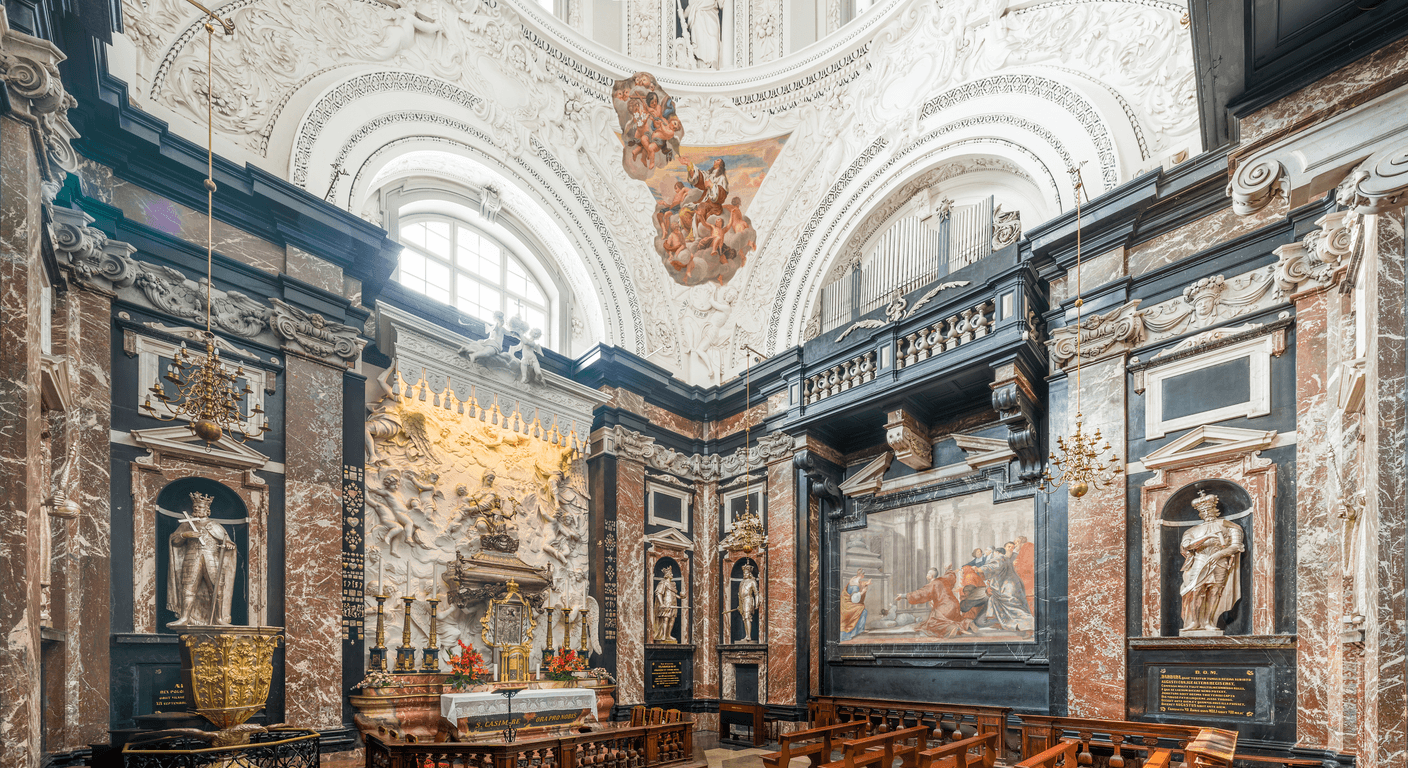
The city has been shaped by Lithuanian, Polish, Jewish, Russian and German influences over seven centuries, and the architecture carries all of it without looking confused. Baroque churches crowd the skyline in a way that even visitors from Mediterranean backgrounds — accustomed to grand religious architecture — tend to find arresting. The detail is extraordinary: gilded altars, painted vaults, facades that catch the low Baltic light in the late afternoon and turn a particular shade of honey.
What the travel brochures understate is how affordable Vilnius remains compared with its Western European counterparts. A long, unhurried dinner for two with wine at a well-regarded Old Town restaurant might cost around AUD 80–120, indicatively. A short taxi ride across the Old Town — which you'll want when cobblestones have done their work on your knees — runs to only a few euros. Confirm all current prices on arrival, but the general direction holds: your money goes further here.
Getting There: The Long-Haul Reality from Australia
Vilnius is not a quick trip from Melbourne, Sydney or Perth, and it's worth being honest about that from the outset. There are no direct flights from Australia to Lithuania. The most common routings connect through Dubai (Emirates), Doha (Qatar Airways) or Frankfurt (Lufthansa, with connections from Singapore or other hubs), putting total travel time at roughly 20–24 hours in the air, plus layover time. From Melbourne or Sydney, a stopover of at least one night — in Dubai, Singapore or a European hub — is strongly advisable rather than a luxury.
Jet lag in the Baltic direction is significant. Vilnius sits in the Eastern European Time Zone (UTC+2 in summer), which is seven hours behind Melbourne's AEST. Most travellers find the westward direction manageable with a day of gentle acclimatisation. Plan your first full day in Vilnius as a slow one: a short walk, a long lunch, bed by nine. The city will still be there on day two, and you'll see it much better rested.
Indicative return economy airfares from Melbourne to Vilnius via a major Gulf hub run roughly AUD 2,200–3,500 depending on season and how far ahead you book. Business class — worth considering for a journey of this length, particularly for travellers with back or circulation concerns — runs significantly higher. These are indicative figures only; confirm current fares directly with airlines or a travel agent experienced in long-haul itineraries for over-50s.
When to Go: Seasonal Reversal and the Baltic Calendar
Australia's summer runs December to February — which is Vilnius's deep winter, with temperatures regularly below zero, short days of around seven or eight hours of daylight, and a city that is undeniably atmospheric in the snow but demands warm layering and careful footing on icy cobblestones. For most over-50 Australians, this is not the moment to visit.
The sweet spot is late May through to mid-September. June and July bring genuinely long days — the sun sets after 10pm at midsummer — and temperatures in the comfortable 18–25°C range. August is the warmest month and the most visited, though Vilnius never reaches the crowding levels of Prague or Dubrovnik. September is arguably the finest month of all: the tourist numbers thin, the light turns golden, and the Old Town takes on a quieter, more local character.
Spring (April to May) offers a lovely transitional period — lilac and chestnut trees bloom across the city's parks — but pack for rain and the occasional cool evening. Shoulder season travel also tends to reward with lower accommodation rates. Whatever the month, a light waterproof layer is sensible; the Baltic weather is changeable and doesn't always read the forecast.
The Old Town on Foot: What to Prioritise
The logical starting point is Gediminas' Tower, the remaining turret of the Upper Castle that sits on a hill above the Old Town and offers an orientation view across the city's roofline. A funicular runs to the top — a practical option when legs or joints need conserving — and the small museum inside is genuinely worth the entry fee. From here, the Cathedral Square below makes an obvious next stop: the neoclassical Cathedral of St Stanislaus and St Vladislaus anchors the northern edge of the Old Town and contains chapels that reward slow looking.
The real pleasure of Vilnius, though, is less about individual monuments and more about the texture of the streets. Pilies Street is the main tourist artery and worth walking end to end, but the real finds are in the lanes that branch off it. Bernardinų Street leads to the Church of St Anne — a late Gothic brick structure that Napoleon reportedly wished he could carry back to Paris in the palm of his hand, which is either apocryphal or a very Napoleonic thing to say. The Dominican Church of the Holy Spirit nearby contains one of the most ornate Baroque interiors in the Baltic states. Neither requires more than 30 minutes, and both are free to enter.
Užupis, the self-declared 'republic' across the Vilnelė River, is a ten-minute walk from the Old Town centre and worth an afternoon. It was historically the city's bohemian quarter and retains that character — independent galleries, courtyard studios, a café culture that takes its time. The neighbourhood's famous constitution, printed in multiple languages on plaques along the canal wall, is worth reading in full. It includes the right to be happy, the right to be unhappy, and the right to be idle. Sensible policy.
The Hill of Three Crosses: A Lookout Worth the Effort
The Hill of Three Crosses is the most recognisable landmark on the Vilnius skyline — three white crosses visible from across the city, standing on a green hill above Kalnai Park. The reputation for a steep climb is slightly overstated. The main path from the park below is well-maintained and takes around 15 minutes at a comfortable pace. There are benches at intervals, and the gradient, while real, is nothing like the dramatic scramble some accounts suggest. Sturdy walking shoes and a willingness to take it slowly are all that's required.
The view from the top is the reward: the entire Old Town spread below, the spires of dozens of churches punctuating the skyline, and on a clear day the wooded hills to the north. Early morning or late afternoon light is best. The crosses themselves carry a sombre history — they mark the site of earlier crosses destroyed during Soviet occupation and rebuilt after Lithuanian independence in 1989. That context, understood, makes the view considerably more affecting.
For travellers who prefer not to manage the hill path, the panoramic view from Gediminas' Tower (reached by funicular) offers a comparable vista without the incline. Both are worth doing if mobility allows; if choosing one, the Hill of Three Crosses has the edge for atmosphere.
Where to Stay, Eat and Spend an Afternoon
Staying within or immediately adjacent to the Old Town makes practical sense — it eliminates the need for transport and puts you within walking distance of everything. Several four-star properties occupy restored historic buildings in the Old Town, with rooms that balance period character with comfortable beds and reliable lifts. Indicative rates for well-located four-star accommodation run roughly AUD 180–320 per night depending on season and room type; confirm current availability and rates directly with properties or through a reputable booking platform.
The Lithuanian food scene has developed considerably in the past decade. Traditional dishes — cepelinai (potato dumplings filled with meat or curd cheese), cold beet soup, dark rye bread — appear alongside a confident contemporary restaurant culture. The Old Town's courtyard restaurants are particularly pleasant on warm evenings; look for those with outdoor seating and a menu that changes with the season. A glass of local craft beer or a Lithuanian mead (midus) makes a reasonable aperitif before dinner. Coffee culture is taken seriously; the café on Literatų Street with its literary plaques along the exterior wall is a genuine institution.
For a quieter afternoon, the Vilnius Picture Gallery (part of the Lithuanian Art Museum network) on Didžioji Street holds an excellent collection of Lithuanian art from the 18th to 20th centuries in a restored Baroque palace. Entry is modest. The National Museum of Lithuania, near Cathedral Square, provides the historical scaffolding that makes everything else in the city make more sense — an hour there on the first full day pays dividends. Check current opening hours and admission at lnm.lt before visiting.
Practical Matters: Entry, Insurance and Getting Around
Lithuania is a member of the European Union and the Schengen Area. Australian passport holders have historically been able to enter the Schengen Zone for up to 90 days in any 180-day period without a visa — but the EU's ETIAS (European Travel Information and Authorisation System) pre-travel authorisation scheme is expected to come into effect for Australians. Do not assume current arrangements will apply at the time of travel. Check the current requirements at smartraveller.gov.au and through the official EU ETIAS information site well before booking.
Travel insurance is non-negotiable for a journey of this length, and for travellers over 70 or with pre-existing medical conditions, the policy details matter considerably. Declare all conditions accurately and confirm that medical evacuation coverage is included. Lithuania has good medical facilities in Vilnius, but the cost of emergency care and repatriation without adequate cover is substantial. Compare policies from multiple providers and read the fine print on age limits and condition exclusions.
Getting around the Old Town itself is almost entirely on foot, with occasional short taxi or rideshare hops when fatigue or footwear makes it sensible. The local Bolt app (rideshare) works reliably in Vilnius and is straightforward to use. Public buses connect the Old Town to the New Town and further afield, but for most Old Town-focused itineraries, they're rarely necessary. The airport is around 10 kilometres south of the city centre; a taxi or pre-booked transfer takes around 20 minutes and costs indicatively around AUD 20–30. Confirm current fares on arrival.
Quick planning guide
| Ideal pace | Slow and unhurried, favouring depth over distance |
|---|---|
| Best months | Late May to mid-September, with September the standout month |
| Suggested stay | Several relaxed days exploring the Old Town and Užupis on foot |
| Mobility level | Moderate — flat cobbled streets plus one manageable hill climb (funicular alternative available) |
| Cost level | Budget-friendly compared with Western European cities |
| Comfort level | Good four-star accommodation in restored historic buildings within the Old Town |
| Best for | Over-50 travellers who value history, architecture and a walkable, unhurried city |
| Main planning consideration | Long-haul flight of 20-24 hours via Gulf or European hubs, with a stopover night strongly advised, plus confirming current Schengen/ETIAS entry rules |
Key takeaways
- Vilnius's UNESCO-listed Baroque Old Town covers roughly three square kilometres — a scale that suits a relaxed, multi-day exploration without long walking days.
- Late May to mid-September is the best window for Australian visitors; December to February is deep Baltic winter and not well-suited to most over-50 travellers.
- Total flying time from Australian cities runs 20–24 hours via Gulf or European hubs — a stopover night is strongly advisable, not optional.
- The Hill of Three Crosses path is manageable at a steady pace with sturdy shoes; a funicular at Gediminas' Tower offers an alternative panoramic view with less exertion.
- Vilnius is noticeably more affordable than comparable Western European cities, with good four-star Old Town accommodation and long dinners for two at reasonable prices.
- Confirm current Schengen entry rules, ETIAS requirements and travel insurance conditions at smartraveller.gov.au before booking — do not rely on previous travel experience.
Recommended partners and links
Indicative prices only — always confirm with the operator before booking.
Frequently asked questions
How long does it take to fly from Australia to Vilnius?
There are no direct flights from Australia to Vilnius. Travelling via Dubai, Doha or Frankfurt, total flying time runs roughly 20–24 hours, plus layover time. A stopover of at least one night at a hub city is strongly advisable for travellers over 50, particularly those with circulation or joint concerns on long flights.
Do Australians need a visa to visit Lithuania?
Lithuania is part of the Schengen Area. Australians have historically been able to visit for up to 90 days without a visa, but the EU's ETIAS pre-travel authorisation scheme is expected to apply to Australians in the near future. Check current requirements at smartraveller.gov.au and the official EU ETIAS information site before booking — do not rely on past experience.
Is Vilnius suitable for travellers with mobility concerns?
Vilnius Old Town is rated Moderate for mobility. The streets are predominantly cobblestone, which requires sturdy, supportive footwear and some care on uneven surfaces. The Hill of Three Crosses path is manageable at a slow pace with rest stops, and a funicular at Gediminas' Tower removes the need to climb that hill. Short taxi or rideshare hops are inexpensive and practical when legs need a rest.
What is the best time of year to visit Vilnius from Australia?
Late May to mid-September offers the best conditions — warm days, long daylight hours and the city at its most accessible. September is particularly pleasant, with thinner crowds and excellent light. Australian summer (December to February) coincides with the Lithuanian winter, which brings cold temperatures and icy cobblestones — manageable but demanding for most over-50 travellers.
Is travel insurance for Lithuania easy to arrange for older Australians with pre-existing conditions?
Travel insurance for Lithuania is available from multiple Australian providers, but policy terms vary significantly for travellers over 70 or with pre-existing medical conditions. Declare all conditions accurately, confirm that medical evacuation is included, and read the fine print on age caps and condition exclusions. Compare several policies before committing, and allow time to do this well before departure.
- Vilnius Tourism — Official Visitor Information
- Visit Lithuania — National Tourism Agency
- Smartraveller — Lithuania Travel Advice (Australian Government DFAT)
- Lithuanian National Museum (Lietuvos nacionalinis muziejus)
- Lithuanian Art Museum — Vilnius Picture Gallery
- UNESCO World Heritage — Vilnius Historic Centre
- EU ETIAS — European Travel Information and Authorisation System