May is Australia's changeover month: the tropical north's wet season recedes, making Kakadu and the Kimberley accessible again, while Melbourne and Adelaide settle into golden autumn days, and humpback whales begin their migration past Eden and Hervey Bay. Suggested stays range from a long weekend in the southern cities to one to two weeks exploring the north. Mobility is moderate, with mostly flat, sealed paths in cities but uneven terrain in remote areas; access relies on domestic flights, self-drive or small-ship expeditions, so early booking matters.
Why May Works So Well for Over-50 Travellers
Australia in May is a study in contrasts — and that's precisely what makes it so good. The tropical north is just becoming accessible again after the wet season, temperatures are dropping toward something manageable, and the landscapes are still lush and water-filled. Meanwhile, the southern states are entering the kind of autumn that regional Victorians know well: cool mornings, warm afternoons, and a certain golden quality to the light that makes every city walk feel considered rather than rushed.
For a group of friends travelling together — particularly women in their sixties who know what they want from a trip — May offers real choice. You're not fighting summer crowds. You're not wilting in tropical humidity. Prices in southern cities are softer than school-holiday peaks, and the north, while beginning its own season surge, still has availability if you've planned a few months ahead. The key is deciding early which kind of May you're after: the wild, ancient north or the cultured, comfortable south.
The Tropical North: Kakadu and the Top End Open Up
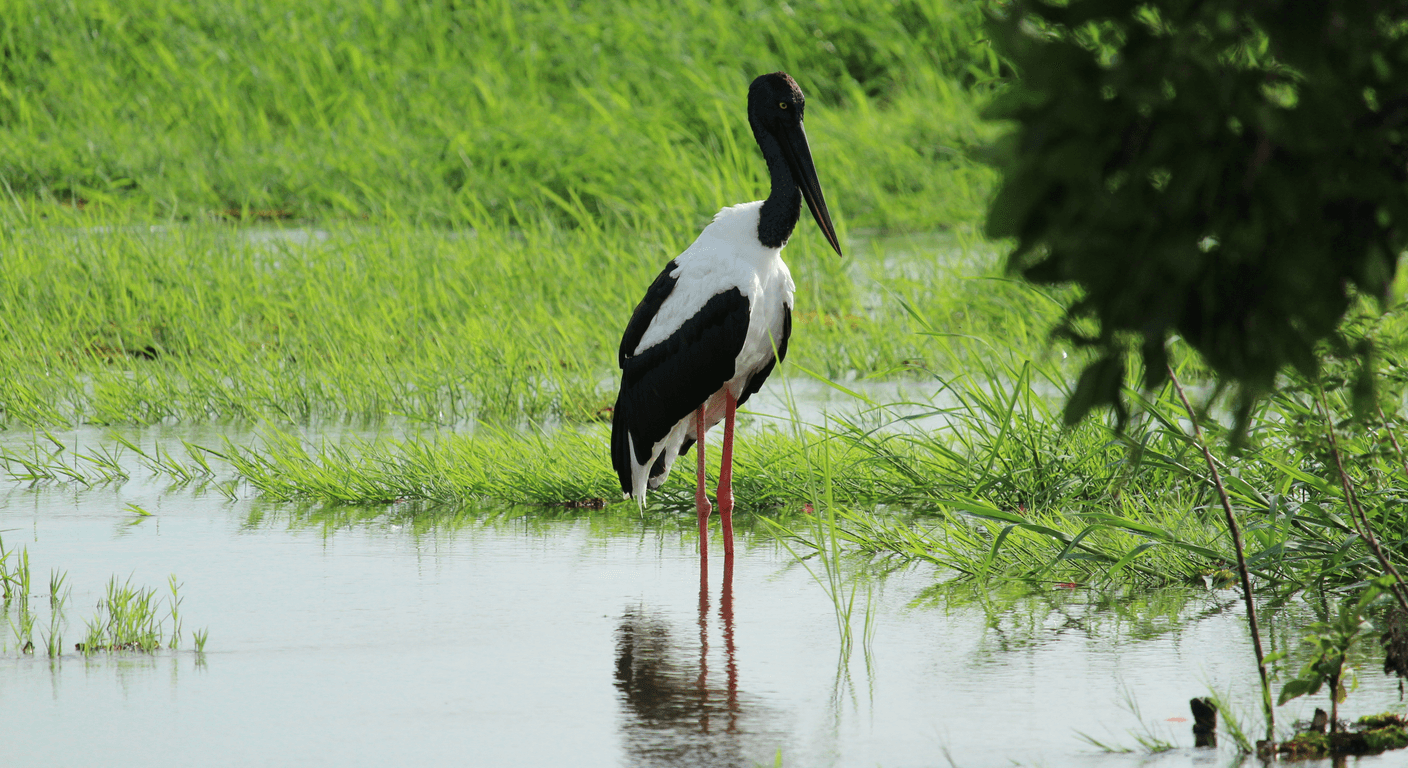
Kakadu National Park in the Northern Territory is, by any honest measure, one of the most extraordinary places on earth — and May is when it becomes genuinely pleasant to visit. The wet season typically winds down through March and April, leaving the park's floodplains shimmering, its waterfalls still running strong, and its wildlife concentrated around receding water sources. Jabiru, magpie geese, freshwater crocodiles, and the occasional saltwater crocodile near the flood plains are reliably sighted on Yellow Water Billabong cruises, which operate from the Cooinda Lodge area. Sunrise cruises are worth the early alarm.
Ubirr and Nourlangie offer some of the most significant rock art in the world — tens of thousands of years of continuous cultural record painted onto sandstone overhangs. Parks Australia provides ranger-led tours at Ubirr that bring the art to life in ways a self-guided walk simply can't. The walk to Ubirr's rock art gallery is largely flat and sealed; the optional climb to the lookout is short but uneven underfoot, so sensible footwear matters. Always confirm site access and road conditions through Parks Australia before booking — some areas open gradually as the dry season establishes, and conditions vary year to year.
Darwin is the logical base or gateway. It's a two-hour drive to Jabiru, or fly directly to Jabiru if you prefer. Darwin itself has improved considerably as a visitor city — the Museum and Art Gallery of the Northern Territory (magnt.net.au) holds the country's finest collection of Aboriginal and Torres Strait Islander art and is free to enter. Mindil Beach Sunset Market runs Thursday and Sunday evenings from April through October, and is the kind of place a group of friends can spend an entire evening without noticing the time. Flights from Melbourne, Sydney and Brisbane to Darwin are direct with Qantas, Virgin and Jetstar — check current schedules and confirm.
The Kimberley: Where the Season Really Begins
Western Australia's Kimberley region is vast, ancient, and genuinely remote. May marks the reliable start of the dry season here — the time when tour operators, small-ship expedition companies and self-drive grey nomads all converge on Broome and push outward. The Kimberley rewards those who've done a little research and committed to a mode of travel, because it's not a region you can half-approach.
Broome is the comfortable entry point. Cable Beach is famous for good reason — the tidal flats at low tide, particularly at sunset, are quietly spectacular. The town has good restaurants, the historic Sun Pictures outdoor cinema (sunpictures.com.au, the world's oldest operating outdoor picture garden), and the Broome Historical Museum for context on the pearling industry that shaped the town. From Broome, travellers split: those with 4WD vehicles and confidence head east along the Gibb River Road; those who prefer guided comfort book small-ship expeditions that cruise the Buccaneer Archipelago and the Horizontal Falls.
The Horizontal Falls in Talbot Bay — tidal surges pushing through narrow gorges — are accessible by scenic flight or boat tour from Broome. Geike Gorge near Fitzroy Crossing offers a gentler, boat-based alternative for those who want ancient reef geology and freshwater crocodiles without the adrenaline. For a friends group not interested in self-drive 4WD, a small-ship expedition departing Broome and ending in Darwin (or vice versa) is the most comprehensive and logistically sensible way to see the region. Operators vary — research carefully, check vessel accessibility features, and book well ahead for the May–June peak. Confirm current departure schedules and pricing directly with operators.
East Coast: Whale Season Begins
Humpback whales begin their northward migration along Australia's east coast in May, heading from Antarctic feeding grounds toward warmer breeding waters off Queensland. The migration typically builds through May and June, reaching its peak later in the season — but early-season sightings are common, and the boats are less crowded than they'll be in July and August. Hervey Bay in Queensland and Eden in New South Wales are two of the east coast's most reliable whale-watching bases, though operators run from most major coastal towns.
Eden, on the NSW Sapphire Coast, is worth particular mention for travellers based in regional Victoria — it's a manageable drive from the Snowy Mountains or Gippsland, and the town has a genuine history with whale migration through its Killer Whale Museum (killerwhalemuseum.com.au), which tells the remarkable story of the orca pod that once worked alongside local whalers. It's an oddly moving place. Whale-watching boat tours operate from Eden's wharf in season; confirm current operators and departure schedules locally.
For those who prefer a longer coastal journey, driving or taking the train from Melbourne to Sydney along the NSW south coast in May combines whale-watching stops with the pleasures of the Shoalhaven, Jervis Bay and the Royal National Park without summer crowds. The NSW TrainLink Intercity service covers much of this coast — check nswtrainlink.info for current timetables.
Southern Cities: Melbourne and Adelaide in Autumn
For a group of friends who want culture, food, and comfortable walking rather than red dust and remote roads, Melbourne and Adelaide in May are genuinely excellent. Melbourne's autumn cultural calendar is reliably strong — the Melbourne International Jazz Festival (melbournejazz.com) typically runs across May, and the National Gallery of Victoria (ngv.vic.gov.au) on St Kilda Road is one of the finest art museums in the Asia-Pacific, free for the permanent collection and worth an entire morning. The city's tram network is free within the CBD, and the inner suburbs — Fitzroy, Carlton, South Yarra — are navigable on foot without the heat that makes summer walking less appealing.
Adelaide has a quieter confidence in May. The Adelaide Central Market (adelaidecentralmarket.com.au) on a Friday morning is one of the great food-hall experiences in Australia, and the Art Gallery of South Australia (agsa.sa.gov.au) holds a collection that rewards more than a quick walk-through. The Barossa Valley and Clare Valley are within an hour of the city — both wine regions are at their most atmospheric in autumn, with harvest done and the vines turning. Regional Victoria travellers will feel at home here. A weekend in the Barossa, staying at one of the valley's smaller guesthouses, is the kind of unhurried travel that a good friends group does well.
Both cities are connected by the iconic Overland train service operated by Journey Beyond (journeybeyond.com.au), which runs between Adelaide and Melbourne — a relaxed, scenic alternative to flying that suits the May pace perfectly. Confirm current schedules and booking options directly.
One Overseas Option: Japan in May
For an international option in May, Japan earns genuine consideration — particularly for a culturally curious group. The cherry blossom season has finished by May, which means the crowds that descend on Kyoto in late March and April have thinned considerably, prices ease slightly, and the country settles into its green, pre-rainy-season best. The Golden Week public holiday period in Japan falls in late April to early May and brings domestic tourism crowds; aim to travel from mid-May onward to avoid it, and confirm dates as they shift slightly year to year.
Kyoto in mid-to-late May is one of those travel experiences that earns its reputation. The temple gardens — Ryoan-ji, Tenryu-ji in Arashiyama, the moss garden at Saihoji (which requires advance booking through the temple's official process) — are extraordinary in fresh green foliage. Nara, a 45-minute train ride from Kyoto, has its famous freely roaming deer and some of Japan's oldest Buddhist temples. The Japan Rail Pass, purchased before departure from Australia, makes Kyoto-Osaka-Nara-Tokyo movements straightforward and good value — confirm current pass pricing and purchasing arrangements through the official Japan Rail Pass site (japanrailpass.net) as pricing and rules have changed in recent years.
From Melbourne, flights to Japan typically route through Asian hubs — Tokyo (Narita or Haneda), Osaka (Kansai). Expect around 11–13 hours flying time with a stopover, depending on the routing. Allow a recovery night on arrival before committing to full days of sightseeing. Travel insurance that covers pre-existing medical conditions is essential — compare policies carefully before booking. Japan's accessibility infrastructure in major cities and on the Shinkansen is excellent; uneven stone paths in temple gardens are the main mobility consideration. A group of friends in their sixties who pace themselves well will find Japan enormously rewarding.
Practical Notes for May Travel in Australia
Packing for May requires genuine versatility if you're moving between regions. Tropical north: light, breathable clothing, a long-sleeved layer for evening insect protection, sturdy closed-toe shoes for uneven terrain, and strong sun protection — UV is still high even as temperatures ease. Southern cities: a proper mid-layer and a light rain jacket; May in Melbourne can deliver four seasons in a day, as the cliché exists for good reason. The Kimberley: dust, heat and remoteness demand practical gear; check operator packing lists carefully.
Domestic flights are the practical reality for most north–south combinations. Qantas, Virgin Australia and Jetstar all service Darwin and Broome from eastern capitals — direct flights exist but aren't always the cheapest; check both. Regional connections (Darwin to Jabiru, for instance) are available via charter and small regional operators; confirm current options through Tourism NT (tourismnt.com.au). For grey nomads driving north from Victoria, May timing works well if you departed in April — the distances are significant and the journey is the point, but it's not a route to rush.
Travel insurance deserves a direct mention. For any trip involving remote areas — the Kimberley, Kakadu, even whale-watching on a small vessel — comprehensive cover that includes medical evacuation is not optional. For travellers with pre-existing conditions, declare everything and read policy exclusions carefully. The Insurance Council of Australia (insurancecouncil.com.au) has guidance on what to look for. For Japan and other international trips, confirm your insurer covers the destination and the activities you have planned.
Quick planning guide
| Ideal pace | Relaxed in the southern cities, more structured and planned in the tropical north |
|---|---|
| Best months | May (start of the northern dry season and southern autumn) |
| Suggested stay | Long weekend for Melbourne or Adelaide; one to two weeks for Kakadu, the Kimberley or the east coast |
| Mobility level | Moderate — flat, sealed city walks versus uneven, remote terrain in the north |
| Cost level | Moderate, with softer shoulder-season prices in southern cities and premium pricing for northern expeditions |
| Comfort level | Comfortable in Melbourne and Adelaide; more rugged and remote in Kakadu and the Kimberley |
| Best for | Over-50 travellers — friends groups, couples or solo — who want flexible, well-planned options |
| Main planning consideration | Confirm road, site and tour access in advance, and arrange comprehensive travel insurance for remote or expedition travel |
Key takeaways
- May is the opening month of the tropical north's dry season — Kakadu and the Kimberley become accessible as wet-season conditions recede, but confirm road and site access before booking.
- Humpback whale migration begins along the east coast in May, with Eden (NSW) and Hervey Bay (Qld) among the most reliable watching bases.
- Melbourne and Adelaide offer excellent autumn cultural programming in May, with fewer crowds and more comfortable walking temperatures than summer.
- The Kimberley rewards committed planning — small-ship expeditions are the most practical option for those who want to see the region without a 4WD.
- Japan in mid-to-late May, after Golden Week, offers quieter temples, green gardens and good rail access — allow a recovery night on arrival from Australia.
- Travel insurance covering medical evacuation is essential for remote northern destinations; pre-existing condition declaration is equally important for international trips.
Recommended partners and links
Indicative prices only — always confirm with the operator before booking.
Frequently asked questions
Is May a good time to visit Kakadu National Park?
May is generally one of the best times to visit Kakadu. The wet season typically recedes by late April, leaving the landscape lush, waterfalls still flowing, and wildlife concentrated around water sources. Temperatures are more manageable than the wet season's humidity. Always confirm road and site access conditions with Parks Australia before travelling, as conditions vary year to year and some areas open gradually.
When does whale watching season start on Australia's east coast?
Humpback whales typically begin their northward migration along Australia's east coast in May, with sightings building through May and June and peaking later in the season. Early-season boat tours from towns like Eden in NSW and Hervey Bay in Queensland offer a chance to see whales with smaller crowds than the July–August peak. Confirm current operator schedules locally before booking.
How do I get to the Kimberley in May without a 4WD?
Travellers without a 4WD can access the Kimberley region in May by flying to Broome, exploring the town and nearby Cable Beach independently, and joining guided small-ship expeditions that cruise the Buccaneer Archipelago and surrounding coastline. Scenic flights to the Horizontal Falls are also available from Broome. Research operators carefully, check vessel accessibility features, and book well ahead as May–June is peak season.
What should over-50 travellers know about visiting Japan in May?
Japan's Golden Week public holiday falls in late April to early May and brings significant domestic tourism crowds — travelling from mid-May onward avoids the peak. The cherry blossom season is finished by May, so crowds thin and prices ease slightly. Flight time from eastern Australia is roughly 11–13 hours with a stopover; allow a recovery night on arrival. The Japan Rail Pass (purchased before departure) simplifies travel between cities. Travel insurance covering pre-existing conditions is essential.
What is the weather like in Melbourne and Adelaide in May?
May in Melbourne and Adelaide marks the settled part of autumn — cool to mild days, cold mornings, and occasional rain. Melbourne temperatures in May typically range from around 9°C overnight to the mid-to-high teens during the day, though conditions vary. Adelaide is generally a touch milder. Both cities are very walkable in May; a light rain jacket and a warm mid-layer are practical. Always check the Bureau of Meteorology (bom.gov.au) for current forecasts.
- Parks Australia – Kakadu National Park
- Tourism NT – Northern Territory travel information
- Tourism Western Australia – The Kimberley
- Museum and Art Gallery of the Northern Territory
- Sun Pictures Broome
- National Gallery of Victoria
- Art Gallery of South Australia
- Adelaide Central Market
- Journey Beyond – The Overland train
- Japan Rail Pass official site
- Bureau of Meteorology – Australian climate and forecasts
- Killer Whale Museum Eden NSW
- Tourism Australia