Amsterdam's Jordaan and Nine Streets reward a slow morning or three, ideally on a weekday between April–June or September–October when the lanes are quiet. The highlight is neighbourhood life itself — brown cafés, Noordermarkt on Saturday, and canalside benches on Brouwersgracht. Mobility is moderate, with uneven bridge stones and steep hotel stairs to navigate. From Australia, expect a 20–24 hour flight via Singapore, Dubai or Doha, then train and tram into the city.
Why the Jordaan works so well for this kind of traveller
There's a particular pleasure in arriving somewhere and immediately feeling that you've chosen well. The Jordaan delivers that. It was once Amsterdam's working-class quarter — weavers, tanners, refugees from religious persecution — and it still carries a different energy from the tourist-dense canal ring. The streets are narrower. The residents are actual residents. The cafés have regulars.
For a solo traveller in her late sixties, the neighbourhood offers something the big museums can't: a pace entirely her own. Nobody is moving in a group. There's no audio guide. You sit with a koffie verkeerd — the Dutch version of a flat white, roughly speaking — and watch the morning happen. That is, genuinely, the point.
The Jordaan runs roughly between Prinsengracht and Lijnbaansgracht, north to south between Brouwersgracht and Leidsegracht. It's compact enough to feel knowable within a day, but layered enough that a second morning reveals things the first one missed. The Nine Streets (De Negen Straatjes) connect the main canals nearby and are worth treating as a separate, slower outing.
Getting there from Australia — the honest flight picture
Amsterdam Schiphol is well connected from Australian capitals, but the journey is long. From Melbourne or Sydney, expect roughly 20 to 24 hours in transit, typically with one stopover via Singapore (Changi), Dubai (DXB) or Doha (Hamad). KLM flies the route and often routes via one of its partner hubs; Singapore Airlines, Emirates and Qatar Airways all serve Amsterdam with strong onward connections. Confirm current routes and schedules directly with airlines, as these change.
A recovery night on arrival is not indulgent — it's sensible. Schiphol to Amsterdam Centraal takes roughly 15 minutes on the NS airport train; from Centraal, a short taxi or tram ride reaches the Jordaan. The tram network is efficient, but the stops involve a step up and occasionally a gap. A taxi or the GVB (Amsterdam's public transport authority) journey planner at gvb.nl will show accessible options. Confirm accessibility features before you travel.
Jet lag from the Netherlands is significant — Amsterdam is eight or nine hours behind Australian eastern time depending on daylight saving in each country. Arriving in the early evening, getting a proper night's sleep and spending the first full day in the Jordaan rather than a museum queue is a strategy that experienced travellers swear by. Let the neighbourhood ease you in.
Anne Frank House — booking the right way, at the right time
The Anne Frank House on Prinsengracht is not optional for many visitors. Nor should it be treated as a casual drop-in. Timed-entry tickets must be booked in advance — often weeks ahead in peak season, sometimes months — and only through the official website at annefrank.org. Third-party ticket sellers charge significant premiums and offer no guarantee of authenticity. The house itself is explicit about this.
The visit involves a steep, narrow staircase — a replica of the original hidden entrance — that is not accessible for those with significant mobility limitations. The Anne Frank House website outlines this clearly and offers guidance on what parts of the experience are accessible. It's worth reading that section before booking rather than after. The visit itself is quietly devastating in the way that only honest, well-curated history can be. Allow an hour and a half, then sit somewhere quiet afterwards.
Indicative adult entry is around AUD 28–32 at current exchange rates, though this shifts with the Australian dollar and the museum's own pricing — confirm on the official site. Morning slots on weekdays tend to be less crowded than weekend afternoons. The surrounding Prinsengracht canal is beautiful at any hour, and the short walk from the house south into the heart of the Jordaan takes less than ten minutes.
The Nine Streets — what's actually there and how to approach it
De Negen Straatjes — the Nine Streets — is a grid of lanes connecting the Herengracht, Keizersgracht and Prinsengracht canals between Raadhuisstraat and Leidsegracht. The streets are short, the shops are independent, and the whole thing takes less than twenty minutes to walk end to end if you don't stop. Stopping, of course, is the entire purpose.
You'll find vintage clothing dealers alongside contemporary Dutch designers, specialist cheese shops next to dealers in antique maps, a chocolatier that takes its work seriously, a bookshop with Dutch and English titles mixed together on the shelves. Nothing is aimed at the souvenir market. The clientele are largely locals and the kind of travellers who've done their research. A weekday morning before eleven is the quietest window.
The canal bridges in this section are low-arched and picturesque and also slightly awkward underfoot — worn stone, no handrails on some. Sensible flat shoes with grip are not a concession to age; they're the correct footwear for this terrain. Anyone who's worn heels on these bridges once has not done it twice.
Navigating Amsterdam's bike lanes — a genuine hazard, not a minor footnote
Amsterdam's cycling culture is not decorative. Cyclists are fast, numerous, often silent, and they have legal priority in most situations. Bike lanes are physically integrated into the streetscape in ways that can genuinely confuse first-time visitors — they run alongside footpaths, cross intersections on their own signals, and appear where you least expect them.
In the Jordaan specifically, the narrower streets mean less separation between pedestrian and cycling space. Before crossing any path or stepping off a kerb, look both ways — not once, but as a genuine habit. Tram tracks add another layer: they're slippery when wet and wide enough to catch a heel or a walking-stick tip. This is not anxiety-inducing with awareness, but it does require attention that some city environments don't demand.
The practical upshot: stick to the footpath, cross at marked pedestrian crossings, and don't assume that a gap in the traffic means the bike lane is clear. Local pedestrians do this automatically; visitors need a day or two to calibrate. It's also worth knowing that hiring a bike, while tempting and very Dutch, is genuinely not recommended for those unfamiliar with the road culture — the risk calculation in a busy canal district is not the same as a quiet shared path in the Yarra Valley.
Where to sit, what to order and how to spend a morning well
The Jordaan runs on coffee and conversation. Neighbourhood cafés — bruine kroegen, the traditional Dutch 'brown cafés' with their dark wood and amber light — open early and encourage long visits. A koffie verkeerd (literally 'wrong coffee', which is milk-heavy, closer to a latte than a flat white but perfectly acceptable) and a stroopwafel or an apple tart is a morning in miniature. Prices at neighbourhood cafés are noticeably lower than those near the Rijksmuseum.
For something more substantial, the Saturday morning market on Noordermarkt — the square in front of the Noorderkerk — is one of the city's best. Organic produce, artisan cheese, fresh bread, flowers. It starts early and winds down by early afternoon. The Wednesday flea market on the same square is quieter and good for browsing. Neither requires planning; both reward wandering.
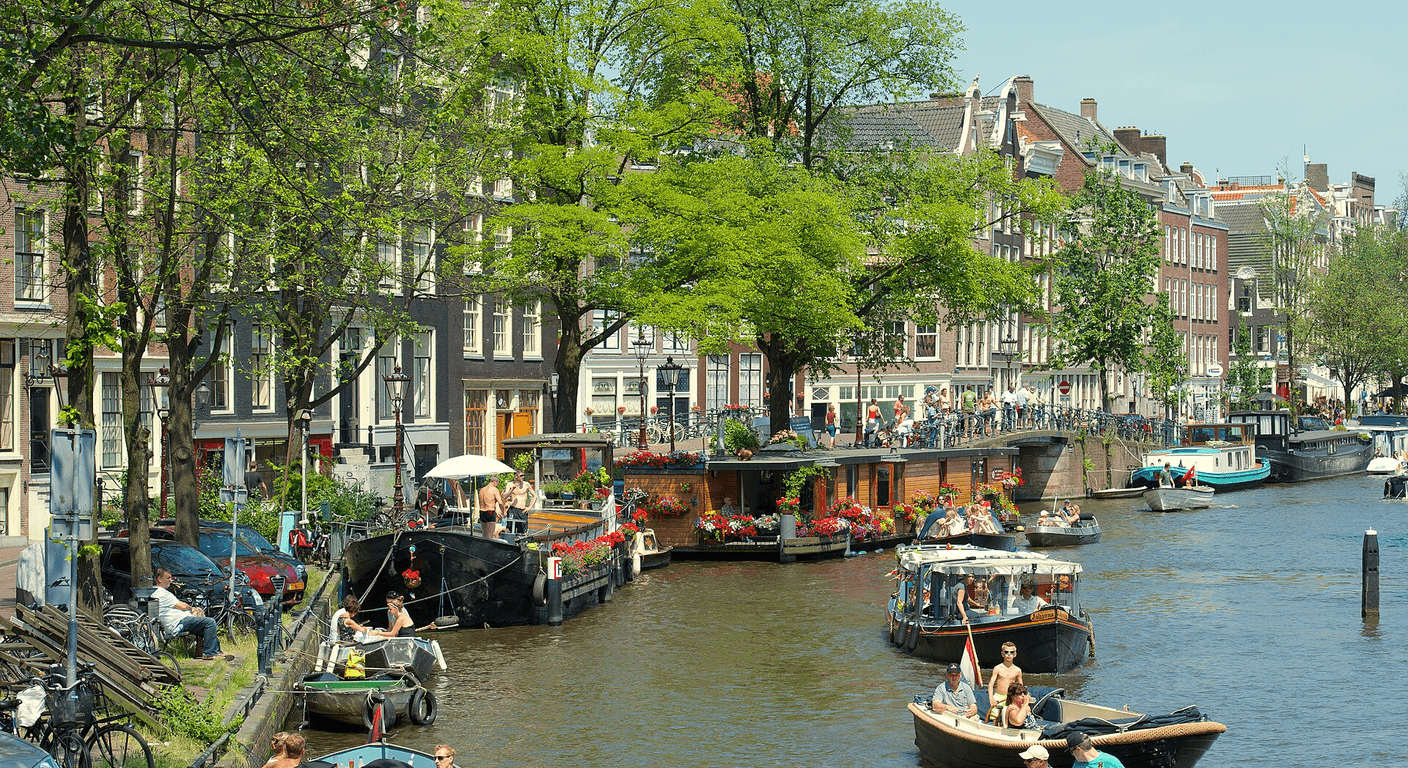
Canal-side benches on Brouwersgracht, at the northern edge of the Jordaan, offer one of the city's more peaceful sitting spots — wide water, houseboats, the occasional heron. It's the kind of view that makes a person feel no particular urgency to be anywhere else. That is, for this kind of traveller, precisely the right feeling.
Practical planning — entry requirements, insurance and staying comfortable
Australian passport holders should check the current status of ETIAS (the European Travel Information and Authorisation System) before booking. This EU authorisation scheme for visa-exempt travellers was expected to come into effect in 2025–2026; confirm current requirements and any application steps at smartraveller.gov.au and at the official ETIAS website. Do not rely on information that isn't sourced directly from an official government site, as the situation has been subject to delays and changes.
Travel insurance for the Netherlands is essential, and for travellers with pre-existing conditions — which, at 68, is a reasonable consideration for many — a policy that genuinely covers those conditions needs to be in place before departure. Read the Product Disclosure Statement carefully. The Australian Government's Smartraveller page for the Netherlands also carries current health and safety advice worth reviewing in the weeks before travel.
Accommodation in the Jordaan itself tends towards boutique canal-house hotels and apartment rentals. The buildings are charming; the stairs inside them are frequently steep and narrow, as Dutch domestic architecture has always prioritised canal frontage over internal comfort. Ask specifically about lift access, room location and stair count before confirming a booking. A ground-floor or lift-accessible room in a quieter street off the main Prinsengracht is worth seeking out. Indicative mid-range hotel costs in Amsterdam run to AUD 220–350 per night, though this varies considerably with season and lead time — treat those figures as a rough planning anchor only.
Quick planning guide
| Ideal pace | Slow-paced, unhurried |
|---|---|
| Best months | April–June or September–October, weekday mornings for quieter lanes |
| Suggested stay | A day or two, with a second morning to see what the first missed |
| Mobility level | Moderate — uneven canal bridges, steep narrow hotel stairs, and constant bike-lane awareness needed |
| Cost level | Budget-friendly for cafés and markets, mid-range for boutique canal-house hotels |
| Comfort level | Casual and low-key, built around cafés, markets and canal-side sitting |
| Best for | Independent travellers who prefer neighbourhood immersion over ticking off sights |
| Main planning consideration | Book Anne Frank House tickets months ahead via annefrank.org and confirm ETIAS entry requirements and hotel lift access before departure |
Key takeaways
- Anne Frank House tickets must be booked weeks or months in advance via annefrank.org only — no walk-up entry.
- Amsterdam's bike lanes run through pedestrian areas throughout the Jordaan; looking both ways before every crossing is non-negotiable.
- The Jordaan and Nine Streets are best visited on a weekday morning in April–June or September–October, when the lanes are quieter and the light is good.
- Australian travellers should confirm ETIAS requirements and Netherlands entry rules at smartraveller.gov.au before booking.
- Canal-house hotel stairs are often steep and narrow — ask specifically about lift access when booking accommodation in the Jordaan.
- A koffie verkeerd in a bruine kroeg and a morning at Noordermarkt on Saturday costs very little and delivers a great deal.
Recommended partners and links
Indicative prices only — always confirm with the operator before booking.
Frequently asked questions
Do Australians need a visa or special authorisation to visit the Netherlands in 2026?
Australian passport holders have historically been able to visit the Netherlands visa-free for short stays, but the EU's ETIAS authorisation system was expected to come into effect in 2025–2026. Confirm the current requirement and any application process at smartraveller.gov.au and the official ETIAS website before booking your trip.
How far in advance do you need to book Anne Frank House tickets?
During peak season (April to September), timed-entry tickets for the Anne Frank House often sell out weeks or even months ahead. Book only through the official website at annefrank.org. Third-party sellers charge higher prices and carry no guarantee of entry.
Is the Jordaan district suitable for travellers with mobility considerations?
The Jordaan is broadly flat, but the cobblestone streets and arched canal bridges are uneven underfoot. Sturdy, flat, non-slip shoes are strongly recommended. The overall mobility rating is Moderate — most of the district is walkable at a slow pace, but those with significant mobility limitations should note that some canal bridges lack handrails and that bike lanes require constant vigilance.
What is the best time of year to visit Amsterdam's Jordaan as an Australian traveller?
April to June and September to October offer the best balance of mild weather, manageable crowds and pleasant canal light. July and August are the busiest months and the most expensive for accommodation. Winter visits are possible and atmospheric, but shorter daylight hours limit walking time.
How long does it take to fly from Australia to Amsterdam?
From Melbourne or Sydney, the journey to Amsterdam Schiphol takes roughly 20 to 24 hours including one stopover, typically via Singapore, Dubai or Doha. A recovery night on arrival before beginning any sightseeing is strongly advisable to manage jet lag, given the eight-to-nine-hour time difference from Australian eastern time.
- Anne Frank House — official tickets and visitor information
- I Amsterdam — official Amsterdam visitor platform
- Smartraveller — Netherlands travel advice (Australian Government)
- NS — Dutch Railways, including Schiphol airport train
- GVB — Amsterdam public transport authority
- De Negen Straatjes — Nine Streets official site