Kotor Bay is best visited in May, June or September, when it's warm and cruise crowds are lighter. A stay of five to seven nights suits exploring the walled old town and a ferry trip to Perast. The old town is flat and easily walkable; the optional 1,350-step fortress climb is strenuous, but bay views from the waterfront are equally rewarding. Australia has no direct flights; travel via the Middle East or Europe takes roughly 22–28 hours.
Why Kotor Bay Stops You in Your Tracks
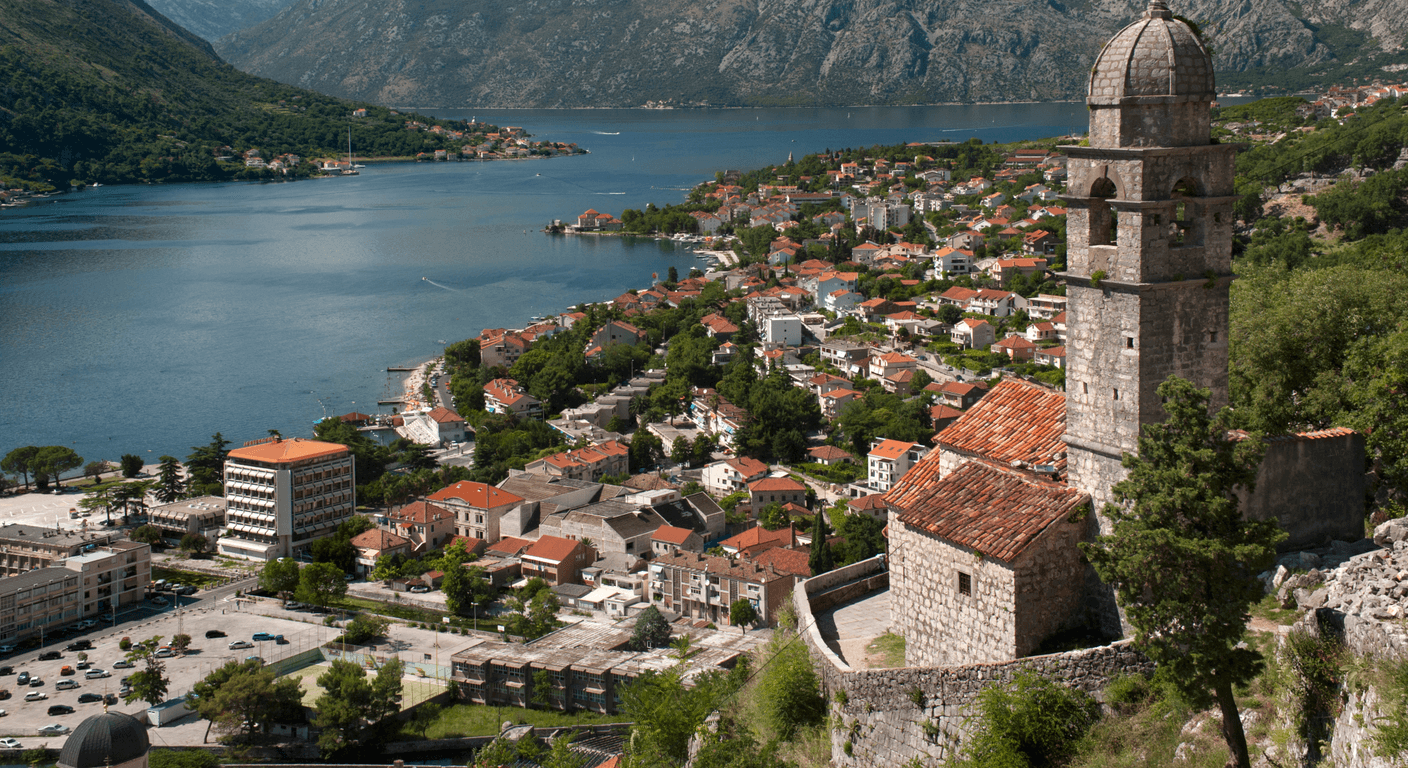
The bay of Kotor — Boka Kotorska — is technically a submerged river canyon rather than a true glacial fjord, but the distinction hardly matters when you're standing at the water's edge watching limestone mountains rise almost sheer from the surface. The effect is the same: an enclosed, cathedral-quiet body of water that makes the Adriatic feel like a different sea entirely. For anyone who has spent time around the Greek islands or the Dalmatian coast, Kotor registers as something adjacent but distinctly its own.
The old town sits at the bay's innermost point, tucked between the water and the base of Mount Lovćen. Venetian rule for nearly four centuries left its mark in the loggia, the carved stone doorways, the quality of the squares. The town has a Greek Orthodox church, a Catholic cathedral, and a mosque within a few hundred metres of each other — a layering of history that will resonate with anyone whose own family story spans cultures and faiths. The cobblestones are worn smooth and the lanes are narrow, but the overall geography at street level is flat and genuinely walkable for most travellers.
What Kotor is not, at least in July and August, is quiet. Cruise ships anchor in the bay and deposit thousands of passengers into those narrow lanes between roughly nine in the morning and four in the afternoon. The town doesn't disappear under the weight of them, but it does contract. The practical solution is simple: be inside the walls early, retreat for a long lunch somewhere shaded during peak hours, and reclaim the streets by late afternoon when the ships have gone and the light turns golden on the stone.
Getting There from Australia: The Honest Reality
There is no direct flight from Australia to Montenegro. The nearest major airports are Dubrovnik in Croatia (around 80 kilometres by road) and Tivat, Montenegro's own coastal airport, which handles seasonal European traffic. Most Australians route through the Middle East — Dubai, Doha or Abu Dhabi — connecting to either Dubrovnik or Tivat, or continuing to a European hub like Frankfurt or Vienna and connecting onward. Total travel time from Melbourne or Sydney is typically in the range of 22 to 28 hours depending on connections and layover lengths.
That's a significant journey, and it deserves honest acknowledgement. A recovery night somewhere — Dubrovnik, Split, or even a night in a transit city — is not an indulgence but a sensible investment in actually enjoying the first few days. Jet lag from a westward journey into European time can take three or four days to settle. Building that buffer into the itinerary means arriving in Kotor as a traveller, not a survivor.
Travel insurance is non-negotiable for this kind of trip, and the details matter. Policies that cover pre-existing conditions vary considerably in what they include, exclude and require by way of documentation. Compare policies through a specialist broker or via the Smartraveller insurance guidance before committing. Montenegro is not a member of the European Union, so European health reciprocal arrangements do not apply. Confirm current visa and entry requirements at smartraveller.gov.au — requirements can change, and the guide on that site is updated regularly.
The Old Town on Foot: What to Expect
The Kotor old town is compact — you can cross it in about ten minutes at a comfortable pace. The main entrance is the Sea Gate, facing the water, and from there the principal squares open up naturally. Trg od Oružja (the Square of Arms) is the social centre, flanked by cafes and the clock tower. The Cathedral of Saint Tryphon, dating from the twelfth century, is one of the more significant Romanesque buildings on the Adriatic coast and worth an unhurried hour inside. Entry is a few euros; confirm the current fee at the site.
The streets are stone-paved and predominantly flat, though some of the narrower lanes have uneven surfaces and occasional shallow steps between sections. Comfortable, supportive footwear matters more than any other single preparation. In the heat of summer, the walls retain warmth and the lanes can feel airless by mid-morning. Carrying water, wearing a hat and planning rest stops at one of the shaded square cafes isn't a concession to age — it's the way the locals have always navigated summer in the Mediterranean.
For those who are Greek Orthodox or simply interested in that tradition, the Church of Saint Luke and the Church of Saint Nicholas both sit within the walls and offer a quieter, less tourist-oriented experience than the cathedral. The sense of continuity with eastern Mediterranean Christianity — the iconostasis, the candlelit atmosphere, the smell of incense — is likely to feel familiar and moving in equal measure.
The Fortress Climb: Go If You Can, Don't Worry If You Can't
The fortress of San Giovanni rises roughly 1,350 steps above the old town, along a path that winds steeply up the mountain face. The views from the top, and indeed from any point partway up, are genuinely remarkable — the full geometry of the bay reveals itself in a way that no photograph quite captures. On a clear morning, the water below looks almost unreal in its stillness.
The climb takes between 45 minutes and two hours depending on pace and fitness, and involves sections of exposed, uneven stone steps with no handrails in parts. In summer, the heat on the exposed southern face can be severe by nine in the morning. Early starts — before seven — are strongly advisable if you plan to go up in June through September. Many travellers over 50 do it without difficulty; others find it beyond what their knees or cardiovascular capacity comfortably allows on a given day.
The bay is just as beautiful from water level. A table at a cafe on the waterfront promenade, a glass of local wine, the mountains reflected in the water at dusk — that is not a consolation prize. It is, in fact, the experience most people remember longest. The fortress is a bonus, not a condition of having properly seen Kotor.
Getting Around the Bay: Ferries and Coastal Buses
One of Kotor Bay's practical pleasures is that it rewards slow exploration by water. A car ferry crosses the bay between Kamenari and Lepetane — a short crossing that cuts driving time significantly and gives a brief, scenic perspective from the water. Passenger ferries also connect several of the bay's smaller towns, including Perast, which sits about twelve kilometres from Kotor and contains arguably the bay's most photographed sight: the small island church of Our Lady of the Rocks, reached by a short boat transfer from the waterfront.
Perast itself is worth an afternoon. It's a small, largely intact Baroque town with a handful of palaces facing the water, no cars inside the main street, and a pace that feels genuinely unhurried. A taxi or organised day trip from Kotor is straightforward; the coastal road is also served by local buses, though schedules require checking locally. Confirm current timetables and fares on arrival — printed or online information doesn't always reflect seasonal changes.
For those based in Kotor without a hire car, the combination of walking, local taxis and occasional ferry crossings covers most of what the bay offers. Hiring a car is useful for reaching the interior — the drive up to the Lovćen National Park and the Njegoš Mausoleum is spectacular — but the coastal experience itself is entirely manageable without one.
When to Go: Reading the Mediterranean Calendar
May and early June are close to ideal. The weather is warm rather than hot, the wildflowers are still on the hills, and the cruise ship season has not yet reached its peak volume. September is similarly well-regarded — the sea is warm from summer, the light is softer, and the school-holiday crowds have retreated. October remains pleasant and is increasingly popular with travellers who want warmth without summer's intensity.
July and August are genuinely hot. Temperatures in Kotor regularly reach 35 degrees Celsius and above, amplified inside the walls. The old town can feel overwhelmed on days when multiple large ships are in port simultaneously. None of this makes summer impossible — early mornings and late evenings are beautiful, and the sea is at its warmest — but it requires planning around the heat rather than ignoring it. This is the Mediterranean in summer: glorious and demanding in equal parts.
For Australians, the seasonal reversal is worth noting. Flying out of a Melbourne or Sydney autumn into a European spring in May is one of the more pleasant transitions the calendar offers. The long days, the mild evenings, the sense of a region waking up for the season — it suits a slower, more settled pace of travel well.
Eating, Staying and the Practical Shape of a Week
Montenegro uses the euro, which simplifies budgeting. Food prices are generally lower than in Croatia or Italy — a solid meal at a good restaurant in the old town or along the waterfront might come to around €20–€35 per person including wine, though confirm current prices as the tourism economy has been adjusting. Seafood is the obvious focus: the black risotto, the grilled fish, the local shellfish from the bay itself. For anyone with Greek-Mediterranean food sensibilities, the flavours will feel like a conversation rather than a foreign language.
Accommodation inside the old town is limited and books out well ahead in summer — small boutique hotels and apartments within the walls offer the most atmospheric experience, though some involve stairs. Properties just outside the walls or along the waterfront promenade offer easier access and, often, more comfortable amenities. A stay of five to seven nights gives time to explore the bay properly without rushing: two days in and around Kotor itself, a day trip to Perast, perhaps a ferry crossing, a slow morning on the waterfront, an evening when the cruise ships have gone and the town is quiet again.
The broader Montenegro coast — Budva, Herceg Novi — is accessible by bus or taxi for those who want contrast. Budva is livelier and more developed; Herceg Novi, at the bay's entrance, is less visited and has a certain faded-elegant quality that some travellers find more interesting than the more polished options. Montenegro rewards those who slow down enough to notice the differences between its towns, rather than ticking them off a list.
Quick planning guide
| Ideal pace | Slow and unhurried, with long lunches during peak cruise hours |
|---|---|
| Best months | May–early June and September; October also pleasant, July–August hot and crowded |
| Suggested stay | Five to seven nights |
| Mobility level | Easy on flat old-town streets; the 1,350-step fortress climb is optional and strenuous |
| Cost level | Mid-range, generally cheaper than Croatia or Italy (meals around €20–€35) |
| Comfort level | Good, with boutique in-walls hotels (some stairs) or easier waterfront properties |
| Best for | Travellers with Mediterranean or Orthodox/Catholic heritage interest who prefer a slower coastal pace |
| Main planning consideration | No direct flights from Australia; 22–28 hour journey via the Middle East or Europe, plus a recovery night for jet lag |
Key takeaways
- Kotor's old town is largely flat at street level — the steep fortress climb is optional and the bay views from waterfront level are genuinely rewarding.
- May, June and September are the best months for travellers over 50; July and August are hot and the old town fills with cruise passengers from mid-morning.
- Australians fly to Kotor via Dubai, Doha or a European hub, with total travel time typically 22–28 hours — a recovery night on arrival is a practical necessity, not a luxury.
- Montenegro uses the euro and is generally more affordable than Croatia, with good-quality seafood restaurants and a growing range of boutique accommodation.
- Confirm visa and entry requirements at smartraveller.gov.au before booking — Montenegro is not an EU member and requirements can change.
- The bay ferry between Kamenari and Lepetane, and day trips to Perast, are among the most rewarding and accessible ways to explore beyond the old town walls.
Recommended partners and links
Indicative prices only — always confirm with the operator before booking.
Frequently asked questions
Do Australians need a visa to visit Montenegro?
Australian passport holders have historically been able to enter Montenegro visa-free for short stays, but entry requirements can change. Always confirm current rules at smartraveller.gov.au before booking, as Montenegro is not an EU member and its arrangements are managed independently.
Is Kotor's old town accessible for travellers with limited mobility?
The old town's main streets and squares are largely flat cobblestone, manageable for most travellers. Some narrower lanes have uneven surfaces or shallow steps. The fortress climb involves roughly 1,350 steps on steep, uneven terrain and is not suitable for those with significant mobility limitations — but skipping it does not diminish the experience of the bay.
When is the best time for Australians over 50 to visit Kotor?
May, June and September offer the best combination of warm weather, manageable crowds and comfortable temperatures. July and August are very hot — often above 35°C — and the old town is heavily impacted by cruise ship arrivals during those months.
How do you get from Dubrovnik airport to Kotor?
Dubrovnik in Croatia is the most commonly used gateway airport for Kotor. The journey by road takes roughly 2.5 to 3 hours, crossing the border into Montenegro. Private transfers and shuttle services operate this route; confirm current options and border crossing requirements before travel.
What is the currency in Montenegro and are prices reasonable for Australians?
Montenegro uses the euro despite not being a member of the European Union. Prices are generally lower than in Croatia or Italy — restaurant meals, accommodation and local transport tend to be good value by western European standards. Always confirm current prices locally, as the tourism economy fluctuates seasonally.