Battambang, Cambodia's laid-back second city, suits a visit from November to February, when daytime temperatures sit around 25-32°C. Two nights are enough, built around the bamboo train — an open-sided norry that rattles through rice paddies at up to 40km/h. Mobility is moderate: colonial streets are easy walking, though boarding the norry and Wat Banan's 350 steps need reasonable fitness. Access is a two-to-three hour private car transfer from Siem Reap, itself reached from Australia via Bangkok or Kuala Lumpur.
Why Battambang deserves more than a detour
Most Australian travellers to Cambodia organise their itinerary around Siem Reap and Angkor, which is entirely understandable. Angkor is extraordinary. But after three days of temple-hopping in the heat, something changes — you start looking for the Cambodia that isn't arranged for tourism. Battambang is that place.
It's a genuine Cambodian city: provincial, a little dusty, proud of itself. The French colonial architecture along the riverside hasn't been restored for Instagram — it simply remains, faded and graceful. Locals eat breakfast at plastic tables under shophouse awnings. Tuk-tuks negotiate with each other at roundabouts. For a couple who's seen their share of the world, there's something satisfying about a place that isn't performing for you.
For travellers based in Victoria — or anywhere in southern Australia — the journey to Battambang runs through Bangkok or Kuala Lumpur to Phnom Penh or Siem Reap, with total travel time typically around 10 to 14 hours depending on connections. A recovery night in Siem Reap before the drive west is not indulgence; it's just good sense.
Getting from Siem Reap to Battambang: what to expect on the road
The overland route from Siem Reap to Battambang runs roughly 170 kilometres and takes between two and three hours by private car or minibus, depending on road conditions and the driver's relationship with speed bumps. The road is sealed and generally in reasonable condition, though it passes through flat agricultural land — rice paddies, sugar palms, the occasional ox cart — rather than scenic drama. That said, it's a pleasant journey if you're not in a hurry.
Hiring a private car through your Siem Reap hotel is the most comfortable option for couples. Indicative cost is around USD $35–$55 for a private transfer; confirm current pricing locally. Shared minibuses are cheaper but offer less flexibility for stops and tend to fill with younger backpackers who have a different relationship with air-conditioning settings.
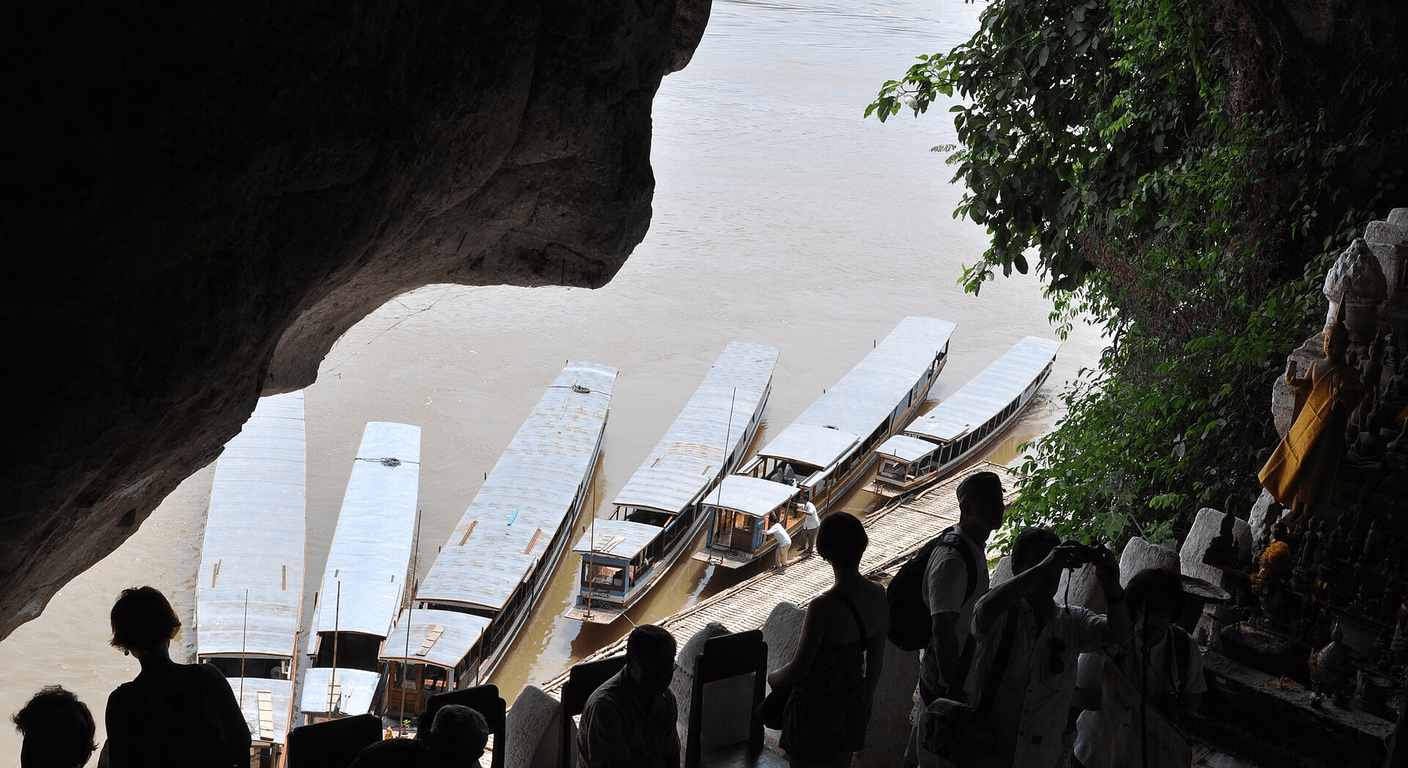
There's also the famous slow boat along the Sangker River — a full-day journey that's scenic in the wet season (July to October) when water levels are high, and can become a muddy grind in the dry months. It's worth researching current conditions before choosing that route. Either way, arrive in Battambang before noon, check in, and let the afternoon take care of itself.
The bamboo train: what it actually is, and what to expect
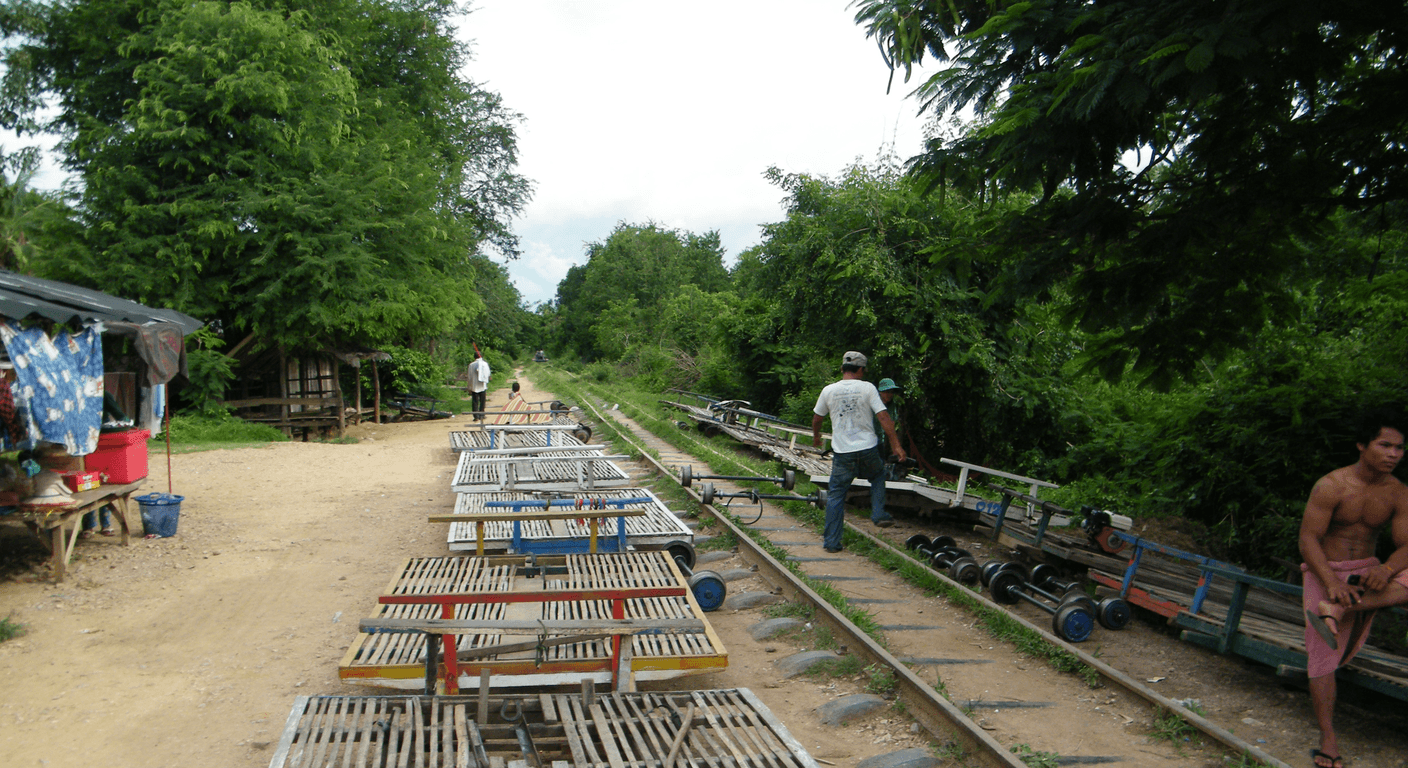
The norry — Cambodia's bamboo train — is a flat bamboo platform, roughly two metres by one, set on two axles and a pair of wheels salvaged from old military equipment. A small petrol engine drives a rubber belt. The whole contraption sits on a disused section of Cambodia's colonial-era railway line and reaches speeds of around 40 kilometres per hour. It is, objectively, one of the more improbable things you can do in Southeast Asia.
The original norry at O Dambong village was relocated and commercialised after the railway line was partially restored — so what you're riding today is an experience designed for visitors, which is worth knowing. That doesn't make it less enjoyable; it makes it honest. The track runs about four kilometres through rice paddies and past rural villages before turning around. When two norries meet head-on, one dismantles itself to let the other pass, then reassembles. This happens with the casual efficiency of people who've been doing it for decades.
The practical notes matter here. The platform is open on all sides with a low railing — sit cross-legged or with legs forward, hold the rail, and wear a hat with a brim. Midday heat in the dry season is serious; aim for an early morning or late afternoon departure. Boarding involves stepping down from a low embankment, which is manageable for most travellers but worth being honest about if mobility is a genuine concern. Wear closed shoes. The ride is bumpy, cheerful, and over in about 20 minutes each way.
The colonial streets and what's worth your time on foot
Battambang's riverside precinct is compact enough to walk in a comfortable hour, with enough shade and café stops to extend that pleasantly. The shophouse rows along Street 1.5 and the riverside road date from the French protectorate period and have a faded elegance that Phnom Penh's development has largely overwritten. Architecture enthusiasts — particularly those with a background in European urban form — will find the proportions and detailing quietly interesting.
The Battambang Museum on Street 1 holds a modest but well-curated collection of Khmer artefacts, including lintels and statuary from regional temples. It's not the National Museum in Phnom Penh, but it's genuinely worth an hour and is far less crowded. Confirm opening hours before visiting, as they can shift around public holidays.
Wat Banan, a hilltop temple about 12 kilometres south of town, requires climbing roughly 350 steps — that's a considered choice rather than a casual one in the heat. The views are worthwhile and the temple itself dates to the 11th century. A tuk-tuk to the base is the obvious transport. If the steps aren't appealing, the countryside drive alone is pleasant, and there are a handful of traditional wine producers near the base of the hill worth a brief stop.
Phare Ponleu Selpak: an evening worth keeping free
Phare Ponleu Selpak — translated as 'the brightness of the arts' — began as a drawing class for traumatised children returning from refugee camps in the early 1990s. It has since grown into Cambodia's most respected arts school, training students in circus, visual arts, music and theatre. The circus performances held at the school's outdoor venue in Battambang are genuinely skilled — acrobatics, clowning, live music — and the shows run around 90 minutes.
This is not a tourist approximation of culture. The performers are students and graduates of the school, and the proceeds directly support the programme. Evening shows typically start around 7pm; check current scheduling and book ahead at phareps.org. Indicative ticket prices are around USD $15–$25; confirm current pricing with the venue. The outdoor setting is open-air with covered seating — bring a light layer for the evening breeze.
For a couple who appreciates craft and history in equal measure, the Phare performance is the kind of evening that stays with you. It's also a good reminder that Cambodia's cultural recovery since the Khmer Rouge era has been driven largely by artists, teachers and the young. That context makes the performance land differently.
Comfort, health and the practicalities of travelling here over 50
Battambang has a reasonable range of mid-range accommodation, including several boutique hotels in renovated colonial buildings near the riverside. Air-conditioning is standard at this level; reliable hot water is worth confirming when booking. The better properties have lifts or ground-floor rooms available — ask specifically when reserving if stairs are a concern.
Heat is the main physical consideration. November to February is the dry and cool season, with daytime temperatures around 25–32°C — warm, but manageable with pacing, shade and hydration. March to May is significantly hotter and more demanding. The wet season (June to October) brings afternoon downpours and lush countryside, but some roads and the norry track can be affected by flooding; check conditions locally.
Travel insurance that covers pre-existing medical conditions is essential and non-negotiable for Cambodia travel. Medical facilities in Battambang are limited compared with Phnom Penh or Bangkok — for anything serious, evacuation to Thailand is the practical option, which is exactly why adequate insurance matters. Confirm your policy covers medical evacuation before you leave Australia. For entry requirements, visa conditions and any current travel advisories, smartraveller.gov.au is the authoritative starting point — check it close to your departure date, not just at planning stage.
How to fit Battambang into a broader Cambodia itinerary
The cleanest structure for most Australian travellers is Siem Reap (three to four nights for Angkor and surrounds), then Battambang (two nights), then either return to Siem Reap for the flight home or continue south to Phnom Penh by road or plane before departing. Phnom Penh to Battambang is around five to six hours by road — manageable in a day with a private car and a lunch stop.
Two nights in Battambang is enough for the bamboo train, a morning in the colonial streets, the museum, and the Phare performance. Three nights allows for a half-day to Wat Banan or the bat caves at Phnom Sampeau — worth it if the pace feels right. Don't try to compress this into a day trip from Siem Reap; the distance and the heat make that a grinding exercise rather than a pleasure.
For Greek Australian travellers — and anyone with a background in cultures that built things to last — there's a particular resonance in Battambang's layers: Khmer temple ruins, French colonial architecture, the practical ingenuity of the bamboo train. It's a city where different histories sit alongside each other without being curated into coherence. That's rarer than it sounds.
Quick planning guide
| Ideal pace | Slow-paced and unhurried |
|---|---|
| Best months | November to February, cooler dry season |
| Suggested stay | Two nights, three if adding Wat Banan or the bat caves |
| Mobility level | Moderate — flat walking with some steps and uneven boarding onto the norry |
| Cost level | Budget-friendly to mid-range |
| Comfort level | Reasonable mid-range hotels with air-con; heat is the main challenge |
| Best for | Couples wanting an authentic, less-touristed stop beyond Angkor |
| Main planning consideration | Timing activities around midday heat and confirming transport, tickets and conditions locally |
Key takeaways
- Battambang is around two to three hours by private car from Siem Reap — a private transfer is the most comfortable option for couples.
- The bamboo train (norry) has no sides or seatbelts; hold the rail, wear a hat, and avoid the midday heat by going early morning or late afternoon.
- November to February is the most comfortable season, with lower humidity and temperatures around 25–32°C during the day.
- The Phare Ponleu Selpak circus is a genuine arts school performance, not a tourist show — book ahead at phareps.org and keep the evening free.
- Travel insurance covering pre-existing conditions and medical evacuation is essential; Battambang's medical facilities are limited.
- Check current Cambodian entry and visa requirements at smartraveller.gov.au before booking, not just before departure.
Recommended partners and links
Indicative prices only — always confirm with the operator before booking.
Frequently asked questions
How do Australian travellers get from Siem Reap to Battambang?
The most comfortable option is a private car or taxi hired through your Siem Reap hotel, taking around two to three hours along a sealed road. Shared minibuses are available and cheaper but offer less comfort and flexibility. A slow boat along the Sangker River is an alternative in the wet season when water levels allow it, but the journey takes a full day; check current conditions before choosing this route.
Is the Battambang bamboo train suitable for older travellers or those with limited mobility?
The bamboo train is rated Moderate for mobility. Boarding involves stepping from a low embankment onto a flat platform close to ground level, which most travellers manage comfortably. The platform has no sides or seatbelts, so a steady grip on the rail is important. The ride is bumpy. Travellers with significant balance issues or joint problems should assess their comfort honestly before boarding. Avoid midday heat — an early morning departure is strongly recommended.
Do Australians need a visa for Cambodia in 2026?
Australian passport holders require a visa for Cambodia. An e-visa is available through the official Cambodian government portal at evisa.gov.kh, with an indicative cost of around USD $30; confirm the current fee and processing time before applying. Always check the latest entry requirements and any travel advisories at smartraveller.gov.au close to your departure date, as conditions can change.
What is the Phare Ponleu Selpak circus in Battambang?
Phare Ponleu Selpak is a Cambodian arts school founded in the early 1990s for children returning from refugee camps. Its circus performances in Battambang feature acrobatics, clowning and live music performed by students and graduates of the school. Shows run around 90 minutes in an open-air venue. Indicative ticket prices are around USD $15–$25; confirm current pricing and show times at phareps.org and book ahead.
What kind of travel insurance do Australian seniors need for Cambodia?
Travel insurance for Cambodia should specifically cover pre-existing medical conditions and medical evacuation to Thailand or Australia, as Battambang's medical facilities are limited. Standard travel policies often exclude pre-existing conditions unless declared and covered at time of purchase. Compare specialist policies designed for over-50 travellers and confirm the level of medical evacuation cover before you finalise your booking.