Brunei suits a short stopover of one to two nights, ideally during the April to October dry season when humidity and rainfall are lower. The gilded Sultan Omar Ali Saifuddin Mosque and the stilted water village of Kampong Ayer are the defining highlights, both reached easily on foot or by a short water taxi ride. Mobility is easy, with flat walkways throughout. Royal Brunei Airlines flies direct from Melbourne and Sydney, making Brunei a simple add-on to a Borneo itinerary.
Why Brunei Works Best as a Short Add-On
Brunei is a sovereign sultanate about the size of a regional Victorian shire, sitting on the north-western coast of Borneo. Its capital, Bandar Seri Begawan — BSB to anyone who's been — is calm, orderly, and relatively easy to navigate on foot or by short taxi ride. There are no big-city crowds, no chaotic traffic, and no pressure to rush. For a group of friends who've already been to Bangkok and Bali, that quiet is actually part of the appeal.
The honest reality, though, is that Brunei's visitor attractions are concentrated and quickly covered. Two full days is comfortable. A fortnight would require a very particular kind of patience. The country's strict interpretation of Islamic law means alcohol is prohibited — not just restricted, prohibited — and the restaurant scene, while perfectly pleasant, is limited in variety. None of this is a problem for a night or two. It becomes one if you're expecting a week of leisurely dining and evening wine.
The smart play is to book Brunei as a deliberate stopover between Australian cities and Kota Kinabalu, Kuching, or Kota Kinabalu. Royal Brunei Airlines routes naturally through BSB, so a one or two-night stop costs little in extra airfare and adds real cultural texture to a Borneo itinerary.
The Sultan Omar Ali Saifuddin Mosque: Brunei's Defining Landmark
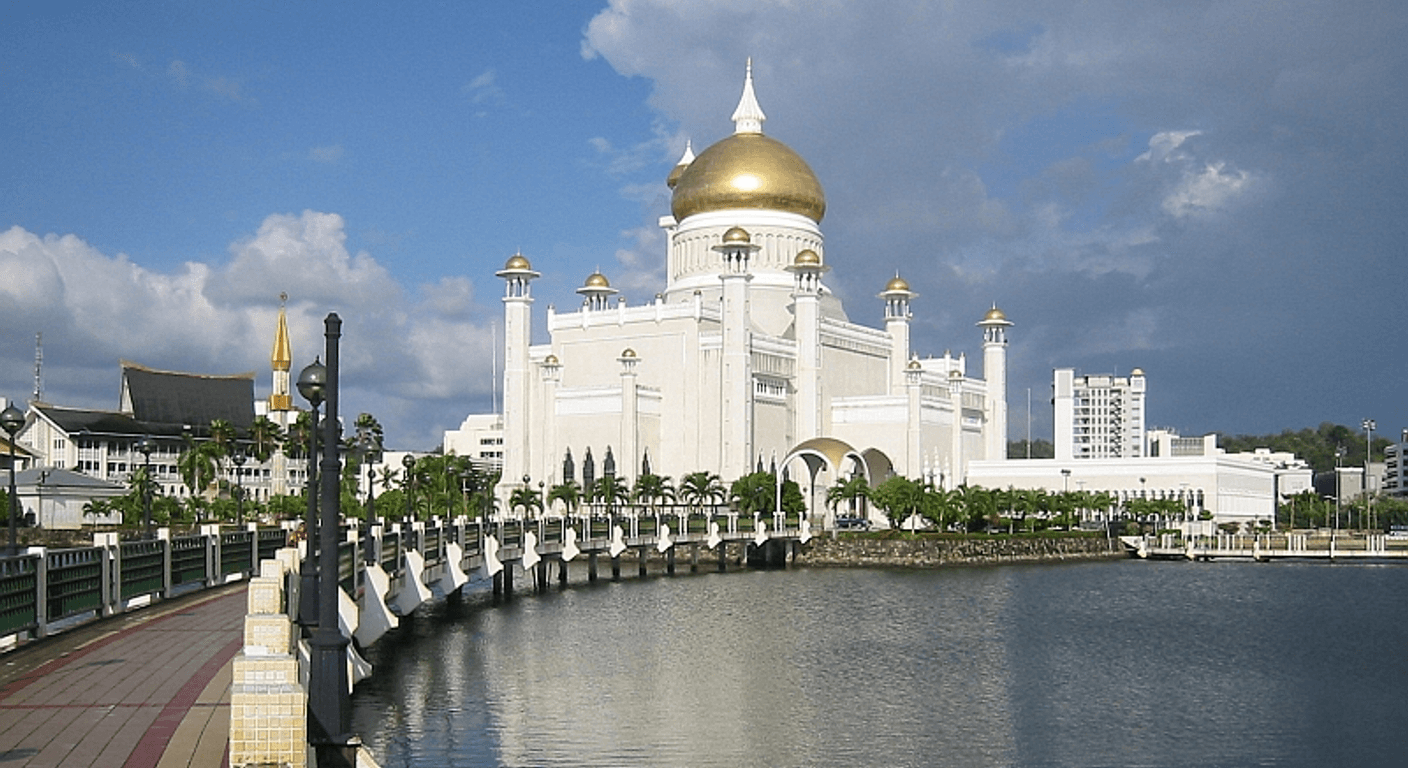
The Sultan Omar Ali Saifuddin Mosque sits at the centre of BSB like a quietly confident statement. Completed in 1958, it's built on an artificial lagoon and topped with a pure gold dome that catches the late-afternoon light in a way that photographs can't quite capture. The surrounding gardens are immaculate, the reflecting pool still, and the overall atmosphere is one of considered elegance rather than tourist spectacle.
Non-Muslim visitors are welcome outside of prayer times — the general rule is to arrive between 8am and noon, or 1.30pm and 3pm, though hours can vary and it's worth confirming at the entrance on the day. Modest dress is required: long sleeves, long trousers or skirt, and a headscarf for women. Robes are available at the entrance if needed. The mosque is free to enter.
The lagoon-side walkway is flat and unhurried, well-suited to anyone who prefers to take their time. There's a replica of a 16th-century royal barge moored on the lagoon — it's not operational, but it adds a certain theatrical grandeur to the setting. Allow an hour, perhaps more if the light is good and the mood is contemplative.
Kampong Ayer: A Water Village Worth the Short Boat Ride
Kampong Ayer is genuinely remarkable. Around 30,000 people live in this network of wooden houses, mosques, schools, and clinics built entirely on stilts over the Brunei River — a water village that has existed in some form for centuries. It's not a heritage display; people live and work there, children cycle along the walkways, and the sounds are domestic rather than performative.
Water taxis — small motorboats locally called 'tambang' — cross from the main riverfront near the Omar Ali Saifuddin Mosque for a few Brunei dollars each way (confirm current fares on arrival; they're indicative only and very affordable). The boat ride itself takes a matter of minutes. Once across, you can walk the raised timber walkways independently or arrange a short guided tour through your accommodation. The Kampong Ayer Cultural and Tourism Gallery, also accessible by water taxi, provides useful context on the village's history and is free to enter.
The walkways are generally flat but can be uneven in older sections, and some are exposed to sun without shade. Comfortable walking shoes rather than sandals, and a hat, are sensible choices. The experience is easy overall, and the perspective from the water looking back at BSB — with the mosque dome rising above the riverbank — is worth the short ride alone.
A Second Mosque, a Market, and What Else to Expect
If a second day appeals, the Jame'Asr Hassanil Bolkiah Mosque — built in 1994 to mark the Sultan's silver jubilee — is larger and, to some eyes, more ornate than Omar Ali Saifuddin. It's set in spacious gardens a short taxi ride from the centre of BSB. Again, modest dress is required and visiting hours apply; confirm before you go.
The Tamu Kianggeh market, a short walk from the waterfront, runs in the mornings and is a practical local produce market rather than a tourist bazaar. It's worth a stroll for the colour and the chance to pick up fresh fruit. The Royal Regalia Museum on Jalan Sultan — free entry — displays ceremonial items from the Sultan's reign and is air-conditioned, which is no small consideration in Brunei's heat.
Dining in BSB centres on halal Malay, Chinese-Malay, and South Asian food. Quality is consistent and prices are very reasonable by Australian standards. Coffee shops open early; some close by mid-evening. Don't expect a lively night out — the city is genuinely quiet after dark, which some travellers find restful and others find limiting. Know which camp you're in before you book.
Getting There from Australia: The Practical Reality
Royal Brunei Airlines operates flights from Melbourne and Sydney to BSB, with some routing via Kuala Lumpur depending on the schedule. Flight time from Melbourne is roughly eight to nine hours direct, though confirm current routes and schedules directly with the airline at flyroyalbrunei.com, as these can change. The BSB International Airport is modern, manageable, and not far from the city centre — a taxi to most hotels takes around fifteen to twenty minutes.
Jet lag from Australia to Brunei is relatively mild — the time difference is around three hours ahead of eastern Australia (AEDT), so the adjustment is gentler than, say, Europe or South America. A first-night recovery buffer is still sensible, particularly if you've connected through a hub. Given Brunei's compact size, there's no need to rush into sightseeing on arrival day.
For travellers flying into Kota Kinabalu or Kuching for a Borneo leg, BSB works as either a first or last stop. Check whether your airline routing naturally passes through BSB — if it does, a deliberate stopover may cost very little to arrange. Confirm all current visa requirements and entry conditions at smartraveller.gov.au well before departure.
Alcohol-Free Travel: What to Expect and How to Prepare
Brunei enforces a complete prohibition on alcohol for all visitors, regardless of nationality or religion. You cannot buy alcohol in restaurants, hotels, or shops. Non-Muslim visitors are technically permitted to bring a limited personal allowance into the country through official channels — the current rules on this are specific and subject to change, so confirm the precise allowance with Brunei customs or via smartraveller.gov.au before you travel. Don't assume what applied on someone else's trip two years ago still applies.
For a one or two-night stay, most travellers find this a non-issue. The food is good, the coffee is strong, and the general atmosphere is peaceful rather than restrictive. It's worth being straightforward with travel companions beforehand, particularly in a friends group where an evening drink is part of the usual rhythm. Brunei isn't the place to work around it — respect the law and plan accordingly.
Travel insurance for over-50 travellers should, as always, cover pre-existing medical conditions and be in place before any deposits are paid. Compare policies carefully; the right cover for a short regional add-on is different from a longer European journey. The Australian Government's Smartraveller site also carries current safety and health advisories for Brunei.
Pairing Brunei with Borneo: The Itinerary That Makes Sense
The most logical pairing is Brunei with Sabah or Sarawak — Malaysia's two Bornean states, both accessible by short flight or (for the adventurous) overland from BSB. Kota Kinabalu in Sabah offers river safaris, the extraordinary Kinabatangan wildlife corridor, and the cultural depth of the Kadazan-Dusun people. Kuching in Sarawak is one of South-East Asia's most liveable and walkable cities, with excellent food and a genuinely interesting arts and heritage scene.
A suggested structure for a group of friends: fly into BSB, spend two nights, then continue to Kota Kinabalu for four to five nights before flying home via a hub. Alternatively, Kuching as a final stop works well if your airline routing permits. Both Sabah Tourism (sabahtourism.com) and Sarawak Tourism (sarawaktourism.com) have solid official sites for planning.
For a Latin-Australian traveller used to the warmth of South American hospitality, the Bornean states offer a comparable generosity of spirit — local guides are often excellent, community-based tourism options exist in both Sabah and Sarawak, and the food culture rewards curiosity. Brunei, by contrast, is quieter and more formal. Together, they make a balanced fortnight: a day or two of contemplative calm followed by genuine immersion in Borneo's extraordinary natural and cultural landscape.
Quick planning guide
| Ideal pace | Slow-paced and unhurried |
|---|---|
| Best months | April to October (dry season, lower humidity) |
| Suggested stay | One to two nights, as a stopover |
| Mobility level | Easy — flat mosque walkways and short water-taxi crossings |
| Cost level | Budget-friendly dining, reasonable prices by Australian standards |
| Comfort level | Comfortable, quiet and orderly, though alcohol-free and limited nightlife |
| Best for | Friends or couples wanting a calm cultural stop before or after a Borneo trip |
| Main planning consideration | Confirm the alcohol import allowance and current visa/entry requirements at smartraveller.gov.au before departure |
Key takeaways
- One to two nights covers Brunei's highlights comfortably — it's a quality add-on, not a standalone destination.
- The Sultan Omar Ali Saifuddin Mosque and Kampong Ayer water village are the two experiences that justify the stop.
- Alcohol is completely prohibited in Brunei for all visitors — confirm the personal import allowance at smartraveller.gov.au before you travel.
- Royal Brunei Airlines flies direct from Melbourne and Sydney, making a BSB stopover logistically easy on a Borneo itinerary.
- The April to October dry season is the most comfortable time to visit, with lower humidity and less rainfall.
- Always confirm current visa requirements and entry conditions for Brunei at smartraveller.gov.au well before booking.
Recommended partners and links
Indicative prices only — always confirm with the operator before booking.
Frequently asked questions
Do Australians need a visa to visit Brunei?
Australian passport holders can generally enter Brunei visa-free for short stays, but entry conditions can change. Always confirm the current requirements at smartraveller.gov.au before booking, and check that your passport has sufficient validity for the trip.
Is Brunei suitable for travellers over 50 with limited mobility?
Brunei rates as Easy for mobility. Bandar Seri Begawan's central attractions are flat and accessible, the water taxi ride to Kampong Ayer is brief, and the walkways within the water village are generally manageable — though some older sections can be uneven. Comfortable, closed-toe shoes are recommended over sandals.
Can you drink alcohol in Brunei as a tourist?
No. Brunei enforces a complete prohibition on alcohol for all visitors, regardless of nationality. Non-Muslim visitors may be permitted to bring a small personal allowance into the country through official customs channels, but the rules are specific and subject to change — confirm the current allowance with Brunei customs or via smartraveller.gov.au before you travel.
How do you get from Bandar Seri Begawan to Kampong Ayer?
Water taxis — small motorboats known locally as 'tambang' — operate from the riverfront near the Omar Ali Saifuddin Mosque. The crossing takes just a few minutes and the fare is very affordable; confirm current rates on arrival. No advance booking is required.
What's the best way to pair Brunei with a Borneo trip from Australia?
Fly into Bandar Seri Begawan first for one to two nights, then continue by short flight to Kota Kinabalu (Sabah) or Kuching (Sarawak) for the main Borneo leg. Royal Brunei Airlines routes naturally through BSB from Melbourne and Sydney, so a deliberate stopover often adds little to the overall airfare. Confirm current routes and schedules at flyroyalbrunei.com.