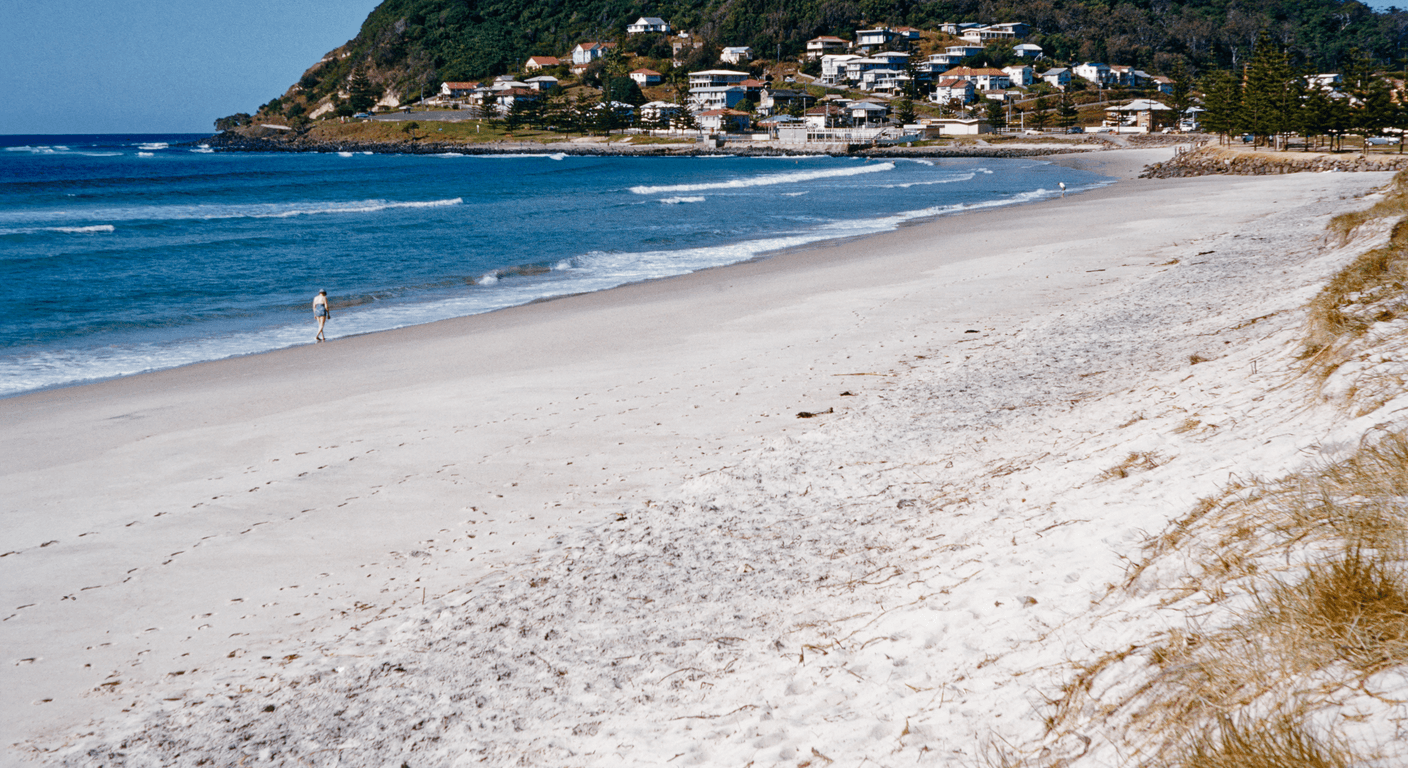
Burleigh Heads, on the Gold Coast's quieter southern strip, works well as a single day trip or as part of a longer coastal stay, with June to August offering mild, dry weather and smaller crowds than peak holiday periods. The defining highlight is the 2-kilometre Burleigh Head National Park headland walk, paired with a patrolled beach and pine-shaded foreshore lawns. The track has slopes and steps, making it a Moderate walk, though the flat paved esplanade suits less mobile visitors. Frequent TransLink buses with a flat 50-cent fare make access easy without needing a car.
Why Burleigh Heads Works So Well for a Day Trip
The Gold Coast has a reputation for noise and neon, and for some travellers that reputation is enough to put them off. Burleigh Heads sits about 10 kilometres south of Surfers Paradise and operates at a noticeably different pace. The main beach curves around a rocky headland, the foreshore is lined with old Norfolk Island pines, and the suburb behind it has proper neighbourhood cafes rather than tourist food courts. It is the kind of place where locals bring grandchildren on a Tuesday morning.
For a couple travelling together, or a solo traveller who enjoys having options without needing to plan too precisely, Burleigh Heads offers a natural shape to the day: walk the headland in the cool of the morning, swim or sit on the beach through mid-morning, have a late breakfast or early lunch on James Street, and catch the bus back before the afternoon heat builds. Nothing about that requires a car, a tour booking, or rushing.
Getting There: The 50-Cent Bus from Anywhere on the Coast
TransLink operates frequent bus services along the Gold Coast's coastal strip, and the flat 50-cent fare with a go card makes public transport genuinely attractive. From Broadbeach or Surfers Paradise, the 700 and 711 bus routes run regularly down the Gold Coast Highway and stop close to the Burleigh Heads foreshore. The journey from Broadbeach takes roughly 20 minutes depending on traffic. Check current timetables and routes at translink.com.au before you travel, as schedules can change.
If you are travelling from Brisbane, the easiest option is the train to Varsity Lakes station on the Gold Coast line, then a connecting bus toward Burleigh Heads. The total journey from central Brisbane is around 90 minutes. A go card is the most practical way to pay — it works across trains, buses, and trams in south-east Queensland and keeps the fare at the flat rate. Cards can be loaded and topped up at major stations and many newsagents.
Driving is possible, but parking at Burleigh Heads on a weekend or during school holidays is genuinely competitive and the foreshore car parks fill early. Midweek, parking is easier. For most visitors staying elsewhere on the coast, the bus is the more relaxed choice.
The Headland Walk: What to Expect Underfoot
The Burleigh Head National Park walking track loops around the rocky headland and through a small pocket of subtropical rainforest and open eucalypt woodland. The full loop is around 2 kilometres and takes most walkers 45 minutes to an hour at a comfortable pace. The track surface is mostly firm — compacted gravel and formed path — but there are sections with slopes and some steps, particularly where the track descends toward the rocks on the southern side of the headland. It is not a flat stroll, but it is well within reach for most reasonably mobile walkers.
The best approach for anyone who is cautious about uneven ground is to walk the track in the morning when the light is good and the surface is dry. Sturdy shoes with a grip sole are sensible — not hiking boots, but not sandals either. There are no handrails on every section, so if balance is a concern, a walking pole is worth bringing. The track does not have any formal accessibility rating for wheelchairs or mobility scooters; some sections would be difficult for those with significant mobility limitations.
From the higher points of the track, there are broad views back over the beach and north up the coast. The rainforest section is shaded and noticeably cooler than the open headland, which makes it a pleasant place to pause. Lizards are frequently seen on the rocks, and the birdlife in the trees is worth a few minutes of quiet attention. The park entry is free and no booking is required.
The Beach: Swimming, Sitting, and Finding Your Spot
Burleigh Beach is patrolled by surf lifesavers on weekends and public holidays, and during school holidays. On weekdays outside holiday periods, the patrol schedule changes — check current patrol times at lifesaving.com.au before you plan to swim. The safest swimming is always between the flags at the northern end of the beach, closest to the headland. The water here is generally calmer than the break further south, though the Gold Coast surf can be lively after storm systems.
The pine-shaded lawns along the foreshore are one of the genuinely lovely things about Burleigh. There are park benches, grassy areas, and low retaining walls that make comfortable perches for people who want to watch the water without sitting on sand. For anyone who finds getting up from beach sand difficult, the lawns and benches are a practical and pleasant alternative. The foreshore path is flat and paved, suitable for walking with a cane or a walking frame, and connects the headland end of the beach to the shops at the southern end of the esplanade.
Burleigh is not a quiet secret — on a sunny weekend it is well-attended by families and younger visitors. Midweek visits, particularly on a Tuesday or Wednesday outside school holidays, give you the beach and the headland track in a much more relaxed state. The light in the morning is also better for the walk, and the cafes are quieter before 10am.
James Street: Where to Eat Without Going Far
James Street runs one block back from the beach and is the practical dining address at Burleigh Heads. It has a range of cafes and small restaurants that cater to the local crowd — good coffee, solid breakfast and brunch menus, and a few places that do a proper lunch. The strip is walkable from the foreshore in under five minutes on flat ground.
A typical breakfast for two with coffee runs to around $50-$70 at most of the mid-range cafes, though prices vary and are indicative only — confirm when you arrive. The street gets busy on weekend mornings, and queues outside popular spots are common. Midweek, you can generally walk in without waiting. If you have specific dietary requirements, it is worth checking menus online before you go, as most places publish them.
For anyone who prefers to bring their own food, the foreshore lawns are a genuine pleasure for a picnic. There are public barbecues in the park area, and a small supermarket and deli options are available in the nearby shopping strip on Gold Coast Highway if you want to put something together before heading to the beach.
Pacing the Day: A Practical Shape for Over-60 Travellers
The day works best when it follows the light and the temperature. Arriving by 8.30 or 9am, before the sun is fully overhead, gives you the coolest conditions for the headland walk. The track faces mostly east and north-east, so morning light is good and the shade in the rainforest section is welcome. After the walk, the beach lawns and foreshore path are comfortable for sitting and watching the water without needing to manage sand.
Late morning — around 10.30 to 11.30am — is a natural time to move to James Street for breakfast or an early lunch, before the midday heat and the weekend crowds build. From there, catching a bus back along the coast is straightforward, and you are back at your accommodation well before the hottest part of the afternoon. For a couple travelling together, this shape of day — three to four hours on the ground, unhurried — is more satisfying than trying to squeeze in too much.
Bring water, a hat, and sunscreen regardless of the season. The Queensland sun is strong even on mild days, and the headland track has open exposed sections. There are no water fountains on the headland track itself, so carry at least 500ml per person. Public toilets are available at the foreshore car park area at the northern end of the beach.
A Note on Visiting as Part of a Longer Trip
Burleigh Heads works well as a single day trip from Brisbane or from anywhere along the Gold Coast, but it also fits naturally into a few days based on the southern Gold Coast. Coolangatta and Tweed Heads are 20 minutes further south by bus and offer a different, even quieter beach experience. Currumbin Wildlife Sanctuary is a short bus ride away and is worth considering if you have a second day and are travelling with grandchildren or simply enjoy wildlife.
For Victorian travellers, the Gold Coast is a logical winter escape — June through August brings mild, dry weather, comfortable walking temperatures, and significantly smaller crowds than the Christmas and Easter peaks. Flights from Melbourne to Gold Coast Airport (Coolangatta) run frequently on multiple airlines, and the airport is well-connected to the coastal bus network. A four- or five-night stay gives you time for Burleigh Heads, one or two other beach stops, and a day trip inland to the hinterland if you want variety.
Quick planning guide
| Ideal pace | Slow-paced, unhurried |
|---|---|
| Best months | June to August, for mild, dry weather and smaller crowds |
| Suggested stay | A single day trip, or 4-5 nights if combined with other southern Gold Coast stops |
| Mobility level | Moderate — headland track has slopes and steps with no wheelchair rating; foreshore path is flat and paved |
| Cost level | Budget-friendly — free national park entry and a flat 50-cent bus fare |
| Comfort level | Comfortable — shaded rainforest sections, pine-shaded lawns, and flat sitting areas near the beach |
| Best for | Couples or solo travellers wanting an unhurried, low-crowd beach day |
| Main planning consideration | Time the headland walk for cool mornings and visit midweek outside school holidays for the calmest experience |
Key takeaways
- The Burleigh Head National Park walking track is around 2 kilometres with a mostly firm surface, some slopes and steps, and takes most people 45 minutes to an hour.
- TransLink buses run frequently along the Gold Coast coast with a flat 50-cent fare using a go card — confirm current fares and schedules at translink.com.au.
- Entry to Burleigh Head National Park is free and requires no booking.
- Swim between the flags at the patrolled northern end of the beach, and check current patrol times at lifesaving.com.au before you go.
- Midweek visits outside school holidays offer the headland, beach, and James Street cafes at their most relaxed.
- The pine-shaded foreshore lawns and paved esplanade path give people who find beach sand difficult a comfortable, flat alternative for sitting and walking near the water.
Recommended partners and links
Indicative prices only — always confirm with the operator before booking.
Frequently asked questions
Is the Burleigh Heads headland walk suitable for older walkers or people with limited mobility?
The track is mostly firm compacted gravel and formed path, but it includes slopes and some steps, particularly on the southern side of the headland. It is manageable for most reasonably mobile walkers wearing sturdy shoes. It is not formally rated as accessible for wheelchairs or mobility scooters, and some sections would be difficult for people with significant mobility limitations. A walking pole is a sensible precaution on the steeper sections.
How do you get to Burleigh Heads by public transport from Brisbane or the Gold Coast?
From Brisbane, take the train to Varsity Lakes on the Gold Coast line, then connect by bus toward Burleigh Heads — allow around 90 minutes total. From Surfers Paradise or Broadbeach, the 700 and 711 bus routes run regularly along the Gold Coast Highway with stops near the foreshore. A go card gives you the flat 50-cent fare. Check current routes and timetables at translink.com.au before you travel.
Is Burleigh Beach patrolled by surf lifesavers?
Burleigh Beach is patrolled on weekends, public holidays, and during school holidays. Patrol hours on weekdays outside holiday periods vary. Check current patrol times at lifesaving.com.au before you plan to swim, and always swim between the flags.
When is the best time to visit Burleigh Heads to avoid crowds?
Midweek visits, particularly on a Tuesday or Wednesday outside Queensland school holidays, are noticeably quieter on the beach, the headland track, and James Street cafes. Winter months — June through August — bring mild, dry weather and much smaller crowds than the Christmas and Easter peaks, making them the most comfortable time for over-60 travellers.
Are there cafes and restaurants within easy walking distance of Burleigh beach?
James Street, one block back from the beach, has a range of cafes and small restaurants with breakfast, brunch, and lunch menus. It is under five minutes on flat ground from the foreshore. The strip is busy on weekend mornings; midweek you can generally find a seat without waiting. A typical breakfast for two with coffee is indicatively around $50-$70, but confirm current prices when you arrive.