Cape Hillsborough, about 50 kilometres north of Mackay, is a free national park beach where wallabies and kangaroos feed on kelp each morning before sunrise. April to October offers the coolest, driest conditions for the pre-dawn vigil. It suits a half-day trip, arriving 30-45 minutes before sunrise. The flat, firm sand rates Easy for mobility, with no tracks or inclines involved. There's no public bus to the park, so visitors self-drive the sealed 50-minute road from Mackay or join a guided sunrise tour.
Why Cape Hillsborough Is Worth a Pre-Dawn Alarm
There are wildlife encounters, and then there is this one. Each morning, as the sky shifts from black to deep violet over the Coral Sea, eastern grey kangaroos and agile wallabies — and sometimes even wallaroos — move down from the vine-thicket scrub behind the beach and begin to feed along the shoreline. They pick through kelp washed up by the tide, graze the grassy fringe, and go about their morning entirely unbothered by the small groups of humans standing at a respectful distance on the sand.
The reason it works is simple: the animals here have not been habituated to feeding by humans. They come to the beach because the beach offers them food. That distinction matters. What you witness at Cape Hillsborough isn't a performance — it's just a morning. And that's precisely what makes it memorable. For travellers who've spent decades ticking off wildlife parks and zoo encounters, this feels genuinely different.
For a solo traveller visiting Queensland — perhaps combining a Mackay stay with the Whitsundays or a drive up the Queensland coast — Cape Hillsborough sits at the kind of sweet spot that rewards a little planning and absolutely no sleep-in.
The Pre-Dawn Drive: What It Actually Involves
Cape Hillsborough is approximately 50 kilometres north of Mackay's CBD, and the drive takes around 50 minutes on well-maintained roads — the Mackay–Eungella Road to the Seaforth–Cape Hillsborough Road. There is no public bus service to the park, so self-driving or joining a guided tour are the practical options. For a solo traveller unfamiliar with the route, a guided sunrise tour removes the navigation question entirely and is worth considering.
Sunrise times vary through the year — in April it's around 6 am, in July closer to 6.30 am. You'll want to be on the beach at least 30 minutes before sunrise, ideally 45. That means leaving Mackay no later than 4.30–5 am depending on the season. Set your phone alarm, lay out your clothes the night before, and accept that the early start is part of the experience. The road is sealed the whole way, and the final section into the park is straightforward.
Driving alone in the dark on an unfamiliar Queensland road is not as daunting as it sounds — the route is not remote, and there's no significant wildlife-collision risk that would require special preparation beyond standard road awareness. A fully charged phone and a confirmed route in your maps app the night before is sensible preparation. Fuel up in Mackay before you leave; there are no petrol stations on the Cape Hillsborough road.
The Beach Itself: What to Expect When You Arrive
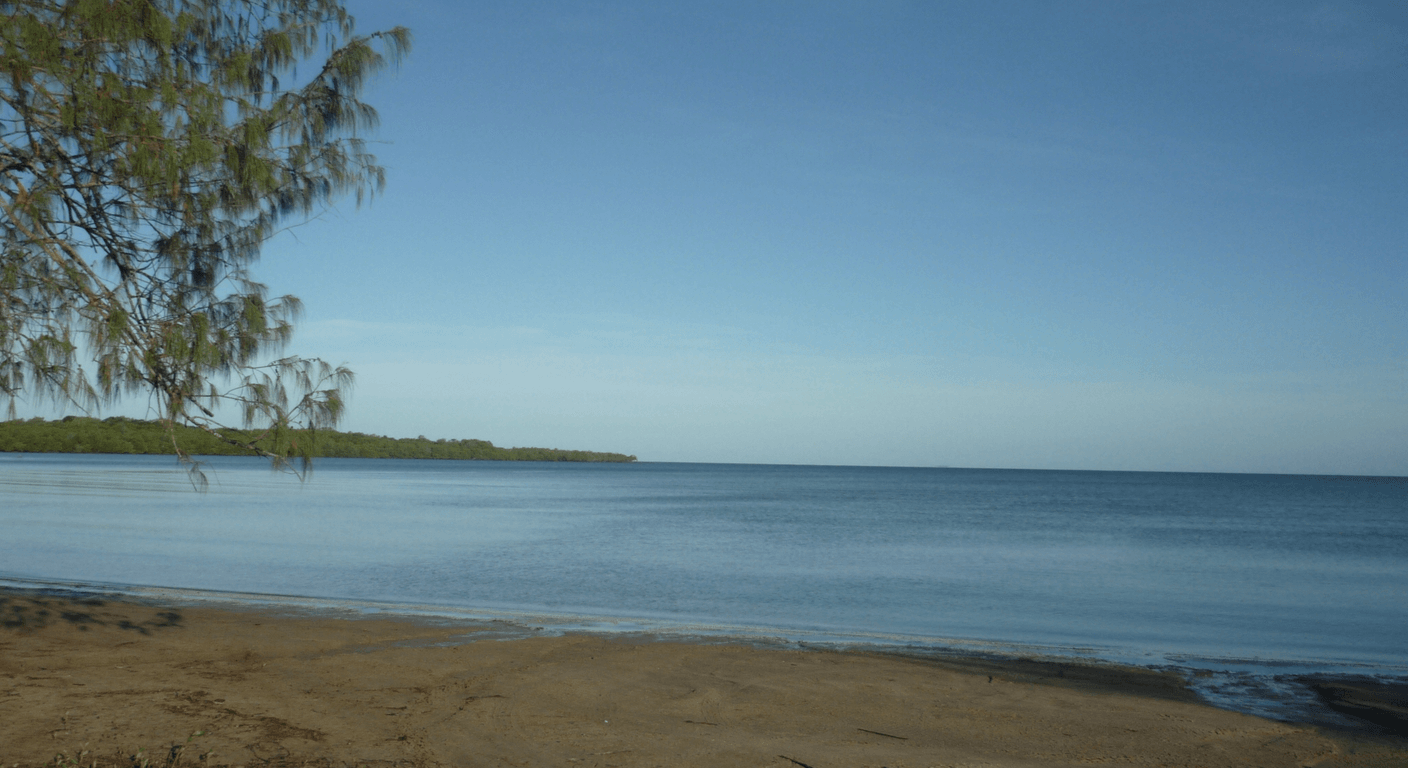
The main beach at Cape Hillsborough is a gently curved stretch of sand backed by dense coastal scrub and pandanus palms, with a small headland at one end. The viewing area is flat and firm enough for most walkers — you're standing on a beach, not a track, so there are no steps or sealed paths required for the wildlife experience itself. Thongs or flat sandals work fine, though sand shoes give more comfort if you're standing for 45 minutes.
The wallabies and kangaroos typically appear at the treeline first, then move down toward the water's edge. Distances vary — on a good morning they come within a few metres of visitors. The unwritten rule, and the rule that keeps this experience intact, is simple: do not approach, do not feed, do not crouch down to their level in a way that might feel like a threat. Stand still, speak quietly, and let them come to you if they choose. Rangers and guided tour operators will reinforce this.
There are basic amenities at the day-use area — toilets, picnic tables, and a small shelter — but no café. The park is managed by Parks Queensland, and day entry is currently free. Confirm current conditions and any seasonal closures via the Parks Queensland website before you travel.
Should You Join a Guided Sunrise Session?
For a solo traveller, a guided sunrise tour from Mackay has genuine practical advantages: transport is sorted, you're not navigating alone in the dark, and a knowledgeable guide adds context about the animals and the park's ecology. Several Mackay-based operators have offered guided Cape Hillsborough sunrise experiences, with indicative pricing roughly in the $40–$80 range per person — but operators change, and pricing shifts, so confirm current availability and cost directly with Mackay Tourism or a local tour operator before booking.
The self-drive option is equally valid if you're comfortable with the early start and have a reliable vehicle. Many grey nomads and independent travellers drive themselves and have a perfectly satisfying experience. The wallabies don't distinguish between guided and unguided visitors — the animals operate on their own schedule regardless. What the guided option gives you is company, transport, and someone who knows exactly where to position you for the best light.
Either way, bring a camera or a phone with a decent low-light mode. The light at Cape Hillsborough sunrise is genuinely beautiful — warm, horizontal, and reflecting off the water behind the animals. It's the kind of shot that doesn't require any photographic skill to get right, which is a relief before 6 am.
After Sunrise: Breakfast and a Gentle Explore
Once the sun is fully up and the wallabies have melted back into the scrub — usually by 7.30 to 8 am — the morning is yours. The Cape Hillsborough Nature Tourist Park, which sits adjacent to the national park, has a small kiosk or café facility; confirm current opening hours and offerings directly with the resort, as these can vary seasonally. It's a pleasant spot to sit with a coffee and let the morning settle.
For a more substantial breakfast, the drive back toward Mackay takes you through Seaforth, a small coastal town with a relaxed local café culture, and then into the northern suburbs of Mackay itself. Mackay has a solid café and brunch scene concentrated around the city centre and the northern beaches area — more than enough to reward an early start.
If you have energy after breakfast, the Cape Hillsborough day-use area has a short boardwalk trail through the coastal vine thicket that's worth a slow wander. It's flat, well-maintained, and takes around 20–30 minutes return. Interpretive signage explains the plant communities that shelter the wildlife you've just watched. It makes a satisfying full stop to the morning.
Practical Planning for Over-50 Travellers
Cape Hillsborough sits comfortably within reach of Mackay, which is well-served by Qantas, Virgin Australia and Jetstar from Brisbane, Sydney and Melbourne — flight times from Melbourne are roughly two to two-and-a-half hours. Mackay is also a stop on the Queensland coastal drive route if you're doing the trip by car or campervan. The region is genuinely easy to navigate, and the town has good accommodation across a range of budgets and styles.
The dry season — April to October — is the recommended window. Humidity and rainfall are lower, mornings are cooler and more comfortable for standing on a beach before dawn, and the wildlife viewing conditions are generally at their best. The wet season (November to March) brings heat and humidity that can make a pre-dawn beach vigil considerably less enjoyable, and road conditions in the national park can be affected by heavy rain.
Travel insurance is essential and worth reviewing carefully if you have pre-existing health conditions — standard advice for any trip, but worth stating plainly. The day trip itself carries no significant physical demands beyond an early start and standing on sand for less than an hour. If mobility is a consideration, flat firm sand is far more manageable than most bushwalking tracks, and there's no requirement to go further than the beach viewing area.
Keeping It Real: What Cape Hillsborough Is — and Isn't
Wildlife encounters in the wild are never guaranteed. Most mornings the wallabies and kangaroos do appear — this is a well-documented and consistent behaviour at Cape Hillsborough, not a fluke. But numbers vary, proximity varies, and occasionally the animals stay closer to the treeline. Going in with a spirit of patience rather than expectation makes the experience more enjoyable regardless of what the morning delivers.
It's also worth being honest about the physical shape of the experience: you're standing on a beach before dawn, probably in the dark, waiting. For some travellers that's meditative and lovely. For others, the early alarm and the standing time are the price of admission. The reward — a kangaroo three metres from you, silhouetted against a pink Coral Sea sky — tends to settle the debate fairly quickly.
Cape Hillsborough is not a theme park or a wildlife park. It's a national park where a remarkable natural behaviour happens to occur in a very accessible location. That's its value, and that's why it's worth getting up for.
Quick planning guide
| Ideal pace | Early pre-dawn start, then a relaxed morning |
|---|---|
| Best months | April to October (dry season, cooler mornings) |
| Suggested stay | Half-day trip from Mackay |
| Mobility level | Easy — flat, firm sand with no tracks or steps |
| Cost level | Free entry; guided tours roughly $40-$80 per person |
| Comfort level | Casual — standing on the beach in the dark before sunrise |
| Best for | Wildlife watchers, photographers and solo or grey-nomad travellers based in Mackay |
| Main planning consideration | Arrive 30-45 minutes before sunrise; no public transport, so self-drive or book a guided tour |
Key takeaways
- Cape Hillsborough is around 50 kilometres north of Mackay and free to enter as a day visitor — confirm current conditions with Parks Queensland.
- Wallabies and kangaroos feed on the beach each morning at sunrise; arrive at least 30–45 minutes before sunrise for the best experience.
- The beach viewing area is flat sand and rates Easy for mobility — no tracks or inclines are required for the wildlife encounter.
- April to October is the recommended window: lower humidity, cooler mornings, and calmer conditions than the wet season.
- Self-driving is straightforward on sealed roads, but a guided sunrise tour from Mackay removes the navigation and early-dark-drive considerations for solo travellers.
- Do not feed or approach the animals — the wildlife here is wild, and keeping your distance is what preserves the experience for everyone.
Recommended partners and links
Indicative prices only — always confirm with the operator before booking.
Frequently asked questions
What time should I arrive at Cape Hillsborough to see the wallabies on the beach?
Aim to be on the beach at least 30 to 45 minutes before sunrise — which means leaving Mackay no later than 4.30 to 5 am depending on the season and the current sunrise time. Check the exact sunrise time for your travel date before you go. The animals typically begin dispersing back into the scrub once full daylight arrives, usually by around 7.30 to 8 am.
Is Cape Hillsborough National Park free to enter?
Day entry to Cape Hillsborough National Park is currently free. Confirm current conditions and any seasonal closures via the Parks Queensland website at npsr.qld.gov.au before you visit, as conditions and access can change.
Can I get to Cape Hillsborough without a car?
There is no public bus service to Cape Hillsborough. Your practical options are self-driving from Mackay on sealed roads (around 50 minutes each way) or joining a guided sunrise tour operated from Mackay. For solo travellers, a guided tour removes the pre-dawn navigation and provides company — check current operators and pricing with Mackay Tourism at mackayregion.com.
Is Cape Hillsborough suitable for travellers with limited mobility?
The main wildlife viewing area is on flat beach sand, with no significant inclines or unsealed tracks required to see the animals. This rates as an Easy mobility experience by most measures. Standard beach footwear is sufficient. Toilets and basic picnic facilities are available at the day-use area.
What is the best time of year to visit Cape Hillsborough?
April to October — Queensland's dry season — offers the most comfortable conditions: lower humidity, cooler mornings, and generally calmer weather. The wet season (November to March) brings significant heat and humidity that can affect both comfort and road access within the park.