The Chengdu Research Base of Giant Panda Breeding rewards an early 7am arrival, when the bears are alert and crowds are thin; a single morning is enough, ideally followed by an afternoon in Chengdu's teahouses. Flat, sealed paths and regular seating make it an Easy mobility destination, suited to wheelchair users. Australians reach Chengdu on a one-stop flight of roughly 11 to 14 hours via Hong Kong, Guangzhou or Shanghai, with a short taxi or Didi ride covering the 10km from the city centre to the base.
Why the First Hour at the Panda Base Changes Everything
Giant pandas are, by nature, magnificently unhurried. By ten in the morning, most of them are already arranging themselves into their preferred sleeping postures. By noon, you'd be forgiven for thinking the enclosures held very large, very expensive soft toys. The window of genuine activity — feeding, climbing, the occasional undignified roll — opens early and closes before the tour buses from the city centre have finished their breakfast.
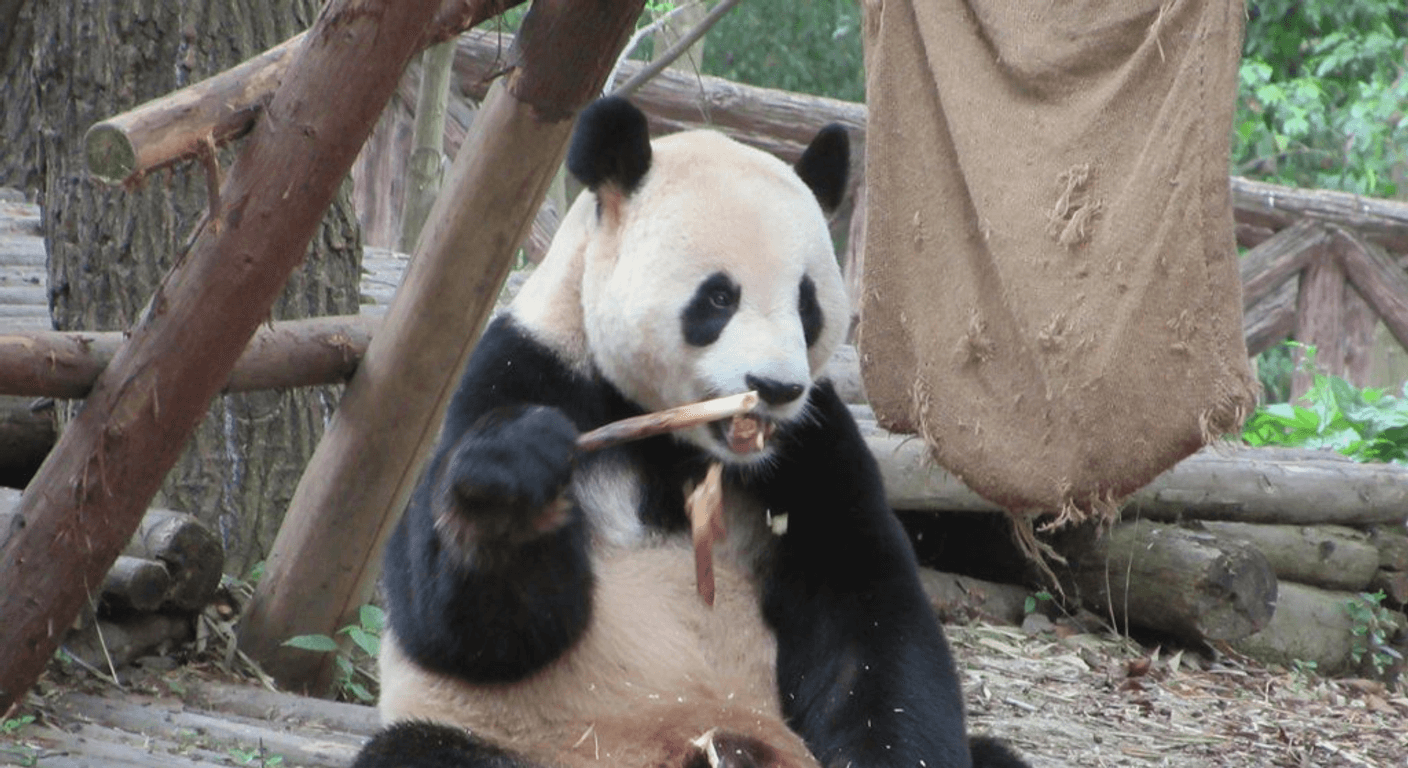
Arriving at the Chengdu Research Base of Giant Panda Breeding by 7am, ideally closer to opening, puts you in a different experience entirely. The bears are alert, the air is cool, and the paths are quiet enough that you can actually stop and watch without someone's selfie stick appearing in your eyeline. For a group of friends travelling together, that unhurried early hour — sharing a moment in front of a panda calmly demolishing a bamboo stalk — tends to be the one everyone talks about on the flight home.
The base is designed with flat, sealed pathways throughout, with benches positioned at regular intervals and shaded rest areas near the main enclosures. Wheelchair users and anyone who prefers not to navigate steps will find the layout genuinely accommodating. The terrain is the kind that lets you set your own pace, stop when you like, and sit when you need to — without any pressure to keep moving.
Getting There: Flights from Australia and What to Expect on the Ground
From Melbourne, Sydney or Brisbane, Chengdu Tianfu International Airport is reachable with one stop — commonly through Hong Kong, Guangzhou, or Shanghai — in around 11 to 14 hours total travel time, depending on the connection. Direct routing exists on some schedules; confirm current options through your preferred airline or travel agent. That's a meaningful journey, and a recovery night in Chengdu before the panda visit is not indulgence — it's basic good sense. Jet lag from an eastward crossing hits differently to a European trip, and giving yourself a quiet first evening makes the early 7am start feel far less heroic.
Chengdu's city centre hotels are well-suited to travellers who value comfort. The area around Tianfu Square and the Jinli precinct has a strong concentration of four- and five-star properties, many with English-speaking front desks and reliable transport connections to the panda base. The base itself is roughly 10 kilometres north of the centre; taxis, ride-share apps (Didi operates in Chengdu), and organised tours all cover the route without difficulty. Your hotel concierge can arrange a car if navigating a new app feels like more admin than the morning deserves.
One logistical detail worth knowing: Chengdu's metro system has expanded considerably in recent years and now reaches areas close to the base, though a taxi or organised transfer remains the most straightforward option for a group wanting to arrive precisely at opening time. Confirm the current best route with your accommodation on arrival — local knowledge here is more reliable than any printed guide.
Visa and Travel Insurance: The Admin Worth Sorting Early
China's entry requirements for Australian passport holders have shifted more than once in recent years, and the current situation — which includes expanded visa-free transit arrangements for some itineraries — deserves careful, current verification rather than reliance on what a friend did two years ago. The definitive starting point is smartraveller.gov.au, which carries up-to-date Australian Government advice on entry requirements, safety conditions and any travel advisories. Check it when you start planning and again close to departure.
Travel insurance is non-negotiable for any international trip, and for travellers over 50 with pre-existing health conditions, the policy details matter more than the headline price. Look specifically for cover that includes medical evacuation, hospital stays in China, and conditions you've already declared. Some insurers exclude conditions that weren't declared at the time of purchase; read the fine print before you buy, not after something goes wrong. Several Australian insurers specialise in cover for older travellers — your travel agent or a comparison service like Cover-More or Allianz Travel Australia can help identify suitable options, though confirming the specifics of any policy is always your own due diligence.
The Afternoon: Teahouses, Time, and the Art of Doing Very Little
Chengdu has been a teahouse city for centuries, and that culture hasn't been polished into a tourist performance — it's still largely where locals spend their afternoons. After a rewarding but early morning at the panda base, returning to the city by late morning leaves the rest of the day entirely open. The Renmin Park teahouses, set among bamboo and old trees, are a genuine local institution: you order a pot of tea, settle into a rattan chair, and the afternoon simply passes. Ear-cleaning services are offered tableside, which is either fascinating or alarming depending on your disposition.
For a group of women travelling together, a teahouse afternoon has a particular rhythm — conversation, people-watching, the occasional order of snacks, no itinerary pressure whatsoever. It's the kind of afternoon that makes you realise good travel isn't always about adding more. Wenshu Monastery, close to the centre, combines a working Buddhist temple with a large, busy teahouse courtyard that manages to feel both serene and alive at the same time.
Chengdu's teahouse culture pairs naturally with an unhurried exploration of the Jinli Ancient Street precinct or the Kuanzhai Alleyways — both are pedestrian-friendly, flat, and lined with small shops, street food stalls and places to sit. Neither requires significant walking if you simply wander in and find a spot you like.
Sichuan Food at a Comfortable Heat
Sichuan cuisine's reputation for fire is entirely deserved, but that reputation sometimes obscures the fact that Chengdu also does gentle. The numbing quality of Sichuan peppercorn — málà — is distinct from chilli heat, and many dishes can be ordered at reduced spice levels, particularly in restaurants accustomed to international visitors. Asking for 'wēi là' (slightly spicy) is understood in most Chengdu restaurants; your hotel can write the phrase in characters to show staff.
Dishes worth seeking out at a milder setting include steamed fish with ginger, dan dan noodles with the chilli oil on the side, and mapo tofu made with less doubanjiang than the standard version — all of which retain the complexity of Sichuan flavour without the full heat assault. For a group wanting a shared experience, a hot pot dinner is a Chengdu institution; broth bases range from mild to incendiary, and most restaurants offer a split pot so everyone gets what suits them.
For a more structured introduction, a half-day Sichuan cooking class is available through several Chengdu operators and gives you both the context and the practical skills — as well as a very good lunch. These classes are typically held in well-equipped kitchens with English-speaking instructors and run at a relaxed pace. Confirm current operators and availability through your hotel or a reputable Chengdu tour company.
Combining Chengdu with High-Speed Rail Across China
One of the genuinely pleasant surprises of modern China travel is the high-speed rail network. Chengdu connects to Xi'an in roughly three and a half hours on the Chengdu–Xi'an high-speed line — a journey that, even a decade ago, would have taken considerably longer and considerably more effort. Xi'an's terracotta warriors and ancient city wall are natural companions to a Chengdu panda morning, and the rail journey itself is comfortable, smooth, and passes through countryside that's worth watching.
Chongqing is closer still — around an hour and a half by high-speed train — and makes an easy day trip or overnight addition. The city's dramatic topography, its own distinctive food culture (Chongqing hot pot is a different beast from Chengdu's), and the Yangtze River viewpoints give it a character entirely its own. For a group that wants to extend the trip without the complexity of internal flights, a rail loop through two or three cities is a practical and comfortable way to travel.
Booking high-speed rail in China is most straightforward through a third-party English-language platform like Trip.com, or through a China-based tour operator who can manage ticketing and transfers. Seats sell out on popular routes during Chinese public holidays, so if your travel dates overlap with Golden Week (early October) or the Lunar New Year period, plan the rail component well in advance.
Practical Packing and Pacing for the Panda Morning
The panda base is outdoors and, in cooler months, genuinely cold in the early morning. Layers are the sensible approach: a light down jacket or warm fleece over what you'd otherwise wear, with comfortable walking shoes that have already been broken in. The paths are flat and paved, but they extend across a reasonably large site, and you'll likely walk two to three kilometres over the course of the morning without noticing. Good footwear matters.
A small daypack is useful for carrying water, a snack, sunscreen for the warmer months, and any medication you take in the morning. The base has a café and food stalls, but arriving self-sufficient means you're not dependent on them. A portable phone charger is worth including if you're planning to photograph — and most people do, at length.
For travellers managing health conditions, Chengdu has good private hospitals with English-language services, and the city is well-served by international pharmacies in the central areas. Bring adequate supplies of any prescription medication, with documentation from your GP, and carry a basic translated summary of your medical history — your GP can help prepare this before departure. The early morning start at the panda base is the only demanding element of the day; everything after that can be as gentle as you choose to make it.
Quick planning guide
| Ideal pace | Slow-paced, early start then unhurried afternoon |
|---|---|
| Best months | Comfortable year-round; cooler months are cold at the 7am opening, warmer months need sunscreen |
| Suggested stay | One morning at the base, with a wider 2-3 day Chengdu stay to include teahouses and food, plus optional rail extension to Xi'an or Chongqing |
| Mobility level | Easy — flat, sealed paths with benches and shaded rest areas throughout the base |
| Cost level | Moderate to premium, with a strong concentration of four- and five-star hotels near Tianfu Square and Jinli |
| Comfort level | High, once the early panda-base start is done — teahouses, guided tours and split-spice dining keep the rest of the day gentle |
| Best for | Over-50 travellers and groups of friends wanting a genuine wildlife encounter without a physically demanding itinerary |
| Main planning consideration | Arriving by 7am for active pandas, plus sorting current Chinese visa rules and travel insurance for pre-existing conditions well ahead of departure |
Key takeaways
- Arriving at the Chengdu panda base by 7am gives you active, feeding bears and far fewer crowds than a mid-morning visit.
- The base has flat, sealed paths and regular seating throughout — it's genuinely Easy-rated for mobility.
- Chengdu's teahouse culture offers one of the most relaxed and authentic afternoon experiences in any Asian city.
- Sichuan food can be enjoyed at a comfortable heat level — asking for 'wēi là' (slightly spicy) is understood in most restaurants.
- High-speed rail connects Chengdu to Xi'an in around three and a half hours, making a multi-city China trip comfortable and practical.
- Confirm current Chinese visa requirements and travel insurance cover for pre-existing conditions well before booking — smartraveller.gov.au is the authoritative starting point.
Recommended partners and links
Indicative prices only — always confirm with the operator before booking.
Frequently asked questions
What time should you arrive at the Chengdu panda base?
Arriving at or close to the 7am opening time gives the best chance of seeing giant pandas actively feeding and moving. By mid-morning, most pandas have settled into their characteristic long naps, and the site becomes significantly more crowded as the day progresses. The early start is the single most important practical decision for this visit.
Is the Chengdu Research Base of Giant Panda Breeding accessible for older travellers with mobility considerations?
Yes. The base has flat, sealed pathways throughout, with benches and shaded rest areas positioned regularly across the site. Wheelchair-accessible sections are available. The terrain requires no steps or steep gradients on the main visitor routes, making it one of the more genuinely easy wildlife encounters in Asia for travellers who prefer not to navigate difficult terrain.
Do Australian travellers need a visa to visit Chengdu, China?
Australian passport holders generally require a visa to enter China, though transit visa exemptions and visa-free arrangements have been expanded in recent years for certain itineraries and passport holders. Requirements change; the authoritative and current source for Australian travellers is smartraveller.gov.au. Check this well before booking and again close to departure.
How do you get from central Chengdu to the panda base?
The panda base is roughly 10 kilometres north of Chengdu's city centre. Taxis, the Didi ride-share app, and organised hotel transfers all cover the route reliably. Some metro lines now extend close to the area, but for a group wanting a precise early arrival at opening time, a pre-arranged taxi or private transfer is the most straightforward option. Ask your hotel concierge to arrange or confirm the best current route.
Can you combine a Chengdu panda visit with other Chinese cities on one trip?
Chengdu connects to Xi'an by high-speed rail in roughly three and a half hours, and to Chongqing in around one and a half hours — making a multi-city loop practical and comfortable without domestic flights. Tickets are bookable through English-language platforms such as Trip.com or through a China-based tour operator. Avoid travel dates that overlap with Chinese national holidays, when rail seats book out quickly.