China's Beijing–Xi'an–Shanghai circuit is best visited April–May or September–October, when temperatures and crowds are most manageable. Three nights per city suits most travellers, allowing time for the Forbidden City, Great Wall and Terracotta Warriors without rushing. Mobility demands are moderate — the Great Wall's uneven, stepped sections and the Forbidden City's several kilometres of courtyards require reasonable fitness. Direct flights from Melbourne and Sydney take 11–13 hours, and escorted touring with a Mandarin-speaking guide removes the language and logistics barriers independent travel in China presents.
Why China Is Different From Every Other Asian Destination
Japan has English everywhere. Thailand has a backpacker infrastructure that has been catering to independent travellers for decades. China is neither of those places. Signage in smaller stations and regional museums is often Mandarin-only. The digital ecosystem — transport bookings, restaurant ordering, even unlocking a hire bicycle — runs through WeChat Pay and Alipay, both of which historically required a Chinese bank account to set up properly. That has eased slightly, but not enough to make a spontaneous solo trip frictionless for a 69-year-old arriving from Melbourne with no Mandarin and a foreign credit card.
This is not a criticism of China. It is simply a country that has built its infrastructure for its own 1.4 billion people, which is entirely reasonable. The practical consequence for an Australian travelling independently is a series of small daily frictions that add up: the taxi driver who cannot read your hotel address in English, the train app that won't accept an international card, the museum queue that requires a QR-code reservation you cannot complete without a Chinese phone number. A Mandarin-speaking guide dissolves all of this before breakfast.
The distances are also serious. Beijing to Xi'an is over 1,000 kilometres. Xi'an to Shanghai is another 1,200 kilometres. The high-speed rail network is genuinely excellent — but booking tickets in advance, navigating the correct station (Beijing has four major ones), and managing luggage across platforms is a logistical exercise that an escorted tour simply absorbs on your behalf. That is not mollycoddling. That is sensible travel design.
Getting There: Flight Realities From Australian Cities
From Melbourne or Sydney, direct flights to Beijing or Shanghai run roughly 11–13 hours depending on routing and winds. From Perth, Beijing is closer to 9–10 hours. Some itineraries route via Hong Kong, Singapore or Guangzhou, adding a stopover that can either be a pleasant break or a tiring inconvenience depending on the layover length. Confirm current direct-route availability with your airline or travel agent, as services have continued to evolve since the post-pandemic reopening.
Jet lag on the eastward return from China to Australia is typically milder than westward long-haul, but the time difference between Beijing and Melbourne is still three hours in summer and two in winter — enough to disrupt sleep for several days. Build in at least one genuine rest day at the start of the tour before any major site visits. Any operator that loads a full day of sightseeing on arrival day is not designing for your comfort.
Travel insurance is non-negotiable, and for travellers over 50 with pre-existing conditions, the policy wording matters enormously. Confirm in writing that your insurer covers the specific conditions listed on your application, and that medical evacuation is included. China has good hospitals in major cities, but costs for uninsured foreign nationals are significant. The Australian Department of Foreign Affairs and Trade's Smartraveller site (smartraveller.gov.au) carries current insurance and safety advice for China.
Visa and Entry: Always Confirm Before You Book
China's visa and entry rules for Australian passport holders have been in flux. There have been periods of visa-free transit, shifts in the visa-on-arrival programme, and standard tourist visa requirements — sometimes changing within the same year. This guide will not state specific current rules because they are subject to change and any detail here could be outdated by the time you read it.
The only reliable sources are the official Chinese embassy or consulate website for Australia, and the Australian Government's Smartraveller page for China at smartraveller.gov.au/destinations/asia/china. Check both, and check them close to your booking date. A reputable escorted-tour operator will also have a visa-assistance service or at minimum clear guidance — but the responsibility to verify sits with you.
Some group tours include visa assistance in their package pricing. This is worth factoring into cost comparisons, since a standard Chinese tourist visa for Australians involves documentation, photographs and processing time. Factor this into your timeline, particularly if you are booking 90 days or less before departure.
What Good Tour Pacing Actually Looks Like
The classic Beijing–Xi'an–Shanghai route is well-established for a reason: it delivers the Forbidden City and the Great Wall, the Terracotta Warriors, and the Bund waterfront in a logical geographic arc. The question is how many days each city gets, and what the daily rhythm looks like. Two nights in a city is survivable. Three nights is comfortable. Four nights, particularly in Beijing, allows a second slower day — a hutong walk, a temple of your choosing, an afternoon in a teahouse — without the low-grade panic of a packed schedule.
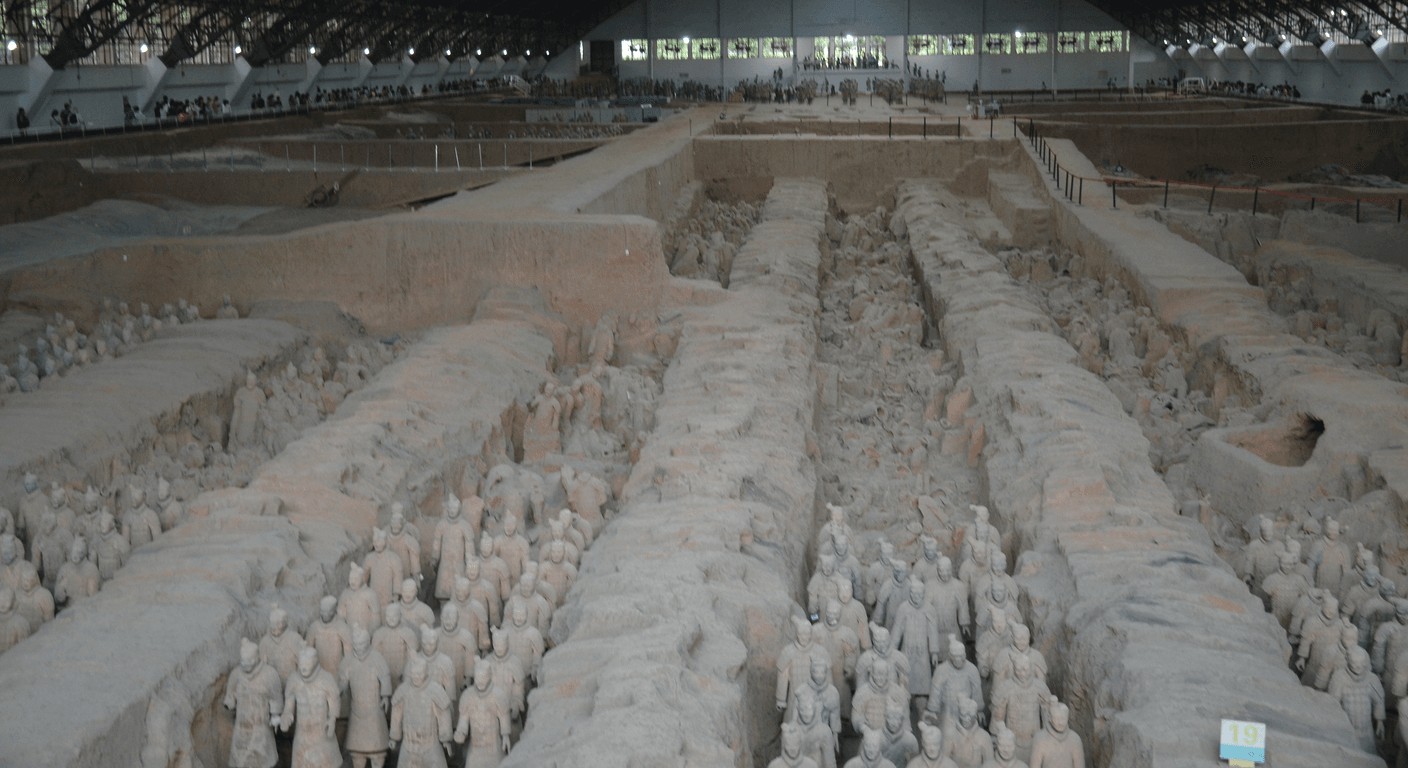
For travellers over 50, the physical demands of the classic sites deserve honest advance notice. The Great Wall at Mutianyu involves a cable car (which most tours use) and then a walk along the wall itself, which is uneven, stepped and can be steep. It is manageable for most reasonably mobile people, but not trivial. The Terracotta Warriors site in Xi'an is largely flat and well-surfaced. The Forbidden City in Beijing involves considerable walking across large open courtyards — around 3–4 kilometres if you traverse it fully — with limited seating.
A well-designed tour will not attempt all three in one day. Watch for itineraries that cluster two major sites into a single day as standard practice — this suits a 28-year-old backpacker, not someone who wants to actually absorb what they're seeing. The best operators for older travellers build in optional activities, so those who want an extra rest hour can take it without holding up the group.
Hotel Standards: What the Star Rating Doesn't Always Tell You
China's hotel star-rating system does not map neatly onto international expectations. A domestic four-star in a second-tier city may have a lobby that looks the part and rooms that are noticeably dated. This is not unique to China, but it is worth knowing. Premium escorted-tour operators typically specify international-brand hotels — Marriott, Hilton, Accor properties — where the product is predictable. This matters for things like mattress quality, shower pressure, reliable hot water, and English-speaking front desk staff.
Ask your operator, before booking, to name the specific hotels used on the itinerary. Then look them up independently. Solo travellers should also confirm the single-supplement situation upfront: single rooms in China can be genuinely small, and the single supplement on escorted tours can be significant — sometimes 30–50% above the twin-share rate, though this varies widely. Some operators have solo-traveller programmes or cabin-share arrangements; it's worth asking directly.
Breakfast is almost always included in Chinese hotel stays at this level, and Chinese hotel breakfasts tend to be generous — a mix of Western and Chinese options. This is practical: a solid breakfast before a day of walking is worth more than it sounds.
The Guide Relationship: More Than Translation
A Mandarin-speaking local guide on an escorted tour does more than translate menus and museum labels. They negotiate the daily friction of Chinese logistics — pre-booked entry slots at the Forbidden City, queue management at the Warriors site, real-time rerouting when a section of the Wall is closed for maintenance. They also provide cultural context that no guidebook replicates: why a particular courtyard faces south, what the stone carvings outside a temple actually signify, which street food stall has been operating for three generations.
The quality of the guide is arguably the single biggest variable in a China group tour. Ask operators how guides are selected and trained, whether they are local to each city or travel with the group throughout, and what happens if a guide is unavailable. A national escort (one guide for the whole trip) provides continuity and gets to know the group's pace and preferences. City-based local guides add depth in their own region. The best tours combine both.
For a solo male traveller, the group dynamic also provides a quiet social infrastructure — dinner companions, someone to share the view from the Wall with, a natural conversation at the hotel bar. This is not a trivial benefit. Travelling solo in China without a guide or group means a lot of evenings in a hotel room, because striking up spontaneous conversation with locals is genuinely difficult without shared language.
Choosing the Right Tour: Questions Worth Asking
Group size matters more in China than almost anywhere else. A group of 40 people moving through the Forbidden City is a different experience from a group of 16. Smaller groups get through security faster, have more flexibility at mealtimes, and create less of a spectacle in narrow hutong lanes. Most operators advertise maximum group sizes — anything under 20 is worth prioritising.
Look at the meal inclusions carefully. Chinese cuisine is one of the genuine pleasures of the trip, and the best tours include a mix of regional specialities — Peking duck in Beijing, hand-pulled noodles in Xi'an, xiaolongbao in Shanghai — rather than generic hotel buffets every night. Some tours include a cooking demonstration or a market visit; these tend to be the itinerary moments people mention years later.
Finally, check the operator's cancellation and rebooking policy. China travel has demonstrated over recent years that geopolitical and health events can affect plans on short notice. An operator with a flexible cancellation policy and clear communication record is worth a small premium over one that is simply the cheapest option in the market.
Quick planning guide
| Ideal pace | Slow-paced — minimum three nights per major city, one long transfer at most per day |
|---|---|
| Best months | April–May and September–October for milder temperatures and manageable crowds |
| Suggested stay | At least three nights each in Beijing, Xi'an and Shanghai (roughly 10 days plus travel) |
| Mobility level | Moderate — uneven, stepped sections at the Great Wall and 3–4km of courtyard walking at the Forbidden City; Terracotta Warriors site is flat |
| Cost level | Premium — international-brand hotels recommended, with solo supplements of 30–50% above twin-share |
| Comfort level | High when booked with a reputable operator using international-brand hotels and a dedicated Mandarin-speaking guide |
| Best for | Over-50s who want depth and cultural context without navigating Mandarin-only apps and long-distance rail logistics independently |
| Main planning consideration | Visa rules for Australians change frequently — confirm current requirements on Smartraveller and the Chinese embassy site close to booking |
Key takeaways
- Mandarin-only apps and limited English signage make China significantly harder to navigate independently than most other Asian destinations.
- The Beijing–Xi'an–Shanghai route covers over 2,200 kilometres — escorted logistics remove the daily friction of booking trains, stations and transfers.
- Always check current visa requirements for Australian passport holders directly on smartraveller.gov.au and the Chinese embassy website before booking.
- Tour pacing matters: look for itineraries with a minimum of three nights per major city and no more than one long-distance transfer per day.
- The single supplement on China escorted tours can be 30–50% above twin-share rates — confirm this upfront if travelling solo.
- April–May and September–October offer the most comfortable temperatures and manageable crowds across Beijing, Xi'an and Shanghai.
Recommended partners and links
Indicative prices only — always confirm with the operator before booking.
Frequently asked questions
Do Australians need a visa to visit China in 2025–2026?
China's visa rules for Australian passport holders have changed multiple times in recent years and may change again. Do not rely on any single source for current requirements. Check the official Chinese embassy or consulate website in Australia and the Australian Government's Smartraveller page at smartraveller.gov.au/destinations/asia/china before booking. Your escorted-tour operator should also be able to advise, but the responsibility to verify sits with you.
How long should a first China trip be for an over-50 traveller?
Fourteen to eighteen days is a practical minimum for a comfortable Beijing–Xi'an–Shanghai itinerary. This allows two to three nights in each city without rushing, absorbs a recovery day on arrival, and leaves room for a slower afternoon when needed. Shorter trips of ten days are possible but tend to feel pressured, particularly given the distances and jet-lag adjustment involved.
Is China physically demanding for older travellers?
The classic sites involve moderate physical effort. The Great Wall at Mutianyu uses a cable car to ascend but still requires walking on uneven, stepped terrain. The Forbidden City involves approximately 3–4 kilometres of walking across large open courtyards. The Terracotta Warriors site is largely flat and accessible. Most reasonably mobile travellers manage these sites comfortably with a sensible pace. Travellers with significant knee, hip or balance concerns should discuss specific site access with their operator before booking.
Can you use Australian credit cards and payment apps in China?
Cash (Chinese yuan/renminbi) remains useful and should be carried in moderate amounts. The dominant payment systems — WeChat Pay and Alipay — have made some improvements for international visitors, but setup can still be complicated without a Chinese phone number or bank account. An escorted tour guide handles most day-to-day payments on behalf of the group, which sidesteps the issue for the majority of daily transactions. Confirm your bank's international transaction fees before departure.
What travel insurance do over-50 Australians need for China?
Comprehensive travel insurance including medical evacuation is essential. For travellers over 50, particularly those with pre-existing conditions, confirm in writing that your policy covers those conditions and that the medical evacuation benefit applies to China. Costs for uninsured medical treatment for foreign nationals in Chinese hospitals can be very high. Compare policies through a licensed Australian insurance broker or comparison service, and read the product disclosure statement carefully.