Citizen science holidays suit travellers over 60 who want a slower, purposeful trip: survey waterbirds in the Top End during the dry season (May–September), record alpine wildflowers in Victoria from November to January, or log reef health off Cairns without diving certification. Field days involve two to four hours of walking or standing, easily adjusted for lower mobility, and most locations — Darwin, Cairns, Tasmania's Midlands — are reachable by ordinary flights and short drives, with no specialist equipment or training required beyond patience and a notebook.
What is a citizen science trip, and why does it suit travellers over 50?
A citizen science trip is a holiday structured around contributing real observational data to a scientific program. You might spend three mornings counting waterbirds along the Murray River, recording wildflower species on a Grampians ridge walk, or logging coral bleaching observations from a reef pontoon off Cairns. The data you collect is submitted to a verified database — not filed away — and researchers actually use it. That distinction matters, because it changes how you experience a place.
For travellers in their 60s and early 70s, citizen science travel offers something a standard tour rarely does: a reason to slow down and look properly. When you are watching a wetland for forty minutes with a checklist in hand, you notice things that a group moving at pace simply walks past. The structured nature of survey work also suits solo travellers well — there is always a task, often a coordinator, and frequently other volunteers to share the work with, which takes the edge off unfamiliar territory.
You do not need scientific training, a degree in biology or expensive equipment to contribute meaningfully. Most programs provide species ID sheets, briefing notes and app guidance before the survey begins. What you do need is reasonable concentration, a willingness to record honestly — including 'I couldn't identify that one' — and enough physical comfort to spend a few hours in the field. The science is better served by careful, honest amateurs than by rushed experts.
Which programs actively recruit untrained volunteers, and where do they operate?
BirdLife Australia runs the most accessible network of bird surveys in the country. The Waterbird Survey covers river systems, wetlands and coastal flats from the Riverina to the Kimberley. The Shorebird Monitoring Program operates at key sites across every state. Both accept first-time volunteers, pair them with experienced coordinators and run orientation sessions before the count begins. The annual Aussie Bird Count in October is the gentlest entry point — you count birds from any location for twenty minutes using the BirdLife app — but the regional survey programs are where the real field-day travel happens.
The Atlas of Living Australia's BioCollect platform hosts dozens of active volunteer projects at any given time, covering flora, fauna, fungi and invertebrates. Projects range from the Victorian Biodiversity Atlas's plant recording work to frog surveys timed to breeding calls after rain. The platform lets you filter by location, season and skill level, which makes it practical to build a trip around a survey that suits your destination and timing. Registration is free, and most projects include downloadable field guides.
The Great Barrier Reef Marine Park Authority's Eye on the Reef program is worth knowing if you are heading to Queensland. Snorkellers and glass-bottom-boat passengers can submit reef health observations — bleaching, crown-of-thorns starfish sightings, fish counts — through a simple app or paper form. It does not require diving certification. For those who cannot or prefer not to snorkel, the Reef Health Impact Survey can be completed from a vessel. Parks Victoria's Volunteer in Parks program covers survey work across Victorian national parks, including the Alpine National Park's wildflower recording during the spring flowering season, roughly November to January.
How do you find and join a project before you travel?
The Atlas of Living Australia's BioCollect site at ala.org.au/biocollect is the broadest starting point. Use the project search to filter by state and month, and read the project description carefully — it will tell you whether a coordinator is on-site, whether the survey is done solo or in groups, and what data format is required. Most projects ask you to register an account, then request to join a specific project. Approval is usually quick.
BirdLife Australia's website lists active surveys by region and season. For interstate travel, the most useful step is to contact the relevant BirdLife state partner — BirdLife Northern Victoria, BirdLife Southern Queensland and so on — to ask whether a regional survey coincides with your travel dates. Coordinators are generally responsive to genuine enquiries and can sometimes arrange for a visitor to join an existing field team rather than work alone. This is worth asking about, particularly if it is your first survey.
For reef monitoring, the Eye on the Reef program is explained clearly on the Great Barrier Reef Marine Park Authority's website at gbrmpa.gov.au. Several Cairns and Port Douglas reef tour operators are registered survey partners, meaning they will give you a briefing card and accept your observations as part of the program. It is worth checking which operators participate before you book a tour, as not all are enrolled. The GBRMPA website lists participating operators, and it is sensible to confirm directly with the operator before travel.
What apps do you actually use in the field, and are they manageable?
The two apps that cover the most ground for Australian nature travel are eBird (for birds, run by Cornell Lab but widely used by BirdLife affiliates) and iNaturalist (for almost anything else — plants, fungi, reptiles, insects). Both are free, available on iOS and Android, and designed with the assumption that users are not experts. iNaturalist's identification assist uses image recognition to suggest what you have photographed, then draws on the community to confirm or correct it. Your observations become research-grade once two or more experienced users agree on the ID.
The BioCollect app is the submission tool for Atlas of Living Australia projects and is worth downloading before you leave home so you can test it in familiar surroundings. Some programs also provide their own data sheets — actual paper forms — which many volunteers in this age group prefer for field work, transferring the data to the app at the end of the day. Coordinators generally support either approach. The key point is that offline mode matters: many survey sites have no mobile coverage, and both eBird and iNaturalist allow you to record observations offline and sync later.
If apps feel like too much friction, do not let that stop you. Paper tally sheets are still standard on many BirdLife surveys, and the coordinator typically enters the data. Your job is accurate observation, not data entry. A reliable pair of binoculars (8x42 is a practical choice for most ages and conditions), a field guide for the region and a notebook are enough to be useful. The Queensland Museum's online field guides and the Victorian Department of Energy, Environment and Climate Action species pages are good free references to download before you go.
Honest fitness notes: what a field day actually involves
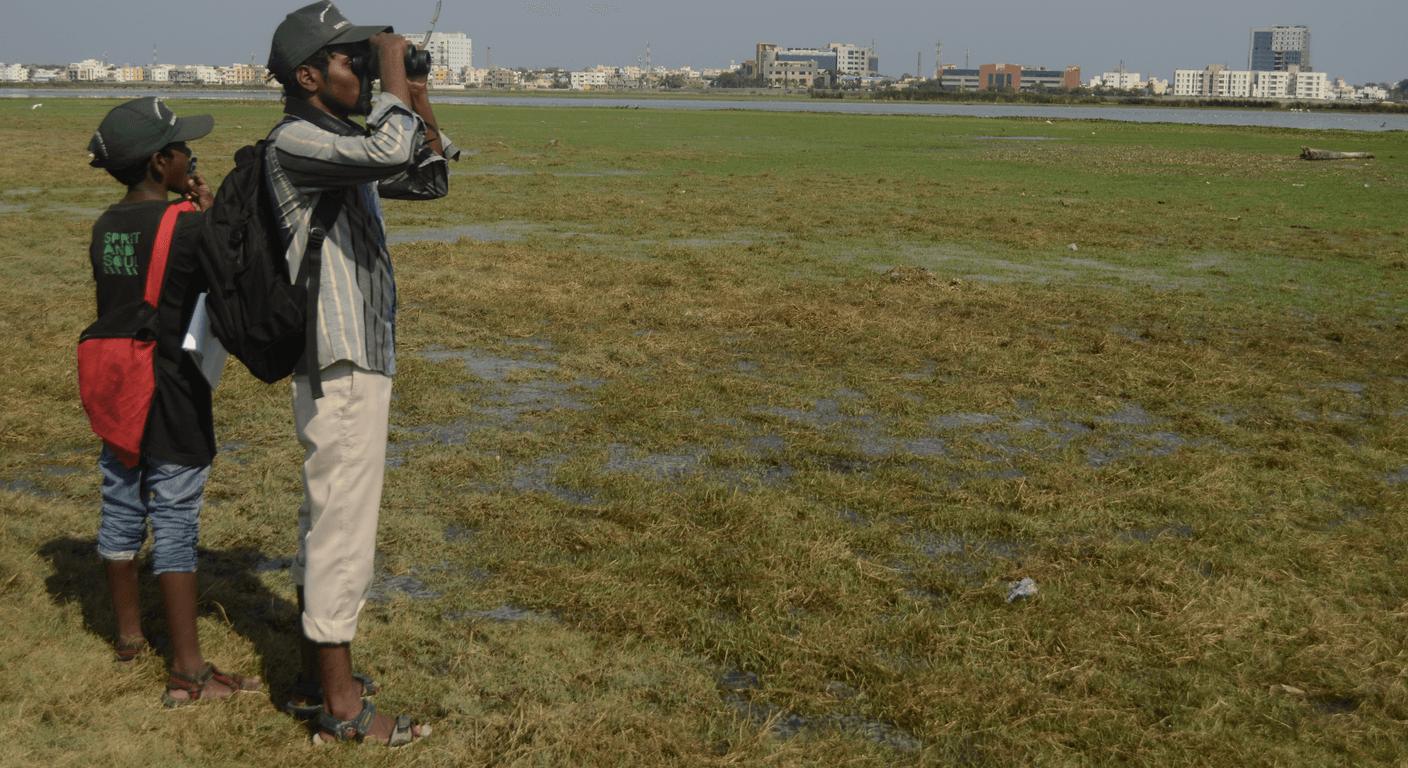
Most citizen science field days involve standing or walking slowly for two to four hours, often on uneven ground, in early morning or late afternoon light. Waterbird surveys on river flats can mean walking several kilometres over grass and mud; alpine wildflower recording on marked tracks is gentler. Reef observation from a tour vessel requires little physical effort beyond boarding and disembarking — though that can be a consideration on some older pontoons. It is worth being direct with the program coordinator about your mobility when you make contact, because most programs have roles that suit different capacities.
Heat management is a genuine consideration in Queensland and the Northern Territory, where many of the most productive surveys run. Early starts — sometimes before 6am — are the norm for bird surveys because activity drops sharply once the day warms. That rhythm suits many travellers over 60 who are early risers anyway, but it does mean accommodation within reasonable distance of the survey site matters more than it might on a standard holiday. Booking somewhere close and quiet rather than the liveliest part of town tends to serve field-day travel better.
Participants with knee or hip issues should note that crouching for plant recording, or navigating rocky creek banks for frog surveys, can be uncomfortable. It is reasonable to ask the coordinator for a role that keeps you on flatter ground or at a fixed observation point. Many surveys deliberately assign older or less mobile volunteers to count stations rather than transect walks — you stay in one spot and record everything that passes through, which is often the most productive role on a waterbird survey in any case.
Where are the most rewarding destinations to combine citizen science with genuine travel?
The Kakadu and Arnhem Land region of the Northern Territory hosts some of the most species-rich waterbird surveys in the Southern Hemisphere, and several are open to interstate volunteers during the dry season (May to September). Darwin is a comfortable base, and day trips or short overnight stays to survey sites are manageable without a four-wheel drive for the main wetland areas. The sheer volume of bird life on a good morning at Yellow Water Billabong, even outside a formal survey, is reason enough to visit; having a checklist in hand gives the experience a different quality.
Tasmania offers platypus monitoring surveys run in partnership with the Platypus Conservation Initiative and various Landcare groups — dawn and dusk sessions at creek sites in the Midlands and north of the state. These are quiet, patient, often cold, and occasionally very rewarding. The island's manageable size means you can combine a survey weekend with broader travel around the Huon Valley or the Freycinet Peninsula without it feeling rushed. BioCollect lists active Tasmanian projects seasonally.
Internationally, New Zealand's Department of Conservation runs volunteer programs that accept Australian participants, including kiwi monitoring and shorebird surveys on the Kapiti Coast and Southland. These require a more formal application process than domestic programs, but they are genuine and well-organised. For those considering something further afield, the citizen science aggregator Earthwatch Institute (earthwatch.org) connects paying volunteers with field research projects across Southeast Asia and beyond — the cost is higher and the commitment more intensive, but the scientific credibility is solid. Confirm program availability and costs directly with Earthwatch before planning.
Why structured observation changes what travel gives you
There is a practical argument for citizen science travel that has nothing to do with altruism: it makes you a better observer, and better observation makes destinations more interesting. A solo traveller who has spent three mornings counting shorebirds on a Queenslander estuary knows that estuary in a way that a week of general sightseeing rarely achieves. You learn the tidal rhythms, the way the light changes the silhouettes, which species arrive first and which linger. That knowledge is yours to keep, and it tends to make the next destination easier to read.
For many travellers in their 60s, citizen science trips also solve a quiet problem with extended solo travel: what to do with yourself between the morning activity and dinner. When the field day is the point of being somewhere, the rest of the day has a different shape. You process what you observed, transfer your notes, look things up, read the local natural history. The trip has a rhythm that is satisfying in the way that purposeful work is satisfying, without the pressure of a job.
There is also the matter of the data itself. When you submit a verified bird count from a wetland that has been surveyed annually for thirty years, your morning's work joins a longitudinal record that will still be meaningful in 2050. That is not a small thing. Travel is often described in terms of what it gives the traveller; citizen science travel is one of the few forms where the destination also gets something back.
Quick planning guide
| Ideal pace | Slow and observational, built around a fixed field day |
|---|---|
| Best months | Varies by project — dry season (May–September) in the Top End, spring (November–January) for Victorian alpine wildflowers, October for the Aussie Bird Count |
| Suggested stay | A few days to a week, timed around available surveys |
| Mobility level | Moderate — two to four hours of walking or standing on uneven ground, with fixed-point observation roles available for those with knee or hip concerns |
| Cost level | Budget-friendly for domestic programs (free registration); higher for international options such as Earthwatch |
| Comfort level | Basic and practical — early starts, sometimes cold or hot field conditions, minimal equipment needed |
| Best for | Solo travellers, retirees and patient observers who enjoy structured activity over sightseeing pace |
| Main planning consideration | Contacting the program coordinator in advance to match survey dates, location and personal mobility to the right role |
Key takeaways
- BirdLife Australia's regional waterbird and shorebird surveys welcome first-time volunteers and operate at rewarding locations across every Australian state.
- The Atlas of Living Australia's BioCollect platform lists dozens of active volunteer projects filterable by state, season and skill level — registration is free.
- The Great Barrier Reef Marine Park Authority's Eye on the Reef program accepts observations from snorkellers and glass-bottom-boat passengers without diving certification.
- Most citizen science field days involve two to four hours of slow walking or standing; coordinators can usually assign roles suited to different mobility levels if asked directly.
- Offline mode in apps like eBird and iNaturalist is essential — many survey sites have no mobile coverage, and both apps allow data entry without a signal.
- Structured observation during a citizen science trip tends to make any destination feel more intimate and memorable than standard sightseeing at the same location.
Recommended partners and links
Indicative prices only — always confirm with the operator before booking.
Frequently asked questions
Do I need any scientific qualifications to join a citizen science survey in Australia?
No qualifications are needed for the vast majority of citizen science programs in Australia. BirdLife Australia, the Atlas of Living Australia and the Great Barrier Reef Marine Park Authority's Eye on the Reef program all accept untrained volunteers. Most programs provide species ID guides, a briefing before the survey and a coordinator to answer questions in the field. Accurate, honest recording — including noting when you cannot make a definitive identification — is more valuable than expertise.
How do I find a citizen science project that fits my travel dates and destination?
The Atlas of Living Australia's BioCollect platform at ala.org.au/biocollect is the broadest directory of active Australian projects and can be filtered by state and month. BirdLife Australia's website lists bird surveys by region and season. For reef-based observation, the Great Barrier Reef Marine Park Authority's Eye on the Reef page at gbrmpa.gov.au explains participating tour operators in the Cairns and Whitsundays areas. Parks Victoria's Volunteer in Parks page covers Victorian national park surveys.
What apps are used for submitting citizen science observations in the field?
The most widely used apps for Australian nature surveys are iNaturalist (plants, animals, fungi and invertebrates) and eBird (birds). The BioCollect app is the submission tool for Atlas of Living Australia projects specifically. All three are free on iOS and Android, support offline data entry for areas without mobile coverage, and sync when you return to a signal. Paper tally sheets remain standard on many BirdLife Australia surveys, with coordinators handling data entry.
Is citizen science travel physically demanding for someone in their late 60s?
Most citizen science field days involve two to four hours of slow walking or standing, often on uneven ground in early morning. The physical demand varies by program: reef observation from a tour vessel is gentle, alpine wildflower recording on marked tracks is moderate, and river-flat waterbird surveys can involve several kilometres over rough ground. Telling the program coordinator about your mobility before you go is sensible — most surveys have roles, such as fixed count stations, that suit travellers who prefer to avoid long walks.
Can Australian seniors join citizen science programs overseas?
Yes. New Zealand's Department of Conservation runs volunteer programs open to Australian participants, including shorebird and kiwi monitoring; check doc.govt.nz for current listings. Earthwatch Institute at earthwatch.org connects paying volunteers with field research projects across Southeast Asia, the Pacific and beyond, with varying levels of physical demand and cost. Confirm program availability, fees and physical requirements directly with the organising body before planning any international trip.
- BirdLife Australia — Surveys and Monitoring
- Atlas of Living Australia — BioCollect
- Great Barrier Reef Marine Park Authority — Eye on the Reef
- Parks Victoria — Volunteer in Parks
- iNaturalist Australia
- eBird — Cornell Lab of Ornithology
- New Zealand Department of Conservation — Volunteering
- Earthwatch Institute