Cleveland Point, about 40 kilometres south-east of Brisbane, is best visited between April and October when Queensland's humidity eases. A single day covers the free timber lighthouse grounds, built in 1864, a flat waterfront walk along Shore Street, and the Redland Museum. The terrain is flat and sealed throughout, making it an easy option for travellers with mobility considerations. Direct trains run from Brisbane Central to Cleveland Station in about 40 minutes, with no transfers.
Why Cleveland Point Works So Well for a Day Out
There's a particular pleasure in discovering that a city as large as Brisbane still has places like this — a small peninsula jutting into Moreton Bay where the pace drops noticeably the moment you step off the train. Cleveland Point is about 40 kilometres south-east of the CBD, and the journey by rail takes roughly 40 minutes from Brisbane Central on the Cleveland line. No transfers, no fuss.
The appeal for a group of friends is partly practical. The lighthouse grounds are free. The waterfront path is flat, sealed and shaded in stretches. There are places to sit, places to eat, and genuinely little pressure to do anything in particular. That's rarer than it sounds. For travellers who've spent years navigating crowded tourist sites, the relative quiet of Cleveland Point on a weekday morning is its own reward.
Pair the waterfront with a visit to the Redland Museum — a short drive or taxi ride from the point — and you have a day with just enough structure to feel satisfying without feeling scheduled. April through October is the window to aim for; Queensland's summer humidity can make even an easy walk feel like an effort, and the autumn and winter months here are genuinely pleasant.
The Lighthouse: What to Expect on the Ground
The Cleveland Point Lighthouse is a modest, timber-framed structure built in 1864 — one of the oldest surviving lighthouses in Queensland. It's not a grand coastal sentinel; it's something more intimate than that. The lighthouse itself is heritage-listed and not open for internal access, but the grounds around it are open and free to enter. Walking up to it, with the bay spreading out behind you, gives a clear sense of why this point mattered to early shipping navigating Moreton Bay.
The surrounding reserve is well-maintained and relatively flat. There are grassed areas, low picnic shelters and unobstructed water views across to North Stradbroke Island and, on clear days, the low outline of Moreton Island. A few benches are positioned for exactly the kind of extended sitting-and-looking that deserves to be taken seriously as a travel activity.
Photography is easy here at almost any time of day, though the soft morning light before 10am gives the timber lighthouse its best colour. The area is popular with locals on weekends, so if the group prefers space to move at their own pace, a Tuesday or Wednesday visit is noticeably calmer. Parking is available near the point for those arriving by car, though the train-and-walk combination is straightforward and avoids any parking search.
Walking the Waterfront: Shore Street and the Esplanade
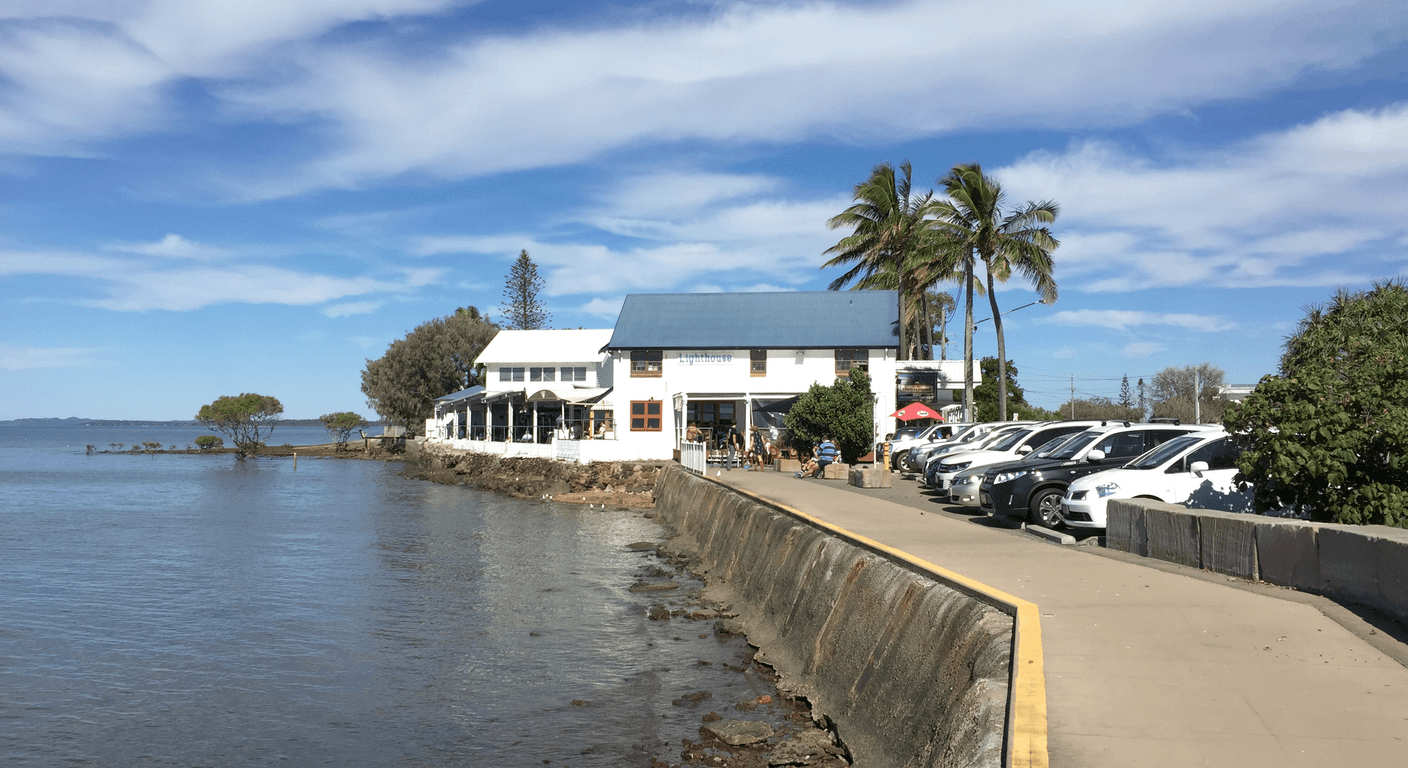
From the lighthouse reserve, a flat path follows the waterfront along Shore Street West. The walking is genuinely easy — no significant gradients, wide enough for two to walk side by side, and with bay views the whole way. The distance from the lighthouse area back toward the main Shore Street precinct is comfortable at a relaxed pace, and there are several natural stopping points along the route.
Shore Street itself has a cluster of casual eateries, including the fish-and-chip shops that are something of a Cleveland institution. The setting — water on one side, a string of low-key local businesses on the other — is unpretentious in the best sense. A group that arrives mid-morning can walk to the lighthouse, spend time in the reserve, stroll back along the waterfront and settle in for a late lunch without feeling hurried.
For anyone in the group with mobility considerations, the flat terrain throughout makes this one of the more accessible coastal walks in South-East Queensland. There are no stairs between the train station and the waterfront path, and the sealed surfaces hold up well. A walking frame or rollator would manage without difficulty. Wheelchair users should confirm current conditions with Redland City Council before visiting, as some areas of the reserve may have grass rather than sealed surfaces.
The Redland Museum: More Depth Than You'd Expect
The Redland Museum sits in Cleveland, a short drive from the waterfront, and it's the kind of local history museum that rewards slower looking. The collection covers the Redlands district from its earliest Indigenous connections through to the farming and fishing industries that shaped the region — including a genuine focus on the oyster industry that once defined Moreton Bay's economy. It's specific, locally rooted history, and that specificity is what makes it interesting.
Entry is around $8–$10 for adults, with concessions available — confirm current pricing directly with the museum before visiting, as these figures are indicative only. Opening days and hours should also be confirmed, as smaller regional museums sometimes operate on reduced schedules. The museum is volunteer-run and community-supported, which gives it a warmth that larger institutions can't always replicate. Expect to be greeted properly.
For a group with varied interests, the museum works well as a two-hour stop. There's enough to engage those who like to read every label, and enough visual material — photographs, tools, reconstructed settings — to hold the attention of those who prefer to browse. The gift shop stocks local publications and small items that make for more considered souvenirs than the average tourist shop.
Getting There from Brisbane: The Train Makes It Easy
The Cleveland train line runs directly from Brisbane Central, Roma Street and South Bank, terminating at Cleveland Station. The journey is roughly 40 minutes from the city centre and runs regularly throughout the day. From Cleveland Station, the waterfront and lighthouse are walkable — around 1.5 kilometres on flat ground — or a very short taxi or rideshare trip for anyone who'd prefer not to walk both ways.
TransLink's go card system applies across the network, and seniors holding a Queensland or Australian seniors card should check current concession fare arrangements directly with TransLink, as eligibility and discounts vary by card type and state of issue. Confirm all fares and card eligibility at translink.com.au before travelling.
For those driving from Brisbane, the route via the Gateway Motorway is straightforward, and parking near the waterfront is generally available. Driving also makes the combination of lighthouse and museum simpler to manage without timing around train departures. Visitors from regional Victoria — or anywhere interstate — are most likely to base themselves in Brisbane and treat this as one of several bayside day trips during a longer Queensland stay.
Lunch and the Practical Bits
Fish and chips on the waterfront is the obvious choice, and it's obvious for good reason. The Shore Street eateries have been feeding locals and visitors for years, and the setting — open water, bay breeze, pelicans exercising their usual audacity — is hard to improve on. Prices are reasonable, portions are generous, and there's no dress code beyond sun sense.
For a group wanting something more sit-down, Cleveland's main street has cafés and casual restaurants within easy reach of the waterfront. The suburb is well-served for a day trip, with public toilets near the waterfront area and seating throughout. Shade is available but can be limited at the lighthouse reserve itself during peak sun hours, so a hat and sunscreen are sensible regardless of the season.
The whole day — train fares, museum entry, a fish-and-chip lunch and a coffee — can be managed comfortably for well under $50 per person. That's not a selling point so much as a fact worth knowing when you're planning a longer Queensland stay and budgeting across several days out.
Making the Most of Cleveland as Part of a Wider Redlands Visit
Cleveland is the gateway to Moreton Bay's island network — ferries to North Stradbroke Island (Minjerribah) depart from Toondah Harbour, a short distance from the town centre. For a group with more than one day in the area, a ferry crossing to Straddie adds a different dimension entirely: beaches, wildlife and a pace that makes Cleveland feel almost metropolitan by comparison. Ferry and vehicle barge services operate regularly; confirm current schedules and booking requirements with the operators directly.
The broader Redlands Coast region — taking in the bayside suburbs and the bay islands — is well-suited to the kind of relaxed, interest-led travel that tends to suit friends travelling together. There's no single centrepiece demanding attention; instead, the appeal accumulates across a lighthouse reserve here, a museum there, a good lunch somewhere in between.
For travellers based in regional Victoria making a Queensland trip, Brisbane's bayside offers a quieter counterpoint to the city's busier inner precincts. Cleveland and the Redlands sit far enough from the tourist trail to feel genuinely local, while remaining entirely accessible by public transport. That combination — easy to reach, easy to navigate, easy on the budget — is harder to find than it should be.
Quick planning guide
| Ideal pace | Slow-paced and unhurried |
|---|---|
| Best months | April to October |
| Suggested stay | Full day trip from Brisbane |
| Mobility level | Easy - flat, sealed paths with no stairs |
| Cost level | Budget-friendly - well under $50 per person |
| Comfort level | Casual, relaxed, plenty of seating and shade options |
| Best for | Groups of friends and seniors wanting an easy-paced coastal day out |
| Main planning consideration | Confirm Redland Museum hours and pricing, and check wheelchair access to grassed reserve areas with Redland City Council beforehand |
Key takeaways
- Cleveland Point lighthouse grounds are free to enter and the surrounding waterfront path is flat, sealed and accessible.
- The Cleveland train line runs direct from Brisbane Central to Cleveland Station in around 40 minutes — no transfers required.
- Redland Museum entry is around $8–$10 with concessions available; confirm current pricing and opening days before visiting.
- April to October offers the most comfortable conditions for a bayside day trip, avoiding the worst of Queensland's summer humidity.
- A full day combining the lighthouse, waterfront walk, lunch on Shore Street and the Redland Museum costs well under $50 per person.
- The Redlands district also provides easy ferry access to North Stradbroke Island for travellers with more than one day in the area.
Recommended partners and links
Indicative prices only — always confirm with the operator before booking.
Frequently asked questions
Is Cleveland Point lighthouse free to visit?
Yes, the lighthouse grounds at Cleveland Point are free to enter. The lighthouse building itself is heritage-listed and not open for internal access, but visitors can walk the reserve, view the lighthouse up close and enjoy the bay views at no cost.
How do you get to Cleveland Point from Brisbane by public transport?
Take the Cleveland train line from Brisbane Central, Roma Street or South Bank stations directly to Cleveland Station — the journey takes around 40 minutes. From the station, the waterfront and lighthouse are about 1.5 kilometres on flat ground, or a short taxi or rideshare trip. Confirm current timetables and fares at translink.com.au.
Is the Redland Museum suitable for older visitors?
The Redland Museum is a community-run local history museum covering the Redlands district's farming, fishing and oyster-industry heritage. Entry is around $8–$10 for adults, with concessions available. It's a manageable two-hour visit and is generally accessible, though visitors should confirm current opening hours and any access arrangements directly with the museum before travelling.
What is the best time of year to visit Cleveland Point?
April through October is the most comfortable window. Queensland's summer months (December to February) bring high humidity that can make even an easy walk feel taxing. The cooler months offer clear bay views, lower humidity and pleasant temperatures for walking the waterfront reserve.
Is Cleveland Point accessible for travellers with limited mobility?
Cleveland Point is one of the more accessible coastal day-trip options near Brisbane. The waterfront path along Shore Street is flat and sealed, and there are no significant stairs between Cleveland Station and the lighthouse reserve. Wheelchair users should confirm current ground conditions in the reserve with Redland City Council, as some grassed areas may present challenges.