Cobbold Gorge sits on a working cattle station near Forsayth in Queensland's Gulf Savannah, best visited in the dry season from April to October, with July and August coolest and busiest. A one- to two-night stay suits the guided tour, whose highlight is a silent electric boat gliding through the continent's narrowest navigable gorge beneath a glass bridge. Terrain is honestly Moderate, with rock steps and uneven ground, and access means either a high-clearance vehicle on unsealed roads from Cairns or the slower Savannahlander heritage train.
What exactly is Cobbold Gorge, and why does it matter?
Queensland has gorges. It has plenty of them, and most are perfectly fine. Cobbold Gorge is something else. Cut through sandstone on a working cattle property about 160 kilometres south of Georgetown, it is reputedly the narrowest navigable gorge on the continent — a slot of layered amber and ochre rock where the walls close in so tightly that the reflections of stone and sky on the water seem almost architectural. The silence, broken only by the hum of an electric motor, is not a marketing device. It's structural.
The gorge is privately owned and managed by the Bond family, who have run cattle here for decades and developed the tourism operation themselves. Access is guided-only, which is both a conservation choice and a practical necessity — the terrain around the gorge rim is uneven, and independent wandering would quickly become a liability in every sense. The glass bridge spanning the gorge was added in recent years and has become the image most people associate with the place, though the boat journey through the slot itself is the experience that stays with you.
For a solo traveller arriving from Melbourne — perhaps Italian-Australian, perhaps someone who has done Rome and the Amalfi Coast and is quietly curious whether inland Queensland can hold its own — the answer is yes, on its own terms. This is not European drama. It's older, quieter, and stranger.
Getting there from Victoria: the honest version
There is no soft way to say this: Cobbold Gorge is remote. From Melbourne, the practical route begins with a flight to Cairns — roughly three hours, with multiple daily services from Melbourne Airport. From Cairns, it is approximately 700 kilometres by road to Forsayth, the nearest town to the gorge. Most of that distance is on sealed highway via Atherton and Georgetown, but the final stretch to the station is unsealed and can be severely corrugated after rain or heavy traffic. A high-clearance vehicle is strongly recommended; confirm with your hire-car company that the vehicle and your insurance cover unsealed roads before you leave the depot.
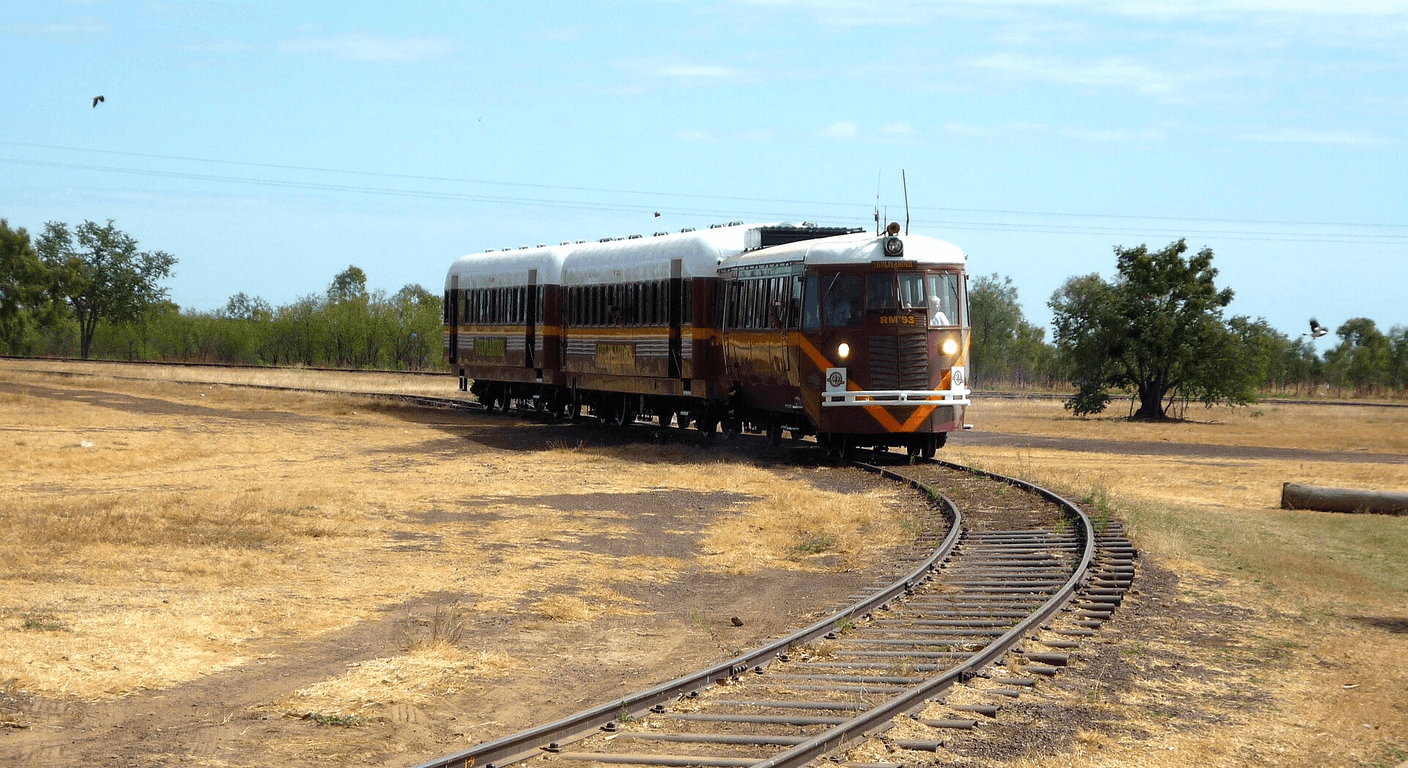
The alternative — and it is genuinely worth considering — is the Savannahlander, a heritage rail service that runs from Cairns to Forsayth on a weekly schedule. The journey takes two days with an overnight stop, moves at a pace that suits the landscape, and deposits you at the Forsayth station where the gorge operation can arrange transfers. Check current schedules and booking at savannahlander.com.au, and confirm the service is operating for your travel dates — it has been subject to seasonal adjustments in recent years.
From Forsayth, the gorge station is roughly 60 kilometres on that unsealed road. Check road conditions via the Queensland government's 13 19 40 road information line or the online trip check tool before heading out, particularly after any rain. The Gulf Savannah has a way of turning a corrugated track into something far more serious very quickly once the wet arrives.
The guided tour: what to expect on the boat and at the bridge
Tours operate in small groups and run multiple times daily during the dry season, roughly April to October — confirm exact dates and session times directly with Cobbold Gorge Tours at cobboldgorge.com.au. The tour begins with a guided walk to the gorge entry, which involves uneven ground, rock steps, and some narrow paths above the waterline. It is not demanding in an athletic sense, but it requires confidence on your feet and reasonable balance. Sturdy enclosed footwear is essential — sandals are a poor choice here.
The electric boats are low, quiet, and stable. The guide narrates the geology and the property's history as the boat moves through the gorge, and there are points where passengers disembark briefly to view formations from ground level. The glass bridge crossing comes toward the end of the tour and offers a direct overhead view into the gorge slot — for those with a fear of heights, this section is optional. The guides are experienced and unhurried; there is no sense of being moved through a production line.
Indicative tour pricing has sat in the range of roughly $60–$80 per adult for the standard gorge experience, though pricing has been updated in recent seasons and should be confirmed directly before booking. Sunrise tours are also offered and are particularly atmospheric — the light on the sandstone walls at dawn is worth the early start.
Where to stay: the station lodge and camping options
Accommodation is available on-site at the station, which removes any need to drive back to Forsayth after a late-afternoon or sunrise tour. The lodge rooms are comfortable and air-conditioned — a detail that matters when the Gulf Savannah temperature climbs into the mid-thirties during the shoulder months of April and October. Powered and unpowered campsites are also available for those travelling with their own setup. Rates for both lodge accommodation and camping are indicative and subject to change; confirm current pricing and availability directly with the operator when booking your tour.
The station setting itself is part of the experience. Cattle country at dusk has a particular quality — the light flattens, the dust settles, and the noise of the day stops abruptly. For a solo traveller, the communal areas around the lodge provide easy, low-pressure conversation with other guests, the kind of organic sociability that organised group tours sometimes manufacture and self-catering properties rarely provide. The staff are station people, not resort people, and the difference shows in the best possible way.
Combining Cobbold Gorge with Undara: the savannah loop
The Gulf Savannah rewards a loop rather than a straight out-and-back. Undara Volcanic National Park, home to the world's longest system of lava tubes formed by a single volcano, sits roughly 275 kilometres west of Cairns and can be combined with Cobbold Gorge into a coherent inland circuit. The logical sequence is to travel to Undara first — the sealed Mount Garnet road makes the approach more straightforward — spend two nights experiencing the lava tube tours, then continue east to Georgetown and south to Forsayth and Cobbold Gorge.
Undara Experience operates accommodation and guided lava tube tours on-site; see undara.com.au for current details. The lava tube tours involve some crouching and uneven basalt underfoot, so the same honest mobility assessment applies: moderate terrain, rewarding for those who can manage it. The two properties together — Undara's geological drama and Cobbold's water-carved silence — make a genuinely distinctive week in country that most Australians treat as a gap on the map between the coast and the Territory.
Completing the loop back to Cairns via the Atherton Tablelands adds another layer entirely: cool air, rainforest, good coffee in Atherton and Mareeba, and a gentle decompression before the flight south. Allow a full week minimum for the loop; ten days is more comfortable and allows for a rest day if the roads have been rough.
Practical matters for solo travellers and those with specific needs
Travelling solo in remote Queensland requires a few straightforward preparations that experienced travellers will already know but are worth stating plainly. Mobile coverage in the Gulf Savannah is limited to patchy at best; a personal locator beacon (PLB) is strongly recommended and can be hired from outdoor equipment retailers in Cairns. Let someone know your itinerary. Carry more water than you think you need — the dry-season heat is deceptive, particularly in April and October.
Travel insurance with pre-existing medical condition cover is non-negotiable for this kind of trip. Medical facilities in the Gulf Savannah are limited; the nearest significant hospital is in Cairns. The Royal Flying Doctor Service operates in the region, but evacuation is a serious and expensive undertaking without insurance. Compare policies carefully and declare all conditions honestly — this is not a place to discover a gap in your cover.
For solo female travellers specifically: the station environment is safe, the staff are professional, and other guests tend to be self-sufficient travellers — grey nomad couples, birdwatchers, a few international visitors. The guided-tour-only model means you are never navigating the gorge alone. The Savannahlander option, if your schedule allows, is an excellent way to arrive without the pressure of driving a remote road solo for the first time.
When to go, and what the seasons actually mean here
The Gulf Savannah has two seasons in practical terms: the dry, roughly April to October, when tours operate, the roads are passable, and the temperature is warm but manageable; and the wet, November to March, when the region receives monsoonal rain that renders the unsealed roads impassable and shuts the gorge operation entirely. There is no meaningful shoulder season to split the difference — the wet is the wet.
Within the dry season, July and August are the coolest and most popular months. Bookings for accommodation fill quickly in peak school-holiday periods. April and October are warmer but quieter, and the light in those months — lower sun angle, longer golden hours — is particularly good for photography. May, June and September represent a practical middle ground: comfortable temperatures, reasonable availability, and the landscape still carrying some of the green from the late wet.
Whatever month you choose, check the Bureau of Meteorology forecast for the Gulf Savannah region in the week before departure and confirm road conditions with the Queensland road information service. The dry season is reliable but not guaranteed, and a late wet or an early return can close the road with little warning.
Quick planning guide
| Ideal pace | Slow and unhurried, guided rather than self-directed |
|---|---|
| Best months | April to October (dry season); July–August coolest, April/October quieter with better light |
| Suggested stay | One to two nights at the station; a full week to ten days if combined with Undara |
| Mobility level | Moderate — rock steps, uneven ground and narrow paths above the waterline |
| Cost level | Mid-range, roughly $60–$80 per adult for the standard tour |
| Comfort level | Comfortable air-conditioned lodge rooms, plus powered and unpowered camping options |
| Best for | Solo travellers, grey nomads, birdwatchers and photographers comfortable with remote, guided travel |
| Main planning consideration | The final road is unsealed and weather-dependent, and the wet season (November–March) closes the gorge entirely |
Key takeaways
- Cobbold Gorge is guided-tour-only — independent access to the gorge is not available, and small group sizes keep the experience genuinely unhurried.
- The tour involves rock steps and uneven terrain; sturdy enclosed footwear and confident footing are required — this is an honest Moderate, not a gentle stroll.
- The final road to the station is unsealed and can be heavily corrugated — check conditions on 13 19 40 before departing Forsayth, and confirm your hire-car covers unsealed roads.
- The Savannahlander heritage rail service from Cairns to Forsayth is a practical and atmospheric alternative to driving the full distance solo.
- Combining Cobbold Gorge with Undara Volcanic National Park creates a coherent Gulf Savannah loop that delivers two very different geological experiences in one week.
- Travel insurance that covers pre-existing conditions and remote medical evacuation is essential — medical facilities in the Gulf Savannah are limited.
Recommended partners and links
Indicative prices only — always confirm with the operator before booking.
Frequently asked questions
Can you visit Cobbold Gorge independently, or is a guided tour required?
A guided tour is required — independent access to the gorge itself is not permitted. Tours are operated by Cobbold Gorge Tours and run multiple times daily during the dry season, roughly April to October. Confirm current session times and season dates directly at cobboldgorge.com.au before booking.
Is Cobbold Gorge suitable for older travellers with limited mobility?
Cobbold Gorge is rated Moderate for mobility. The tour involves a walk over uneven ground and rock steps to reach the gorge entry, and some paths run close to the water's edge on irregular terrain. The boat itself is stable and low. Travellers with significant balance issues, joint problems or limited confidence on uneven surfaces should contact the operator directly to discuss whether the tour is appropriate for them.
What is the best time of year to visit Cobbold Gorge?
Tours operate during the dry season, roughly April to October. July and August are the coolest months and the most popular. May, June and September offer a practical balance of comfortable temperatures and reasonable accommodation availability. April and October are warmer but quieter. The wet season, November to March, closes the operation and renders the access road impassable.
How do you get to Cobbold Gorge from Melbourne or Sydney?
Fly to Cairns, then travel inland roughly 700 kilometres to Forsayth by road (sealed highway most of the way, unsealed final stretch) or by the Savannahlander heritage rail service, which runs from Cairns to Forsayth on a weekly schedule. From Forsayth, the station is approximately 60 kilometres on unsealed road. Check road conditions via Queensland's 13 19 40 road information line before the final leg.
Can Cobbold Gorge be combined with Undara Volcanic National Park?
Yes — the two form a natural Gulf Savannah loop. The logical route is to visit Undara first via the sealed Mount Garnet road from Cairns, spend two nights, then continue east to Georgetown and south to Forsayth and Cobbold Gorge. Allow at least a full week for the loop; ten days is more comfortable. Both properties offer on-site accommodation.