Moreton-in-Marsh, the only Cotswolds town on the London-Paddington rail line, is the practical car-free base, reached via a 22–26 hour flight from Australia with one stopover. May, June and September suit visitors best, and a week to ten days allows an unhurried pace. The highlight is timing village visits before 9am or after 4pm to dodge coach crowds. Mobility is moderate — flat high streets, uneven limestone paths, and short climbs — with buses and taxis replacing a hire car.
Getting There: The Long-Haul Reality from Australia
From Melbourne or Sydney, expect a flight time of roughly 22 to 26 hours to London Heathrow or Gatwick, almost always with one stopover — Singapore, Dubai, Doha and Hong Kong are the common hubs. It's a long day and a half in the air, and anyone who tells you otherwise is selling something. Airlines including Qantas, Singapore Airlines, Emirates and Qatar Airways serve this route; prices and schedules shift, so compare through your travel agent or airline sites directly.
The jet lag on arrival in London is genuine. Australia to the UK involves crossing nine to eleven time zones depending on your state, and the body takes a few days to catch up. The smartest move is to book a night in London on arrival — not to sightsee, but to sleep, walk gently, eat well and get your bearings. A hotel near Paddington Station makes the next morning's train to Moreton-in-Marsh entirely straightforward. That one recovery night changes the whole trip.
Travel insurance is non-negotiable on a trip of this length, and for travellers over 50 with any pre-existing conditions, read the policy carefully before purchasing. The Australian Government's Smartraveller site (smartraveller.gov.au) carries the current UK entry requirements, including any Electronic Travel Authorisation obligations for Australian passport holders. Confirm visa and entry rules there before booking — this guide cannot substitute for official advice.
Why Moreton-in-Marsh Makes Sense as Your Base
Moreton-in-Marsh sits on the Cotswold Line, the rail route that runs from London Paddington through Oxford and on to Worcester. It's the only town in the central Cotswolds with its own railway station, and that single fact changes everything about how you move. The train from Paddington takes around an hour and forty minutes to two hours, and you arrive on the high street without having navigated a roundabout.
The town itself is a proper working place — a Tuesday market, a handful of good pubs, a well-stocked pharmacy, a supermarket and enough independent shops to feel like somewhere rather than nowhere. It's not performing quaintness for visitors; it just happens to have it. The accommodation ranges from traditional coaching inns to B&Bs and small hotels, and prices are generally more reasonable than in the show villages. Indicative rates for a comfortable double room run around AUD 180–280 per night, though confirm current prices directly with properties.
From Moreton, Pulhams Coaches operates local bus routes connecting to Stow-on-the-Wold, Bourton-on-the-Water, Northleach and other villages. The buses are not frequent — some routes run only a few times a day — so download or collect a current timetable before you set out. For Bibury, which has no direct bus from Moreton, a taxi or a guided day tour is the practical answer. Taxis in the Cotswolds are reliable and, shared among a group of friends, quite reasonable.
Timing the Villages: When the Crowds Thin
Bourton-on-the-Water and Bibury are among the most photographed villages in England, and in peak summer — particularly July and August — coach parties arrive in waves from mid-morning onwards. By 11am, the low stone bridges at Bourton can feel like a school excursion in full swing. This is not a reason to skip them; it's a reason to arrive by 8.30am or to linger into the early evening when the light is extraordinary and the streets empty.
Staying overnight in or near these villages transforms the experience entirely. A room at a village inn means you're there when the morning mist sits on the River Windrush, when the only sound is jackdaws. The coach crowds are day-trippers who leave by late afternoon. This is the simplest and most effective travel hack in the Cotswolds, and it costs nothing extra if you've budgeted for accommodation anyway.
May, June and September are the sweet spots for Australian visitors. The days are long, the gardens are at their best in late spring, and September brings a golden quality to the stone that photographs cannot quite capture. October is cooler but often clear, and the tourists thin considerably. July and August are busy and expensive; December and January are quiet but some attractions reduce hours or close — confirm before travelling.
Moving Between Villages: Buses, Taxis and the Occasional Train
The Pulhams Coaches network is the backbone of car-free Cotswolds travel, running between Moreton-in-Marsh, Stow-on-the-Wold, Bourton-on-the-Water, Northleach, Cirencester and surrounding villages. The Route 801 and related services are the most useful; current timetables are on the Pulhams website. A day return from Moreton to Bourton costs roughly AUD 10–15 (indicative; confirm). Buses are accessible and drivers are generally helpful, but note that some stops are on uneven ground.
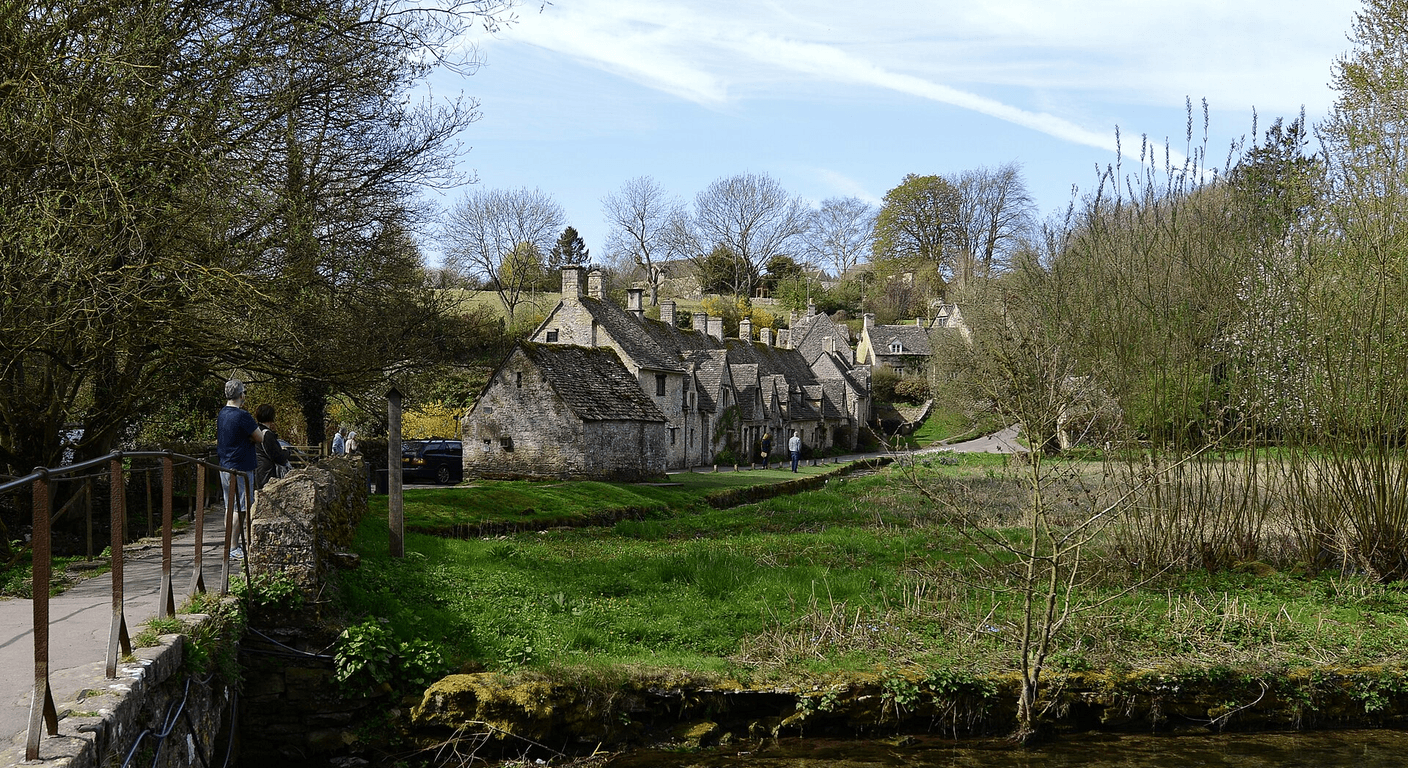
For Bibury — with its famous Arlington Row of weavers' cottages and the clear-running River Coln — the most practical approach from Moreton is a pre-booked taxi or a small-group day tour. Several operators run Cotswolds tours from Oxford and Cheltenham that include Bibury; these can be worth considering for a day when you want to cover more ground without planning every connection yourself. Cotswolds.com lists current tour operators.
Stow-on-the-Wold is four miles from Moreton and reachable by bus or an easy taxi. The town sits on a hill — the highest in the Cotswolds — and the market square is flat enough, but the approach from some directions involves a short, moderate climb. Worth knowing. Chipping Campden, one of the finest of all the Cotswolds towns, is accessible by taxi from Moreton in around fifteen minutes, and the high street is largely flat and manageable at a comfortable pace.
Walking in the Cotswolds: Gentle Paths and Honest Terrain
The Cotswolds Way is a 164-kilometre National Trail from Chipping Campden to Bath, and sections of it are genuinely lovely for a half-day walk. That said, the full trail involves significant elevation and is not the right choice for every traveller. The more practical approach is to walk within and between the nearest villages on well-marked footpaths, keeping the distances to two to five kilometres and the terrain to your own comfort level.
Around Bourton-on-the-Water, the paths along the River Windrush are flat and easy — a pleasant hour's walk in either direction before or after the crowds arrive. Between Stow-on-the-Wold and Lower Slaughter, the footpath through the fields is one of the most rewarding short walks in the region: around three kilometres, mostly flat, with the Slaughters' distinctive mill and stream at the end. Wear proper walking shoes — the limestone paths can be uneven, and after rain, field paths become slippery.
Footwear matters more than fitness here. A pair of well-broken-in walking shoes or light hiking boots will serve far better than comfortable trainers when the paths turn to packed stone or muddy field edges. Trekking poles are a practical aid on uneven ground and no source of embarrassment. Several villages have benches placed thoughtfully along their main routes — the Cotswolds has a long history of walkers who understand the value of sitting down.
Where to Eat, What to Drink and the Rhythm of a Cotswolds Day
The Cotswolds pub is a reliable institution. Stone floors, low beams, a real fire in cooler months and a food menu that has improved dramatically over the past decade — local lamb, Gloucester Old Spot pork, seasonal vegetables. A pub lunch with a glass of something local runs around AUD 30–50 per person (indicative). The quality varies, so ask your accommodation host for their honest recommendation rather than walking into the first sign you see.
Afternoon tea is not a cliché here — it's a genuine pleasure, particularly in one of the country house hotels or established tea rooms in Chipping Campden or Bourton. Budget around AUD 40–60 per person for a proper one, and book ahead in the warmer months. Moreton-in-Marsh has a good range of cafés and independent restaurants along the high street that cater to everyday appetites without tourist pricing.
A workable daily rhythm: breakfast early, out to a village by 9am, walk or explore through mid-morning, lunch in a local pub, back to Moreton (or your base village) for a rest in the early afternoon, then out again at 4pm when the light shifts and the day-trippers leave. That two-hour afternoon rest is not laziness — it's what makes the evening feel effortless. Experienced travellers know this. It's how you stay well for ten days rather than exhausted after four.
Practical Matters: Money, Health and Staying Safe
The UK uses pounds sterling. Card payments are near-universal in the Cotswolds, including at most pubs and market stalls, but carry a small amount of cash for village honesty boxes, church donations and the occasional farm stall. A travel money card with low foreign exchange fees — Wise and similar services are popular — saves on bank charges. Indicative daily spend for a comfortable trip runs around AUD 200–350 per person per day including accommodation, meals and local transport, but this varies considerably with your choices.
The UK's National Health Service covers emergency treatment for visitors, but this does not replace travel insurance. For travellers over 50 with pre-existing conditions, ensure your policy covers medical evacuation and hospital stays in the UK — costs without insurance can be substantial. Carry a list of your medications with generic names, and pack enough supply to cover the full trip plus a week's contingency. Some medications available over the counter in Australia require a prescription in the UK; check with your GP before departure.
Phone coverage in the Cotswolds villages is generally good on major UK networks, but can drop in valleys and on rural footpaths — download offline maps (Maps.me or Google Maps offline) before setting out. The emergency number in the UK is 999. Smartraveller.gov.au is the authoritative source for current travel advice, entry requirements and any safety notices for the United Kingdom; register your trip there so that consular assistance is easier if needed.
Quick planning guide
| Ideal pace | Slow and unhurried, with rest built into the afternoon |
|---|---|
| Best months | May, June and September; October also quiet and clear |
| Suggested stay | A week to ten days for a comfortable, unrushed rhythm |
| Mobility level | Moderate — mostly flat high streets but uneven limestone paths, slippery field edges after rain, and short climbs (e.g. Stow-on-the-Wold) |
| Cost level | Mid-range, around AUD 200–350 per person per day including accommodation and meals |
| Comfort level | Comfortable, especially with an overnight base in the villages themselves |
| Best for | Over-50 travellers who prefer trains, local buses and walking to driving themselves |
| Main planning consideration | Book a recovery night in London first, then time village visits before 9am or after 4pm and confirm Pulhams Coaches timetables in advance |
Key takeaways
- Moreton-in-Marsh is the only Cotswolds town on the rail line from London Paddington, making it the logical car-free base for Australian visitors.
- Arriving at famous villages before 9am or after 4pm transforms the experience — the coach crowds are a mid-morning phenomenon.
- Pulhams Coaches connects the main villages; for Bibury, a taxi or small-group tour is the practical car-free solution.
- A recovery night in London after the long-haul flight from Australia is not optional — it sets the tone for the whole trip.
- Australian passport holders must check UK Electronic Travel Authorisation requirements at smartraveller.gov.au before booking.
- Short footpath walks of two to five kilometres — rather than full trail stages — suit most over-50 travellers and reveal the best of the Cotswolds landscape.
Recommended partners and links
Indicative prices only — always confirm with the operator before booking.
Frequently asked questions
Can you visit the Cotswolds without a car from London?
Yes. Great Western Railway runs direct trains from London Paddington to Moreton-in-Marsh in around one hour forty minutes to two hours. From Moreton, Pulhams Coaches connects to Bourton-on-the-Water, Stow-on-the-Wold and other villages, with taxis and small-group tours covering villages not on the bus network such as Bibury. A car is not necessary for a well-planned Cotswolds visit.
What is the best time of year for Australians over 50 to visit the Cotswolds?
May–June and September–October are the best months. Days are long, walking conditions are comfortable, and crowds are lighter than in July and August. Late September brings warm golden light on the stone villages. December through February is quiet but cold, and some attractions reduce hours; confirm opening times before travelling.
How long is the flight from Australia to the UK Cotswolds region?
Flights from Melbourne or Sydney to London take roughly 22–26 hours including a stopover, typically in Singapore, Dubai, Doha or Hong Kong. After arriving at Heathrow or Gatwick, a recovery night in London is strongly recommended before taking the train to the Cotswolds the following morning.
Do Australian passport holders need a visa or travel authorisation to visit the UK?
Australian passport holders should check current UK entry requirements, including the Electronic Travel Authorisation (ETA) scheme, at smartraveller.gov.au and the official UK government website before booking. Requirements can change, and this guide cannot substitute for official government advice.
How accessible are the Cotswolds villages for travellers with mobility considerations?
Accessibility varies by village. Bourton-on-the-Water and the River Windrush paths are largely flat and manageable. Stow-on-the-Wold involves a moderate hill approach from some directions. Footpaths between villages can be uneven limestone or muddy field edges. Proper walking shoes and trekking poles are recommended. Most village centres are accessible at a comfortable pace, and benches are common along main routes.
- Cotswolds Tourism – Official Visitor Information
- Great Western Railway – Cotswold Line timetables and fares
- Pulhams Coaches – Cotswolds local bus network
- Smartraveller – United Kingdom travel advice (Australian Government)
- Cotswolds Area of Outstanding Natural Beauty – Walking and access
- National Trails – The Cotswolds Way