North of Port Douglas, the Daintree River cable ferry opens onto Cape Tribulation, where rainforest meets the Great Barrier Reef. May to October is the reliable dry-season window for a full day trip taking in croc-spotting, a river cruise, and the flat, shaded Marrdja and Dubuji boardwalks. Mobility demands are easy, with no uphill sections. Guided coach tours from Port Douglas cover the ferry, cruise and boardwalks, removing the driving, fuel and phone-coverage concerns of self-driving.
Why this day trip works so well for over-50 travellers
There's a reason seasoned travellers keep returning to the Daintree. The scale is intimate enough to feel personal — you're not standing in a crowd at a lookout — and the rewards arrive steadily throughout the day rather than all at once at a summit. A croc sliding off a mudbank at 9am sets the tone nicely.
For solo female travellers in particular, the structure of this day trip is reassuring. The cable ferry is staffed, the boardwalks are clearly marked and well-maintained, and the guided coach option from Port Douglas means you're always with a small group and a knowledgeable local. The rainforest north of the Daintree is genuinely remote, but it's not inaccessible — and that balance is exactly what makes it satisfying rather than stressful.
The Daintree Rainforest is listed under the Wet Tropics of Queensland World Heritage Area, and it earns that designation. At around 135 million years old, it predates the Amazon. Walking a flat boardwalk through it, listening to the layered quiet, is an experience that doesn't require a single uphill step.
Crossing the Daintree River: the cable ferry
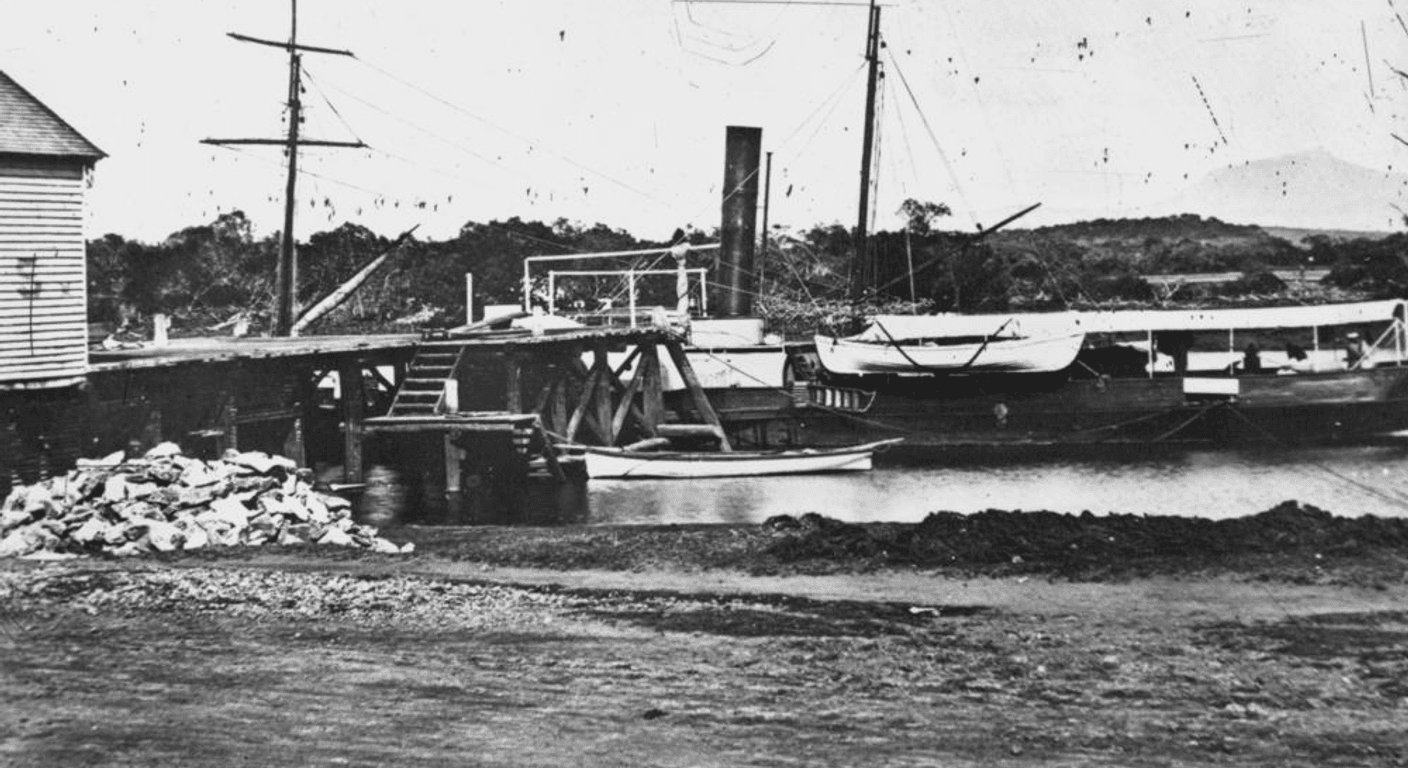
The Daintree River cable ferry runs between roughly 6am and midnight, seven days a week, and it's the only way to cross the river by vehicle. The crossing takes about five minutes. It's a small barge guided by a steel cable stretched across the river — unhurried, reliable, and oddly ceremonial. You pay a toll for the return journey; around $30 per car is indicative, but confirm current rates with Douglas Shire Council before you go, as fees are reviewed periodically.
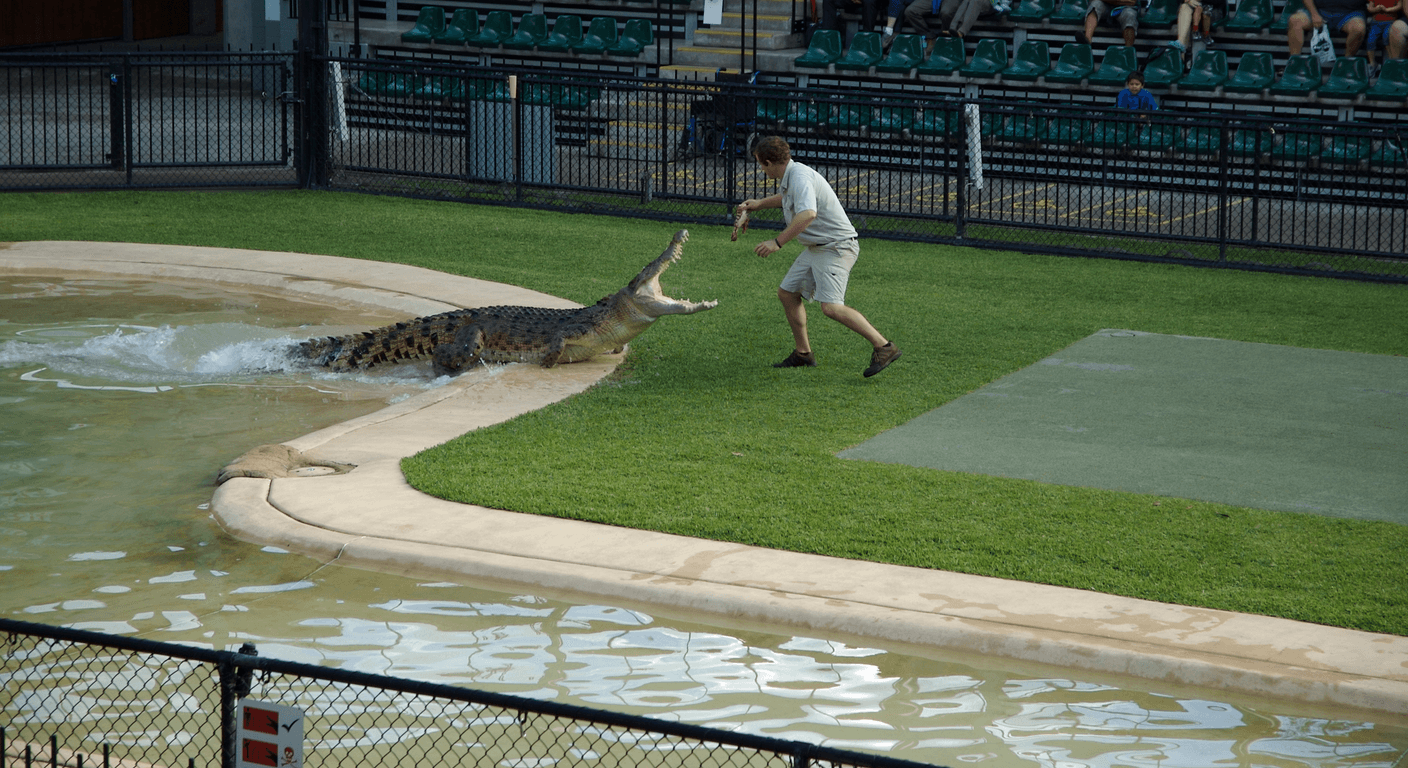
The ferry landing on the north bank is itself worth a few minutes. The river here is wide, tannin-dark, and lined with mangroves. Saltwater crocodiles inhabit this stretch of water — not as a tourism gimmick, but as a genuine, permanent fact of the ecosystem. Stay well back from the water's edge at all times, and take that instruction seriously. Salties can move with unsettling speed on land and are not deterred by human presence.
If you're driving yourself, note that there's no fuel available between the ferry and Cape Tribulation. Fill the tank in Mossman or Port Douglas before you leave. Phone coverage north of the river is patchy to non-existent on most networks. Download offline maps and let someone know your plans. None of this is alarming — it simply requires the kind of quiet preparation that experienced travellers already understand.
Croc-spotting on the Daintree River: what a cruise actually involves
A river cruise before or after the ferry crossing is the most reliable way to see saltwater crocodiles in their actual habitat rather than at a distance. Several operators run cruises from the Daintree Village side of the river, generally lasting around one hour. Indicative prices sit between $35 and $50 per person — confirm directly with operators, as pricing and schedules change seasonally.
Solar Whisper Wildlife Cruises is one of the better-known options, running an electric boat that moves quietly enough not to disturb wildlife. The silence matters. Guides on these cruises tend to have decades of local knowledge, and the commentary covers not just crocodiles but the birds, fish and plant life that make the Daintree River one of the most biodiverse waterways in Australia. Even on a cruise where crocs prove elusive — they do sometimes — the birdlife alone justifies the fare.
Croc-wise behaviour applies throughout the entire day north of the river, not just on the water. Every beach, creek crossing, and waterway in this region is potential crocodile habitat. The Queensland Government's CrocWise guidelines are clear: never swim in rivers, estuaries or the sea near creek mouths, stay well back from the water's edge, and don't camp near waterways. Signage is posted throughout the area, and it's not decorative.
The Marrdja and Dubuji boardwalks: rainforest at your own pace
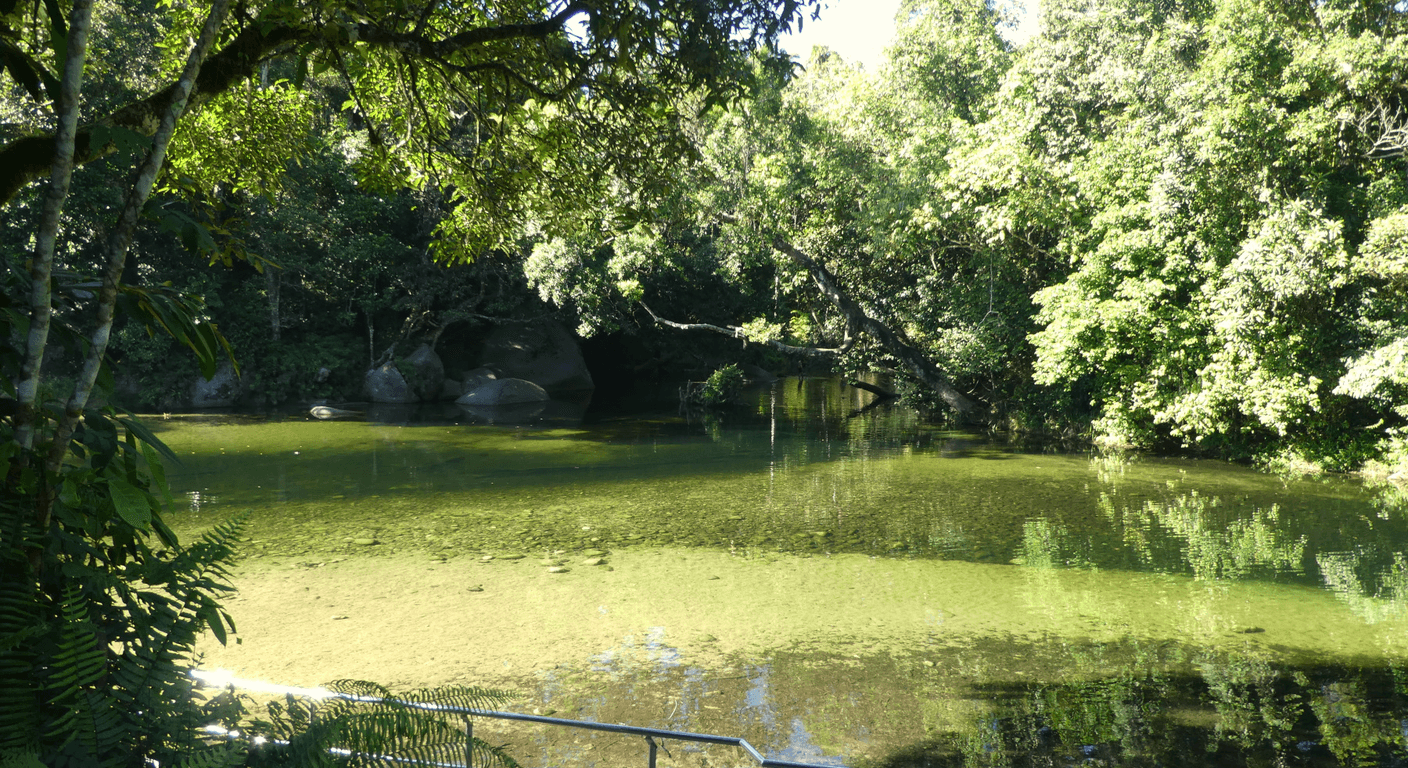
Two boardwalks north of the ferry are well-suited to travellers who want genuine rainforest immersion without demanding terrain. The Marrdja Botanical Walk near Noah Creek is around 1.2 kilometres return, mostly flat and boardwalked, threading through a section of rainforest that transitions between lowland and swamp. It's quiet, shaded, and the kind of walk where you find yourself stopping every thirty seconds to look at something. Orchids, ferns, the flicker of a Ulysses butterfly.
The Dubuji Boardwalk near Cape Tribulation beach is slightly longer at around 1.2 kilometres one-way (a loop of roughly 2.4 kilometres), and it passes through both rainforest and mangrove communities. The boardwalk is generally in good condition, though some sections can be uneven after heavy rain — sensible footwear with grip is worth wearing. Both walks are managed under the Wet Tropics World Heritage Area; dogs are not permitted.
Neither walk requires a guide, though ranger-led programs run periodically and are worth checking through the Queensland Parks and Wildlife Service website. The walks are at their most atmospheric early morning, when the light is low and the forest is loudest with birds. A water bottle, insect repellent, and sunscreen are the only real requirements.
Cape Tribulation: where the rainforest meets the reef
Cape Tribulation itself is the point where the Daintree Rainforest meets the Coral Sea — and, by extension, the outer edge of the Great Barrier Reef Marine Park. It's a genuinely striking piece of geography, even if the beach comes with the same croc caution as every other waterway in the region. Swimming is not recommended. Standing at the headland and understanding that both World Heritage areas overlap here, sea and forest pressing against each other, is enough.
The Cape Tribulation beach and headland area has a small cluster of accommodation, a café, and an interpretation centre. It's around 35 kilometres north of the ferry — allow at least 45 minutes each way on the winding sealed road, which demands unhurried driving. The road is single-lane in sections, with passing bays. It's not difficult, but it rewards patience. Hire cars are generally permitted north of the Daintree; confirm with your rental company before booking.
For those who'd rather not think about the driving at all, Cape Tribulation is included on several guided coach day tours from Port Douglas. These typically depart early, include the ferry crossing, a river cruise, and stops at the boardwalks, returning to Port Douglas by late afternoon. The group dynamic suits solo travellers well — there's company when you want it, and the guide absorbs the logistical load entirely.
The guided tour option: Port Douglas to Cape Tribulation without the driving
Port Douglas is the natural base for this day trip, sitting about 75 kilometres north of Cairns. Several operators run guided day tours from Port Douglas that cover the ferry, a river cruise, the boardwalks, and Cape Tribulation in a single well-paced day. Back Country Bliss Adventures is one established option; there are others. Compare itineraries carefully — some include lunch, some don't, and group sizes vary.
The appeal for solo travellers is straightforward. You're not navigating unfamiliar roads in a hire car on the wrong side of your usual comfort zone, you're not worrying about fuel, and you're not alone in remote country with limited phone coverage. The guide's local knowledge adds genuine depth to every stop. For a 68-year-old travelling independently, this is not a compromise — it's a sensible allocation of energy toward the things that actually matter.
Tours from Cairns also exist but add considerable travel time each way. If you're based in Cairns, consider whether it's worth moving to Port Douglas for a night or two to make the day trip more comfortable. The Cairns to Port Douglas drive takes around 75 minutes on the Captain Cook Highway — itself a scenic coastal road worth doing at least once.
Practical planning: timing, health, and what to bring
The dry season — May through October — is the recommended window. Humidity is lower, the road north is reliably passable, and river cruises run to schedule. The wet season (November through April, peaking in January to March) brings extraordinary green intensity to the rainforest but also the risk of road closures, flooding, and crocodiles moving into unexpected places. February to April is particularly unpredictable. Check the Queensland Roads and Traffic portal for current conditions before any visit.
Heat and humidity are real considerations even in the dry season. Start early — aim to be on the ferry by 8am if self-driving, or on the tour bus at departure time. Wear light, breathable clothing that covers your arms and legs (both for sun and insects), a broad-brimmed hat, and reef-safe sunscreen. Carry more water than you think you need. The boardwalks are shaded, but the stretches between stops are not.
Travel insurance is essential for any Queensland adventure, particularly if you have pre-existing conditions. The nearest major hospital is in Cairns. Confirm your policy covers you for remote-area activities and, if you have any cardiovascular or respiratory considerations, discuss the heat and humidity with your GP before travelling. None of this should deter you — it's the same practical thinking that makes any trip go well.
Quick planning guide
| Ideal pace | Unhurried, full-day outing |
|---|---|
| Best months | May to October (dry season) |
| Suggested stay | One full day |
| Mobility level | Easy — flat, shaded boardwalks, no uphill sections |
| Cost level | Budget-friendly (ferry toll around $30 per car; cruises roughly $35-50 per person) |
| Comfort level | Comfortable, especially with a guided coach tour |
| Best for | Solo travellers and those who'd rather not self-drive remote roads |
| Main planning consideration | Crocodile safety near all waterways, plus no fuel or phone coverage north of the ferry |
Key takeaways
- The Daintree River cable ferry runs roughly 6am to midnight and is the only vehicle crossing — the return toll is around $30 per car, but confirm current rates with Douglas Shire Council.
- Saltwater crocodiles are permanent residents of every waterway north of the Daintree River; CrocWise behaviour — staying well back from the water, never swimming — applies at all times.
- The Marrdja and Dubuji boardwalks are flat, shaded, and well-maintained, making them genuinely accessible for most over-50 travellers without requiring a guided walk.
- There is no fuel north of the Daintree ferry and phone coverage is largely absent — fill up in Mossman or Port Douglas and download offline maps before crossing.
- Guided coach day tours from Port Douglas cover the ferry, a river cruise, both boardwalks, and Cape Tribulation in one well-paced day, removing every driving concern for solo travellers.
- May to October is the reliable window; the wet season can close the road north entirely, and February to April is the riskiest period for a self-drive itinerary.
Recommended partners and links
Indicative prices only — always confirm with the operator before booking.
Frequently asked questions
Is the Daintree River area suitable for solo female travellers over 60?
Yes, particularly with a guided coach tour from Port Douglas. The ferry is staffed, the boardwalks are well-maintained and signposted, and tour groups provide company and local expertise throughout the day. Self-driving is feasible for confident drivers, but the limited phone coverage and remote stretches north of the ferry make a guided option the more comfortable choice for solo travellers.
How much does the Daintree River cable ferry cost?
The return toll is around $30 per car (indicative only). The ferry is operated by Douglas Shire Council; confirm current pricing at douglas.qld.gov.au before your visit, as fees are reviewed periodically. The crossing itself takes about five minutes.
Are the Marrdja and Dubuji boardwalks wheelchair accessible?
Both boardwalks are largely flat and boardwalked, but they are not fully certified as wheelchair accessible. Some sections can be uneven, particularly after rain. Travellers using mobility aids should contact Queensland Parks and Wildlife Service for the most current track condition information before visiting.
What is the best time of year to visit Cape Tribulation?
May to October is the recommended dry season window. The road north of the Daintree ferry is reliably open, humidity is more manageable, and wildlife cruises run to schedule. The wet season (November to April) brings intense greenery but also the risk of road closures and flooding. February to April is the most unpredictable period.
Are there crocodiles at Cape Tribulation beach?
Saltwater crocodiles inhabit all waterways, estuaries, and coastal areas north of the Daintree River, including near Cape Tribulation beach. Swimming at Cape Tribulation beach is not recommended. Follow all posted CrocWise signage, stay well back from the water's edge, and never approach any waterway after dark.