Darwin's dry season, especially August, delivers warm 30°C days with low humidity, making it the most comfortable window for visitors escaping southern winters. A 5–6 night stay suits the compact, flat Waterfront precinct and the Thursday/Sunday Mindil Beach Sunset Market, the trip's defining highlight. Mobility demands are easy overall, though market sand requires flat shoes. Direct 4.5-hour flights from Melbourne mean no stopovers or jet lag, but August is peak season, so early booking is essential.
Why August Is Darwin's Best-Kept Calendar Secret
Melbourne in August is wool socks and grey skies. Darwin in August is 30°C, bone-dry air and a sky so blue it looks slightly implausible. The Top End operates on a two-season calendar — wet and dry — and the dry season runs from roughly May through September. August sits at the heart of it: the rains are long gone, the humidity has dropped to something a southerner can actually cope with, and the evenings cool to a point where you want to linger outdoors.
For travellers over 50, the appeal is not just the warmth. It's the manageability of the place in this season. Darwin is a compact city. The main attractions — the Waterfront precinct, the markets, the cultural centres — are close together and largely flat. You're not navigating a sprawling metropolis or ticking off a relentless list of sights. The pace here is deliberately unhurried, and that suits a 5–6 night escape perfectly.
It's worth being honest: August is peak tourist season, and Darwin knows it. Accommodation fills quickly, Mindil Beach on market nights draws serious crowds, and flights from Melbourne can sell out weeks in advance. None of this makes it a bad time to go — quite the opposite — but it does mean the window for easy, affordable booking is earlier than most people expect.
Getting There From Melbourne: What the Flight Actually Involves
Direct flights from Melbourne (Tullamarine) to Darwin run with several carriers and take around 4.5 hours — a manageable single leg with no international queues, no stopovers, no jet lag. Book ahead and fares can come in at roughly $350–$500 return in economy; leave it to the last few weeks and you'll pay considerably more, particularly for August. These are indicative figures only — confirm current fares directly with airlines before making any decisions.
The flight departs southerners and arrives them in the tropics with a time difference of just 1.5 hours (Northern Territory runs on ACST, 30 minutes behind Queensland). That half-hour quirk catches people out — adjust your watch and your stomach accordingly. There's no significant adjustment period required, which is one of the genuine pleasures of a domestic escape. You land, collect your bag, and you're there.
Darwin Airport is compact and easy to navigate. Taxis and rideshares are readily available at the rank outside arrivals, and the drive to the CBD or Waterfront area takes around 10–15 minutes. If you've pre-booked accommodation in the Waterfront precinct or the CBD, the transfer is straightforward. A solo traveller arriving in the early evening will find the airport calm and well-lit — none of the overwhelming scale of an international terminal.
The Waterfront Precinct: Darwin's Most Accessible Neighbourhood
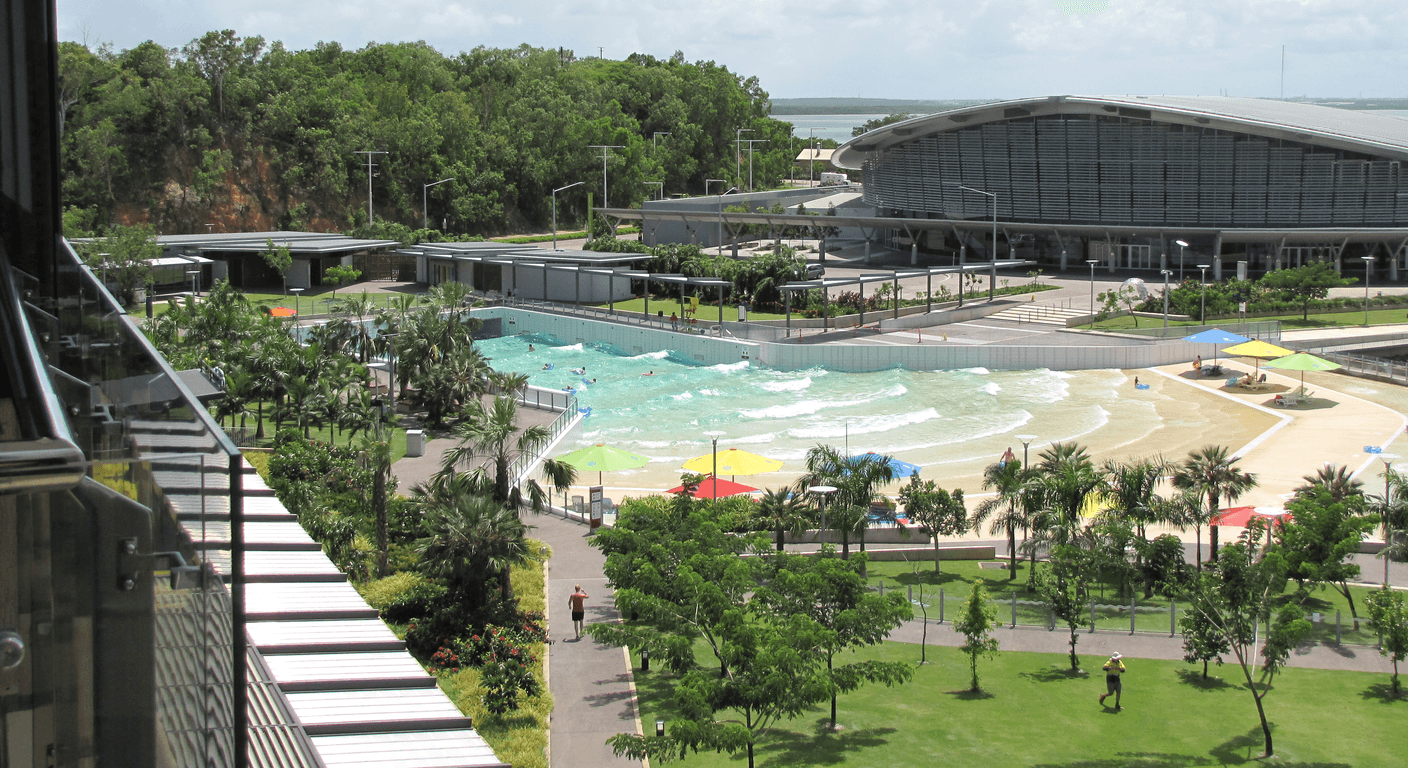
The Darwin Waterfront Precinct is where most visitors over 50 will want to base themselves, and for good reason. The boardwalks are flat, wide and well-maintained — genuinely easy walking for anyone who finds uneven terrain a nuisance rather than an adventure. The precinct wraps around a sheltered harbour cove and contains restaurants, cafés, a wave pool, a recreation lagoon and the Darwin Convention Centre, all connected by continuous paved paths.
The Recreation Lagoon is one of the precinct's quieter pleasures. It's a seawater lagoon with a netted swimming area — safe from both stingers and crocodiles, which the open water emphatically is not (more on that shortly). On a warm August evening, it's a genuinely lovely place to sit and watch the light change over the water. The wave pool nearby is more for families, but the surrounding lawn area is a pleasant spot to read or simply decompress.
Dining in the precinct runs from casual waterfront kiosks to sit-down restaurants with proper wine lists. Darwin's food scene has a genuine multicultural character — the city's Southeast Asian, Indigenous and Pacific communities all leave their mark on what's available. A solo diner here will feel entirely comfortable at the bar or a window table; the precinct is well-lit, well-patrolled and has a relaxed social atmosphere rather than a rowdy one.
Mindil Beach Sunset Market: Thursday and Sunday Evenings
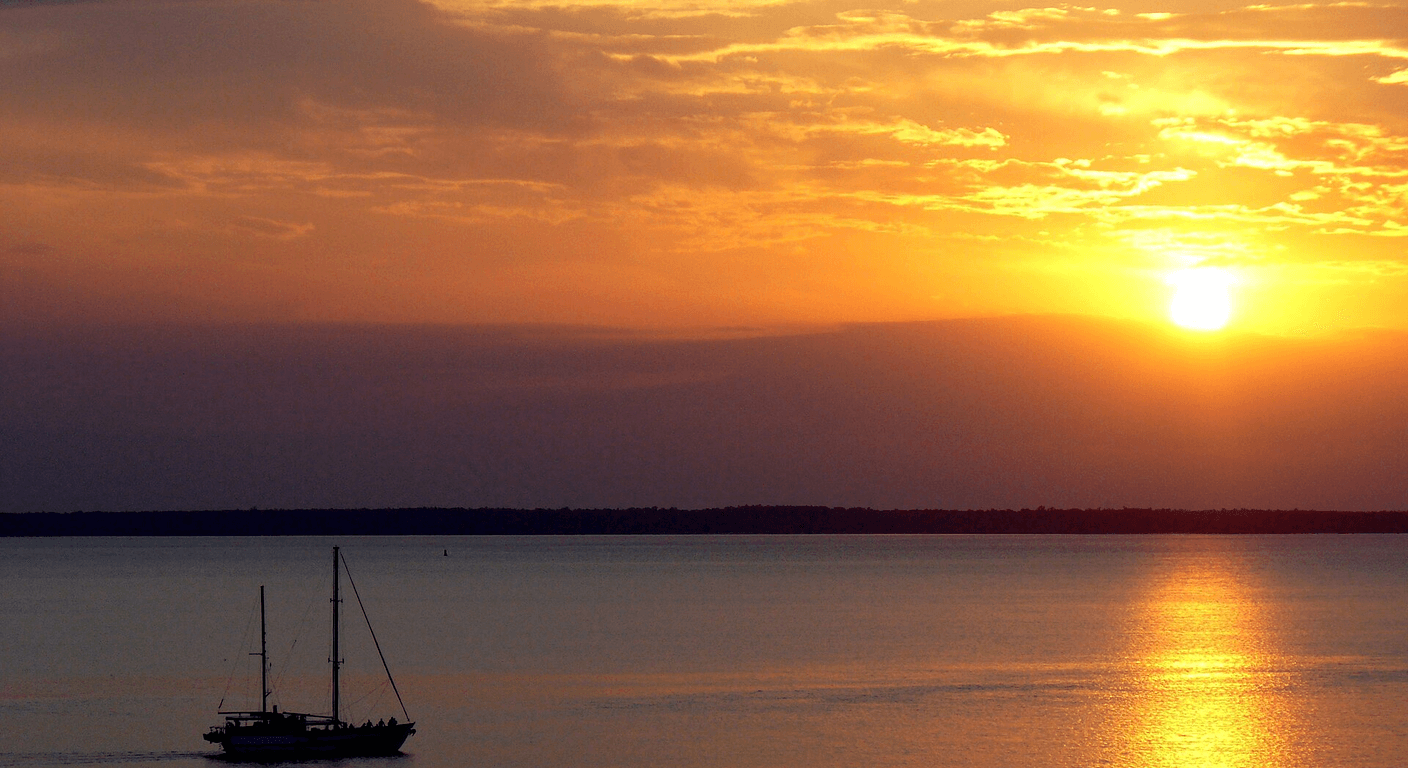
The Mindil Beach Sunset Market operates on Thursday and Sunday evenings during the dry season, typically from around 4pm to 9pm. It is, without overstatement, one of the more atmospheric outdoor markets in Australia — a wide sandy foreshore, food stalls representing a remarkable range of cuisines, craft and art vendors, and a crowd that gathers to watch the sun drop into the Timor Sea in a way that has clearly become a Darwin ritual.
The food is the main event. Indonesian satay, Thai noodles, Indian curries, Vietnamese spring rolls, freshly shucked oysters, barramundi in various configurations — the stalls are numerous and the quality is generally high. Budget around $20–$35 for a satisfying meal across a few dishes, eaten on the grass or at one of the low tables near the beach. There's no alcohol sold at the market itself, but a BYO approach is common and accepted.
Mobility note: the market is set on sand and grass, which is manageable but not as easy as a paved surface. Flat, supportive footwear is the practical choice. The crowds peak in the hour before and after sunset — arriving at 4pm or 4.30pm gives you first pick of the stalls and a calmer atmosphere before the masses arrive. The market is a 10–15 minute taxi or rideshare from the Waterfront precinct, or around 20 minutes on foot along the foreshore path if the evening is kind.
The Adelaide River Jumping Crocodile Cruise: A Half-Day Worth Taking
About an hour's drive south of Darwin along the Stuart Highway, the Adelaide River hosts one of the Northern Territory's most genuinely memorable wildlife experiences. The jumping crocodile cruises — operated by Adelaide River Cruises among others — run on flat-bottomed vessels that move slowly along the river while guides use dangling meat to coax saltwater crocodiles out of the water. The crocodiles are wild. They are also very large. It's a visceral reminder that the Top End operates on different ecological terms to the south.
The cruise itself takes around 1.5 hours on the water and is physically undemanding — you're seated on a covered deck for most of it, with good viewing from multiple positions on the boat. The vessels are accessible for most mobility levels, though boarding involves a short step down from the jetty; anyone with balance concerns should let staff know in advance. Return transfers from Darwin can be arranged through some operators or local tour companies, which removes the need to hire a car.
Indicative pricing runs around $60–$70 per adult for the cruise itself; confirm directly with operators as prices change seasonally. The drive through Noonamah and the Adelaide River floodplains is itself part of the experience — flat, wide wetlands that in August are dry and golden, dotted with termite mounds and the occasional flock of brolgas. Book this one in advance. August departures fill quickly, and the morning cruises tend to offer the best crocodile activity.
Crocodiles, Stingers and Swimming: The Safety Reality
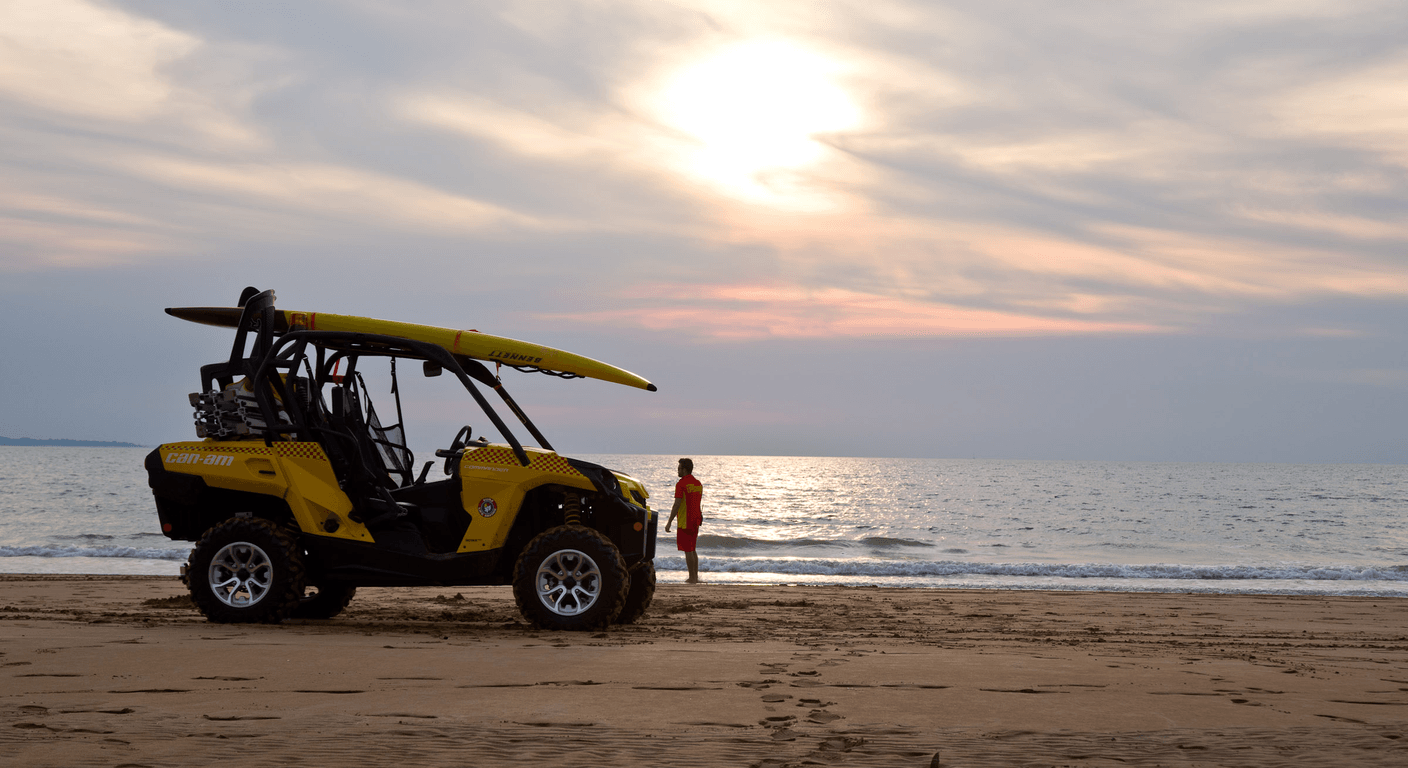
This needs to be said plainly, because some visitors treat it as optional information: in Darwin and across the Top End, saltwater crocodiles inhabit virtually every body of water connected to the sea or major river systems. This includes beaches, estuaries, creek mouths and tidal areas that might look perfectly innocuous. Crocodile warning signs are not decorative. Swimming in unenclosed natural water in the Darwin area is genuinely dangerous, and 'I didn't see any signs' is not a reliable safety strategy.
The Waterfront precinct's Recreation Lagoon and Wave Lagoon are the safe swimming options in Darwin itself — both are netted and regularly checked. Mindil Beach and other open beaches are not safe for swimming, both for crocodile risk and because box jellyfish (stingers) are present in the warmer months. August is technically the dry season and stinger risk is lower than in the wet, but the Northern Territory government's advice is to check current conditions and signage before entering any open water. Confirm the latest advice at nt.gov.au or with your accommodation.
None of this should alarm anyone out of coming. It's simply useful to know the rules before you arrive rather than after. Darwin residents live comfortably alongside these realities, and the city's managed swimming areas are well-maintained and genuinely pleasant. Treat the open water with respect, swim where locals swim, and the rest of your time is entirely relaxed.
Practical Planning: Budget, Accommodation and What to Bring
Accommodation in Darwin in August starts at around $150 per night for a comfortable hotel room in or near the Waterfront precinct or CBD; mid-range options with a pool and good breakfast run to around $200–$250 per night. Serviced apartments are a practical choice for a solo traveller who wants a kitchenette and a bit more space — several options exist within walking distance of the Waterfront. Book as early as possible; August availability tightens significantly by late May.
A realistic daily budget, excluding accommodation, sits at roughly $120–$180 depending on how you eat and what you do. Darwin's dining is not cheap by regional Australian standards — a sit-down dinner with a glass of wine will run to $50–$70 per person at a mid-range restaurant. The markets offer the best value eating in the city. Taxis and rideshares are the practical transport option for a solo visitor without a car; distances are short and fares are reasonable.
What to pack: Darwin in August is warm (around 28–32°C during the day) and dry, with evenings dropping to around 20–22°C — a light cardigan or linen layer is sufficient. Comfortable walking sandals and flat shoes for market evenings. Sun protection is non-negotiable; the UV index in Darwin in August is still significant even in the dry season. Reef-safe sunscreen, a wide-brimmed hat and a light long-sleeved shirt for midday are sensible defaults. Travel insurance covering any pre-existing conditions is essential — confirm your policy covers the full duration of your trip before departure.
Quick planning guide
| Ideal pace | Slow-paced and unhurried |
|---|---|
| Best months | May to September (dry season), with August the peak |
| Suggested stay | 5–6 nights |
| Mobility level | Easy — flat, compact Waterfront boardwalks; Mindil Beach market involves some sand and grass |
| Cost level | Mid-range — rooms from around $150/night, daily budget roughly $120–$180 |
| Comfort level | High — warm, dry days around 28–32°C and cooler evenings |
| Best for | Solo and older travellers wanting warmth, easy walking and a manageable pace |
| Main planning consideration | Book flights, accommodation and popular cruises well ahead, as August availability tightens quickly |
Key takeaways
- Darwin in August offers warm, dry days around 30°C with low humidity — the most comfortable window of the year for visitors from southern states.
- Direct flights from Melbourne to Darwin take around 4.5 hours, with indicative return fares from roughly $350–$500 if booked well ahead.
- The Mindil Beach Sunset Market runs Thursday and Sunday evenings during dry season — arrive early for the best stall selection and a calmer atmosphere.
- The Darwin Waterfront precinct offers flat, accessible boardwalks, safe enclosed swimming lagoons and waterfront dining in a compact, walkable area.
- Saltwater crocodiles inhabit open waterways throughout the Darwin region — swim only in the precinct's netted lagoons and follow all signage without exception.
- August is peak tourist season: accommodation, flights and popular cruises book out weeks in advance, so planning early is a practical necessity.
Recommended partners and links
Indicative prices only — always confirm with the operator before booking.
Frequently asked questions
How long is the flight from Melbourne to Darwin?
Direct flights from Melbourne (Tullamarine) to Darwin take around 4.5 hours. Several carriers operate this route. Indicative return fares start at roughly $350–$500 if booked well in advance; prices rise significantly closer to August departure dates. Confirm current fares directly with airlines.
Is Darwin suitable for solo female travellers over 50?
Darwin is a generally safe and manageable destination for solo female travellers. The Waterfront precinct is well-lit, well-patrolled and has a relaxed social atmosphere. The markets are busy but not rowdy. Taxis and rideshares are readily available. Standard solo travel awareness applies, as it does anywhere.
When does the Mindil Beach Sunset Market operate in August?
The Mindil Beach Sunset Market runs on Thursday and Sunday evenings during the dry season, typically from around 4pm to 9pm. It is located on the Darwin foreshore and is free to enter. Food, craft and art stalls are available, and the market is timed around the sunset over the Timor Sea. Confirm current operating dates at mindil.com.au.
Is it safe to swim at Darwin's beaches in August?
Open beaches in Darwin, including Mindil Beach, are not safe for swimming due to the presence of saltwater crocodiles and the potential for box jellyfish even in the dry season. Safe swimming is available at the enclosed Recreation Lagoon and Wave Lagoon in the Darwin Waterfront precinct, which are netted and regularly monitored. Always follow current signage and local advice.
What is a realistic daily budget for Darwin in August?
Excluding accommodation, a realistic daily budget in Darwin in August is roughly $120–$180 per person. Accommodation in the Waterfront precinct or CBD starts at around $150 per night for a comfortable hotel room, rising to $200–$250 for mid-range options. These are indicative figures only — confirm current pricing with accommodation providers before booking.