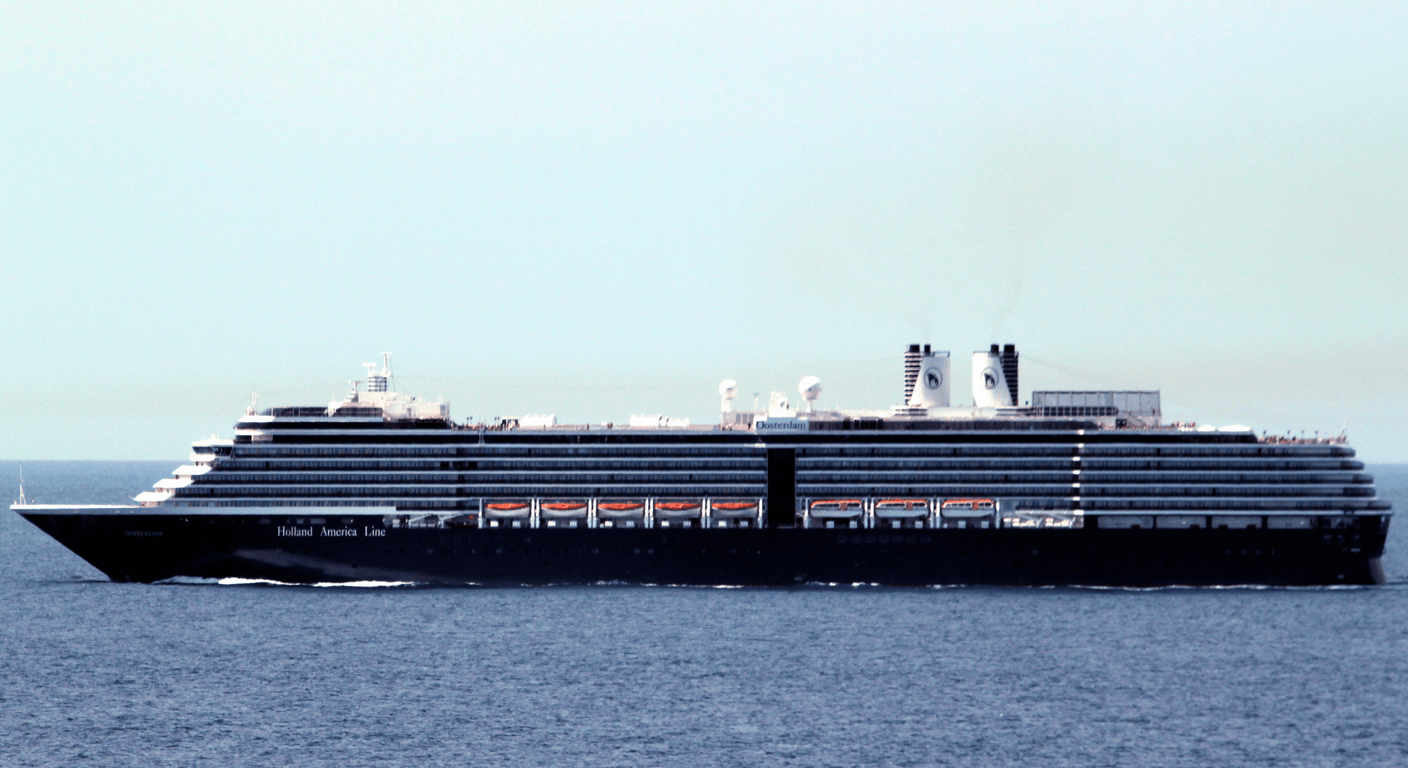
Holland America Line suits Australian travellers over 50 who want a measured pace, enrichment-focused programming and a passenger profile that skews mature. Ships are mid-size by today's standards, the dress code still means something, and the onboard noise level is genuinely lower than the mega-ship competition. Best months depend on itinerary: Alaska and Europe run April–September; Australia and South Pacific sailings typically November–March. Plan at least 14 nights. Mobility rating: Moderate. Access from Australia means long-haul flights to Seattle, Amsterdam or Fort Lauderdale — factor in a recovery night before embarkation.
Address the hard parts first: getting there from Australia
Most Holland America itineraries depart from Seattle, Vancouver, Fort Lauderdale, Amsterdam or Barcelona. From Melbourne, Sydney or Brisbane, you're looking at 20–30 hours of travel, often with one or two connections, before you even reach the embarkation port. From Perth the picture can look slightly better for European ports via the Middle East, but it's still a long day — and that matters at 66 in a way it simply didn't at 36.
The single most important piece of advice for any Australian boarding a Holland America ship: book a hotel night at the embarkation city before you sail. Not because the itinerary requires it, but because arriving at a terminal after 24 hours of flying and then processing embarkation queues — which on a ship carrying 1,800–2,500 passengers can stretch well over an hour — is a miserable way to start a holiday you've saved hard for. That recovery night costs roughly AUD $200–$400 depending on the port city, and it's worth every cent.
Jet lag is a real variable. Seattle and Vancouver are AEST minus 17–18 hours — essentially the most disorienting direction possible. Amsterdam and Barcelona are AEST minus 8–9 hours in northern summer. Give yourself two nights if you can. Smartraveller (smartraveller.gov.au) is the place to check current travel advisories for any port country before you book, and confirm entry requirements with the relevant consulates or your travel agent — visa rules change.
What Holland America actually is — and isn't
Holland America occupies a specific lane in the cruise market. It's not budget, it's not ultra-luxury, and it's emphatically not the party-ship end of mass-market cruising. The ships — ranging from roughly 1,350 to 2,650 passengers — feel genuinely mid-size compared to the 5,000-plus behemoths now launching from rival lines. Corridors are wide enough for comfortable mobility aid use, public spaces don't echo with competing DJ sets at 11am, and the demographic onboard is, with rare exceptions, 55 and above.
The line's Signature of Excellence programme still means something in practice: fresh flowers, a dedicated Exploration Central (the former Ocean Bar area reconfigured as a learning hub), the Lincoln Centre Stage classical music programme, and the America's Test Kitchen cooking demonstrations. These aren't afterthoughts bolted onto a party ship — they're the actual product. For a 66-year-old who's crossed most of the standard tourist checklists and wants substance rather than spectacle, that distinction matters.
What Holland America isn't: cutting-edge. The décor on older ships leans dark wood and muted tones, which some travellers find elegant and others find dated. The entertainment programme won't compete with Royal Caribbean for sheer spectacle. The food is solid and often very good — the Pinnacle Grill is genuinely worth the cover charge of around USD $45–$55 per person — but don't expect the culinary ambition of a Seabourn or Silversea. You're paying for reliability, calm and a crew-to-passenger ratio that keeps service personal.
Itineraries that matter to Australians: South Pacific, Australia and grand voyages
Holland America does sail Australian and South Pacific itineraries, typically in the November–March window when the northern hemisphere season winds down. These have included roundtrip sailings from Sydney and Auckland, as well as segments of the annual Grand World Voyage that passes through the region. For Australians who'd rather not fly to the other side of the world first, these sailings are the obvious entry point — check hollandamerica.com for current season deployment, since specific ships and ports change year to year and nothing here should be taken as a confirmed 2026 schedule.
The South Pacific itineraries tend to call at ports including Fiji, Tonga, Samoa and various French Polynesian islands. Many of these are tender ports — meaning you transfer from ship to shore via small boat rather than walking down a gangway — and that's worth flagging plainly. Tender transfers involve steps, some swell-dependent rocking, and a degree of physical confidence. If mobility is a genuine concern, ask Holland America's accessibility team directly before booking which specific ports on your sailing are tender-access, and what accommodation they can make.
For those willing to do the long-haul flight, Alaska remains Holland America's strongest itinerary. The line has sailed Glacier Bay since 1947 and holds one of the few National Park Service concession permits to enter the bay — a detail that separates it from competitors in a very practical way. Alaska sailings round-trip from Seattle or Vancouver, typically 7–14 nights, and they suit a friends group or couple who want dramatic scenery at a pace that allows you to actually absorb it. The shoulder season (May and early September) is often preferable to the July peak for crowd levels and sometimes pricing.
Solo traveller's perspective vs a couple's perspective
Solo travellers — and this is a point that deserves direct language — face Holland America's single-supplement policy head-on. The standard supplement on most cabin categories runs to 100% of the double-occupancy fare, meaning a solo traveller pays roughly what two people would pay together. That's an industry norm, not a Holland America peculiarity, but it still stings, and any honest guide has to say so plainly.
Holland America does periodically offer reduced single supplements — sometimes 50%, occasionally waived entirely on select sailings and cabin categories — particularly during off-peak periods or for longer grand voyage segments. The line also runs a Cabins for Solo Travellers programme on some ships, offering purpose-configured single-occupancy staterooms at a lower premium. Availability is limited and these sell quickly, so contacting Holland America directly or using a specialist cruise agent who monitors solo-fare releases is the practical move. There is no formal share-match programme on Holland America in the way some river cruise lines offer.
For a couple, Holland America's value proposition is considerably cleaner. A verandah stateroom on a 14-night Alaska sailing might run roughly AUD $4,500–$7,500 per person depending on season and cabin position — confirm all current pricing directly. The onboard dynamic suits couples who want time together without the social pressure of a highly programmed group tour: sea days are genuinely restful, and you can spend an afternoon in the Crow's Nest observation lounge with a book and a coffee without anyone suggesting you should be doing something else. For a friends group of three or four women travelling together, the line's twin-share and quad-cabin configurations often make the per-person cost much more manageable — worth asking about specifically.
Onboard pace, enrichment and what a sea day actually looks like
Sea days on Holland America are the product, not the penalty. The Explorations Central programme typically includes guest lecturers — historians, naturalists, former diplomats — who give talks in the main theatre or smaller venues. On Alaska sailings, park rangers board in Glacier Bay. On European sailings, the guest roster often includes specialists in the ports you're visiting. These aren't promotional talks; they're substantive, and they're free once you're aboard.
The Lincoln Centre Stage programme partners with Lincoln Centre in New York to bring chamber musicians onboard — rotating ensembles that perform multiple times per sailing in a dedicated venue. It's a genuine differentiator for culturally curious travellers. There's also the Billboard Onboard programme (pop and rock piano performances) and a more traditional show lounge for evening entertainment. The point is that there's genuine choice, and none of it requires staying up past 10pm if that's not your preference.
The spa, the pool deck, the library — all are quieter than you'd find on a larger ship. The Lido restaurant (the buffet) does get busy at peak times, but the main dining room operates on open seating for dinner on most ships now, which means you're not locked into a fixed table at a fixed time. For travellers who've been burned by rigid dining schedules on other lines, that flexibility is worth knowing about. The dress code — smart casual most nights, with two or three formal or 'gala' evenings per sailing — is still taken seriously by the passenger base, which some people find pleasantly old-fashioned and others find slightly exhausting to pack for.
The practical money conversation
Holland America positions itself between mass-market and premium. A rough AUD cost band for a 14-night sailing — interior cabin, no flights, excluding gratuities and most drinks — might start around AUD $3,500–$4,500 per person in double occupancy. Verandah cabins add roughly AUD $1,000–$2,500 per person depending on deck and itinerary. Grand voyages and world cruise segments scale considerably higher. All of these figures are indicative only; confirm every number with Holland America directly or through a licensed Australian cruise agent before making any decisions.
Gratuities are added daily — currently around USD $16–$17 per person per day on most Holland America ships, though this changes and should be confirmed. The Have It All fare package (which bundles drinks, specialty dining, shore excursions credit and Wi-Fi) is often worth calculating carefully: if you'd spend that money anyway, the bundled price can work out cheaper, but run the numbers for your actual habits rather than assuming. Wi-Fi packages sold separately are expensive at sea — factor that in if you're a regular video-caller back to family in regional Victoria.
One concession that's consistently overlooked: some Australian travel insurers offer specific cruise-cover endorsements for travellers over 60 with pre-existing conditions, but the definition of 'cruise cover' varies enormously. Check that your policy covers emergency medical evacuation from a ship at sea, which is categorically different from a standard hospital admission. The cost of a medical evacuation from the middle of the Pacific without cover is not a number you want to discover after the fact. The Australian Government's Smartraveller site has a useful insurance checklist at smartraveller.gov.au.
Who Holland America suits — and who it doesn't
Holland America suits the traveller who reads on sea days, attends the afternoon lecture, has a proper dinner with wine, and is in bed by 10:30pm with no apology required. It suits the regional Victorian woman who's done the European river cruise and wants something with more ocean, more distance and more intellectual texture. It suits the friends group who want a shared experience without the forced bonding of a group tour itinerary. It suits couples where one partner is less mobile but both want to feel like travellers rather than passengers being managed.
It suits less well the traveller who wants a buzzing social scene, late-night entertainment, a casino as a genuine activity, or the kind of constantly-changing roster of new bars and venues that newer ships offer. If you found Princess or Celebrity a bit quiet, Holland America will be quieter still. That's not a criticism — it's a description. The line has a very clear sense of what it is, and that self-knowledge translates into a consistent product.
For the Latin Australian traveller who's spent years working through between cultures and has a particular eye for warmth and hospitality: Holland America's Indonesian and Filipino crew are frequently cited by repeat passengers as a genuine differentiator. The service is attentive without being performative, and the cultural warmth in the dining room and housekeeping interactions tends to be genuine rather than scripted. That's not guaranteed — ships and crews rotate — but it's a consistent thread in the line's reputation that's worth acknowledging.
Quick planning guide
| Ideal pace | Unhurried — sea days are part of the appeal, not dead time |
|---|---|
| Best months | Alaska/Europe: April–September; Australia/South Pacific: November–March |
| Suggested stay | 14–21 nights minimum to justify the long-haul flight |
| Mobility level | Moderate — ship corridors are long, some ports are tender-access only |
| Cost level | Mid-to-premium — around AUD $4,000–$9,000+ per person for a 14–21 night sailing, depending on cabin and itinerary; confirm all pricing with Holland America directly |
| Comfort level | High — well-appointed staterooms, attentive service ratio, quieter public spaces |
| Best for | Culturally curious couples, solo women travellers, friends groups wanting substance over spectacle |
| Main planning consideration | Long-haul flights from Australian cities, single-supplement policy, and travel insurance covering pre-existing conditions — all require early attention |
Key takeaways
- Holland America's passenger profile genuinely skews 55-plus — you won't be the oldest person on the ship, and nobody will treat that as remarkable.
- Solo travellers typically face a 100% single supplement, but reduced-supplement sailings and purpose-built solo cabins do exist — ask specifically and early.
- A recovery night at the embarkation city after flying from Australia isn't optional luxury; it's sensible travel planning.
- Tender ports are common on South Pacific itineraries — ask Holland America's accessibility team which ports require tender transfer before committing to a sailing.
- The Lincoln Centre Stage classical music programme and onboard guest lecturers are genuine product, not marketing gloss.
- Travel insurance must explicitly cover emergency medical evacuation from a ship at sea — standard domestic cover rarely does.
Recommended partners and links
Indicative prices only — always confirm with the operator before booking.
Frequently asked questions
Does Holland America charge a single supplement, and is there any way to reduce it?
Holland America's standard single supplement is 100% of the double-occupancy fare on most cabin categories, meaning a solo traveller pays the full cost of a double cabin alone. However, the line periodically releases reduced-supplement sailings (sometimes 50% or waived) on select itineraries and dates, and some ships offer purpose-configured solo staterooms at a lower premium. There is no formal share-match programme. Solo travellers should contact Holland America directly or use a specialist cruise agent who monitors single-fare releases, and book early when reduced supplements are available.
Which Holland America itineraries depart from or visit Australia?
Holland America operates Australia and South Pacific sailings typically between November and March, including roundtrip departures from Sydney and Auckland, and Australian port calls as part of Grand World Voyage segments. Specific ships, ports and schedules change each season. Check hollandamerica.com for current deployment and confirm sailings directly with the line or a licensed Australian cruise agent — do not rely on third-party sources for scheduling accuracy.
How long is the flight from Australia to Holland America's main embarkation ports?
Seattle and Vancouver — the primary Alaska embarkation ports — are approximately 17–20 hours from Sydney or Melbourne, usually with one connection. Fort Lauderdale runs roughly 20–24 hours with connections. Amsterdam and Barcelona are 20–24 hours from east-coast Australian cities, often via the Middle East. Perth travellers may find European routes marginally shorter via direct Middle East connections. Regardless of departure city, booking a hotel night at the embarkation port before sailing is strongly recommended to recover from travel fatigue before boarding.
Is Holland America suitable for travellers with limited mobility?
Holland America's mid-size ships are generally well-configured for mobility aids, with wide corridors and lifts throughout. However, ship corridors are long — walking from a stern cabin to a bow restaurant can be 200 metres or more — and tender ports (common in the South Pacific) require transferring to a small boat via steps, which can be difficult for travellers with limited mobility. Request Holland America's accessibility information directly and ask which specific ports on your sailing are tender-access before booking. The line does offer accessible staterooms; availability is limited and they book early.
What does travel insurance need to cover for a Holland America cruise as an Australian over 50?
Standard travel insurance is often insufficient for cruise travel. Your policy must explicitly cover emergency medical evacuation from a ship at sea, medical treatment in international waters, and cruise-specific interruption (missed port, ship mechanical issues). If you have pre-existing conditions — common at 50-plus — you need a policy that covers those conditions, ideally with a specialist insurer experienced in mature-age cruise cover. The Australian Government's Smartraveller site (smartraveller.gov.au) has an insurance checklist. Compare policies carefully and read the product disclosure statement before purchasing.