Iceland's south coast suits over-50 Australians who travel in June or July for long daylight and easier waterfall access, or November to March if an ice-cave tour is the goal, over roughly a fortnight at a slow pace. The defining highlight is the run of black sand beaches, waterfalls, the Golden Circle and the Jökulsárlón glacier lagoon. Mobility is moderate, with flat paths at major stops but uneven terrain elsewhere. Reaching Iceland means a 24-30 hour journey via Singapore and London, as there are no direct flights from Australia.
The Long Haul: Getting to Iceland from Australia
There are no direct flights from Australia to Iceland. From Melbourne, Sydney or Brisbane, the most common routing is via Singapore (Changi) to London Heathrow, then onward to Reykjavík's Keflavík International Airport — total travel time somewhere between 24 and 30 hours depending on layover length. Icelandair and SAS operate the London–Reykjavík leg; Finnair routes via Helsinki are another option. Confirm current routes and codeshares before booking, as airline partnerships shift.
For travellers in their sixties and beyond, that journey demands honesty. Plan a full recovery night in Reykjavík before heading anywhere near a black sand beach or a glacier. Jet lag in Iceland is roughly nine to eleven hours behind Australian eastern time, which means your body clock will have you wide awake at 2am in a room that, in June, is still flooded with Arctic light. Blackout curtains and an eye mask are not optional extras — pack both.
Travel insurance is essential and should be arranged before any pre-existing conditions are disclosed. Iceland's medical care is excellent, but emergency evacuation or hospitalisation costs are significant. Policies that cover adventure activities — glacier walks, ice-cave tours — are worth the additional premium. Read the fine print on what constitutes a 'pre-existing condition' with your insurer before you finalise anything.
Reynisfjara and the Black Sand Beaches: Beautiful, and Genuinely Dangerous
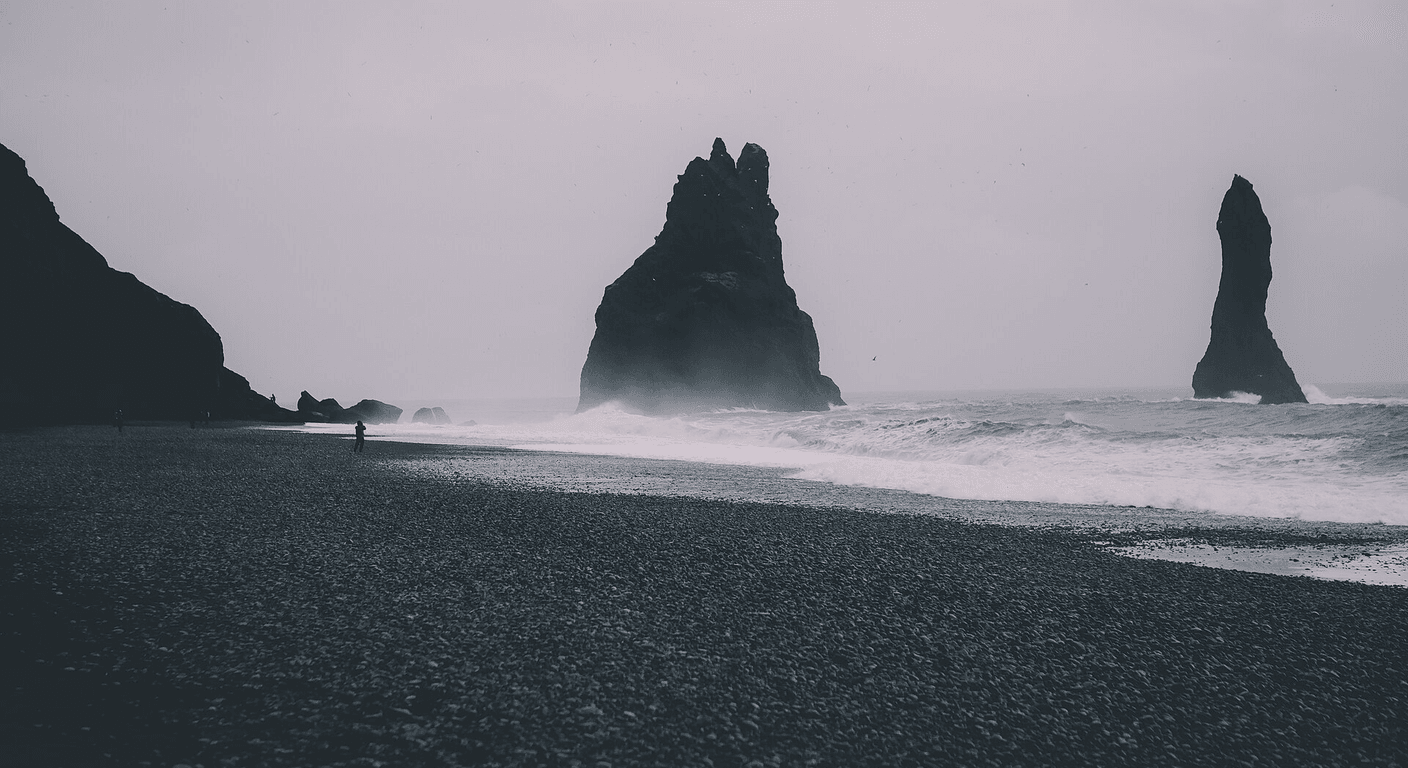
Reynisfjara, near the village of Vík on Iceland's south coast, is one of the most photographed beaches in the northern hemisphere. The black basalt columns, the hexagonal rock formations of Reynisdrangar rising from the sea, the sheer dramatic scale of the place — it earns every image. It also kills people who don't understand sneaker waves. This is not hyperbole. The warning signs at Reynisfjara exist because people have died there, swept from the shoreline by waves that arrive without warning, far up the beach, with extraordinary force.
The rule is simple and non-negotiable: stay well back from the water's edge, behind the wave-warning line. Never turn your back on the ocean. Never go to the waterline for a photograph, no matter how calm the sea looks. The wave that catches people is not the one they're watching. Rangers and signage reinforce this, but the responsibility is yours. For travellers who've spent decades walking Australian beaches and feel comfortable near surf, that confidence can be misleading here — the wave dynamics are different.
The basalt rock formations themselves are worth the visit on their own terms, and they're safely accessible from well back on the beach. The columns can be slippery when wet — wear shoes with real grip, not sandals or smooth-soled boots. Restrooms and a café are available at the car park. The walk from the car park to the main beach is short and relatively flat, making it accessible for most mobility levels, though the black sand itself is soft and uneven underfoot.
Waterfalls — Seljalandsfoss, Skógafoss and the Question of Footing
Seljalandsfoss is the waterfall you can walk behind — a narrow path curves around and through the rock face, giving you a curtain of falling water at arm's length. It's extraordinary, and it's also reliably wet, cold and slippery. The path is uneven rock and compacted earth, and in the spray zone it can be treacherous underfoot. Micro-spikes or ice cleats — small attachments that strap over your boots — are worth carrying from June onward if you want to attempt the full circuit. Many travellers choose to view Seljalandsfoss from the front and skip the behind-the-falls path. That's a completely reasonable call, not a compromise.
Skógafoss, roughly twenty kilometres further east, is bigger and more straightforward to access. The base viewing area is flat, well-maintained and close enough to feel the spray. There's a staircase of around 370 steps to a viewing platform at the top — a legitimate workout, and worth it for the views over the south coast on a clear day. It is not required. The base view is spectacular on its own terms. Take your time, let the crowds thin a little, and find a spot without being jostled.
Both waterfalls are on the main Ring Road (Route 1) and are easily incorporated into a south-coast day. The practical consideration for pacing: don't try to combine Seljalandsfoss, Skógafoss, Reynisfjara and the Jökulsárlón glacier lagoon in a single day. That's four hours of driving plus walking time, in rapidly changeable weather. Choose two or three stops maximum and linger properly at each.
Glacier Lagoons and Ice Caves: When to Go with a Guide
Jökulsárlón glacier lagoon sits at the edge of Vatnajökull, Europe's largest glacier. Icebergs calve from the glacier face and drift slowly through the lagoon before breaking apart and washing onto the black sand beach — Diamond Beach — on the other side of the road. The viewing area at the lagoon edge is accessible and relatively flat; the beach is a short walk across the road. Both are worth time. Amphibious boat tours operate on the lagoon itself, offering a closer look at the ice formations from the water — a gentler experience than glacier walking, and accessible for a wider range of mobility levels.
Ice-cave tours operate inside the glacier itself and are a different category of experience. These require a licensed guide — full stop. No responsible operator will let you enter an ice cave without one. The caves are accessed via a short but physically demanding walk over uneven glacial terrain, and conditions inside change with temperature. The blue ice is genuinely otherworldly. The tours are operated by companies like Icelandic Mountain Guides and are run in small groups, with safety equipment and briefings included. The terrain inside is cold (bring more layers than you think you need), sometimes low-ceilinged, and the footing is managed with crampons provided by the guide. Indicative cost is around AUD 200–280 per person, subject to exchange rates — confirm current pricing directly with operators.
Ice-cave season traditionally runs from November through March, when the ice is most stable. Summer visits focus on glacier surface walks instead. If an ice-cave tour is on the wish list, that shapes the entire trip timing — and means travelling in Iceland's darker months, with shorter days and more challenging driving conditions. The trade-off is real. Talk it through with a reputable operator before committing. Geothermal ground in areas like the Haukadalur valley (home to Geysir and Strokkur on the Golden Circle) presents its own hazard: the soil around active geothermal features can be thin and dangerously hot just below the surface. Stick to marked paths. Always.
The Golden Circle: A Classic Route Done at Your Own Speed
The Golden Circle — Þingvellir National Park, the Geysir geothermal area and Gullfoss waterfall — is Iceland's most accessible day route and genuinely worth the reputation. It's roughly 300 kilometres from Reykjavík and back, manageable as a day trip but better as an overnight if you want to move slowly. Þingvellir is a UNESCO World Heritage Site where the North American and Eurasian tectonic plates meet visibly at the surface — you can walk between the rift walls on a well-maintained path. It's also where the Icelandic parliament (the Alþingi) was established in 930 AD, which gives the landscape a human weight beyond the geology.
Guided day tours from Reykjavík run the Golden Circle as a group experience; indicative pricing is around AUD 90–130 per person, confirming with operators directly. Self-driving is also very manageable on this route — the roads are paved and well-signed, and the stops are all clearly marked. For travellers uncertain about driving on unfamiliar roads in changeable weather, a guided tour removes the decision-making load and lets you simply absorb the landscape. For those who prefer their own pace — and who want to spend an extra forty minutes at Gullfoss without a group timetable — self-drive makes sense.
Strokkur, the most active geyser at the Geysir site, erupts roughly every five to ten minutes and shoots water fifteen to twenty metres into the air. The viewing area is flat and well-organised, and you can position yourself at a comfortable distance. The ground immediately around the hot springs is fenced and signposted — the restrictions are there for excellent reasons. Gullfoss is a two-tiered waterfall of considerable scale; the paths to the main viewing platforms are paved and accessible, though there's an optional rougher track closer to the falls that requires more care underfoot.
Weather, Driving and the Importance of Checking Conditions Daily
Iceland's weather is genuinely unpredictable in a way that Australian travellers from coastal climates may underestimate. A clear morning on the south coast can become a horizontal sleet storm by early afternoon, with visibility dropping fast. Wind speeds in exposed areas — particularly near waterfalls and coastal headlands — can be strong enough to knock you off balance. This is not drama: it's a practical consideration for anyone with a hip replacement, a balance issue, or simply unfamiliar footwear.
The Icelandic Met Office (vedur.is) publishes colour-coded weather alerts that are updated multiple times daily. Safe Travel Iceland (safetravel.is) aggregates road conditions, closure alerts and safety warnings for specific sites. Checking both before leaving your accommodation each morning should be as automatic as putting on your jacket. The Ring Road (Route 1) is generally well-maintained in summer, but highland roads (marked F-roads) require a 4WD and are only open seasonally — most rental agreements prohibit standard vehicles on F-roads, and that restriction is enforced for good reason.
For self-drive travellers, hiring a small 4WD rather than a standard car is worth the additional daily cost — indicatively around AUD 130–200 per day for a basic 4WD, excluding fuel. Fuel in Iceland is expensive; budget roughly AUD 2.50–3.00 per litre as a rough indicative figure, and confirm current pump prices on arrival. Filling the tank whenever you pass a station is a sensible habit in rural areas where the next station may be an hour away. All costs are indicative, fluctuate with season and the AUD/ISK exchange rate, and should be confirmed before booking.
Pacing, Comfort and Making the Most of Being Slower
The travellers who have the best time in Iceland are not the ones who tick off the most sites — they're the ones who stop long enough to actually feel the place. A morning at Jökulsárlón watching icebergs drift, followed by a long lunch and an afternoon soak at one of the local geothermal pools, is a better day than five rushed photo stops. The light in Iceland, particularly in June and July, shifts and changes through a very long evening — colours that are flat at noon become extraordinary at 9pm. Slowing down is not a concession. It's the actual strategy.
Geothermal pools and hot pots are Iceland's great comfort offering — and they're particularly welcome for travellers whose joints feel the cold. The Blue Lagoon near Keflavík is the internationally known option, and it's worth booking in advance (bluelagoon.com); the Fontana spa at Laugarvatn on the Golden Circle route is smaller, quieter and sits directly over geothermal springs. Many guesthouses along the south coast have their own small hot pots. After a day of uneven terrain and cold air, twenty minutes in 38-degree geothermal water is genuinely restorative.
Restroom availability varies by site — the major tourist stops (Reynisfjara, Seljalandsfoss, Skógafoss, Geysir, Gullfoss, Jökulsárlón) all have facilities at or near the car park. Smaller roadside stops may not. Carrying hand sanitiser and being realistic about longer stretches between services is practical planning, not fussiness. For travellers with mobility aids or accessibility requirements, it's worth contacting specific operators and accommodation providers directly before booking — Iceland's accessibility infrastructure has improved considerably, but it's uneven, and honest advance enquiry saves disappointment.
Quick planning guide
| Ideal pace | Slow-paced — two to three stops per day, with time to linger |
|---|---|
| Best months | June-July for long daylight and waterfalls; November-March for ice-cave season |
| Suggested stay | A fortnight |
| Mobility level | Moderate — flat, accessible paths at main sites, uneven or demanding terrain at glaciers, ice caves and behind waterfalls |
| Cost level | Mid-range to premium, with indicative AUD costs for guided tours, 4WD hire and fuel |
| Comfort level | Geothermal pools and guesthouse hot pots offer genuine restorative comfort after cold, uneven terrain |
| Best for | Over-50 Australians who plan carefully, pace themselves and take natural hazards seriously |
| Main planning consideration | Respecting sneaker-wave and weather hazards while checking daily conditions and choosing guided options where terrain demands it |
Key takeaways
- Sneaker waves at Reynisfjara are a genuine, documented hazard — stay well behind the wave-warning line at all times, regardless of how calm the sea appears.
- A recovery night in Reykjavík after the 24–30-hour journey from Australia is not optional — it's the foundation of the whole trip.
- Ice-cave tours require a licensed guide and are physically demanding; glacier lagoon boat tours offer a comparable sense of wonder at a gentler pace.
- Check vedur.is and safetravel.is every morning before leaving accommodation — Iceland's weather changes fast and site conditions vary daily.
- Two to three stops maximum on south-coast driving days is a smarter rhythm than five rushed ones; the light and landscape reward time spent lingering.
- All costs — guided tours, car hire, fuel, entry fees — are indicative in AUD and fluctuate with season and exchange rates; confirm current pricing directly with operators before booking.
Recommended partners and links
Indicative prices only — always confirm with the operator before booking.
Frequently asked questions
Is Iceland safe for over-50 travellers?
Iceland is very safe for over-50 travellers who take the natural hazards seriously. The main risks are sneaker waves at exposed black sand beaches like Reynisfjara, slippery terrain near waterfalls and on glacier surfaces, sudden weather changes, and geothermal ground around active hot spring areas. Sticking to marked paths, checking daily alerts on safetravel.is and vedur.is, and booking guided tours for glacier and ice-cave experiences significantly reduces risk.
What is the best time of year for over-50 Australians to visit Iceland?
Late May through early September offers the best combination of mild weather, long daylight hours and clear road conditions for most of the south coast. June, July and August are warmest, with temperatures typically between 10 and 15 degrees Celsius in the south. May and September have fewer crowds and are still very manageable. Ice-cave tours run November to March, when colder, more challenging conditions apply — a meaningful trade-off to consider.
Do I need a guided tour or can I self-drive Iceland's south coast?
Both are viable. Self-driving gives you full control of pace and timing, which suits travellers who want to linger longer at each site — the Ring Road is well-paved and signed in summer. Guided small-group tours remove the navigation and weather-monitoring burden, which many travellers find genuinely liberating. Glacier walks and ice-cave tours always require a licensed guide; those cannot be done independently.
How accessible are Iceland's main natural attractions for travellers with mobility considerations?
Accessibility varies considerably by site. Jökulsárlón glacier lagoon and the Golden Circle stops (Geysir, Gullfoss viewing platform, Þingvellir main path) are relatively flat and well-maintained. Reynisfjara beach involves soft, uneven black sand. Seljalandsfoss has slippery, uneven rock paths, particularly in the spray zone. Glacier and ice-cave tours involve physically demanding terrain with crampons. Contacting specific operators directly before booking is the most reliable way to assess whether a particular experience suits your mobility level.
How much does a trip to Iceland cost for an Australian traveller?
Iceland is one of Europe's more expensive destinations. As a rough indicative guide: guided glacier walks run around AUD 160–220 per person, ice-cave tours around AUD 200–280, and Golden Circle day tours around AUD 90–130. Small 4WD hire runs around AUD 130–200 per day before fuel, which is expensive — budget roughly AUD 2.50–3.00 per litre. Accommodation ranges from modest guesthouses to well-appointed hotels. All figures are indicative, fluctuate with season and the AUD/ISK exchange rate, and should be confirmed with operators before booking.
- Safe Travel Iceland — official safety alerts and travel warnings
- Icelandic Met Office — weather forecasts and hazard alerts
- Icelandic Mountain Guides — glacier and ice-cave tours
- Reykjavík Excursions — Golden Circle and south coast guided tours
- Blue Lagoon Iceland — geothermal spa near Keflavík
- Vatnajökull National Park — official park information
- Þingvellir National Park — UNESCO World Heritage Site information
- jordentually — Iceland travel content (YouTube)