The Golden Triangle — Delhi, Agra and Jaipur — covers about 750 kilometres and suits small-group escorted tours of eight to fourteen days, with November to February the most comfortable months. The Taj Mahal is the defining highlight and genuinely lives up to its reputation. Mobility is moderate, with uneven ground and steps at monuments, and access is by road and train between cities, flying in and out of Delhi.
Why the Golden Triangle works well for older solo travellers
The Golden Triangle — Delhi, Agra and Jaipur — forms a rough loop in northern India that covers around 750 kilometres and three of the subcontinent's most historically layered cities. It became a standard circuit because it is logistically coherent: the distances are manageable by road or train, the sights are concentrated, and the tourist infrastructure, while far from seamless, is more developed here than in most of India. For a traveller doing India for the first time at 65 or 69, that coherence matters.
Travelling solo adds its own texture to the experience. You set your own pace within the group, you are not negotiating with a travel companion about how long to linger at a monument, and you tend to be more open to conversation with fellow travellers and local guides. Small-group tours — typically eight to sixteen people — suit the solo traveller well because they provide structure and company without the anonymous scale of a coach tour. You are not alone, but you are not managed either.
The honest case for escorted touring in India is simple: the country is genuinely complex to navigate independently, especially for a first visit. Traffic in Delhi and Agra operates on logic that takes time to read. Touts at major monuments are persistent and skilled. The gap between a good guesthouse and a poor one is enormous and not always obvious from photos. A reputable small-group operator absorbs all of that friction, leaving you with the parts worth your energy: the sights, the food (carefully chosen), the people, the light.
What does a typical Golden Triangle itinerary actually look like?
Most Golden Triangle tours run between eight and fourteen days, with the core circuit taking roughly eight to ten days. A common shape: two to three nights in Delhi, one to two nights in Agra (with the Taj Mahal as the centrepiece), then two to three nights in Jaipur, before returning to Delhi for the international flight home. Longer tours add extensions to Varanasi, Ranthambore National Park for tiger-spotting, or Udaipur in Rajasthan.
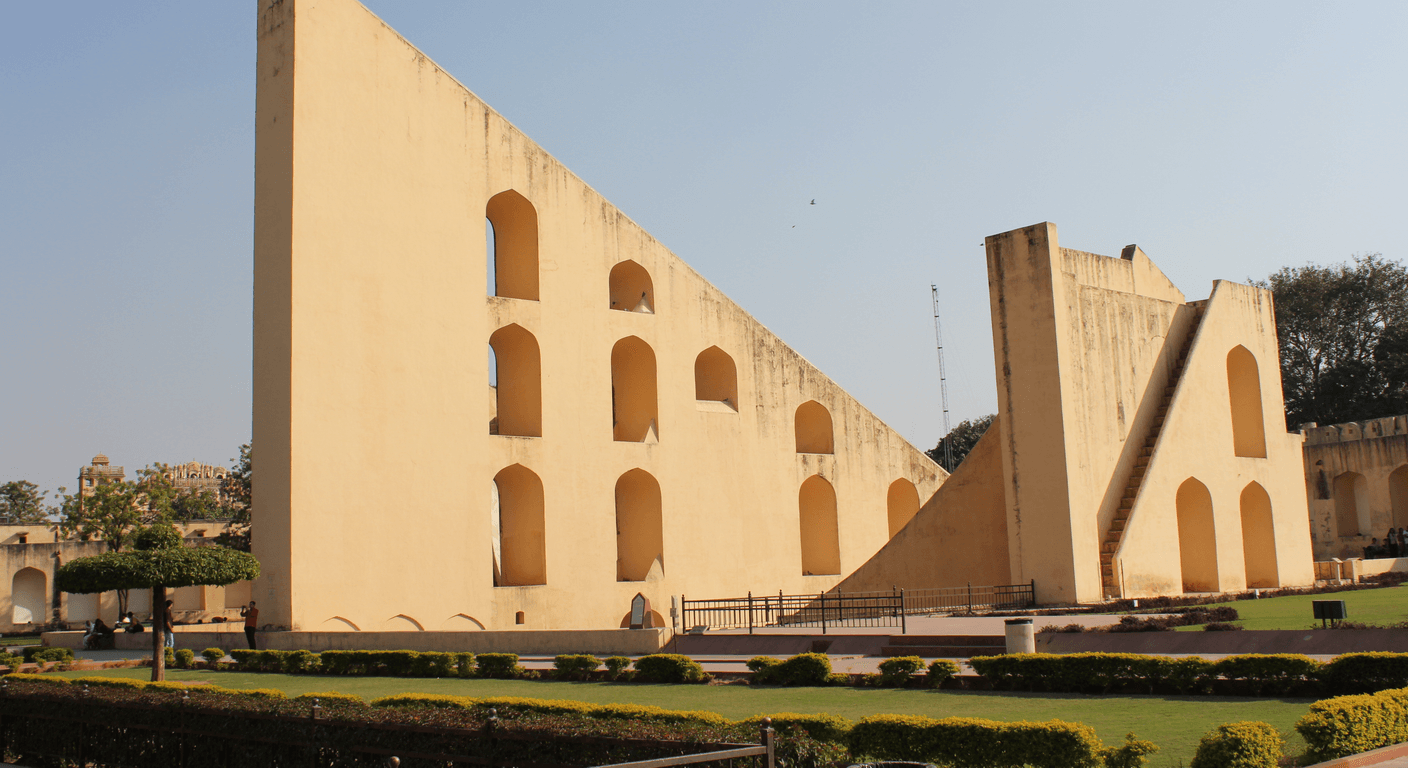
The Delhi days typically cover Old Delhi — the Red Fort, Jama Masjid, a rickshaw ride through the lanes of Chandni Chowk — and New Delhi's colonial-era geometry: India Gate, Humayun's Tomb, Qutb Minar. Agra is essentially the Taj Mahal plus Agra Fort and, if time allows, Fatehpur Sikri, the abandoned Mughal city nearby. Jaipur brings the Pink City's walled old town, Amber Fort above the city, Jantar Mantar observatory, and the City Palace.
Drive days between cities run two to four hours depending on traffic, which in India means they can run longer. A good operator builds in stops and does not schedule a major monument immediately after a long drive. When you are comparing tours, look at the day-by-day itinerary with some scrutiny: how many hours are actually spent in vehicles, and how many genuine rest periods are built in. A packed day that works for a 35-year-old can be genuinely tiring for someone in their late sixties, particularly in the heat.
The Taj Mahal: does it actually live up to the reputation?
The honest answer is yes — and that is worth saying plainly, because very few sights that carry this much expectation manage it. The Taj Mahal is one of them. The scale becomes clear only when you pass through the great sandstone gateway and the full structure opens in front of you. The white marble changes with the light in ways that photographs do not capture. Early morning, when the mist off the Yamuna River is still sitting low, is the time most guides will push for, and they are right.
What escorted touring helps with here is significant. Entry queues at the Taj Mahal can be long and the ticketing system has multiple components including separate charges for foreign nationals. Your guide handles that. The site itself is large and uneven underfoot — the pathways are paved but the grounds around the main plinth involve steps and marble surfaces that can be slippery. Good walking shoes with grip matter. If mobility is a concern, discuss this with your operator before booking: some access limitations apply around the main mausoleum.
What escorted touring cannot change is the crowd. The Taj Mahal receives millions of visitors a year and even in the quieter months you will be sharing it with a great many people. Early entry helps. So does accepting that this is part of the experience rather than a flaw in it. A monument this significant was never going to be a private experience, and there is something oddly moving about seeing so many people from so many countries gathered around the same thing.
What escorted touring smooths over — and what it cannot
A good small-group operator removes a remarkable amount of friction from an Indian itinerary. Traffic and transfers are handled. Accommodation is vetted. Guides are local, knowledgeable and generally skilled at reading what a group needs — when to slow down, when to skip a secondary sight in favour of rest, when someone needs a quiet moment. The persistent touts at monument gates, while still present, are easier to navigate when you are moving as a group with a confident local guide. You learn quickly to make brief, polite eye contact, say no once and keep walking.
Escorted touring cannot change the climate. Northern India in summer — roughly April through September — is extremely hot, with temperatures in Delhi and Agra regularly exceeding 40 degrees Celsius. The cooler months from October through March are the standard recommendation for the Golden Triangle, with November through February being the most comfortable. Even in December, midday can reach the mid-twenties and the sun is strong. October and March sit at the edges of comfortable: warm but manageable if you pace yourself and carry water.
It also cannot guarantee your stomach. Traveller's diarrhoea is a genuine risk in India regardless of how careful you are, and it is more disruptive at 69 than at 29. A reputable operator will steer you toward restaurants with appropriate hygiene standards and brief you on food and water discipline: bottled water only, avoid raw salads and unpeeled fruit from street vendors, be cautious with dairy from unknown sources. Carry oral rehydration sachets. Discuss appropriate medications with your GP before you leave — this is not something to sort out in Delhi. Travel insurance that covers medical evacuation is not optional.
How do you choose an operator with the right pacing?
Pacing is the single most important factor for older travellers choosing between Golden Triangle tours, and it is also the one most obscured by marketing language. Every operator describes their tour as 'leisurely' or 'well-paced'. The way to test that claim is to read the actual day-by-day itinerary, count the number of sights scheduled per day, and check whether rest time and free afternoons are built in as genuine features rather than afterthoughts.
Look for tours that describe themselves as specifically designed for mature or senior travellers, or that cap group size at twelve or fewer. Ask the operator directly: what is the average age of participants on this departure, what is the most walking-intensive day, and what happens if a traveller needs to sit out an activity? A good operator will answer all of these questions without hesitation. An operator that deflects or gives vague reassurances is telling you something.
Australian-based operators — or international operators with a strong Australian customer base and local support — tend to be easier to deal with in terms of pre-trip communication, complaints handling and emergency support. Look at whether the operator is a member of the Australian Federation of Travel Agents (AFTA) or the Australian Tourism Export Council. Read recent reviews on independent platforms, filtering specifically for travellers in your age group. Departure dates from Australia typically route through major hub airports; check whether the operator includes or assists with international flights or land-only content.
Practical matters: visas, health, money and staying connected
Visa requirements for Australians travelling to India have changed more than once in recent years. As of 2025, most Australian passport holders apply for an e-Visa online before departure. The smartraveller.gov.au entry for India is the authoritative starting point — check it when you begin researching and again when you book, because requirements and processing times can shift. Your operator will have current guidance, but do not rely solely on them: the obligation to hold a valid visa rests with you.
Health preparation deserves more time than most travellers give it. Book a travel medicine appointment at least six to eight weeks before departure. Depending on your vaccination history and health profile, your doctor may recommend hepatitis A, typhoid, and updated tetanus coverage at minimum. Discuss malaria prophylaxis, though the Golden Triangle cities themselves carry lower risk than rural or jungle areas. Bring a small medical kit: hand sanitiser, rehydration sachets, an antidiarrhoeal, and any prescription medications in sufficient supply with a copy of the prescription.
Cash in Indian Rupees is still useful for tips, small purchases and market browsing, though ATMs in Delhi, Agra and Jaipur are generally reliable. Notify your bank before you travel. A travel money card loaded in AUD and converted to INR gives reasonable rate transparency. Mobile connectivity is generally good in the cities: your Australian SIM may work on roaming, but a local SIM purchased at the airport is cheaper for a two-week stay. WhatsApp is the standard communication tool for guides and operators on the ground.
Getting the most out of the experience as a solo traveller
Solo travellers on small-group tours often find the Golden Triangle unexpectedly sociable. Groups tend to be drawn from Australia, the UK, New Zealand and North America, with a reasonable proportion of solo travellers in the 60-plus age bracket. There is a natural ease to conversation when you are all navigating the same sensory overload together. Some of the best moments on a trip like this happen at a shared dinner table in Jaipur, not at a monument.
Give yourself permission to opt out occasionally. If the group is heading to a fourth temple on a hot afternoon and you have had enough, a rest at the hotel is not a failure. The best operators build in enough flexibility to make this possible. Carry a notebook or a camera with a purpose — having a small creative focus sharpens attention and gives the experience somewhere to land.
India has a way of getting under the skin of people who go open-handed rather than white-knuckled. The chaos is real. So is the colour, the hospitality, the food when you find the right places, and the weight of history at sites like Humayun's Tomb or Amber Fort. A 69-year-old travelling solo has, in most cases, accumulated enough life to meet India on something like equal terms. That is not a small thing.
Quick planning guide
| Ideal pace | Slow enough to include genuine rest time; avoid operators who pack every day |
|---|---|
| Best months | November to February for the most comfortable weather; October and March at the edges of comfortable |
| Suggested stay | 8 to 14 days, with the core Delhi-Agra-Jaipur circuit taking 8 to 10 days |
| Mobility level | Moderate — uneven pathways, steps and slippery marble at monuments like the Taj Mahal, plus long drive days |
| Cost level | Varies by operator; small-group escorted tours with vetted accommodation and guides |
| Comfort level | Improved significantly by a reputable small-group operator who handles traffic, touts and hygiene standards |
| Best for | First-time solo travellers in their 60s and 70s wanting structure without a large coach-tour scale |
| Main planning consideration | Choosing an operator based on genuine day-by-day pacing, group size and pre-departure health and visa preparation |
Key takeaways
- The Golden Triangle — Delhi, Agra and Jaipur — is the most logistically coherent first-time India circuit for travellers in their 60s and 70s.
- The Taj Mahal is one of the rare sights that genuinely exceeds expectation; early-morning entry in the cooler months gives the best experience.
- October through March is the recommended window, with November to February the most comfortable for older travellers managing heat.
- A small-group escorted tour handles traffic, touts and logistics effectively but cannot eliminate stomach risk, heat or long drive days — prepare for all three.
- Check smartraveller.gov.au for current India visa requirements before booking, and see a travel medicine specialist at least six weeks before departure.
- When comparing operators, read the day-by-day itinerary carefully: genuine rest time and manageable daily walking distances matter more than any marketing description.
Recommended partners and links
Indicative prices only — always confirm with the operator before booking.
Frequently asked questions
Is India's Golden Triangle suitable for solo travellers in their late 60s?
Yes, on a small-group escorted tour it is a workable and rewarding trip for a healthy traveller in their late 60s. The circuit is well-established, the tourist infrastructure is more developed here than in most of India, and a good operator handles the logistical complexity that makes independent travel in India demanding. The key variables are your general fitness, tolerance for heat, and willingness to follow sensible food and water discipline.
What is the best time of year to visit the Golden Triangle for older Australian travellers?
November through February is the most comfortable window. Temperatures are cooler, humidity is lower, and the days are clear. October and March are also viable but warmer at the edges. Avoid the summer months from April through September: temperatures regularly exceed 40 degrees Celsius in Delhi and Agra, which is genuinely risky for older travellers.
How much does a small-group Golden Triangle tour cost from Australia?
Land content for a Golden Triangle small-group tour varies widely depending on the operator, accommodation standard, group size and inclusions. As an indicative and rough guide only, budget-to-mid-range tours start around AUD 2,500–3,500 for ten days of land content; premium or fully escorted tours with higher-grade hotels can reach AUD 7,000–9,000 or more. International flights are typically additional. Always confirm current pricing directly with operators, as costs change and these figures are indicative only.
Do Australians need a visa for India, and how do they apply?
Most Australian passport holders need to apply for an Indian e-Visa online before departure. Requirements and processing times can change, so check the current advice at smartraveller.gov.au before booking and again closer to your departure date. Your tour operator will also have current guidance, but the responsibility for holding a valid visa rests with you.
How do you avoid getting sick in India on a Golden Triangle tour?
Stomach illness is a genuine risk in India and warrants serious preparation. Drink bottled water only — including for brushing teeth. Avoid raw salads, unpeeled fruit from street vendors, and dairy products from unknown sources. Eat at restaurants recommended by your guide and operator. Carry oral rehydration sachets and discuss appropriate medications with your GP before you leave. See a travel medicine specialist at least six weeks before departure to review vaccinations and any prophylactic medications relevant to your health profile.
- Smartraveller — India Travel Advice (Australian Government)
- Tourism of India — Official India Tourism Site
- Archaeological Survey of India — Taj Mahal
- Intrepid Travel — India Small Group Tours
- APT (Australian Pacific Touring) — India
- Peregrine Adventures — India
- Australian Federation of Travel Agents (AFTA)