Istanbul's Hagia Sophia and Cappadocia's fairy-chimney landscape make Turkey worth the long-haul journey from Victoria, typically 14 to 17 hours with one stopover via Singapore, Dubai or Doha. Best visited in the shoulder seasons of April–early June or September–October, the trip suits a minimum two to three weeks: a week in Istanbul, four to five days in Cappadocia. Terrain is genuinely hilly and uneven, rating Moderate for mobility, and persistent shop-selling requires patience throughout.
Why Turkey makes sense for Australian travellers over 50
There is a certain kind of trip that earns its place in memory not because everything went smoothly, but because the place itself is genuinely unlike anywhere else. Turkey is that kind of destination. Istanbul sits at the junction of two continents and several thousand years of history, and you feel that weight the moment you walk into Hagia Sophia or stand on the Galata Bridge watching the ferries cross the Bosphorus. Cappadocia, a few hours inland by plane or overnight bus, presents a landscape so unusual — volcanic rock formations, cave churches, fairy chimneys — that photographs never quite prepare you for it.
For a traveller based in Victoria, the flight time is real: typically 14 to 17 hours with one stop, often via Singapore, Dubai or Doha. That is a commitment, and it is worth acknowledging rather than glossing over. Most travellers in their 60s find that a minimum of two to three weeks justifies the journey properly — one week in Istanbul, four to five days in Cappadocia, and ideally a day or two in transit to rest before flying home. The Turkish lira has been volatile in recent years, and while that has generally worked in favour of Australian visitors, you should check the current exchange rate with your bank or a currency converter close to travel rather than relying on any figure published here.
Turkey is also, bluntly, a country that requires some patience and a degree of resilience. It is not a passive, sit-back-and-be-guided experience unless you specifically arrange it that way. The rewards are proportional to the effort, and most travellers who go prepared come back saying they would return.
Istanbul: what to expect at the major sites
Hagia Sophia is the building that stops most visitors in their tracks. Built as a Byzantine cathedral in 537 AD, converted to a mosque in 1453, a museum for most of the 20th century, and returned to active mosque status in 2020, it carries that layered history visibly. Entry is free, but non-Muslim visitors are directed to specific areas and entry may be restricted during prayer times — typically five times daily. Dress requirements apply: shoulders and knees covered, and women are asked to cover their hair. Scarves are available at the entrance if you arrive unprepared, but bringing your own is simpler. The space is large, but crowds inside are dense, particularly mid-morning. Arriving at opening time — currently around 9am outside prayer periods, though confirm this before your visit — gives you the best chance of moving freely.
The Blue Mosque (Sultan Ahmed Mosque) sits directly opposite and remains an active place of worship. Entry is free for visitors outside prayer times. The same dress rules apply, and the queues at peak hour can be slow-moving. The interior — six minarets, Iznik tiles, cascading domes — is worth the wait, but if you are travelling with a knee or hip concern, be aware that visitors sit or kneel on carpet inside and rising from that position in a crowd requires some care. The Topkapi Palace, a short walk from both, charges entry and involves significant walking across a large open site with uneven cobblestones. Allow at least three hours and wear flat, supportive shoes.
The Grand Bazaar is one of the world's oldest covered markets — more than 4,000 shops across a labyrinthine network of lanes. It is worth seeing as an experience in its own right, distinct from any intention to buy. Be prepared for persistent, good-humoured approaches from shopkeepers: 'Just looking? Where are you from? Australia — beautiful country.' This is not aggression, it is profession, and a calm, friendly 'no thank you' is entirely sufficient. Do not feel obliged to enter a shop unless you genuinely want to. If you do enter, particularly a carpet shop, understand that a cup of tea and a long presentation is the standard format, and leaving without buying is perfectly acceptable — though you may need to say so clearly more than once.
Istanbul's terrain: an honest assessment for older travellers
Istanbul is a hilly city built on a peninsula, and the historic Sultanahmet district where most of the major monuments sit involves meaningful inclines and a great deal of cobblestone. If you use a walking stick, that is sensible rather than optional. If you have significant mobility limitations or use a wheelchair, the historic core presents genuine difficulties — surfaces are uneven, kerbs are inconsistent, and many older buildings have steps without ramps. The newer districts, particularly Beyoglu on the other side of the Golden Horn, have a famous steep hill serviced by a historic funicular (the Tünel, one of the world's oldest underground railways), which is a practical and interesting way to manage the gradient.
The city's public transport is well-developed. The tram line T1 runs directly through Sultanahmet and connects to the main ferry terminals and the Grand Bazaar stop, making it possible to avoid most of the hills if you plan your routing. The metro system is modern and air-conditioned. Taxis are plentiful and relatively inexpensive by Australian standards, though agree on using the meter before you get in. The ferry system across the Bosphorus is a genuine pleasure — comfortable, affordable, and one of the best ways to see the city from the water.
Pace is everything. Istanbul in summer is hot and crowded, and the temptation to pack in five major sites in a day will leave most travellers exhausted and irritable. Three hours of sightseeing in the morning, lunch somewhere cool, and a slower afternoon works far better for most people over 60. The shoulder seasons — April to early June and September to October — offer more manageable temperatures and slightly thinner crowds.
Cappadocia: the landscape, the balloons, and what the ground is actually like
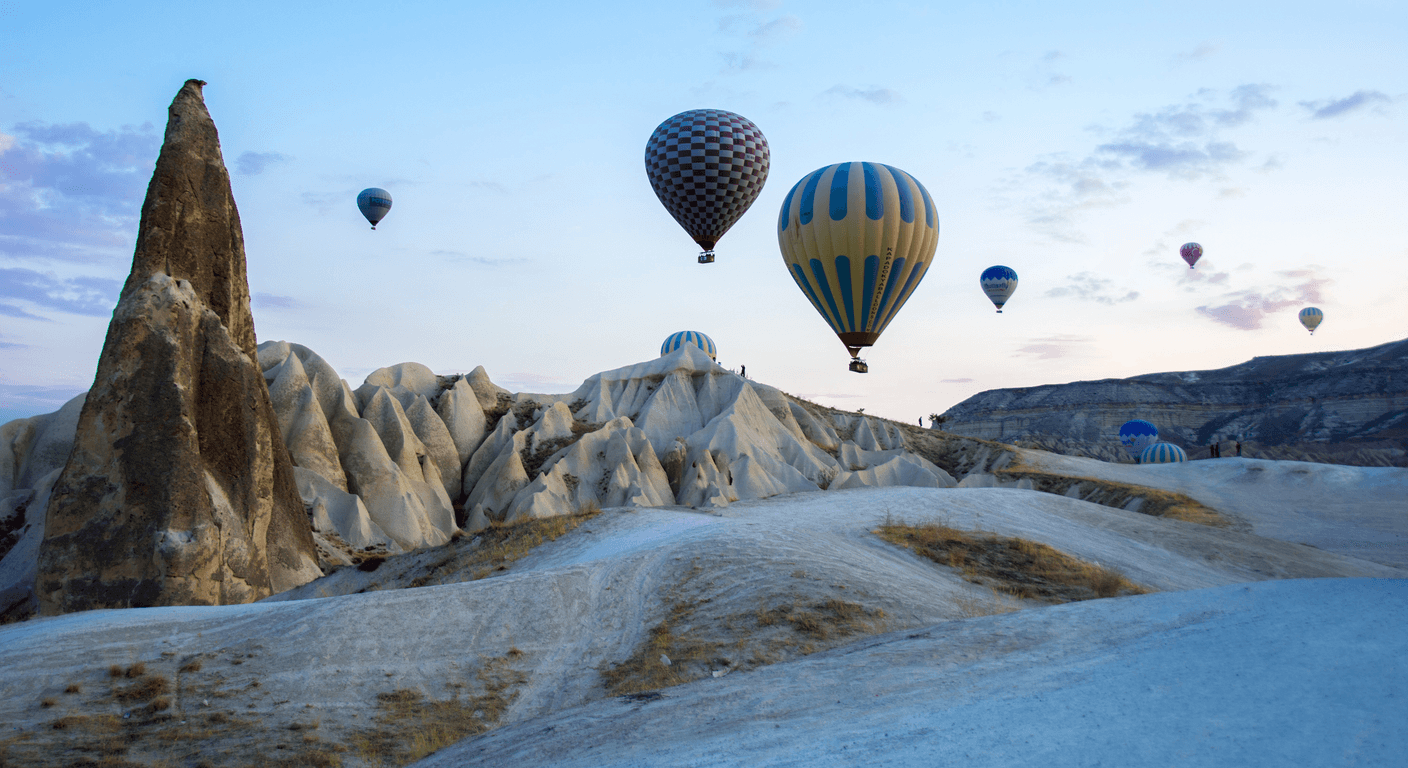
Cappadocia is a region in central Anatolia centred on the towns of Göreme and Ürgüp, and it looks like nowhere else on earth. The volcanic rock formations — called fairy chimneys — rise from the valley floors in clusters, and the rock has been carved into cave dwellings, churches and monasteries over more than a thousand years. The Rose Valley, Love Valley and Göreme Open-Air Museum (a UNESCO World Heritage Site) are the headline attractions, and they hold up to their reputation. The Open-Air Museum is a cluster of rock-cut Byzantine churches with well-preserved frescoes; entry is ticketed and the site involves a moderate walk on uneven ground.
The hot air balloon flights over Cappadocia are genuinely one of the more memorable things on offer in Turkey. Flights typically launch at dawn, last around an hour, and the view of the valleys from altitude — particularly in the soft light of early morning — is difficult to describe without reaching for superlatives, so take that as a signal of how good it actually is. Operators are numerous; prices are indicative around AUD 250–400 per person, though confirm current pricing with operators directly. Not all operators maintain the same safety standards, and this is an area where booking through a reputable small-group tour operator or a well-reviewed local agency matters. The flight itself involves standing in a basket for an hour — most people find this manageable — and the landing can be firm. If you have significant back or joint concerns, discuss this with the operator before booking.
The valleys themselves require candour about terrain. Walking the valley floors involves loose gravel, rocky paths, and in places quite steep descents and climbs. This is not a manicured national park with sealed paths. Trekking poles are genuinely useful. Some sections are accessible on horseback or by quad bike if walking is difficult, though these come with their own considerations. If you have limited mobility, the view from the valley rim lookouts — such as those near Göreme — gives a strong sense of the landscape without requiring you to descend.
Selling culture, scams, and staying comfortable with both
The selling culture in Turkey's tourist areas is persistent and practiced. In Istanbul's Grand Bazaar and Spice Bazaar, in carpet shops across Cappadocia, and in restaurants near major monuments, you will be approached, invited in, offered tea, and encouraged to buy. The vast majority of this is not hostile or dishonest — it is simply how a significant portion of the local economy operates, and some of the craftwork and produce on offer is genuinely excellent. The key is knowing what you want before you enter a shop, being comfortable saying no without elaboration, and not allowing social politeness to override your own judgement.
Carpet shops in particular operate on a high-investment, high-reward model. You may be shown dozens of carpets, served multiple cups of tea, and subjected to a price negotiation that begins at a figure well above what the seller expects to receive. This is not inherently dishonest, but it requires patience and a willingness to walk away. If you genuinely want a carpet, it is worth knowing that prices can be negotiated substantially and that quality varies enormously. If you do not want a carpet, a polite 'I'm just looking, thank you' at the door is sufficient — you are not obliged to sit down.
More straightforward caution applies to a small number of common tourist-area scams: shoe-shiners who 'accidentally' drop a brush and then charge heavily for an unrequested shine; men who offer to be your guide and then expect significant payment; restaurants near major monuments that charge well above local rates without indicating prices. None of these are serious safety concerns, but they are worth knowing about. Checking Smartraveller's current advice for Turkey before you travel — particularly for any security-related updates — is not optional for Australian travellers; it is standard practice.
Small-group tours versus independent travel: which suits over-50s better
Turkey is navigable independently, but a small-group tour removes a considerable amount of logistical friction that can wear on a solo traveller in their late 60s. A well-chosen small-group operator handles transfers between Istanbul and Cappadocia, accommodation booking, entry to major sites, and a guide who can answer questions and manage the selling culture on your behalf. Groups of 8 to 16 people in this category tend to attract other travellers of similar age and outlook, which has social value for a solo traveller in particular. The trade-off is less flexibility — the itinerary moves at a group pace, and if you want an extra afternoon somewhere, that requires negotiation.
Independent travel gives you full control of pace, which matters enormously when you are managing energy across a long trip. A solo traveller who is comfortable navigating airports, using translation apps, and making decisions on the fly will find Turkey very manageable independently. Turkish domestic flights between Istanbul and Kayseri (the gateway airport for Cappadocia) are frequent and relatively inexpensive. Hotels across both regions range from budget guesthouses to well-appointed cave hotels in Cappadocia that are a genuine part of the experience. Booking accommodation in advance for peak season (April to June and September to October) is advisable.
A middle path that many travellers find useful is booking the balloon flight and one or two guided day tours through a local operator while otherwise travelling independently. This gives you the benefit of local knowledge for the headline experiences without locking your entire itinerary into a group schedule. Operators in Göreme in particular are well set up for this kind of à la carte approach.
Practical preparation: visas, health, currency and what to pack
Australian passport holders require an e-Visa to enter Turkey. This is obtained online before travel through the official portal at evisa.gov.tr — do not use third-party sites that charge additional fees for the same document. The process is straightforward and takes around 15 minutes if your passport details are to hand. The fee is indicative around AUD 30–50 at time of writing, but confirm the current amount when you apply. Your visa is typically valid for 90 days and allows multiple entries. Check Smartraveller at smartraveller.gov.au for any updates to entry requirements, current travel advisories, and health recommendations before you book and again before you depart.
Travel insurance is non-negotiable for a trip of this distance and duration, and you should specifically confirm that your policy covers pre-existing conditions relevant to your health history and includes medical evacuation cover. Turkey has good private hospitals in Istanbul and Ankara, but regional areas are more limited. Carry a list of your medications in generic (non-brand) names, as brand names differ internationally. If you take prescription medication, bring enough for your entire trip plus a buffer, and carry it in your hand luggage in original packaging.
For currency, the Turkish lira is the local currency and is subject to significant fluctuation. ATMs are widely available in Istanbul and Cappadocia's main towns and generally offer competitive rates; withdrawing lira locally is usually more practical than exchanging Australian dollars before departure. Credit cards are accepted in most hotels, larger restaurants and established shops, but smaller vendors and market stalls are often cash-only. As for clothing: modest dress is practical and respectful throughout Turkey, not just at mosques. Lightweight layers work well in spring and autumn; summer in both Istanbul and Cappadocia is genuinely hot. Comfortable, flat shoes with grip are more important than almost any other packing decision you make.
Quick planning guide
| Ideal pace | Slow and deliberate — a few hours of sightseeing followed by rest, not a packed daily itinerary |
|---|---|
| Best months | April to early June and September to October, for cooler temperatures and thinner crowds |
| Suggested stay | Two to three weeks minimum — around a week in Istanbul, four to five days in Cappadocia |
| Mobility level | Moderate — cobblestones and hills in Istanbul, loose gravel and steep paths in Cappadocia's valleys |
| Cost level | Mid-range — balloon flights around AUD 250–400 and an e-Visa around AUD 30–50, both to be confirmed before travel |
| Comfort level | Generally comfortable but requires patience with persistent, good-humoured selling in bazaars and carpet shops |
| Best for | Curious, patient travellers over 50 comfortable with some effort, whether independent or on a small-group tour |
| Main planning consideration | Balancing the uneven, hilly terrain against transport alternatives like trams, the ferry and the historic funicular |
Key takeaways
- Hagia Sophia, the Blue Mosque and Cappadocia's valley landscape are genuinely as significant as their reputations suggest — the trip earns its distance.
- Istanbul's Sultanahmet district involves real hills and cobblestones; flat, supportive shoes and a realistic daily pace are essential for travellers over 60.
- Mosque visits require covered shoulders, knees and — for women — hair; carry a scarf rather than relying on finding one at the entrance.
- The selling culture in Turkey's tourist areas is persistent but manageable: a calm 'no thank you' is always sufficient and you are never obliged to enter or stay.
- The Turkish lira's volatility has generally favoured Australian visitors in recent years, but confirm current exchange rates close to travel — never rely on published indicative figures.
- All Australian travellers should check smartraveller.gov.au for current Turkey travel advice and confirm e-Visa requirements at evisa.gov.tr before booking.
Recommended partners and links
Indicative prices only — always confirm with the operator before booking.
Frequently asked questions
Do Australian travellers need a visa for Turkey?
Yes. Australian passport holders need an e-Visa, which is obtained online before travel through the Turkish government's official portal at evisa.gov.tr. The process is straightforward and takes around 15 minutes. Avoid third-party sites that charge extra fees for the same document. Confirm the current fee and any entry requirement changes at smartraveller.gov.au before you apply.
What are the dress requirements for visiting mosques in Istanbul?
Both Hagia Sophia (now an active mosque) and the Blue Mosque require visitors to cover their shoulders and knees. Women are also asked to cover their hair. Scarves are sometimes available at the entrance, but bringing your own is more reliable. Remove shoes before entering — there are racks at the door. Entry is restricted or closed to non-Muslim visitors during the five daily prayer times, so check the schedule on the day.
Is Cappadocia suitable for travellers with limited mobility?
The valley floors in Cappadocia involve rocky, uneven terrain with loose gravel and steep sections — trekking poles are genuinely useful. Travellers with significant mobility limitations will find valley walking difficult, but the views from rim lookouts near Göreme give a strong sense of the landscape without descending. The hot air balloon flights involve standing in a basket for around an hour and a firm landing; discuss any physical concerns with the operator before booking.
Is Turkey good value for Australian travellers in 2026?
Turkey has generally been good value for Australians in recent years due to the Australian dollar's relative strength against the Turkish lira, but the lira is subject to significant volatility and you should check the current exchange rate with your bank close to travel. Costs for food, local transport and accommodation are indicatively lower than equivalent quality in Western Europe, but always confirm current prices rather than relying on any published figures.
Is a small-group tour or independent travel better for solo travellers over 60 visiting Turkey?
Both are viable. A small-group tour removes logistical friction — transfers, accommodation, guides — and provides social connection for a solo traveller. Independent travel offers more control over pace, which matters when managing energy on a long trip. A practical middle option is travelling independently while booking specific guided experiences — such as the Cappadocia balloon flight or a day tour of Istanbul's monuments — through reputable local operators.
- Smartraveller — Turkey Travel Advice (Australian Government)
- Turkish e-Visa Official Portal
- Göreme Open-Air Museum — UNESCO World Heritage (Turkish Culture and Tourism Ministry)
- Visit Turkey — Official Turkish Culture and Tourism Portal
- Intrepid Travel — Turkey Small Group Tours
- Explore Worldwide — Turkey Tours (Australia)