Kenya's Masai Mara and Tanzania's Serengeti and Ngorongoro Crater are East Africa's benchmark safari destinations, with the Great Migration generally in the Mara from July to October and in southern Tanzania during the January–February calving season. A 10-day guided mid-range itinerary is typical. Getting there means 16–20 hours flying from Australia with a stopover, then a charter flight to camp. Mobility demands are moderate — long hours on rough tracks — with Kenya offering shorter transfers and easier logistics than Tanzania's grander but rougher circuit.
Why East Africa Still Sets the Standard
There's a reason the Masai Mara and the Serengeti appear on virtually every serious wildlife list. These aren't manufactured experiences — the animals are wild, the distances are real, and the landscape operates entirely on its own terms. For a traveller at 69 who's spent decades watching nature documentaries and wondering what the actual thing feels like, this is it.
The honest starting point is this: both Kenya and Tanzania are genuine, rewarding destinations. The difference lies in logistics, distances, and what your body is willing to negotiate. Neither country is 'easy' in the way that, say, a European river cruise is easy. But both are entirely manageable with the right operator, the right lodge, and the right preparation.
Australia to East Africa is a long haul — roughly 16 to 20 hours flying time from Melbourne or Sydney, almost always with one stopover, typically in Dubai, Doha, Addis Ababa or Singapore. Factor in a genuine recovery night on arrival before you board a small charter flight to any camp. Jet lag at altitude (Nairobi sits at 1,700 metres; the Serengeti plains vary) is real and worth planning around.
Kenya's Masai Mara: Easier Logistics, Excellent Wildlife
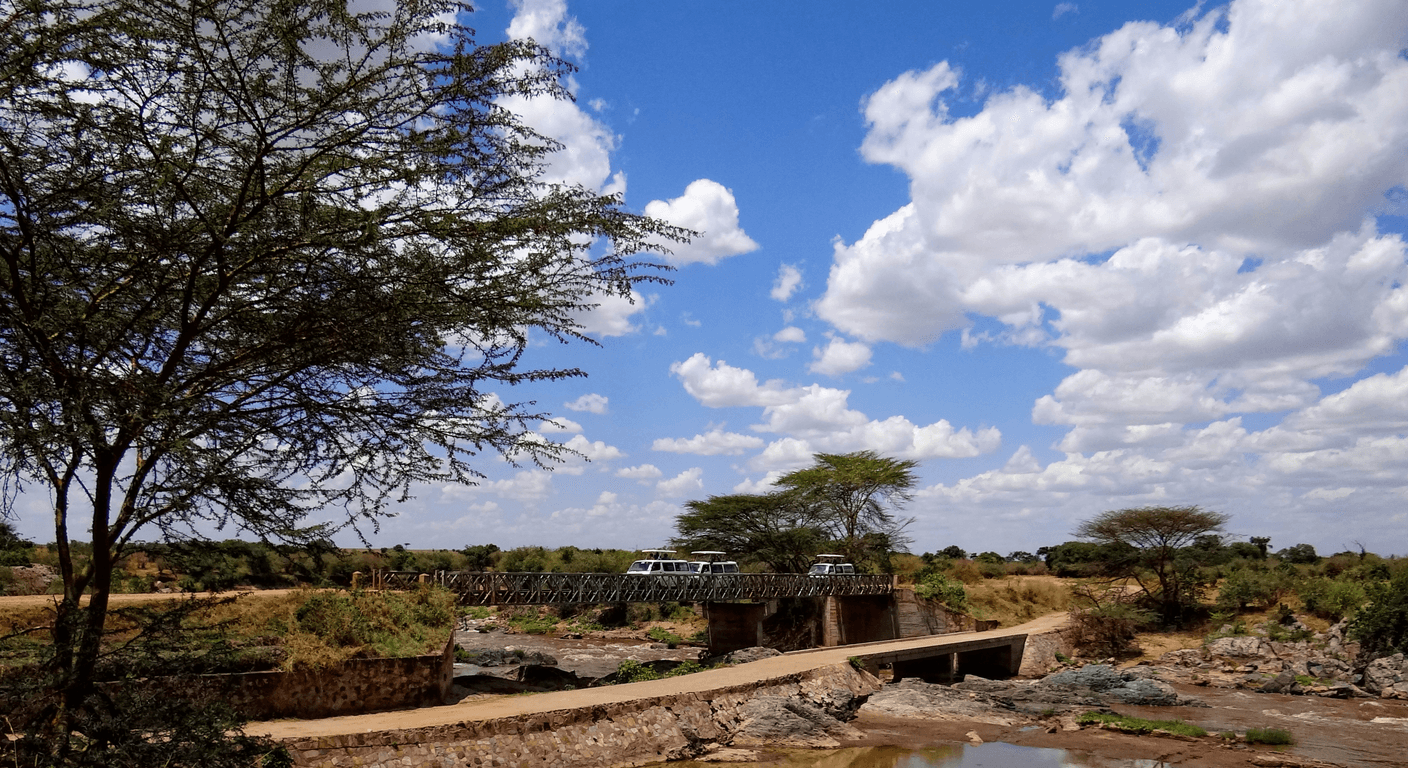
The Masai Mara is Kenya's flagship reserve — a vast grassland in the southwest of the country that shares an unfenced border with Tanzania's Serengeti. What makes it particularly well-suited for a first safari is proximity. Many of the best-regarded camps and lodges are within 45 minutes to an hour and a half of the Mara's main airstrip by vehicle. That matters when you're sitting on a corrugated dirt track.
Game drives here are typically three to four hours in the morning and two to three hours in the afternoon, with a lodge lunch and genuine rest in between. That rhythm suits older travellers well. The Mara also has a well-established infrastructure: a range of lodges and tented camps with reliable electricity, hot showers, proper beds, and medical contacts. Some properties have elevated decks, steps, and uneven terrain — worth raising with your operator if balance or joint pain is a consideration.
Kenya's capital, Nairobi, is a practical transit hub with good international hospitals, familiar hotel chains, and onward domestic flights well-organised through operators. The country's tourism industry is experienced with Australian visitors. Entry requirements, including the electronic Travel Authorisation introduced in recent years, should be confirmed at smartraveller.gov.au before booking — do not rely on secondhand advice.
Tanzania's Serengeti and Ngorongoro: Grander Scale, Longer Days
The Serengeti is simply enormous — roughly 15,000 square kilometres of protected savannah. That scale is part of the appeal, and part of the physical reality. Drives between camps and prime game-viewing areas can run four to six hours on roads that range from acceptable to genuinely punishing. A 69-year-old with a bad back or hip replacement needs to factor this in, not dismiss it.
Ngorongoro Crater is in a category of its own. The crater floor — a collapsed volcanic caldera roughly 20 kilometres across — is home to a dense, self-contained wildlife population including black rhino, lion, elephant and flamingo-fringed soda lakes. The descent into the crater is steep and the road is rough, but the viewing once you're down is extraordinary by any measure. Most operators combine Ngorongoro with Serengeti camps as part of a circuit, which adds distance.
Tanzania's entry point is typically Kilimanjaro International Airport, near Arusha, or Julius Nyerere International in Dar es Salaam. Arusha is the more practical base for northern circuit safaris. The country updated its visa processes in late 2025; current requirements should be verified at smartraveller.gov.au well ahead of travel. Tanzania's camps range from genuine luxury to fairly spartan — the price difference is significant, and the physical comfort gap is real.
The Great Migration: What the Timing Actually Means
The Great Migration — the annual movement of roughly 1.5 million wildebeest, zebra and gazelle between the Serengeti and the Masai Mara — is one of the most-cited reasons to visit East Africa. July to October is when the herds are generally in the Mara, crossing the Mara River in scenes that look exactly like the documentaries. January to February, the calving season in Tanzania's southern Serengeti, is less dramatic visually but extraordinary in its own right.
The word 'generally' is doing real work in that previous sentence. Wildlife doesn't follow a calendar. River crossings happen when they happen — some days multiple times, some days not at all. Operators with years of experience in the region improve your odds considerably, but no operator can guarantee a crossing. A good guide, a smaller vehicle, and patience matter more than exact timing.
The Mara is the more accessible option for catching Migration activity — shorter drives mean you can spend more time at the river and less time getting there. In Tanzania, accessing the northern Serengeti during migration season involves longer transit, though the reward is fewer vehicles and a less trafficked experience. Both are legitimate choices. Neither is guaranteed.
Lodge Versus Tented Camp: What Comfort Actually Looks Like
The distinction between a 'lodge' and a 'tented camp' matters more than the marketing suggests. A genuine luxury tented camp — think canvas walls, a proper bed, an en-suite bathroom and a veranda overlooking a waterhole — is comfortable for most travellers and can be warmer in feel than a concrete lodge. A more basic tented camp, however, may involve shared facilities, cold showers and camp beds. The price difference between these two experiences can be thousands of dollars.
For travellers with mobility considerations — arthritis, a replaced joint, balance issues, difficulty with steps — it's worth asking operators directly about specific properties. Some lodges have rooms with grab rails and roll-in showers; many don't. Elevated walkways, uneven stone paths, and dark evenings with no handrails are common. These aren't reasons to avoid a safari, but they're worth a frank conversation before you commit.
Mid-range lodges in both countries, with solid walls, air conditioning or ceiling fans, reliable hot water and a swimming pool, are the sweet spot for comfort without stratospheric cost. Properties like those in the &Beyond, Elewana or Asilia portfolios (to name established operators) tend to have consistent standards — though always confirm the specific property, not just the brand. A lodge that was excellent two years ago can change.
Health, Insurance and the Conversations Worth Having Early
Yellow fever vaccination is required for entry into both Kenya and Tanzania if you're arriving from a country with yellow fever risk — and the rules around transit countries add complexity. Australia is not a yellow fever country, but stopovers matter. See a travel medicine specialist or GP with travel medicine experience at least six to eight weeks before departure. Don't leave this to the last fortnight. The yellow fever certificate (now the ICVP) has no expiry under current WHO rules, but entry requirements can differ from WHO policy — confirm with the relevant embassy and smartraveller.gov.au.
Malaria is present in both countries' safari regions. Prophylaxis options — atovaquone-proguanil (Malarone), doxycycline, mefloquine — have different side-effect profiles and interact differently with common medications for blood pressure, cholesterol and diabetes. Your travel doctor needs the full picture of what you're taking. This is not a conversation to have with a pharmacist at the airport.
Travel insurance is non-negotiable, and for a 69-year-old with any pre-existing conditions, it requires specific attention. Standard policies often exclude pre-existing conditions unless declared and covered at an additional premium. Medical evacuation from a remote Tanzanian or Kenyan camp to a capable hospital — let alone repatriation to Australia — is expensive without cover. Compare policies carefully; read the Product Disclosure Statement; declare everything. Providers such as Cover-More, Allianz Travel and NIB Travel offer senior-specific options, but premiums vary considerably. Get multiple quotes.
Practical Costs and How to Think About Value
Safari pricing is genuinely wide. A budget group tour camping in shared tents costs a fraction of a private fly-in itinerary at an exclusive camp — and the experience is correspondingly different. For a first safari, and particularly for a solo traveller over 60, the mid-to-upper range tends to deliver the right balance: smaller vehicles (six seats or fewer), experienced guides, good food, proper beds and the kind of flexibility that lets you stay at a sighting rather than rush back for a group dinner.
Indicatively, and these figures are rough guides only — confirm everything with operators — a 10-day guided mid-range safari package from Australia including flights might run from around AUD 8,000 to AUD 15,000 per person. Premium fly-in, private-camp itineraries can exceed AUD 20,000 per person. Solo traveller single supplements are a real cost in this part of the world; some operators offer 'single-friendly' departures or roommate-matching for small group tours, which is worth asking about directly.
Park fees are substantial in both countries and are typically included in package pricing — but verify this. Tanzania's conservation fees for the Serengeti and Ngorongoro have increased in recent years and can add several hundred US dollars per person to a self-arranged itinerary. The case for using an established operator rather than piecing together a safari independently is stronger in East Africa than almost anywhere else.
Quick planning guide
| Ideal pace | Slow-paced, with rest built in between morning and afternoon game drives |
|---|---|
| Best months | July–October for Mara river crossings; January–February for Tanzania's calving season |
| Suggested stay | Around 10 days, allowing for a recovery night on arrival and charter flights between camps |
| Mobility level | Moderate — corrugated tracks, four-to-six-hour Tanzanian transfers, and uneven lodge terrain |
| Cost level | Premium — mid-range packages roughly AUD 8,000–15,000 per person, luxury fly-in itineraries can exceed AUD 20,000 |
| Comfort level | Varies widely by property, from basic tented camps to full luxury lodges |
| Best for | First-time safari-goers over 50 seeking genuine wildlife encounters with manageable logistics |
| Main planning consideration | Early health prep (yellow fever, malaria), insurance covering pre-existing conditions and evacuation, and choosing Kenya over Tanzania if long, rough drives are a physical concern |
Key takeaways
- Kenya's Masai Mara suits first-time safari travellers over 50 best: shorter drives, smoother logistics and well-established lodge infrastructure.
- Tanzania's Serengeti and Ngorongoro Crater offer grander scale but involve longer, rougher drives — plan for it physically.
- The Great Migration is generally in the Masai Mara from July to October, and in Tanzania's southern Serengeti during calving season in January–February — but wildlife never follows a guaranteed schedule.
- Yellow fever vaccination and malaria prophylaxis require a travel medicine appointment at least six to eight weeks before departure — not a task to rush.
- Travel insurance must cover pre-existing conditions and medical evacuation; read the PDS carefully and declare everything before you pay a premium.
- Entry requirements for both Kenya and Tanzania should be confirmed at smartraveller.gov.au — rules have changed recently and secondhand advice is unreliable.
Recommended partners and links
Indicative prices only — always confirm with the operator before booking.
Frequently asked questions
Is Kenya or Tanzania better for a first African safari for travellers over 50?
Kenya's Masai Mara is generally the better choice for a first safari for travellers over 50. It offers shorter game drives, more established lodge infrastructure, and easier logistics from Nairobi. Tanzania's Serengeti and Ngorongoro Crater are rewarding but involve longer, rougher drives that require more physical stamina.
When is the best time to visit East Africa for the Great Migration?
July to October is when the wildebeest herds are generally in Kenya's Masai Mara, including the famous Mara River crossings. January to February is calving season in Tanzania's southern Serengeti. Neither period guarantees specific sightings — wildlife behaviour is unpredictable regardless of timing.
Do Australian travellers need a yellow fever vaccination for Kenya or Tanzania?
Yellow fever vaccination requirements for Kenya and Tanzania depend on your country of origin and transit countries. Australia is not a yellow fever country, but stopover rules can complicate things. See a travel medicine specialist at least six to eight weeks before departure, and confirm current entry requirements at smartraveller.gov.au and with the relevant embassy.
How do I get travel insurance for a safari with pre-existing medical conditions?
You need to declare all pre-existing conditions when purchasing travel insurance and ensure the policy explicitly covers them, including medical evacuation. Standard policies often exclude pre-existing conditions unless a specific premium is paid. Compare multiple providers, read the Product Disclosure Statement carefully, and get quotes from insurers offering senior-specific cover such as Cover-More, Allianz Travel or NIB Travel.
How long is the flight from Australia to Kenya or Tanzania?
Flights from Melbourne or Sydney to Nairobi (Kenya) or Kilimanjaro/Dar es Salaam (Tanzania) take roughly 16 to 20 hours with one stopover, typically in Dubai, Doha, Addis Ababa or Singapore. A recovery night in Nairobi or Arusha on arrival before beginning safari travel is strongly advisable.